 KL Observer
Overview
The best things to do in Kuala Lumpur combine the Petronas Towers and KLCC, Batu Caves, the Chinatown and Merdeka Square heritage area, Malaysian food, green space, and an evening market or skyline experience. For a workable first visit, choose a few priorities and group them by area instead of collecting attractions across the city.
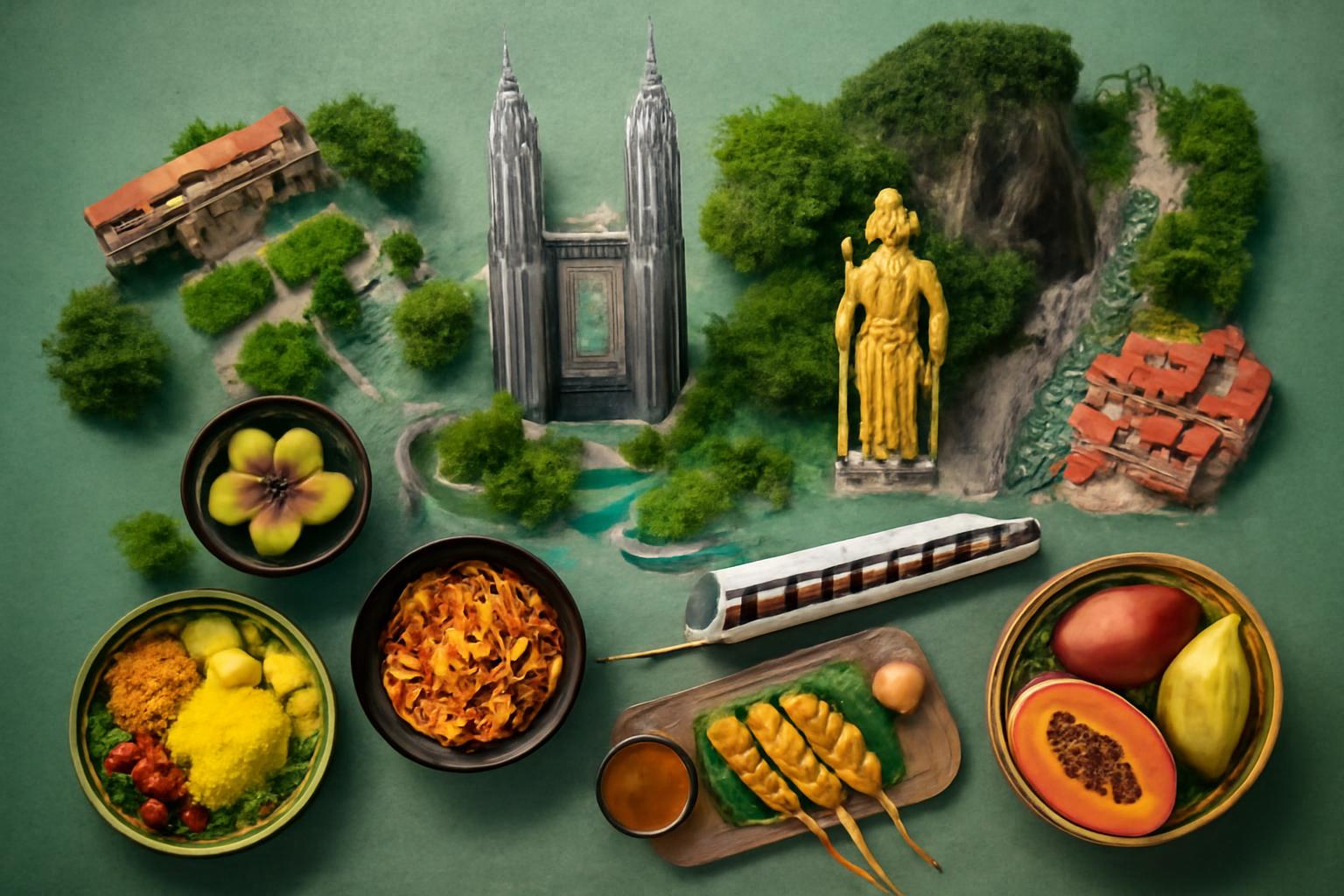
That mix reveals several sides of Kuala Lumpur without requiring an exhaustive itinerary. The Petronas Towers provide the recognizable modern-city landmark, while Batu Caves and Thean Hou Temple add religious and architectural context. Chinatown, Petaling Street, Masjid Jamek, and Merdeka Square can form a heritage-focused outing, while Jalan Alor, Kampung Baru, markets, and food courts provide different ways to explore the city through food.
Available time should control how much you add. A quick two-day visit can cover the principal landmarks, one heritage cluster, and one evening out. A longer stay lets you slow down, include parks and neighborhood meals, and consider a side trip without turning every day into a cross-city race.
Start with Kuala Lumpur’s first-visit essentials
A balanced first-visit shortlist includes the Petronas Towers and KLCC Park, Batu Caves, Chinatown, Thean Hou Temple, and the Merdeka Square area. These places are repeatedly recommended because they cover modern Kuala Lumpur, religious life, historic architecture, markets, and public space rather than repeating the same type of sightseeing.
The Petronas Towers are described by Condé Nast Traveller as the world’s tallest twin towers and the capital’s most recognizable landmark. You do not need to buy access to an observation experience to appreciate them. KLCC Park provides a free ground-level view, making the park a strong choice if you care more about seeing the towers in context than looking down from them. A paid Petronas or KL Tower observation experience is an optional upgrade for visitors who specifically value an elevated view. Check current ticket conditions directly before committing because the supplied evidence does not establish reliable current prices or reservation rules.
Batu Caves supplies a very different experience. It is a Hindu temple complex marked by a large statue of Lord Murugan, caves, shrines, and the multicolored staircase described in several visitor guides. Chinatown then brings food, shopping, street activity, and heritage into a more compact urban setting. Anoushka Probyn’s Kuala Lumpur guide describes the Petaling Street area as dense with restaurants, cafés, bars, street art, and busy markets.
Thean Hou Temple adds Chinese religious architecture to this shortlist. Snap Happy Travel identifies it as a six-tiered Chinese temple. Merdeka Square completes the group with a historic civic setting and views of prominent older buildings, according to Mismatched Passports’ first-timer guide.
These attractions do not need to fit into one day. Pair KLCC with nearby city-center activities, reserve another period for Batu Caves, and combine Chinatown with the Merdeka Square heritage area. That arrangement gives each place enough attention while limiting unnecessary movement between unrelated parts of the city.
Know the Batu Caves tradeoffs before you go
Batu Caves is rewarding if you are comfortable with a substantial staircase, outdoor heat, religious-site etiquette, and animals around the route. It is not simply a quick photo stop at the base.
The route to the caves includes 272 multicolored steps. That climb can be demanding, particularly when heat affects your pace. Build in time for pauses and avoid treating the ascent as a minor transfer between sights. If stairs present a mobility barrier, the upper caves may not be a suitable choice even though the statue and staircase remain visible from below.
Dress for a place of worship rather than only for the weather. Visitor guidance from Abbie Jade Wanders advises covering shoulders and knees before entering the caves at the top. A light layer can make that easier, but visitors should confirm current requirements before departure rather than assuming every religious site applies identical rules.
Monkeys introduce another practical concern. The same guide warns against carrying visible food or leaving objects hanging loosely from a bag because monkeys may grab them. Keep food secured, hold onto personal items, and do not use the animals as a reason to delay other visitors on the staircase.
The sensible approach is to choose a pace suited to your physical comfort, carry only what you can secure, and arrive prepared for both heat and modest-dress expectations. Current hours and likely crowd levels still need to be checked separately.
Explore Kuala Lumpur through food, markets, and neighborhoods
Food is one of the clearest ways to understand Kuala Lumpur’s Malay, Chinese, and Indian influences, but the experience changes depending on where you eat. Street-food corridors, market areas, neighborhood restaurants, and food courts each solve a different planning need.
Jalan Alor is the straightforward choice when you want many vendors concentrated in one recognized visitor area. Condé Nast Traveller describes it as a large thoroughfare devoted to street-food stalls. Its value is convenience and range: you can survey several options without building a route between distant restaurants. It also fits naturally into an evening around Bukit Bintang.
Petaling Street combines food with market activity and a broader Chinatown visit. Mismatched Passports recommends its night market for street food and shopping, while the surrounding area also contains restaurants and cafés. Choose it when you want a meal to sit within a heritage and market outing rather than function as the entire evening.
Food courts are useful when weather or group preferences complicate the plan. Condé Nast Traveller highlights Kuala Lumpur’s food courts as places to sample food associated with the country’s different ethnic communities. They offer a practical way for several people to choose independently while remaining together, and they provide an indoor alternative when rain or afternoon heat makes extended outdoor browsing less appealing.
Treat every market and food district as a working place. Browse without blocking counters, order with reasonable decisiveness when stalls are busy, and ask before closely photographing vendors or their work. The aim is to participate as a customer, not treat the market as scenery.
Choose between convenient food hubs and more local-feeling stops
Choose Jalan Alor or Petaling Street when ease, central location, and visitor energy matter most. Choose Kampung Baru or a scheduled market when you are willing to make a more deliberate trip for a different neighborhood setting.
Jalan Alor is easy to understand as a dedicated food outing, while Petaling Street works well inside a Chinatown and heritage day. Neither requires you to claim that it is the city’s definitive or most authentic food experience. Their advantage is that a first-time visitor can combine eating with other central activities.
For an alternative, Justine Wharton describes Kampung Baru as an old Malay village only a few stops from central Kuala Lumpur. It can add Malay-neighborhood context to a trip otherwise dominated by towers and central commercial districts. Go because you want to spend time in the neighborhood, not merely to collect a meal and leave.
The Taman Connaught night market is another option, but it requires more scheduling. Snap Happy Travel reports that the market takes place on Wednesdays. Because market schedules can change, confirm the current day and operating details before crossing the city for it.
The practical choice is about atmosphere and effort. Central food hubs make a short itinerary easier. Neighborhood and scheduled-market visits ask for more planning but can broaden the social and geographic range of the trip.
Make room for parks and green escapes
A park visit helps balance paved heritage walks, shopping districts, and indoor attractions. KLCC Park is the easiest green-space choice to connect with a principal landmark because it sits beside the Petronas Towers and provides free exterior views, as Miss Filatelista’s Kuala Lumpur guide notes.
That makes KLCC Park more than spare time between tower-related activities. It is a lower-cost way to experience the skyline, a place to slow the pace of a city-center outing, and a useful meeting point when different travelers have different levels of interest in paid observation experiences. If the towers are a priority, include the park in the same visit rather than returning to the district solely for ground-level views.
Broader Kuala Lumpur guides also recommend botanical, forest, and wildlife-oriented attractions, but those choices require more current research. In particular, the supplied sources do not agree on the present fee or operating details for KL Forest Eco Park. Do not classify it as free or build a tightly timed visit around it without checking its current official information.
When selecting a larger green escape, consider what you actually want: a brief skyline break, a longer garden walk, or a dedicated nature or wildlife visit. Only the first fits easily into a KLCC cluster. The others deserve their own time allowance and an access check before you travel.
Plan at least one Kuala Lumpur evening out
Kuala Lumpur’s evening options are strongest when you combine one main atmosphere with one practical activity. A skyline walk around KLCC pairs naturally with dinner, while Jalan Alor and Petaling Street combine food with street-level energy. A scheduled night market works better as the evening’s main destination.
Seeing the Petronas Towers illuminated from outside is the simplest skyline option. It avoids making a paid viewpoint the condition for enjoying the city after dark, and it can follow a daytime visit elsewhere. Fountain performances are often mentioned in visitor itineraries, but schedules can change. Treat one as a bonus unless you have checked the current program directly.
For a food-led evening, Jalan Alor offers the clearest concentration of stalls. Petaling Street makes more sense if you also want market browsing and Chinatown surroundings. Taman Connaught may suit someone willing to arrange the evening around a scheduled market, but the available guide identifies Wednesday as its operating day, so current confirmation matters.
Rooftop and observation experiences can add an elevated view, but access rules, reservations, dress expectations, and prices vary by venue. Select a specific one only after checking those details. One well-chosen evening area is usually more satisfying than trying to move between a rooftop, KLCC, and a distant market in the same night.
Group attractions by area and choose transport trip by trip
The most useful Kuala Lumpur itinerary is organized around clusters. Walking works within compact heritage areas, rail provides the spine for movement between districts, and Grab can fill gaps when the weather, luggage, physical comfort, or a poorly connected destination makes a direct ride more sensible.
Three practical groupings keep the trip legible:
- Chinatown, Masjid Jamek, and Merdeka Square: Explore Petaling Street and Chinatown, then continue toward the mosque and civic heritage area if weather and walking comfort allow. Mismatched Passports specifically recommends exploring the area around Masjid Jamek and Merdeka Square on foot. Justine Wharton’s budget guide also notes that several important heritage buildings sit around or very close to Merdeka Square.
- KLCC and Bukit Bintang: Start with the towers and KLCC Park, then connect to the Bukit Bintang side for shopping or a Jalan Alor evening. Tripadvisor describes the KLCC–Bukit Bintang Walkway as a 1.173-kilometre pedestrian bridge linking the convention-center area with destinations including Pavilion.
- Brickfields or central Kuala Lumpur and Thean Hou Temple: These can contribute Indian-neighborhood and Chinese-temple experiences to the same broader part of your trip, but the supplied evidence does not establish a complete walkable connection. Use rail as far as it is useful, then assess the remaining route rather than assuming the entire pairing is comfortable on foot.
Rail is most useful when it prevents road traffic from controlling the day. A Touch ’n Go card can simplify repeated public-transport use. The Trip.com MyRapid guide says Touch ’n Go cards work across MRT, LRT, Monorail, and Rapid KL buses, with users tapping at entry and exit where applicable. MRT.com.my’s fare guide also identifies Touch ’n Go as a stored-value payment option for Rapid KL services and says reloading is available through transport stations and several retail channels.
That evidence supports the card’s broad usefulness, not a precise route for every attraction. Check the current journey planner for lines, transfers, service changes, and the station nearest your destination. Also distinguish the physical card from any mobile wallet before relying on your phone at a gate.
Walking remains valuable inside a cluster, but distance alone does not determine whether a route is comfortable. Heat, rain, crossings, stairs, and time already spent sightseeing all matter. A covered connection such as the KLCC–Bukit Bintang walkway may be useful, while an exposed walk of similar length may feel less practical.
Grab is the situational alternative. Anoushka Probyn reports using Grab frequently while also noting Kuala Lumpur’s metro system. A direct ride can make sense for a destination that is awkward from the nearest station or when several travelers can go together. It is less useful as the automatic answer to every trip because road conditions can make journey time unpredictable.
Choose transport one segment at a time. Use rail between well-served districts, walk within coherent clusters, and reserve Grab for gaps where it materially simplifies the route.
Prioritize by the time you actually have
Two days can cover Kuala Lumpur’s highlights at a fast pace, while roughly three to five nights creates room for neighborhoods, parks, and slower meals. These are planning perspectives from the supplied travel sources, not fixed requirements for every visitor.
For a two-day visit, prioritize categories before individual attractions. One period can cover Batu Caves, while another focuses on the Petronas Towers and KLCC. Use the remaining time for the Chinatown–Merdeka Square cluster and one evening food area. A budget-oriented guide presents a 48-hour Kuala Lumpur visit, demonstrating that a short highlights stay is possible, but the pace leaves little margin for rain, long meals, or a distant market.
With three or four nights, add breathing room rather than simply adding more attractions. Snap Happy Travel argues that three to four nights is preferable to a one- or two-night stopover. That extra time can support a dedicated food outing, Thean Hou Temple, a park, and a flexible indoor period without compressing the main landmarks.
Another visitor guide recommends allocating three to five nights when Kuala Lumpur forms part of a wider Malaysia trip. The upper end is useful if you want a relaxed pace or a substantial excursion.
The decision is therefore less about a universal ideal and more about your tolerance for movement. Two days suits focused highlights. Three to five nights suits a fuller first visit with recovery time, neighborhood exploration, and fewer compromises during bad weather.
Separate free experiences from optional paid upgrades
A lower-cost Kuala Lumpur visit can be anchored by KLCC Park, exterior skyline views, heritage-area walks, neighborhood exploration, and market browsing. Paid observation experiences, guided tours, purchases, and dedicated ticketed attractions can remain optional.
The clearest supported free choice is KLCC Park. You can see the Petronas Towers from ground level without purchasing observation access, according to Miss Filatelista. Merdeka Square and its surrounding streets also work as an outdoor heritage cluster, while Petaling Street can be explored without making shopping the purpose of the visit.
Religious sites may also fit a low-cost plan, but do not assume that every part of every complex is free or continuously open. Check current admission information, worship restrictions, dress requirements, and any separate access conditions. The evidence supports modest-dress preparation at Batu Caves, but not a complete current fee reference for all religious sites.
Paid viewpoints should answer a specific preference. Choose one if seeing Kuala Lumpur from above matters enough to justify the cost and a fixed booking. Skip it if exterior architecture, park views, and neighborhood atmosphere are more important. You can still build a varied visit without paying for every landmark’s premium access.
KL Forest Eco Park should not be placed automatically in either the free or paid category because the supplied sources conflict about its status. Verify it directly. A sound budget plan is based on confirmed conditions, not an old “free things to do” label.
Keep a flexible plan for rain and afternoon heat
Pair every outdoor priority with an indoor category you would genuinely enjoy. This keeps rain or intense afternoon heat from turning the day into either a cancellation or an unplanned cross-city journey.
Food courts are the strongest supported fallback. Condé Nast Traveller recommends Kuala Lumpur’s food courts for sampling dishes connected with Malaysia’s different ethnic communities. They can replace an exposed street-food period while still preserving the food-focused purpose of the day.
Museums, covered markets, and malls can also function as weather-resilient categories, but choose a specific venue only after checking its current location, hours, admission conditions, and relationship to your existing route. Do not cross the city for a generic indoor backup when a suitable option sits near the cluster you are already visiting.
Use cooler or drier periods for Batu Caves, parks, Merdeka Square, and longer outdoor walks. Keep meals, shopping, or a verified indoor venue available for the middle of the day. This is a flexible sequence, not a rigid hourly schedule. If conditions remain comfortable, continue outdoors; if they change, move to the nearby fallback without abandoning the entire plan.
Check access, dress rules, hours, and booking requirements
Before visiting, verify whether the attraction matches your mobility, clothing, schedule, and tolerance for heights or heat. Current operating details matter most at religious sites, observation experiences, parks with disputed access information, and any venue requiring a timed ticket.
Use a short pre-visit check:
- Confirm current opening hours and the final admission time through the venue’s own channel.
- Check whether tickets or reservations are required and whether entry is timed.
- Review dress expectations and possible worship-related closures for mosques, temples, and caves.
- Assess stairs, hills, exposed walking, and height before bringing young children or anyone with limited mobility.
- Check the weather and identify a nearby indoor alternative.
- Confirm market days and evening operating details before making a dedicated journey.
Batu Caves provides the clearest example of why this matters. The upper route involves 272 steps, shoulders and knees may need to be covered, and loose food can attract monkeys. Those are material constraints, not minor etiquette notes. Someone unable to manage the staircase should plan around the ground-level view or select a different religious or cultural experience.
Mosques require equally respectful planning, but rules can differ. Justine Wharton’s visitor account reports head-covering requirements for women and closures during prayer time. Treat that as a reason to check the specific mosque’s current visitor guidance, not as a complete rule for every site.
Height-related attractions also need individual assessment. The same source identifies one elevated experience as unsuitable for young children, people with mobility issues, or those with a strong fear of heights, but that does not establish citywide accessibility. Venue-specific information is necessary for wheelchair access, lifts, stroller use, seating, toilets, or step-free routes.
Current prices, opening hours, prayer-time arrangements, and booking requirements are not sufficiently consistent in the supplied evidence to publish as fixed facts. Checking them shortly before the visit prevents an old schedule or disputed fee from shaping the day.
Choose day trips by travel burden, not popularity alone
Malacca is the more credible day-trip option from Kuala Lumpur, although an overnight stay gives it more room. Cameron Highlands places a heavier journey around the experience, so an overnight visit is usually the more defensible choice if your wider itinerary allows it.
Mismatched Passports says most Malacca highlights can be seen in a day but recommends spending one or two days when possible. That makes Malacca suitable for visitors who accept a concentrated excursion. Staying overnight becomes more appealing if you want a slower visit instead of fitting the destination around same-day transport.
Cameron Highlands involves a substantially larger travel burden. There She Goes Again places it four to five hours from Kuala Lumpur and cautions that a tour-style day trip leaves very little time there. A same-day excursion may exist as a product, but availability does not make it the best use of a short stay.
Do not sacrifice Kuala Lumpur’s main neighborhoods for a side trip merely because the destination appears on popular excursion lists. If you have only two or three days, keep the focus on the city unless Malacca is a major priority. With more time, Malacca can work as a concentrated day or an overnight, while Cameron Highlands makes a stronger case for at least one night because of the journey involved.