 KL Observer
Overview
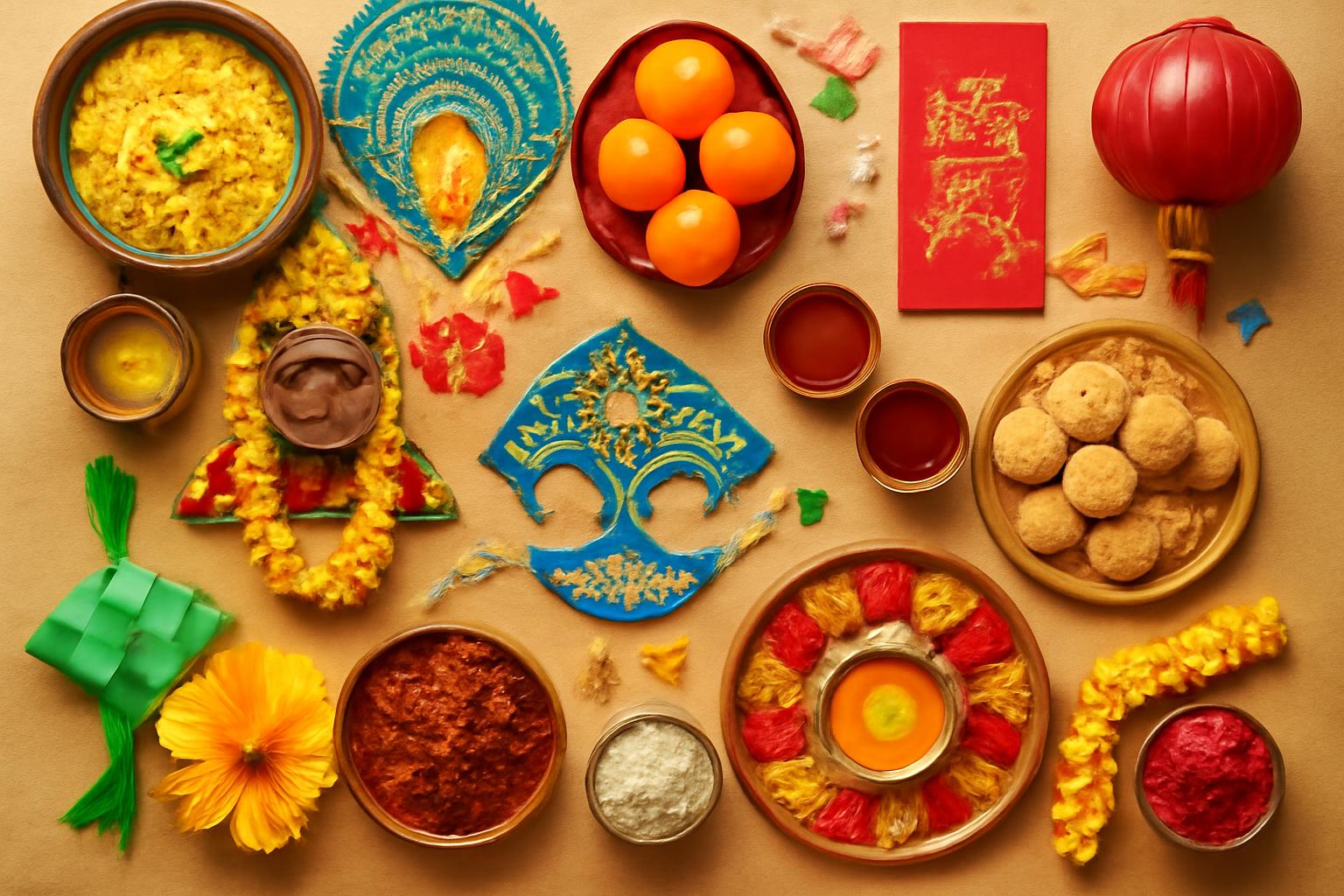
The best festivals to experience in or near Kuala Lumpur are Thaipusam at Batu Caves, Chinese New Year, Hari Raya Aidilfitri, Deepavali, the KL Festival in May, and the national-day celebrations at Merdeka Square. Most are open to everyone and often free, but the religious festivals follow lunar calendars, so you have to verify the date for your travel year.
Here is the shortlist, ordered roughly through the year:
- Thaipusam at Batu Caves, a public holiday in Kuala Lumpur (22 January in 2027)
- Chinese New Year across the city (6–7 February 2027)
- Hari Raya Aidilfitri and its open-house tradition (10–11 March 2027)
- KL Festival, the city’s own arts celebration, held in May
- Citrawarna, Merdeka Day (31 August), and Malaysia Day (16 September) at and around Merdeka Square
- Deepavali (28 October 2027)
One warning up front: many “best festivals in Malaysia” guides recommend events that are not in Kuala Lumpur at all, most notably the Rainforest World Music Festival and Gawai, both held in Sarawak. This guide sticks to what you can actually reach from a KL base, with verified dates and named venues.
The Big Cultural Festivals You Can Experience in KL
Kuala Lumpur’s real strength is that Malay Muslim, Chinese, Hindu, and national celebrations all happen in one city, on one calendar, and visitors are welcome at nearly all of them. As Tourism Malaysia’s Linawati Ismail puts it in JourneyWoman’s coverage, “In Malaysia, everyone is welcome to participate in any of the celebrations regardless of any religion they are because they believe in togetherness in everything.”
Food is your easiest way in. “Every celebration – and practically every day – in Malaysia is centered around food,” Ismail says in the same piece. You do not need an invitation or background knowledge to eat well during a festival week; you need to know which festival is on and where the city gathers. The four sections below cover exactly that.
Chinese New Year
Chinese New Year is KL’s biggest Chinese celebration and a national public holiday, and its date moves every year because it follows the lunar calendar. JourneyWoman noted that in 2025 the first day fell on January 29, the Year of the Snake; in 2027, both the Kuala Lumpur 2027 calendar and the Malaysia public holidays 2027 calendar list Chinese New Year on 6 and 7 February, observed in all states.
For you as a visitor, the practical points are simple: it is a two-day national holiday, so expect some businesses closed and heavy demand for rooms, and check the exact date for your year before booking flights. Do not trust a guide that quotes a date without a year attached.
Hari Raya Aidilfitri and the Open-House Tradition
Hari Raya Aidilfitri marks the end of Ramadan and is the festival where Malaysia’s open-house culture is most visible. Ismail describes it in JourneyWoman as a time when everyone can simply walk into everyone’s houses, an openness that extends to visitors, not just neighbors. If you are invited to join a meal during Raya, the invitation is genuine.
The dates shift with the Islamic calendar. In 2027, both the Malaysia public holidays calendar and the Kuala Lumpur 2027 calendar list Hari Raya Aidilfitri on 10 and 11 March, a national holiday in all states. For 2026, the Visit Malaysia 2026 events calendar lists a Tourism Malaysia Aidilfitri celebration in W.P. Kuala Lumpur on 29 March, which gives you a public, organized way to experience the festival even without a personal invitation.
Thaipusam at Batu Caves and Deepavali
Thaipusam at Batu Caves is the most distinctive festival spectacle within reach of the city, and in 2027 it falls on 22 January, a public holiday in WP Kuala Lumpur according to the Kuala Lumpur 2027 calendar. Traveloka’s festival guide describes devotees carrying decorated kavadis, usually made from wood and metal and decorated with peacock feathers, flowers, and colorful beads, as a form of penance and thanksgiving, with the elaborate ceremonies centered on Batu Caves itself. Expect very large crowds; this is a major pilgrimage, not a staged show.
Deepavali, the Hindu festival of lights, also follows the lunar calendar. Traveloka notes it usually lands around October or November, and both 2027 calendars confirm 28 October 2027, a holiday in all states except Sarawak. In KL it is a citywide holiday with festive food and decorated public spaces, and an easy celebration to enjoy without any planning beyond the date.
Merdeka Day, Malaysia Day, and Citrawarna at Merdeka Square
If you want a festival you can plan around a year in advance, these are the ones, because two of the three sit on fixed dates: Merdeka Day on 31 August and Malaysia Day on 16 September, both national holidays per the Malaysia public holidays 2027 calendar. Both bring national-scale celebration to the capital.
Citrawarna, also called Colours of Malaysia, is the third. JourneyWoman reports that the month-long celebration begins at Dataran Merdeka (Merdeka Square) in Kuala Lumpur with a parade in which each of Malaysia’s 14 states puts on a show of song, dance, and culture. Exoticca’s Malaysia events page places it between the end of May and the beginning of June. Confirm the current year’s programme before building a trip around it.
KL Festival and the City’s Modern Arts and Music Scene
KL Festival is the one flagship celebration that belongs unambiguously to the city itself. Its organizers describe it as KL’s flagship celebration, bringing together creativity, cultures, and communities and connecting people with the places and stories of the city. Usefully for your budget, the programme splits explicitly between free and ticketed events: in 2026, for example, Kuala Sine ran free on 15–16 May, while The Lessons of Silence on 22–23 May was ticketed. That mix means you can sample the festival for nothing and pay only for the performances you actually want.
Beyond KL Festival, the city has a modern events layer that Malaysia-wide festival roundups rarely mention. The Visit Malaysia 2026 calendar lists a Kuala Lumpur Orchestra Festival at the DBKL Mayor’s Courtyard and a Tourism Malaysia VM2026 Music Festival in W.P. Kuala Lumpur on 23 September 2026. Recurring ticketed events also run year after year; Eventbrite’s KL festival listings show the World Bachata Festival Kuala Lumpur celebrating 16 years. For what is on during your specific dates, a live listing such as the KL Events Calendar is more reliable than any static article.
When KL’s Festivals Fall — and Why the Dates Keep Moving
Most of KL’s major festivals do not have fixed dates. As the Visit Malaysia 2026 events calendar states plainly, dates for Hari Raya, Deepavali, Thaipusam, and Chinese New Year are based on lunar calendars and may shift slightly, and public holiday dates are indicative until the government confirms them. This is why published guides disagree: JourneyWoman quotes a precise 2025 Chinese New Year date (January 29) that is already useless for a 2026 or 2027 trip, while other roundups give only vague seasonal windows. Never carry a festival date from an undated article into a flight booking.
The snapshot below combines Tourism Malaysia’s confirmed 2026 celebrations in Kuala Lumpur with the 2027 public-holiday dates cross-checked across two independent Malaysian holiday calendars.
| Festival or event | Date | Location and status |
|---|---|---|
| VM2026 Chinese New Year celebration (Tourism Malaysia) | 18 Feb 2026 | W.P. Kuala Lumpur (Visit Malaysia 2026 calendar) |
| VM2026 Aidilfitri celebration | 29 Mar 2026 | W.P. Kuala Lumpur (same calendar) |
| VM2026 Vaisakhi celebration | 13–16 Apr 2026 | W.P. Kuala Lumpur (same calendar) |
| KL Festival: Kuala Sine (free) | 15–16 May 2026 | Kuala Lumpur (klfestival.com.my) |
| KL Festival: The Lessons of Silence (ticketed) | 22–23 May 2026 | Kuala Lumpur (klfestival.com.my) |
| VM2026 Music Festival | 23 Sep 2026 | W.P. Kuala Lumpur (Visit Malaysia 2026 calendar) |
| Thaipusam | 22 Jan 2027 | Public holiday incl. WP Kuala Lumpur (cutisekolah.com.my, malaysiapublicholiday.com) |
| Chinese New Year | 6–7 Feb 2027 | National holiday, all states (both 2027 calendars) |
| Hari Raya Aidilfitri | 10–11 Mar 2027 | National holiday, all states (both 2027 calendars) |
| Wesak Day | 20 May 2027 | National holiday, all states (both 2027 calendars) |
| Merdeka Day | 31 Aug 2027 | National holiday, fixed date (both 2027 calendars) |
| Malaysia Day | 16 Sep 2027 | National holiday, fixed date (both 2027 calendars) |
| Deepavali | 28 Oct 2027 | All states except Sarawak (both 2027 calendars) |
Treat the 2027 lunar dates as provisional until officially confirmed; the Kuala Lumpur 2027 calendar itself advises checking back for amendments after the cabinet’s official announcement. Your verification workflow is simple: confirm the public-holiday date on a current Malaysian holiday calendar, then check a live listing like the KL Events Calendar or Eventbrite KL for the specific events running during your dates.
Where in Kuala Lumpur the Celebrations Happen
Knowing the date only gets you halfway; you also need to know where the city gathers. The evidence points to a small set of named venues, most of them inside W.P. Kuala Lumpur itself, which is also where Tourism Malaysia stages its official VM2026 celebrations per the Visit Malaysia 2026 calendar.
- Batu Caves: the center of Thaipusam’s ceremonies and rituals, per Traveloka
- Merdeka Square (Dataran Merdeka): where the Citrawarna parade begins, per JourneyWoman, and the anchor for national celebrations
- Dataran DBKL and the DBKL Mayor’s Courtyard: city-run events such as the KL New Year Run (1 January) and the Kuala Lumpur Orchestra Festival, per the Visit Malaysia 2026 calendar
- Taman Tasik Titiwangsa: a listed venue on the 2026 events calendar (25–27 September)
- Central Market, the National Mosque, and the Petronas Twin Towers: named venues for the World Folklore Festival “Treasures of Malaysia”
The pattern worth noting: apart from Batu Caves, which sits just outside the city center, everything on this list is inside KL proper, so a single well-located base covers the lot.
Famous “Malaysian” Festivals That Are Not Actually in KL
The most common mistake in festival planning for KL comes straight from the “best festivals in Malaysia” genre: recommending events a KL visitor cannot attend without a separate flight. The clearest example is the Rainforest World Music Festival. Tourism Malaysia’s Linawati Ismail tells JourneyWoman it is the one festival a visitor to Malaysia should not miss, but Traveloka locates it precisely: a roughly three-day celebration of music, culture, and nature held every year in Kuching, Sarawak, on Borneo.
The same applies to Gawai, the Dayak harvest festival: the Malaysia 2027 holiday calendar lists Hari Gawai Dayak on 1–2 June as a Sarawak holiday, and the 2026 events calendar places the Gawai celebrations in Sarawak on 5–7 June. Both are worth attending, but from KL they are a separate flight and a side trip, not a day out. If your trip is KL-based, either budget for that flight or plan around the in-city calendar above instead.
Joining In: Openness, Cost, and What Visitors Should Know
You can join nearly everything, and much of it costs nothing. JourneyWoman states it directly: “For almost all festivals, they are open – and often free – to all who wish to attend,” and Ismail’s point about everyone being welcome regardless of religion applies across the calendar, from Thaipusam’s processions to Hari Raya open houses.
The cost nuance sits in the modern events layer. Cultural and religious festivals are generally free public life, while organized festivals mix pricing: KL Festival labels its 2026 programme explicitly, with Kuala Sine free and The Lessons of Silence ticketed, and recurring events on platforms like Eventbrite are ticketed by default. A practical rule: if an event has a named organizer and a fixed venue, check whether it is ticketed before you go; if it is a religious or national celebration in public space, just show up. The KL Events Calendar covers how to join local festivals and what to expect for the current season.
Etiquette at Religious Celebrations
No supplied source publishes formal rules for visitors, so treat the following as general courtesy principles rather than official guidance. Dress modestly at temples, mosques, and religious processions: covered shoulders and knees are a safe baseline, and carry a light layer in KL’s heat rather than dressing down. At Thaipusam, remember that kavadi bearers are performing an act of penance; ask before photographing individual devotees up close, and never block a procession route for a shot. Follow what locals do at entrances, including removing shoes where others do, and accept food or hospitality graciously if offered at an open house. If you are unsure whether an area is open to non-worshippers, ask; in a festival culture built on welcome, a polite question is always acceptable.
Planning Your Trip Around Festival Crowds and Holidays
Festival timing changes your booking math. The Visit Malaysia 2026 events calendar advises that Chinese New Year, Hari Raya, Deepavali, and the December holidays see high demand, and recommends reserving accommodation and tours 2–3 months in advance. Those same windows are public holidays, so expect some closures and busier transport; keep your daily plans loose rather than stacking fixed appointments onto a holiday.
Logistics inside the city are manageable if you set them up once. KL Observer’s approach is to help you pick a base, connect the city by train, and eat well without fighting the heat or backtracking across town, and that logic fits festival trips well: the main venues (Merdeka Square, Dataran DBKL, Titiwangsa, Central Market) sit inside KL, with Batu Caves just beyond the center, so a well-connected base lets you reach a morning celebration and retreat from the midday heat without crossing the city twice. Build each festival day around one venue and one meal, not a checklist.
FAQ
Are festivals in KL suitable for families with kids, and which ones are most family-friendly?
Generally yes. JourneyWoman reports that almost all festivals are open, and often free, to anyone who wishes to attend, and celebrations center on food, which makes them naturally easy with children. Daytime, open-space events suit families best: the Citrawarna parade at Merdeka Square, national-day celebrations, and KL Festival’s free programmes. Thaipusam at Batu Caves is open to families too, but its dense pilgrimage crowds demand more preparation, so plan an early visit and an exit route if you bring young kids.