 KL Observer
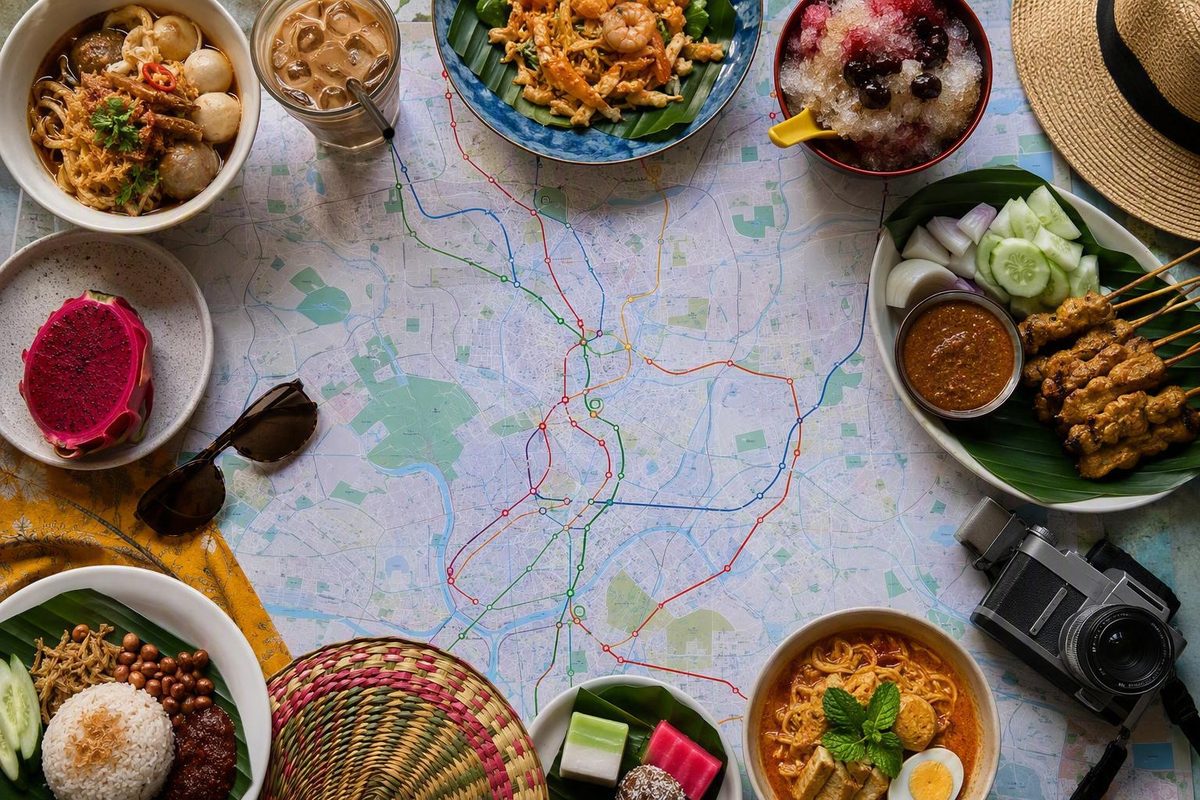
This is a guide to Kuala Lumpur’s street markets and food districts, not a finance explainer. If your goal is to enjoy Petaling Street, Jalan Alor, and a few well-chosen food neighborhoods without spending the day in traffic or long exposed walks, the best question is not “How do I see everything?” It is “Which one or two districts can I do well?”
KL often looks simpler on a map than it feels on the ground. Heat, rain, big roads, mall detours, and the temptation to zigzag between districts can make a market day feel busier than it needs to. The more reliable approach is to choose one base neighborhood, let rail do the heavy lifting, and build the day around short, purposeful walks.
That gives you a better version of the city. Instead of forcing a checklist, you let each area do what it is good at: Chinatown for old-city texture and Petaling Street, Bukit Bintang for a more obvious evening food run, and KLCC for a cleaner reset point between outings.
Why Base Your KL Markets Trip on One Neighborhood and Rail
The strongest KL market day usually begins with one base decision. KL Observer’s planning framework is built around exactly that idea: pick Bukit Bintang, KLCC, or Chinatown first, then shape the day around rail, short walks, food stops, and breaks that still work when heat or rain changes the mood (KL Observer).
In practice, each base removes a different kind of friction. Bukit Bintang suits travelers who want late food and easy evening movement. Chinatown suits travelers who care more about heritage streets, Petaling Street, and keeping the old city close at hand. KLCC suits travelers who want a tidier, more controlled base and do not need the market atmosphere outside the hotel door.
Rail matters because it turns KL into manageable pieces. Rather than treating the city as one continuous walking experience, think in short segments: hotel to station, one neighborhood cluster, one meal anchor, one backup indoor pause, then back out again. That structure is less dramatic than a full-city sweep, but it usually leaves you with more real street time and less dead time.
A car can still make sense for some trips, but for central market-focused days it is usually not the easiest default. The sources here consistently point toward rail plus short walking segments as the simpler pattern for seeing central KL without constant backtracking.
A useful rule is to decide what kind of tired you are willing to accept. If you hate late-night transport decisions, base near Bukit Bintang. That is a more practical decision than chasing a single “best” neighborhood.
Chinatown and Petaling Street: Lively Night Market and Street Food
Petaling Street is the clearest market anchor in KL’s Chinatown. Nomadic Notes describes Petaling Street as the center of Chinatown, with lively streets and cheap eats around it, which matches why the area works so well for visitors who want a concentrated old-city feel rather than a polished dining district (Nomadic Notes).
What makes this part of KL useful is the cluster, not just the sign over the market lane. Audley’s evening street-food tour through central KL groups Central Market, Sin Sze Si Ya Temple, and Sri Maha Mariamman Temple into the same heritage-and-food orbit, which is a good clue for independent visitors too: Chinatown works best when you treat it as a compact zone rather than a single stop (Audley Travel).
That means the best Petaling Street visit is rarely the fastest one. Give the area enough time for one slow pass, one deliberate food stop, and a little wandering beyond the busiest strip. If you only arrive for the photo under the arch and immediately leave, Chinatown can feel thinner than it is.
Central Market is the obvious companion. The nearby temples help give the visit shape. Even if you later move on for dinner elsewhere, do the drifting part here first, while you still have patience for smaller lanes and stall browsing.
It also helps to decide what this stop is for. If the answer is browsing, snack lightly and keep moving. If the answer is dinner, pick one proper stall meal and stop pretending you also need three more “must-tries” before the night ends. Petaling Street rewards moderation better than speed.
One limitation is timing. The practical takeaway is simple: give Chinatown an intentional evening slot, and do your aimless wandering while the district is still awake.
Respect matters here because the lanes can feel tight fast. Be ready to order, avoid stopping in the narrowest choke points, and remember that the appeal of Petaling Street is that it is still a working commercial space.
Bukit Bintang and Jalan Alor: Food Street Market Heart
If Chinatown is the atmospheric old-city choice, Bukit Bintang is the easier evening machine.
That transport point matters because Bukit Bintang is forgiving. You can arrive by rail, eat on Jalan Alor, duck indoors, change plans, add dessert, or call the night early without the district collapsing on you. For short stays, that flexibility is often worth more than romance.
Jalan Alor also works across budgets and appetites. Nerd Nomads highlights Jalan Alor as Bukit Bintang’s hawker street and specifically points to Lot 10 Hutong as a useful food option in the same district, which gives the area a practical two-part structure: outdoor street-food energy if the weather is kind, indoor fallback if it is not (Nerd Nomads).
If one stall is too busy, there is another nearby. If someone in the group wants a mall break, that is easy. If you want the market-adjacent atmosphere without committing the whole night to one covered lane, Bukit Bintang absorbs indecision better than Chinatown.
The tradeoff is that Bukit Bintang is less about heritage texture. You come here for appetite, movement, and options. If your favorite kind of evening is food first and everything else second, Jalan Alor is often the simpler starting point. If your favorite kind of evening is neighborhood first, Chinatown may still be richer.
A good Bukit Bintang plan is not complicated: use Bukit Bintang station as your anchor, keep the night inside one district loop, and decide in advance whether Jalan Alor is the main event or just one stop in a broader evening. The area is at its best when you let it stay local to itself.
KLCC Markets and Food: Modern Contrast to Street Vibes
KLCC belongs in a market guide mostly as contrast.
Instead, it is the place that makes a market-focused trip easier to manage.
KLCC’s value is control: easier resets, a cleaner visual rhythm, and less pressure to keep squeezing action out of the street once you are already tired.
The tradeoff is obvious too. If what you want is the rougher market feel of Petaling Street or the hawker-street energy of Jalan Alor, KLCC is not the substitute. It is the balance wheel.
Spend the day in a modern center, then choose either Chinatown or Bukit Bintang for the evening. That shape keeps the trip varied without turning it into a relay race.
If you are traveling with mixed preferences, KLCC can also be the compromise base. The person who wants comfort gets it. The person who wants markets still gets them by rail. You do not need every neighborhood to do every job.
Rail and Walking Routes to Link KL Markets Efficiently
The most useful KL market routes are sequences, not collections. Think in hinges and clusters.
The clearest hinge in the evidence is KL Sentral. A traveler answer on Quora describes it as the city’s most convenient tourist base because trains, buses, taxis, e-hailing, and airport access converge there, and it specifically names Central Market, Petaling Street, KLCC Twin Towers, and Bukit Bintang as practical onward targets; treat that as informed traveler opinion, not official transit guidance, but it is still a useful routing frame (Quora traveler answer).
With that in mind, three route shapes work better than trying to “do KL” in one sweep.
1. Chinatown first, Bukit Bintang later. Start the day around Central Market and Petaling Street. Let that part be the browsing and heritage block. Eat one lighter stop there, not a full overload. Then move by rail into Bukit Bintang for the more openly dinner-driven evening around Jalan Alor.
2. Bukit Bintang only. If the weather is punishing or your trip is very short, simplify. Use Bukit Bintang station as the arrival and departure point, keep your indoor break inside the same district, and make Jalan Alor or Lot 10 Hutong the anchor. You lose range, but you gain energy and patience.
3. KLCC plus one market district. Base or start in KLCC for the modern city segment, then choose either Chinatown or Bukit Bintang for the evening.
What you should usually avoid is the full-city sweep: Chinatown lunch, KLCC skyline stop, Bukit Bintang dinner, then one more district because there is still “time.” That plan produces a lot of transit and very little texture.
A better way to decide is to choose only one district where you are willing to wander without purpose. If that is Chinatown, keep the rest of the day structured. If that is Bukit Bintang, make Chinatown a lighter heritage stop or skip it entirely. The city gets easier when only one part of the day is allowed to sprawl.
Respectful Food Crawls at KL Markets: Pacing and Etiquette
A KL food crawl goes better when you act like a guest, not a collector. KL Observer’s food-crawl guide puts the basics plainly: queue properly, order clearly, do not block counters or tables, raise dietary needs early, and build the crawl around one neighborhood instead of using stalls as excuses to cross the whole city (KL Observer’s food-crawl guide).
That advice matters because the best food spaces in this guide are working spaces. They are not designed for long consultations, group indecision, or turning the counter into a photo stage. The smoother you are, the easier it is for the place to stay itself.
The most comfortable rhythm is usually one anchor meal, one lighter stop, a walk or rest, then a final drink or dessert. That gives you enough variety to feel the neighborhood without flattening your appetite. Heavy-heavy-heavy is how crawls become chores.
For dishes, Audley’s tour overview is useful not because it gives you a checklist, but because it shows a sensible mix: satay, nasi lemak, Hokkien mee, cendol, roti canai, and clay pot chicken rice all represent different weights and styles of eating (Audley Travel). A good crawl chooses contrast, not maximum count.
The simplest market etiquette rule is this: decide faster than the people behind you expect. That does not mean rushing mindlessly. It means knowing whether you are here to sample, sit, browse, or move. Clarity is courtesy.
It also helps to keep your group honest. If someone is full, stop. If the weather is draining everyone, sit down. If the line is too long for your mood, move on. Courtesy is not just about manners at the stall; it is also about not turning your own group into a slow-moving obstruction.
Heat, Weather, and Timing for Comfortable Market Visits
For most travelers, timing is the real market hack in KL.
An evening start is the easiest default. Audley’s KL street-food walk starts at 5 p.m. and runs for about 4.5 hours, which reflects the basic logic of the city: the worst daytime heat has eased, the food scene is waking up, and your energy is still usable when you arrive at the part of town you actually care about.
That does not mean every good market visit must start late. It means you should be suspicious of plans that burn your patience in the hottest part of the day and expect you to be enthusiastic again by dinner. If the market is the point, protect energy for the market.
This is where the rail-first pattern earns its keep. When the weather turns, you want the exposed parts of the day to shrink, not to become heroic.
Weekday and weekend choices are really crowd-tolerance choices. If you enjoy denser atmosphere, later evenings will feel fuller. If you dislike queue pressure, go earlier and let your second stop happen after the first rush. The city does not owe you a perfect balance of buzz and elbow room at the same moment.
One practical rule helps almost everyone: do less before the market, not more after it. The classic tired-traveler mistake is to stack sightseeing first and treat the market as a bonus round. Reverse that logic. Save your looseness, patience, and appetite for the district that needs them.
Budget Stays Near KL Markets: Hotels by Neighborhood
If you care about cost, the best cheap room is usually the one that removes the most friction from your day.
For hub-style convenience, Brickfields near KL Sentral is the value play in this evidence set. The Quora traveler answer that frames KL Sentral as the city’s most convenient transport convergence point also notes cheaper accommodation in Brickfields and easy onward access around the city. That does not make it the most atmospheric base, but it does make it a practical one for travelers who want rail flexibility first.
For immediate Petaling Street access, Chinatown still has the obvious appeal. You are close to the market, close to old-city sights, and already in the neighborhood you came to feel. The compromise is that your evenings are more dependent on the specific market rhythm of the area than they would be in Bukit Bintang.
Bukit Bintang is the least fragile lodging choice if food is the main event. Nomadic Notes describes it as a district with hotels for all budgets around the city’s most obvious evening food-and-entertainment core. That matters because it reduces the question of “How do we get back?” after dinner.
The dated Tripadvisor thread mentioned budget names such as Hotel Chinatown Inn in Chinatown, but that is best treated as a historical example rather than a current recommendation. What is still useful from that discussion is the planning distinction: sleeping right next to Petaling Street gives you proximity, but not necessarily the same late-evening continuity you get in Bukit Bintang.
So the neighborhood tradeoff stays fairly clean:
- Brickfields / KL Sentral: best if transport efficiency is the priority.
- Chinatown: best if Petaling Street and old-city atmosphere are the priority.
- Bukit Bintang: best if late food and easy evening movement are the priority.
- KLCC: best if comfort and a tidier reset point are the priority.
If you only want one answer for a food-heavy short stay, Bukit Bintang is usually the least complicated. If you want the market outside your hotel rather than at the end of a rail ride, Chinatown becomes more tempting. If you are planning the city as a set of short, controlled outings, KL Sentral and KLCC make more sense than they first appear.
Stick to one strong base, let rail connect the districts you actually care about, and keep your market days compact enough to stay enjoyable. That is the version of KL most visitors end up liking best: Chinatown when you want layered street life, Jalan Alor when you want the easiest food night, and KLCC when you need the trip to breathe. For more route-first neighborhood and rail planning, KL Observer collects its guides on the posts page.
Do I need a car to visit KL markets like Petaling Street?
Usually no. In the source set used here, the practical pattern is rail plus short walks, not car-first planning. KL Observer’s own framework is built around exactly that, and the central districts discussed in this guide are treated as workable by rail and on foot in linked segments rather than as a driving itinerary.
Chinatown or Bukit Bintang for markets and evening vibe?
Choose Chinatown if you care most about Petaling Street, heritage lanes, and old-city texture. Choose Bukit Bintang if you care most about an easier evening food run, rail-marked access through Bukit Bintang station, and a district that keeps offering options after dinner. In this guide’s evidence, Bukit Bintang is the easier nightlife-and-food base, while Chinatown is the more atmospheric market neighborhood.
What dishes to try on a respectful market food crawl?
A simple, balanced crawl is better than a maximal one: something grilled like satay, one rice or noodle stop such as nasi lemak or Hokkien mee, then a lighter finish like cendol or a drink. The point is not to complete a canon. It is to keep the crawl varied, manageable, and polite to the places serving you.
Best rail base for accessing multiple KL markets?
Within the sources used here, KL Sentral is the clearest hub-style answer because one traveler source specifically describes it as the point where many transport options converge and names Bukit Bintang, KLCC, Central Market, and Petaling Street as easy onward targets. Treat that as traveler guidance rather than an official ranking, but it is still the best-supported “rail base” idea in this article.
Are KL market areas safe and walkable at night?
The sources used here do not support a broad, current safety guarantee. What they do support is a narrower planning distinction: older traveler reports describe Bukit Bintang as busier later in the evening, while some streets around Chinatown were described as darker once Petaling Street wound down (Tripadvisor forum thread). The safest editorial advice from that limited evidence is to keep late walking to active routes, avoid unnecessary wandering after a market has clearly shut, and use rail or a ride for longer stretches.