 KL Observer
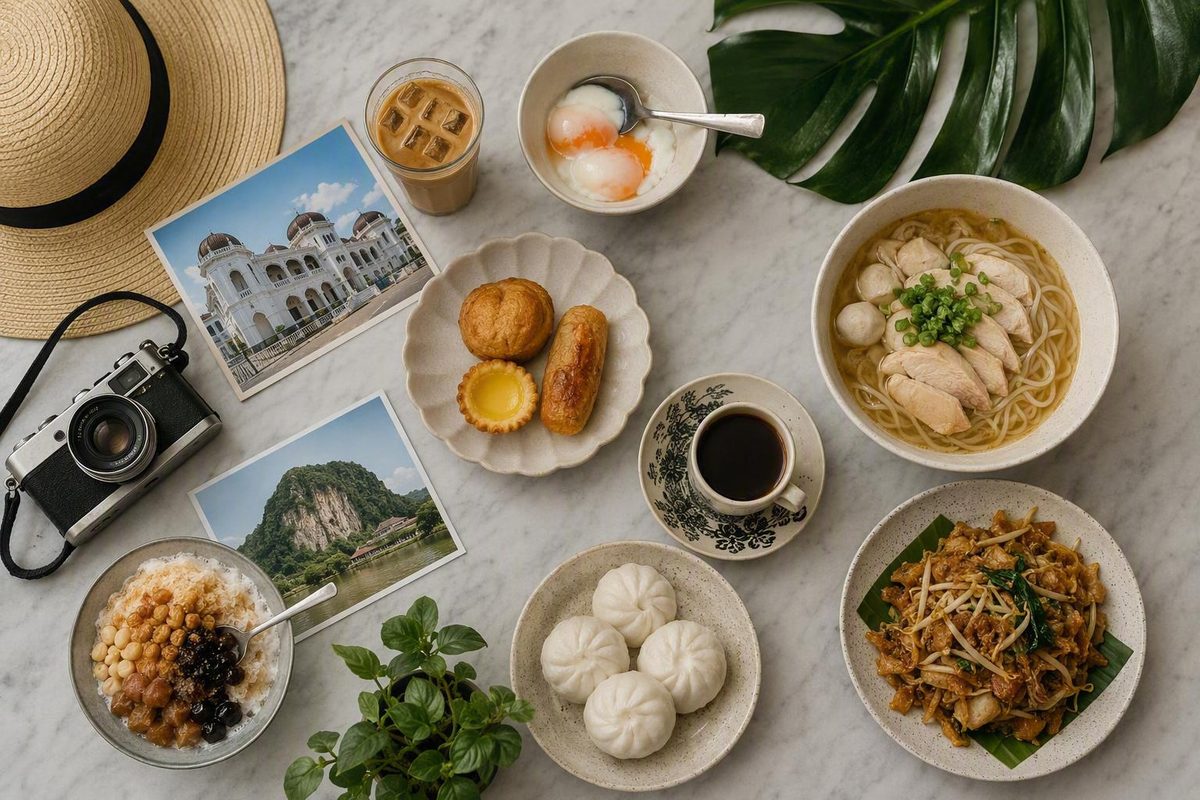
Ipoh, Malaysia, is best approached as two distinct travel experiences. The first is a compact heritage-and-food route around the railway station and Old Town. The second is a limestone landscape of cave temples and lakes that requires separate transport.
Trying to combine every headline attraction in one day creates unnecessary transfers and leaves little room for museums, meals, heat, rain, or unexpected closures. A better plan is geographical: explore the center on foot, then add one carefully chosen outer cluster if your schedule and current access conditions allow.
This guide focuses on durable route planning rather than current prices, timetables, opening hours, or admission rules. Those operational details are not established by the available evidence and should be checked through the relevant transport provider, museum, temple, or attraction shortly before departure.
Ipoh at a glance: where it is and why travelers stop
Ipoh is the capital of Perak, in Kinta District, and lies on the Kinta River. Its position on Peninsular Malaysia’s west-coast corridor places it between Kuala Lumpur and George Town, making it a practical stop on journeys toward Penang.
The city is associated with tin-mining heritage, colonial-era civic buildings and shophouses, limestone hills, Buddhist cave temples, street art, white coffee, and local food. These attractions are not concentrated in one tourism precinct. The railway station, heritage architecture, museums, lanes, and many murals belong to the central walking day; the principal cave temples and limestone sights sit outside that zone.
Ipoh lies on the west-coast railway and the North–South Expressway, and Sultan Azlan Shah Airport serves the city. Intercity buses commonly use Terminal Amanjaya outside the central heritage area, so bus passengers generally need an additional transfer that rail arrivals may not need. These geographic and infrastructure details are summarized in the overview of Ipoh.
The main planning distinctions are:
- Old Town is the principal walking zone, beginning around Ipoh Railway Station.
- New Town is a separate extension for food, murals, and other city stops.
- The Gunung Rapat cave temples require additional transport.
- Perak Cave Temple is another outer-city excursion, not part of an Old Town walk.
- Tasik Cermin needs its own access plan and should never be assumed to be an automatic add-on.
Ipoh therefore suits travelers prepared to choose a focus. One day provides a selective introduction. Two days make it easier to combine heritage, food, and limestone scenery without spending most of the visit moving between zones.
From tin boomtown to Perak capital
Ipoh became the capital of Perak in 1937, replacing Taiping, and received city status in 1988. These dates and the city’s connection to tin are documented in the same general historical overview cited above.
The history remains visible in central Ipoh.
That context makes the center easier to understand as a connected historical landscape rather than a collection of unrelated photo stops.
Han Chin Pet Soo brings that history to a more personal scale. The museum presents Hakka heritage and aspects of mining-era life through its setting, period décor, and displays. A sponsored travel feature also describes its interpretation of miners’ daily lives, but its promotional context should be kept in mind. Current admission, reservation, and guided-visit arrangements are not established here, so confirm them directly before organizing a day around the museum.
The contraction of tin mining changed Ipoh’s economic direction. It is reasonable to connect that decline with later efforts to develop other activities, but the evidence does not establish tourism’s exact current contribution to the city’s economy.
It is also important to distinguish documented history from stories repeated in tourism copy:
- Concubine Lane’s present commercial character is easy to establish, but colorful explanations for its name are weakly documented.
- Accounts of monks founding particular cave temples often combine local legend with later construction history.
- White coffee is closely associated with Ipoh, but claims naming one definitive inventor or origin should not be presented as settled fact.
Treat such stories as traditions when a museum, temple, or local guide identifies them that way—not as substitutes for documented history.
Plan Ipoh by four practical sightseeing clusters
The simplest itinerary uses four broad planning clusters. They are not rigid official districts; they are a way to reduce cross-city transfers and preserve time for meals, shade, indoor stops, and weather changes.
1. Railway Station and Old Town
Begin at Ipoh Railway Station and the nearby civic buildings. Continue toward the Padang, Birch Memorial Clock Tower, heritage shophouses, Han Chin Pet Soo, Kong Heng Square, Concubine Lane, cafés, and Old Town murals.
This is the main car-free sightseeing cluster. Although geographically compact, it can occupy most of a day once you include a museum, lunch, coffee, photography, and indoor breaks.
2. New Town and food areas
Across the Kinta River, New Town is a separate extension rather than another name for Old Town. The Kinta River divides the historic Old Town to the west from New Town to the east, according to a first-time Malaysia itinerary that includes Ipoh.
Use this side of the city for a planned meal, Mural Art’s Lane, or another mapped stop. Do not assume that every well-known food business is beside Concubine Lane. If a restaurant requires crossing town, treat it as a deliberate destination rather than squeezing it between Old Town landmarks.
3. Gunung Rapat cave-temple zone
Sam Poh Tong, Nam Thean Tong, and Ling Sen Tong form the clearest multi-temple cluster. Available travel reporting describes them as adjacent and practical to combine, subject to current access. Kek Lok Tong lies in the broader southeastern limestone area, but its entrance should be mapped separately rather than assumed to be the next stop on foot.
Use a car, ride-hailing service, or currently verified local transport. Historic bus references and old journey estimates should not be treated as current instructions.
4. Standalone limestone excursions
Perak Cave Temple and Tasik Cermin are grouped here only because neither belongs to the central walking route. They are not necessarily an efficient pair.
Perak Cave Temple is an outer-city destination with an interior temple and stairs toward an elevated viewpoint. Tasik Cermin is a lake attraction with separate entry and operating considerations. Treat either as a planned excursion, not as a casual extension of Old Town.
This structure makes the day more resilient. If rain disrupts an outdoor walk, move to a museum, bookstore, café, heritage interior, or longer meal. If an outer attraction is unavailable, use the saved transfer time in the center rather than chasing another distant site.
A self-guided route through Ipoh Old Town
Start at Ipoh Railway Station, especially if arriving by train. The station places you beside the central civic landscape, allowing sightseeing to begin without first crossing the city.
Orient yourself around the nearby Town Hall, Court House, mosque, Padang area, and Birch Memorial Clock Tower. These landmarks are consistently grouped in travel coverage of central Ipoh and provide a useful introduction to the city’s administrative and colonial-era built heritage.
Use the Ipoh Heritage Trail as the route’s organizing spine rather than jumping between disconnected map pins. You do not need to complete every segment.
A practical sequence is:
- Ipoh Railway Station
- Town Hall and nearby civic buildings
- Padang area and Birch Memorial Clock Tower
- Heritage shophouse streets
- Han Chin Pet Soo, if a visit is confirmed
- Kong Heng Square and BookXcess
- Concubine Lane and adjoining streets
- Art of Old Town murals
- Coffee, lunch, or an indoor break
- New Town or Mural Art’s Lane only if time, weather, and energy permit
Treat Han Chin Pet Soo as a planned visit until its current arrangements are confirmed. If you secure a scheduled entry, build the walking route around it. If not, continue toward Kong Heng Square rather than waiting nearby in the hope of admission.
Kong Heng Square demonstrates how older commercial buildings have been adapted for shops, cafés, and cultural uses. BookXcess Kong Heng Ipoh occupies a former bank and incorporates its vault and safe-deposit boxes into the bookstore design, according to a detailed Ipoh travel guide. These interiors also provide a useful pause from outdoor walking.
Concubine Lane is short. Its contemporary appeal comes from the concentration of shops, cafés, restaurants, and stalls rather than from the distance covered. Pass through patiently, avoid blocking entrances for photographs, and explore the connecting streets instead of treating this single lane as the whole of Old Town. There is no need to repeat uncertain stories about its name to appreciate the surviving lane and shophouse setting.
Street-art planning requires a distinction between two locations:
- Art of Old Town is described as a trail of seven labeled murals in and around the historic center.
- Mural Art’s Lane is a separate street-art concentration east of the Kinta River.
Individual murals can weather, become obstructed, or change over time, so use a current map on the day rather than expecting every work to appear exactly as shown in an older guide.
Do not treat the compact map as a reason to walk continuously through the middle of the day. Break the route with white coffee, lunch, a confirmed museum visit, BookXcess, or another indoor stop. Architecture and murals are often more enjoyable in shorter segments than in one uninterrupted circuit.
The central area can occupy anything from several hours to a full day. Travelers interested mainly in façades, lanes, and quick photographs may finish earlier. Anyone adding museum interpretation, a slow meal, coffee, murals, and browsing should prioritize rather than assume every stop will fit.
Choosing among Ipoh’s cave temples and limestone sights
Ipoh’s cave temples are places of worship within the city’s limestone landscape, not simply scenic sets. Dress and behavior should respect their religious function. Travel guidance for the temples advises covering shoulders and knees; visitors should also speak quietly, observe posted photography rules, avoid interrupting ceremonies, and leave space around shrines and worshippers. The clothing guidance is noted in this firsthand comparison of Ipoh’s attractions.
Sam Poh Tong and the Gunung Rapat cluster
Sam Poh Tong combines cave chambers, religious art, a garden, pond, and pagoda setting. Its strongest planning advantage is proximity to Nam Thean Tong and Ling Sen Tong. If all three are accessible, they can form an efficient cluster without repeated long transfers.
Choose this cluster when variety and efficient routing matter more than concentrating on one large cave space. Do not assume that every interior, garden, or connecting area will be accessible simply because the main entrance is open. Use precise map pins for each stop and decide in advance how you expect to leave the cluster.
Kek Lok Tong
Kek Lok Tong is associated with a large cave interior, limestone formations, religious sculptures, and a garden area. It offers a cave-and-garden experience rather than simply a sequence of shrines.
Older travel reports have described flooding or temporary closure affecting access. Those reports show that disruption has occurred; they do not establish the site’s current condition. Confirm the present situation directly before making Kek Lok Tong the sole purpose of a tightly timed trip.
Choose Kek Lok Tong when spacious cave scenery and a garden matter more than maximizing the number of temples. Map its entrance independently instead of assuming that its location in the broader southeastern limestone zone makes it walkable from the Sam Poh Tong group.
Perak Cave Temple
Perak Cave Temple combines interior religious features and murals with stairs leading toward an elevated viewpoint. It suits visitors interested in both the temple interior and an optional climb.
The viewpoint requires more physical effort than entering the lower temple. Travelers should make their own decision based on current on-site conditions and personal ability rather than treating the climb as compulsory. Anyone concerned about mobility should ask the site directly whether the areas they most want to see can be reached without taking the full stair route.
Choose Perak Cave Temple when a viewpoint is a priority and your group is comfortable with a climb. Because it is outside both Old Town and the compact Gunung Rapat trio, allocate separate transport for it.
Tasik Cermin
Tasik Cermin offers a different experience: lake water enclosed by limestone scenery. One detailed travel source describes two lakes, Tasik Cermin 1 and Tasik Cermin 2, along with forms of boat access. That description does not verify current operations, entry points, fees, or weather restrictions.
Treat Tasik Cermin as a conditional excursion. Before traveling, establish:
- Which lake or entrance you intend to visit
- Whether access is available that day
- Whether a boat is involved
- Where the correct arrival or boarding point is
- How weather affects the visit
- How you will return to the city
Do not ask a driver only for “Mirror Lake” without checking the precise destination.
A quick decision framework
- Choose Sam Poh Tong and its neighboring temples when efficient clustering is the priority.
- Choose Kek Lok Tong for a cave-and-garden experience, provided current access is confirmed.
- Choose Perak Cave Temple when you want an interior temple and are comfortable considering a viewpoint climb.
- Choose Tasik Cermin when limestone-lake scenery matters more than visiting a temple.
For limited mobility, strollers, or young children, do not infer full accessibility from an entrance photograph or map listing. Ask the relevant site about gradients, steps, surfaces, seating, restrooms, vehicle drop-off points, and which areas can be visited without climbing. Without current operator information, this guide cannot establish that any complete route is step-free.
Avoid unsupported superlatives. Claims that a site is Malaysia’s largest cave temple, Ipoh’s definitively oldest temple, or home to the country’s largest reclining Buddha are inconsistently supported and unnecessary for choosing an itinerary.
What to eat and drink in Ipoh
Ipoh food planning works better as a sequence of meals than as a race through famous names. Start with coffee or breakfast, choose one substantial lunch, pause, and add a later snack or dinner only if it suits your appetite.
White coffee is one of the drinks most consistently associated with Ipoh. It is commonly described through its roasting style and rich, sweet presentation, but stories identifying one definitive inventor or origin should be treated cautiously. Sweetness and milk levels may vary by preparation.
Nga choi kai, often translated as bean-sprout chicken, consists of poached chicken served with dressed bean sprouts. One supplied travel account describes the sprouts as seasoned with light soy sauce, sesame oil, and white pepper.
Hor fun refers to flat rice noodles and appears in several preparations, including soup-based chicken noodle dishes. Do not collapse hor fun, curry noodles, laksa, char kway teow, and wanton mee into a single category. Their noodles, broths, seasonings, toppings, and cooking methods differ.
Other recurring options include:
- Salted chicken
- Tofu dishes
- Curry rice, including nasi ganja
- Laksa
- Chicken hor fun
- Curry noodles
- Char kway teow
- Wanton mee
- Sweet snacks and bakery items
Yong Suan is associated in the supplied evidence with curry rice and a selection of chicken, fish, and squid dishes. That makes it an example of the nasi ganja style, not a guarantee of its current menu, price, wait, or availability.
A sponsored feature historically described Restoran New Hollywood as halal-certified and associated it with chicken hor fun, char kway teow, and wanton mee. Because certification and menus can change, diners who require halal food should verify the current position directly rather than relying on an older promotional article.
The same principle applies to vegetarian, vegan, allergy-related, and other dietary requirements. Ask the business directly about ingredients, broths, sauces, preparation methods, shared equipment, and any certification relevant to your needs. The available evidence does not establish current suitability at individual restaurants.
A balanced food day might look like this:
- Morning: white coffee with breakfast
- Midday: bean-sprout chicken, hor fun, curry rice, or another substantial meal
- Afternoon: coffee, tofu, or a sweet snack during a rest
- Evening: one additional dish if appetite and schedule allow
Named restaurants are best treated as examples for further checking, not timeless recommendations. Menus, queues, certification, and opening arrangements are all time-sensitive.
Getting to Ipoh and moving around without a car
Ipoh is served by the west-coast railway, the North–South Expressway, intercity buses, and Sultan Azlan Shah Airport. For travelers arriving from Kuala Lumpur or Butterworth, rail can be especially convenient because Ipoh Railway Station is beside the central heritage zone.
Schedules, fares, seat availability, service patterns, and final departures are volatile. Check the current railway operator before buying accommodation or committing to a day trip. The final practical return service matters more than an old estimate of how long a journey usually takes.
Bus travel can fit routes from Kuala Lumpur, Penang, and the Cameron Highlands. The important planning detail is the arrival point: intercity buses commonly use Terminal Amanjaya, outside Old Town. Allow for a separate transfer and verify the available options shortly before travel. Do not assume that an intercity bus stops beside Concubine Lane or the railway station.
Once in central Ipoh, walking is practical for:
- Ipoh Railway Station and nearby civic buildings
- The heritage trail
- Padang and Birch Memorial Clock Tower
- Han Chin Pet Soo
- Kong Heng Square
- Concubine Lane
- Old Town murals
- Selected cafés and restaurants
Additional transport is generally required for:
- Sam Poh Tong
- Nam Thean Tong
- Ling Sen Tong
- Kek Lok Tong
- Perak Cave Temple
- Tasik Cermin
Ride-hailing is commonly mentioned in available travel accounts, but those accounts do not establish current vehicle availability at every outer attraction. Before leaving the center, make sure you have a workable return plan, mobile connectivity, and enough phone power to request transport. Where availability is uncertain, investigate a prearranged pickup rather than assuming a car will appear immediately.
Driving offers more flexibility for combining outer attractions, but it does not remove the need to plan. Parking, traffic, opening arrangements, closures, and lake access still determine what is feasible.
Because no current official transport or attraction material is included in the evidence used for this guide, complete this verification checklist through the relevant providers before departure:
| Check | What to confirm |
|---|---|
| Rail | Ticket, station, departure time, seat availability, and final return service |
| Intercity bus | Departure point, arrival terminal, and onward transfer from Terminal Amanjaya |
| Han Chin Pet Soo | Opening day, reservation method, entry format, and visit time |
| Cave temples | Current opening status and any restricted areas |
| Tasik Cermin | Correct entrance, access method, boat operation if relevant, and weather policy |
| Local transfer | Precise destination pin and return arrangement |
| Weather fallback | Indoor or central alternatives that do not depend on caves or lakes |
For a Kuala Lumpur day trip, choose either a detailed Old Town day or a shortened central route plus one outer cluster. Old Town, several cave temples, Tasik Cermin, multiple food stops, and a timed return train do not form a comfortable or resilient single-day plan.
One-day and two-day Ipoh itineraries
One day is enough for selected highlights. Two days reduce backtracking and provide a more practical way to combine the heritage center with the limestone outskirts.
One day by rail: Old Town plus one cave temple
Morning
Arrive at Ipoh Railway Station and begin with the station, Town Hall, Court House, mosque, and Padang area. Follow the heritage trail toward Birch Memorial Clock Tower and the commercial streets.
Pause for white coffee rather than moving continuously through the center.
Late morning
Visit Han Chin Pet Soo if you have confirmed entry. Otherwise, continue toward Kong Heng Square and BookXcess. Walk through Concubine Lane, then look for several Art of Old Town murals.
Lunch
Choose one substantial local meal. Bean-sprout chicken, hor fun, curry rice, or another noodle dish is enough; avoid crossing the city repeatedly to collect famous foods.
Afternoon
Add one outer temple only if its current access, transport, and your return schedule align:
- Sam Poh Tong for the Gunung Rapat setting
- Kek Lok Tong for cave-and-garden scenery
- Perak Cave Temple if you want the option of a viewpoint climb
Return to the center with a generous margin before your train. Tasik Cermin should not be treated as an automatic addition.
One day in the city only
This is the better plan for museum visitors, photographers, slow walkers, food-focused travelers, or anyone facing uncertain weather.
Spend the morning around the station and civic buildings, then follow the heritage trail. Visit Han Chin Pet Soo if your entry is confirmed, explore Kong Heng Square and BookXcess, eat lunch, and continue through Concubine Lane and the Old Town murals.
After an indoor break, cross toward New Town for Mural Art’s Lane or a planned meal if time permits. Return toward the station without the pressure of an outer-city transfer.
This version covers fewer attraction categories but can provide a fuller understanding of the center. It leaves more room for architectural details, museum interpretation, coffee, and an unhurried meal.
Two days: heritage first, limestone second
Day one: Old Town, museums, murals, and food
Begin at the railway station and use the heritage trail to connect the civic quarter with the commercial streets. Schedule Han Chin Pet Soo if current arrangements allow. Continue to Kong Heng Square, BookXcess, Concubine Lane, and the Old Town murals.
Pace food across the day: coffee or breakfast, one substantial lunch, an afternoon pause, and an optional dinner. If energy remains, extend into New Town rather than introducing a distant temple transfer.
Day two: one limestone circuit
Choose one primary route.
Option A: Gunung Rapat cluster
Visit Sam Poh Tong, Nam Thean Tong, and Ling Sen Tong if all are currently accessible. Their reported proximity makes this the most efficient multi-temple option.
Add Kek Lok Tong only if its access is confirmed and the mapped transfer suits your transport plan. “Nearby” on a city map does not necessarily mean a seamless entrance-to-entrance walk.
Option B: Perak Cave Temple
Choose Perak Cave Temple as the main outing if you want interior murals and the option of climbing toward the viewpoint. Do not automatically combine it with the Gunung Rapat trio; doing so can turn the day into a sequence of transfers and entrances rather than meaningful visits.
Option C: one temple plus Tasik Cermin
Combine a temple with Tasik Cermin only after confirming the lake entrance, access method, weather conditions, and return transport. Keep the second half of the day flexible in case conditions change.
Rain or closure fallback
If an outer attraction is unavailable, return to indoor and semi-indoor city stops:
- Han Chin Pet Soo, if entry is available
- BookXcess and adapted heritage interiors
- Cafés and a longer lunch
- Covered shophouse areas
- Food-focused stops in Old Town or New Town
- Short mural walks between showers
Staying near the railway station or Old Town is a practical editorial choice for travelers prioritizing rail and walking. It reduces arrival and departure friction and keeps the main heritage route close. It is not universally the best base: travelers focused on driving or a particular outlying attraction may prefer another area.
Last check before leaving
- Confirm attraction opening days and hours.
- Reserve museum or guided visits where required.
- Check current cave-temple access.
- Verify Tasik Cermin’s entrance and operating arrangements.
- Pack clothing that covers shoulders and knees for temples.
- Confirm the final train, bus, or onward transfer.
- Verify dietary requirements and certification directly.
- Keep a weather fallback that does not depend on caves or lakes.
Frequently asked questions
Is Ipoh worth visiting for one day?
Yes, if you treat one day as a selective introduction rather than an attempt to cover every attraction. Rail arrival is particularly convenient for a central itinerary because the station is beside Old Town. You can see the civic architecture, follow part of the heritage trail, visit the lanes and murals, drink white coffee, and eat one substantial local meal.
Add no more than one outer attraction, and only when access, transport, and your return schedule are confirmed. If museums, photography, or food matter more, skip the caves and spend the full day in the center.
How many days do you need in Ipoh?
Allow one day for Old Town and selected highlights. Choose two days if you want to combine the heritage center with cave temples or Tasik Cermin at a more comfortable pace.
The difference is logistical rather than universal. Fast-moving visitors may be satisfied with several central hours. Museum visitors, food-focused travelers, and anyone wanting a limestone excursion will benefit from staying overnight.
Can you walk to Ipoh’s main attractions from the railway station?
You can walk from Ipoh Railway Station to many central attractions, including nearby civic buildings, the Padang area, heritage streets, Han Chin Pet Soo, Kong Heng Square, Concubine Lane, and Old Town murals.
The principal cave temples and Tasik Cermin do not belong to the same walking circuit. Plan a car, ride-hailing trip, or currently verified local transport for those outer attractions.
Which Ipoh cave temples can be visited together?
Sam Poh Tong, Nam Thean Tong, and Ling Sen Tong form the clearest cluster and are described in available travel reporting as adjacent, subject to current access.
Kek Lok Tong lies in the broader southeastern limestone area but should be mapped as a separate entrance. Perak Cave Temple is better treated as another outer-city excursion, particularly if you intend to climb toward its viewpoint.
What should visitors check before traveling to Ipoh?
Confirm transport tickets, the exact arrival station or terminal, and the final return service. Check Han Chin Pet Soo’s current reservation process, cave-temple access, and Tasik Cermin’s entrance and operating arrangements.
Also verify temple clothing expectations, mobility requirements, local transfers, and dietary needs directly. Keep an indoor fallback for rain or closures, and avoid building the entire day around operating information found only in older travel posts.
The central planning rule is simple: choose your itinerary by geography, not attraction count. Use Old Town as the walkable heritage-and-food core, then add one carefully selected limestone cluster if time and current conditions allow. A focused day introduces Ipoh well; two days make the combination substantially more comfortable.