 KL Observer
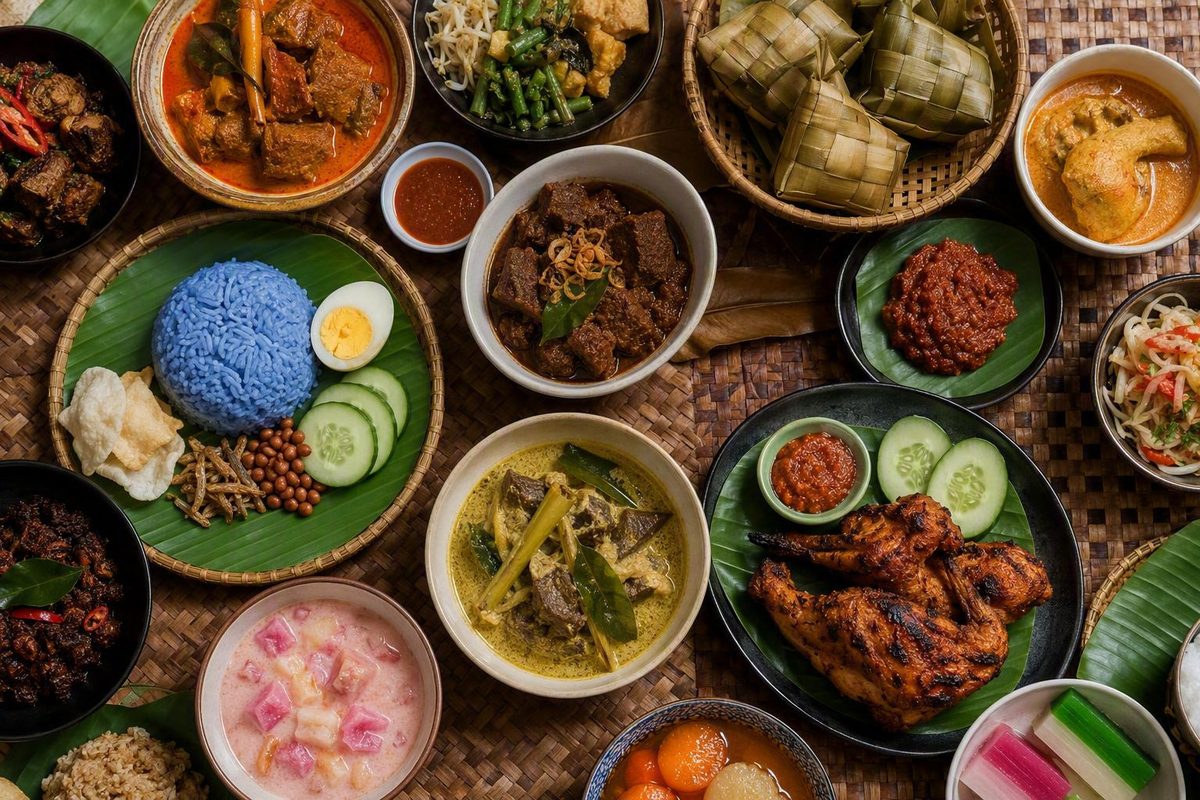
Malay food in Malaysia becomes easier to understand once you stop treating “Malay” and “Malaysian” as interchangeable. Malaysia has a broad, multicultural food landscape. Ethnic Malay cooking is one important tradition within it, alongside Chinese Malaysian, Indian-Muslim, Nyonya, East Malaysian, and regional or cross-cultural cuisines.
For a first Malay meal, look for rice accompanied by sambal, vegetables, gravy, and a grilled or stewed protein. Nasi lemak, nasi campur, ikan bakar, rendang, satay, ketupat, and nasi ulam are useful starting points. Coconut milk, pandan, belacan, lemongrass, galangal, turmeric, and aromatic herbs appear frequently, but no single ingredient or flavor defines every dish.
This is an introductory, Kuala Lumpur-oriented guide rather than a complete survey of Malay traditions in every Malaysian state. Culinary labels are used to make ordering clearer, not to establish a rigid canon. Recipes and accompaniments can change by state, community, household, occasion, and vendor. Venue-specific ingredients and dietary status should always be confirmed directly when they matter.
Malay Food Is Not the Same as All Malaysian Food
Malay cuisine refers to culinary traditions associated with ethnic Malays. Malaysian cuisine is the wider national food landscape: everything eaten and developed across Malaysia’s many communities, including but not limited to Malay food. This distinction is also made in a general overview of traditional Malay cuisine.
A visitor might encounter Malay nasi lemak, Indian-Muslim roti canai, Chinese Malaysian wantan mee, Nyonya curry, and a regional laksa during the same day. All can be Malaysian food experiences, but they do not all belong to the same ethnic culinary tradition.
This guide uses the following practical labels:
- Malay for food closely associated with ethnic Malay cooking in Malaysia.
- Adopted or adapted in Malay cooking for dishes with roots elsewhere that have established Malay versions.
- Indian-Muslim for food strongly associated with mamak and related Muslim Indian traditions.
- Chinese Malaysian for dishes connected primarily with Malaysian Chinese communities.
- Nyonya for the distinct Peranakan traditions shaped by Chinese and local influences.
- Regional or cross-cultural when a dish has several community associations or changes substantially by location.
These categories are guides, not walls. Malaysia’s food has developed through long contact among communities, and one dish name can cover different ingredients, methods, and cultural contexts. A Malaysian food-business owner’s discussion of common misconceptions about Malaysian food likewise distinguishes the national category from its Malay, Chinese, Indian, Eurasian, and fusion traditions.
Roti canai illustrates why labels help. It is a flaky flatbread commonly served with dhal or curry, but it is strongly associated with Indian-Muslim mamak food culture rather than exclusively with ethnic Malay cooking. Nasi kandar, particularly associated with Penang, likewise centers on rice accompanied by a selection of Indian-style curries and proteins.
The same care applies to Chinese Malaysian food. Char kway teow, Hokkien mee, mee kolok, wantan mee, chicken rice, and bak kut teh are all found in Malaysia, but they do not belong on a narrowly defined list of Malay essentials. Some common or traditional versions contain pork, char siu, pork broth, or lard, making precise labels important for diners with halal or pork-free requirements.
Laksa is more complicated still. It is better understood as a family of regionally varied, cross-cultural noodle dishes than as the exclusive property of one ethnic tradition. Penang asam laksa, curry laksa, and Sarawak laksa differ substantially in broth, toppings, and regional context.
The point is not to police ownership or identify one uniquely “authentic” version. It is to help a first-time visitor recognize what kind of food is being ordered, anticipate possible ingredients, and understand why two vendors may serve very different preparations under the same name.
The Building Blocks of a Malay Meal
Rice commonly anchors a Malay meal. Instead of expecting fixed Western-style courses, picture rice accompanied by several dishes that can be eaten together: fish or meat, one or more vegetables, a curry or gravy, and sambal or another condiment.
This structure lets the diner adjust each mouthful. Rice can soften an intense condiment; gravy contributes moisture and richness; vegetables provide contrast; and sambal can be used sparingly or generously. At a shared table, several dishes may be served simultaneously. At a nasi campur counter, the diner creates a similar arrangement by selecting from prepared trays.
A practical beginner’s template is:
- Rice as the base.
- Fish, chicken, beef, or another protein, grilled, fried, curried, or stewed.
- A vegetable dish, raw accompaniment, or herb selection.
- Gravy or curry, added separately or supplied by one of the dishes.
- Sambal or another condiment for heat, savoriness, sweetness, or acidity.
Coconut milk and pandan
Coconut milk contributes body and richness to rice preparations, gravies, curries, sweets, and some regional noodle soups. It is especially familiar in nasi lemak, where the rice is commonly cooked with coconut milk.
Pandan is valued for fragrance rather than chile heat. Its leaves can perfume rice and sweets. In nasi lemak, coconut milk and pandan together provide much of the rice’s recognizable aroma.
Neither ingredient is universal. A grilled fish, fresh herb preparation, clear soup, or dry condiment may not taste coconut-rich at all. “Coconut milk is important in Malay cooking” is a useful tendency; “all Malay food is creamy” is not.
Sambal and belacan
It is a broad family of chile-based condiments and preparations. Depending on the cook and dish, sambal may be cooked or relatively fresh, smooth or coarse, sweet or sharp, moderately warm or intensely hot.
Belacan is fermented prawn paste. Because belacan is seafood-derived, diners avoiding seafood should ask about an unfamiliar sambal rather than judging it by appearance alone.
Herbs, roots, and spices
Frequently cited ingredients in Malay cooking include lemongrass, galangal, turmeric, pandan, basil, kesum, torch ginger, nutmeg, mustard seed, and fenugreek. Onion, garlic, chile, coconut products, and fermented seafood seasonings may also contribute to a dish’s base.
This is not a mandatory checklist. Torch ginger may be prominent in one regional preparation and absent from another. Mustard seed or fenugreek may appear through particular regional and historical influences. Lemongrass and galangal are both aromatic ingredients, but they are not interchangeable, and a dish need not contain both.
Malay food is often described as aromatic, spicy, or coconut-rich. All three descriptions can be accurate, but none applies universally. “Spicy” may also describe spice fragrance rather than overwhelming chile heat. Ask about the particular dish instead of expecting one fixed heat level across the cuisine.
Rice Dishes to Know First
Rice dishes provide a straightforward introduction because they show how condiments, proteins, vegetables, and gravies fit around the staple.
Nasi lemak
Nasi lemak is one of the clearest starting points for Malay food in Malaysia. Its familiar base is rice cooked with coconut milk and pandan, accompanied by sambal, ikan bilis or dried anchovies, peanuts, cucumber, and egg. Together, these elements bring fragrance, richness, heat, saltiness, crunch, and freshness to one plate.
The format varies widely. A compact breakfast portion may consist mainly of rice, sambal, anchovies, peanuts, and a piece of egg, sometimes wrapped for convenient eating. A larger plate can include fried chicken, fish, curry, sambal squid, or rendang. These common components and variations are described in an overview of nasi lemak and other Malaysian dishes.
Nasi lemak is often called Malaysia’s national dish in travel writing, but the supplied evidence does not establish an official designation. It is more accurate—and sufficient—to describe it as a central, widely recognized introduction to Malay cooking.
For a first order, begin with the basic set and add one protein if you want a more substantial meal. This makes it easier to notice the coconut-pandan rice and sambal instead of covering them with several rich side dishes.
Nasi campur
Nasi campur means, in practical terms, rice with a mixed selection of prepared dishes. The diner begins with rice and chooses from the available meat, fish, vegetables, curries, gravies, and sambals.
It is especially useful for beginners because one plate can provide several contrasts. You might select grilled fish, one vegetable, a spoonful of curry, and a little sambal rather than committing to one large main dish. A broad Malaysia food guide describes nasi campur as rice with a customer-selected assortment of prepared foods.
A restrained plate is usually more informative than a crowded one. Choose dishes that differ in method and texture: grilled fish, for example, with a leafy vegetable and one gravy-based preparation. Keeping the gravies partly separate also lets you taste each component before mixing it with the rice.
Do not infer ingredients from appearance. A vegetable dish can contain prawn paste, anchovies, seafood seasoning, or meat stock, while a dark gravy does not reveal which protein or seasoning was used.
Nasi ulam
It offers a different direction from coconut-rich nasi lemak, with its appeal centered on the relationship between rice and aromatic plant ingredients rather than a single prescribed topping set.
Recipes and herb combinations differ, so it is best approached as a category to ask about rather than a fixed formula to memorize. If you see it, ask which herbs and condiments are included in that vendor’s version.
Ketupat and nasi himpit
Ketupat and nasi himpit are forms of compressed rice particularly associated with festive meals such as Hari Raya.
For a visitor, the most noticeable distinction is texture. Unlike a loose mound of steamed rice, compressed rice can be cut into pieces and paired with rich sauces. Exact methods and presentations vary, and a household’s festive arrangement need not resemble a commercial serving at another time of year.
Across all these rice dishes, accompaniments matter as much as the rice. Nasi lemak will not always arrive with every familiar topping, nasi campur depends on the day’s prepared selection, and festive rice dishes change by household and regional practice.
Grilled, Stewed, and Skewered Malay Favorites
Once you understand the rice base, add a protein that introduces a contrasting cooking method. Ikan bakar offers char and chile; rendang provides concentrated coconut-and-spice depth; and satay offers a smaller grilled format suitable for sharing.
Ikan bakar
Ikan bakar is grilled fish. One common preparation coats or marinates the fish with chile and other seasonings before grilling it over charcoal, sometimes on a banana leaf. It is generally served with rice and one or more condiments.
The category is broad because the fish, marinade, wrapping, sauce, and degree of charring can all change. Some versions emphasize a chile coating; others leave the flavor of the fish and smoke more prominent. Condiments may contribute sweetness, acidity, fermented savoriness, or more heat.
For an introductory meal, ikan bakar is useful when you want a recognizable protein beside rice, vegetables, and sambal. It can also provide a textural contrast to a coconut-rich gravy. The charcoal-grilled, banana-leaf preparation is documented alongside other common Malaysian serving styles.
Ask which fish is available and whether the coating or condiment contains belacan. If heat is a concern, request the condiment separately when possible, while remembering that the fish itself may already be heavily seasoned.
Rendang
Rendang is meat slowly cooked with coconut milk and spices until the flavors become concentrated. In a documented beef preparation, kerisik—typically toasted coconut—is included with the coconut milk and spices.
Rendang has Minangkabau roots, while established Malay adaptations also exist. Historical roots and later adoption are not mutually exclusive. A description of beef rendang and satay identifies the former with Minangkabau cooking and the latter with Javanese roots, while also showing their established place among food eaten in Malaysia.
Rendang can appear at special occasions, but it is not limited to ceremonial meals. Because its flavors are concentrated, a modest portion can be sufficient when the plate already includes gravy and sambal.
For a beginner, rendang is a strong alternative to ikan bakar rather than a required addition. Choose grilled fish if you want smoke and a distinct fish texture; choose rendang if you want a slow-cooked, deeply seasoned meat dish.
Satay
Satay consists of marinated meat threaded onto skewers and chargrilled, commonly served with peanut sauce. It works well as a shared snack or as part of a meal with compressed rice and accompaniments.
The available meat, marinade, sauce, and accompaniments vary, so “satay” names a format and family of preparations rather than one universal recipe. Its Javanese roots coexist with later regional adaptations and an established place in Malay and wider Malaysian food culture.
Anyone avoiding peanuts should ask about the sauce and preparation before ordering. The meat may also contain a marinade whose ingredients are not visible, so the dish name alone cannot establish suitability for an individual dietary requirement.
There is no need to order ikan bakar, rendang, and satay in one sitting. A balanced first plate might contain rice, one main protein, one vegetable, and sambal. Satay can be saved as an optional shared snack later.
Popular Malaysian Foods That Need More Precise Labels
Some of Malaysia’s most familiar foods are frequently placed on “Malay food” lists even when another label is more informative. Clarifying those labels does not make the dishes less Malaysian. It helps visitors understand where they fit and what ingredients they may contain.
Roti canai is Indian-Muslim, not a bowl of dhal
Roti canai is a flaky flatbread made by stretching and folding dough before cooking it on a hot surface. It is commonly served with dhal or curry and is strongly associated with Indian-Muslim mamak eateries.
The words roti canai refer to the bread, not to the dhal beside it. This matters when ordering because the accompaniment can vary. One venue may supply dhal, another curry gravy, and another several sauces. Additional fillings and styles may be available, but the plain bread remains the reference point.
Roti canai belongs in a guide to eating in Malaysia, yet it should be labeled Indian-Muslim rather than presented as exclusively ethnic Malay.
Nasi kandar is also strongly associated with Indian-Muslim food culture
Nasi kandar consists of rice served with a diner’s choice of Indian-style curries and proteins. Fish, chicken, mutton, seafood, vegetables, and mixed gravies may appear, depending on the venue. It has a particularly strong association with Penang and Indian-Muslim food culture.
Its ordering structure can resemble nasi campur because both begin with rice and a selection of prepared dishes. The culinary context is the important distinction: nasi kandar is associated with Indian-Muslim curry traditions, while nasi campur is a broader rice-and-assorted-dishes format that can be used to sample Malay cooking.
Nyonya cuisine is a distinct tradition
Nyonya, or Peranakan, cuisine should not be treated as another word for Malay food or for Malaysian cuisine as a whole. It is a distinct Malaysian tradition shaped through cultural exchange, with regional expressions that can differ from one another.
Nyonya and Malay dishes may share ingredients or techniques, just as both can overlap with Chinese and Indian cooking. Shared ingredients do not erase the value of accurate labels.
Chinese Malaysian dishes may contain pork or lard
Char kway teow, Hokkien mee, wantan mee, chicken rice, bak kut teh, and mee kolok belong to Malaysia’s broader culinary landscape rather than an ethnic Malay essentials list.
Ingredient awareness is important:
- Char kway teow is a stir-fried flat rice-noodle dish. Some traditional versions use pork fat or include Chinese sausage.
-
Hokkien mee can refer to substantially different dishes by location. A dark fried version may contain pork or lard, while another regional form can be broth-based.
-
Chicken rice generally includes chicken and rice cooked with chicken broth, so it should not be assumed vegetarian.
- Bak kut teh is traditionally centered on pork cooked in an herbal broth.
These ingredient patterns are documented in descriptions of Chinese Malaysian noodle and rice dishes. Mee kolok also requires care: one documented Kuching version uses egg noodles, lard, and roast pork.
These are general descriptions, not guarantees about every vendor. Pork-free adaptations can exist, and one regional Hokkien mee may differ greatly from another. The useful question is not only “What is this dish usually?” but also “How does this particular kitchen prepare it?”
Precise labeling is not about declaring one community’s version superior or uniquely legitimate. Culinary categories overlap and evolve. The goal is to replace an undifferentiated list of “Malaysian food” with enough context to order intelligently.
Laksa Is a Family of Regional Dishes, Not One Recipe
Laksa is a family of noodle dishes with strong regional variation and cross-cultural associations. It should not be reduced to one standardized Malay recipe or assigned exclusively to one community.
Three names are especially useful for orientation:
| Style | Broth character | Common proteins or toppings | Regional association |
|---|---|---|---|
| Asam laksa | Sour, fish-based broth with tamarind acidity | Fish, noodles, herbs, and vendor-specific garnishes | Strongly associated with Penang |
| Curry laksa | Generally thicker and coconut-rich, with curry spices | Seafood, chicken, tofu, fish balls, herbs, or other additions | Found in several Malaysian regional and community traditions |
| Sarawak laksa | Distinct spiced broth commonly enriched with coconut | Bean sprouts, chicken, prawns, omelette, and other garnishes | Sarawak |
The table is a navigational guide, not a universal specification. Recipes, names, noodles, and toppings differ among states, communities, households, and vendors.
Asam laksa
Asam laksa offers a clear contrast to coconut-rich curry laksa. Its broth is generally sour and fish-based, with tamarind providing acidity. The result is typically sharper and more tangy than a curry-style laksa.
“Fish-based” does not identify every ingredient. The fish, herbs, garnish, sweetness, and balance of sourness can change, and individual vendors may adjust the broth substantially.
Curry laksa
Curry laksa generally uses a thicker, coconut-rich curry broth. Possible additions include chicken, prawns or other seafood, tofu, fish balls, herbs, noodles, and sprouts.
Removing one visible topping does not alter stock or paste already used in the soup, so dietary questions should cover the broth as well as the garnish.
Sarawak laksa
Sarawak laksa is a distinct preparation rather than simply “curry laksa from Sarawak.” Its spiced broth and topping profile differ from Penang asam laksa and other coconut-based laksas. Bean sprouts, chicken, prawns, and omelette may appear. A comparison of Penang asam laksa and Sarawak laksa describes the former as sour and fish-based with tamarind and the latter as coconut-based with several possible toppings.
For a first-time visitor, broth character is the fastest way to choose. Order asam laksa when you want sourness and fish; curry laksa when you want a richer coconut-curry profile; and Sarawak laksa when you want to explore a distinct East Malaysian regional style. None is inherently more authentic than the others.
Halal, Vegetarian, and Ingredient Questions
Traditional Malay cuisine generally follows Islamic dietary rules that exclude pork, alcohol, and non-halal meat. That broad culinary tradition should not be treated as proof of the status of a particular restaurant, stall, kitchen, packaged product, or dish; the distinction between traditional Malay food and Malaysia’s wider food landscape is summarized in an overview of Malay cuisine and halal practice.
Several descriptions answer different questions:
- Malay-style describes a culinary style.
- Muslim-owned describes ownership.
- Pork-free addresses the stated absence of one ingredient category.
- Halal-certified makes a specific claim about certification.
These descriptions should not be treated as interchangeable. Malaysian food as a national category is not automatically halal because it includes traditions in which pork or lard may be customary. When compliance matters, confirm the current status and preparation with the particular business rather than inferring it from the cuisine name.
Dishes requiring particular care include char kway teow, Hokkien mee, mee kolok, wantan mee, and bak kut teh. Depending on the version, they may contain pork fat, lard, char siu, pork-filled dumplings, pork pieces, or pork broth. Omitting visible pork does not establish that the cooking fat, stock, sauce, or seasoning meets a diner’s requirements.
Vegetarian diners face a related issue. A dish centered on vegetables may still contain belacan, ikan bilis, fish sauce, dried seafood, seafood seasoning, chicken stock, or beef stock. These possible hidden animal ingredients are identified in a discussion of dietary assumptions in Malaysian food.
“Vegetable” may describe the main solid ingredient rather than the complete recipe. Similarly, removing meat pieces from a curry does not make the gravy vegetarian if it was prepared with meat stock.
Ask short, specific questions. “Is this vegetarian?” may be interpreted differently by different people. When relevant, ask whether a dish contains belacan, ikan bilis, fish sauce, seafood, chicken stock, or beef stock. For halal requirements, ask about the current status and preparation of the particular venue and dish rather than asking only whether visible pork is present.
Anyone managing an allergy or strict dietary requirement should communicate it directly. A dish name, menu category, or general culinary description cannot guarantee that an individual preparation will be suitable.
A Practical First Malay Food Day in Kuala Lumpur
A useful food day in Kuala Lumpur does not need to include every famous Malaysian dish. Three well-paced meals—and perhaps one shared snack or dessert—will usually teach you more than a rushed checklist of unrelated stops.
Breakfast: start with nasi lemak
Begin with a basic nasi lemak. Look for coconut-and-pandan rice with sambal, ikan bilis, peanuts, cucumber, and egg, while accepting that the exact set will vary. If the serving is compact, eat it as it comes. If it is a larger plate, add one protein such as fried chicken or rendang rather than every available extra.
This breakfast introduces several recurring elements at once: fragrant rice, chile condiment, salty seafood, crunch, and a fresh accompaniment. If you avoid seafood, ask about both the ikan bilis and the sambal.
Teh tarik is an optional drink. It is black tea mixed with condensed milk and poured back and forth to cool it and create froth. It is generally sweet, so order it as a deliberate part of breakfast rather than expecting unsweetened tea.
Lunch: use nasi campur to compare flavors
At lunch, choose nasi campur. Start with rice, then add a small selection:
- One fish or meat dish
- One vegetable
- One gravy or curry
- A modest amount of sambal
Choose contrast rather than quantity. If breakfast was coconut-rich, try grilled fish at lunch. If you want to save ikan bakar for dinner, choose a smaller curry or another prepared protein. Avoid pouring several gravies over the entire plate before tasting them; keeping them partly separate makes comparison easier.
Ask about unfamiliar dishes before they are added, especially when halal, vegetarian, seafood, or heat-related requirements apply. A prepared tray rarely reveals every ingredient.
Later meal: choose ikan bakar or rendang
For a later meal, build a simple plate around rice and either ikan bakar or rendang.
Choose ikan bakar if you want grilled fish, charcoal character, and a chile-based or sharp condiment. Choose rendang if you want slow-cooked meat with coconut and spices. Add a vegetable and sambal, remembering that the main dish may already be highly seasoned.
Satay can be an optional shared snack rather than another mandatory meal. A few skewers let you try the chargrilled format and peanut sauce without adding an entire extra stop. Ask about the meat, marinade, and peanut sauce when those details matter.
Optional dessert and drink
Cendol is a useful optional dessert. Recurring elements include shaved ice, coconut milk, and a green pandan-colored component, while additions may include beans, corn, durian, or different sweet syrups.
Because cendol can be rich and sweet, it may work better after a lighter meal or as a separate rest stop. You do not need both cendol and teh tarik simply because each is well known.
Make the route smaller than the menu
Organize the day around one neighborhood or a small number of rail stations. Have breakfast near your starting area, take a short rail journey or walk for lunch, and leave time before the later meal. Heat, rain, queues, and several rich dishes can all change the day’s pace.
The KL Observer approach uses rail as the spine of a Kuala Lumpur day, with food and rest stops fitted into a compact route. Its editorial planning method emphasizes neighborhoods, station pairs, shaded walks, and meals that work with the route rather than interrupting it.
Do not lock the day to unverified restaurant names, opening hours, prices, or halal claims. Choose the food structure first, then confirm current availability and dietary details directly.
| Time | Food idea | What it introduces |
|---|---|---|
| Breakfast | Basic nasi lemak; optional teh tarik | Coconut-pandan rice, sambal, ikan bilis, and familiar accompaniments |
| Lunch | Nasi campur with one protein, one vegetable, and gravy | How a Malay rice plate is assembled |
| Afternoon | Rest; optional cendol | A cold coconut-and-pandan dessert format |
| Evening | Ikan bakar or rendang with rice | Grilled versus slow-cooked protein |
| Optional shared snack | Satay | Chargrilled skewers and peanut sauce |
Treat this as a sequence of choices, not a compulsory itinerary. If breakfast is large, skip the afternoon dessert. If lunch includes rendang, choose grilled fish later. If rain or heat makes the route tiring, shorten the day instead of forcing another stop.
Frequently Asked Questions
What is the difference between Malay food and Malaysian food?
Malay food is the culinary tradition associated with ethnic Malays. Malaysian food is the broader national category, encompassing Malay, Chinese Malaysian, Indian-Muslim, Nyonya, East Malaysian, and cross-cultural traditions.
A dish can therefore be Malaysian without being ethnically Malay. Roti canai is strongly associated with Indian-Muslim food culture, while wantan mee and bak kut teh are Chinese Malaysian examples. Laksa spans several regional and cultural contexts.
What Malay food should a first-time visitor order?
Nasi lemak is an accessible breakfast introduction. At lunch, nasi campur lets you combine rice with a few prepared proteins, vegetables, gravies, and sambal. For another meal, choose either ikan bakar or rendang with rice and a vegetable.
Satay is a practical shared snack, while ketupat or nasi himpit may appear in festive contexts. Choose a few contrasting dishes instead of trying to complete a definitive list.
Is all food in Malaysia halal?
Descriptions such as Malay-style, Muslim-owned, and pork-free should not be treated as proof of current halal certification. Ask the specific business directly when halal compliance matters.
Can a vegetable dish contain fish or meat ingredients?
Yes. A dish centered on vegetables may still contain belacan, ikan bilis, fish sauce, dried seafood, seafood seasoning, chicken stock, or beef stock. Sambal, curry paste, sauce, and gravy can contain animal ingredients that are not visually obvious.
Ask about the particular ingredients you avoid rather than relying only on the words “vegetable” or “meat-free.”
What is the difference between asam laksa, curry laksa, and Sarawak laksa?
Asam laksa is generally sour and fish-based, with tamarind contributing acidity. Curry laksa usually has a thicker, coconut-rich curry broth and may contain chicken, seafood, tofu, herbs, or fish balls. Sarawak laksa has its own spiced broth and may be topped with bean sprouts, chicken, prawns, and omelette.
These are broad navigational descriptions, not fixed recipes. Names, broths, noodles, and toppings vary by region and vendor.
The distinction that makes this guide useful is simple: Malay food is a specific tradition within Malaysia’s much larger culinary landscape. Begin with a manageable combination—perhaps nasi lemak for breakfast, or rice with ikan bakar or rendang, vegetables, and sambal—then explore Indian-Muslim, Chinese Malaysian, Nyonya, East Malaysian, and regional foods with accurate labels. In Kuala Lumpur, fit those meals into a compact, rail-connected, weather-aware route, and verify ingredients or halal requirements directly whenever they matter.