 KL Observer
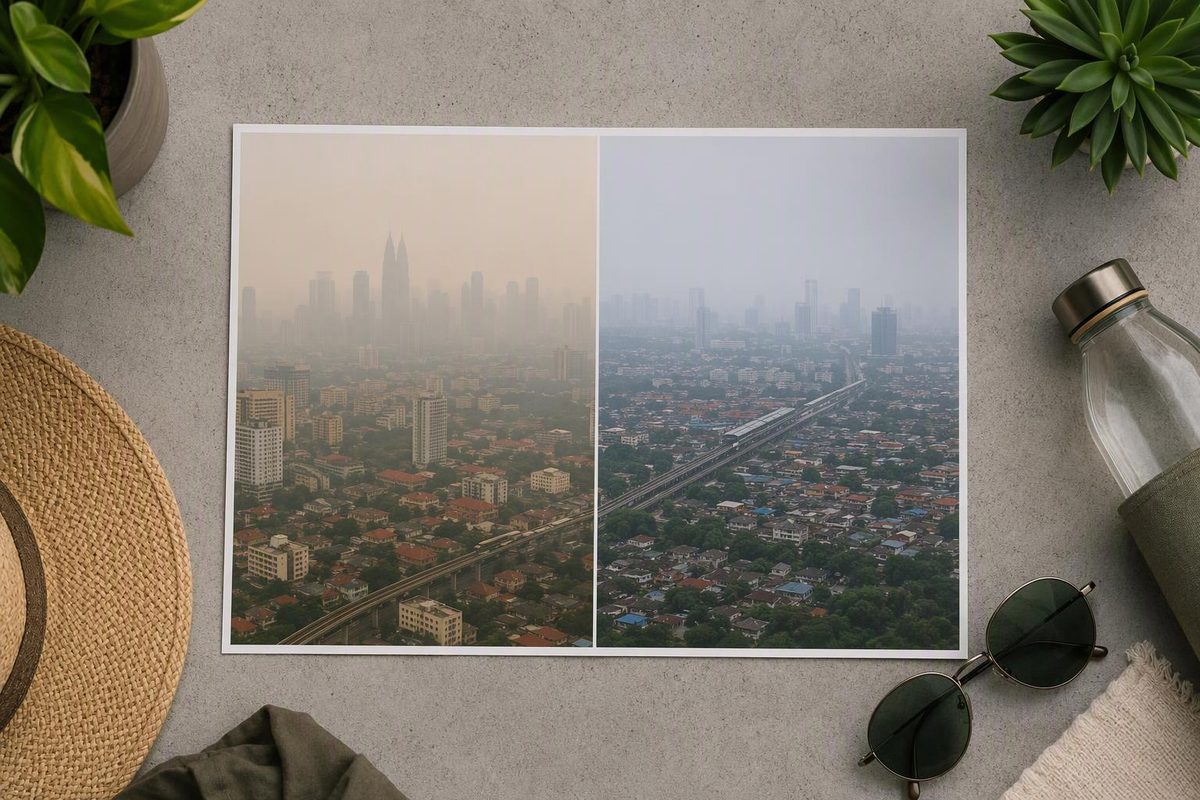
At 2pm Malaysian time on 5 October 2026, SemakAPI reported an Air Pollutant Index (API) of 153 for Cheras, in the unhealthy band, and 97 for Batu Muda, moderate. For an optional outdoor outing, the Cheras reading is the stronger reason to postpone prolonged walking or exercise at this snapshot. Batu Muda’s lower reading is not a clean-air guarantee.
These figures are from SemakAPI’s republication of Department of Environment station readings. Confirm the latest readings on the official APIMS hourly table before leaving: this is a dated comparison, not a continuously updating status page.
KL’s two stations, compared
| Monitoring station | Reported API at 2pm, 5 October 2026 | Official API band | Practical planning choice |
|---|---|---|---|
| Cheras | 153 | Unhealthy | Postpone a long outdoor walk, run or open-air food crawl; keep necessary outdoor transfers short. |
| Batu Muda | 97 | Moderate | Lower than Cheras, but close to the unhealthy threshold. Do not treat it as a reason to schedule strenuous outdoor activity during haze. |
SemakAPI’s station comparison lists two DOE stations for the Federal Territory of Kuala Lumpur. Malaysia’s official bands are 0–50 good, 51–100 moderate, 101–200 unhealthy, 201–300 very unhealthy and above 300 hazardous, as shown on APIMS. The planning choices above follow DOE’s haze advice to stay indoors where possible and reduce vigorous outdoor recreation.
The reported difference matters: the stations are not showing the same condition at this hour. But neither should be labelled KL’s permanently cleaner neighbourhood. At noon on 18 September 2026, both Cheras and Batu Muda recorded 168, according to Malay Mail’s report of DOE data.
What about KLCC, Bukit Bintang and Chinatown?
These readings do not establish separate API scores for KLCC, Bukit Bintang, Chinatown or Brickfields. The published KL station list contains Cheras and Batu Muda—not a monitor in every visitor neighbourhood. A station reading is useful local evidence, not a boundary map showing where unhealthy air stops.
For a city-centre day, check both KL stations rather than relying on a single number labelled “Kuala Lumpur”. SemakAPI’s KL city page, for example, uses Cheras as its representative station and separately notes Batu Muda’s different reading.
If you are already based in KLCC or Bukit Bintang, do not cross the city merely to chase the lower Batu Muda number. Shortening your outdoor exposure is a more defensible plan than assuming the route or destination shares that station’s conditions. Use our haze-day indoor routes to replace an exposed sightseeing loop, rather than adding another journey.
Before you head outside
- Match the timestamp. Compare Cheras and Batu Muda in the same hourly column on APIMS, and check the date as well as the clock time.
- Keep the index consistent. This comparison uses Malaysia’s API. Do not substitute a differently calculated AQI number from another app into the same table.
- Cut duration and exertion first. Choose one meal or indoor destination with a short transfer, rather than several outdoor queues and walks.
API is not an instantaneous street-level measurement. DOE’s calculation guide says the highest pollutant sub-index determines the reading; PM2.5 and PM10 use 24-hour averages, while other pollutants have different averaging periods. A brighter skyline does not by itself establish improved air quality.
DOE’s haze advice also recommends seeking medical treatment if existing symptoms or conditions worsen. Do not wait for a higher station reading before responding to worsening symptoms.