 KL Observer
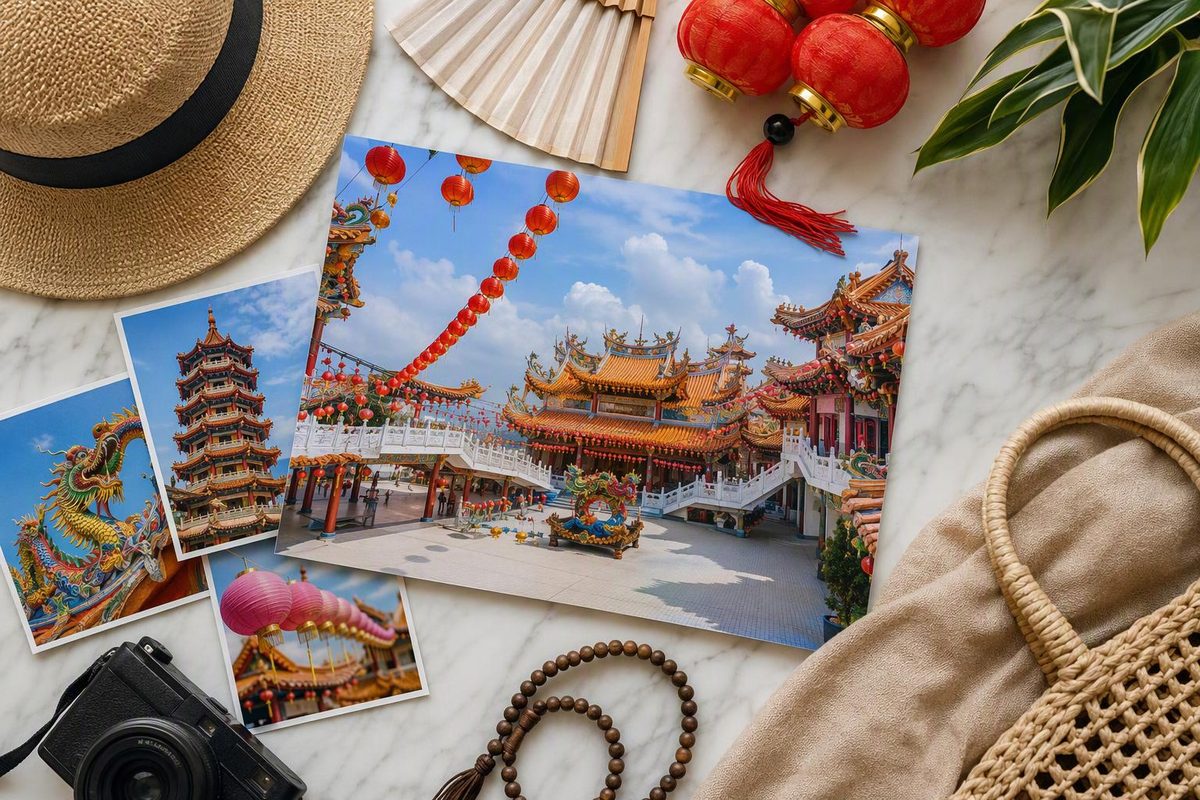
Thean Hou Temple is close to central Kuala Lumpur but not directly served by rail. A practical plan is to take the Kelana Jaya LRT to Bangsar, finish the journey by e-hailing car, and allow 60–90 minutes at the temple. Walking from the station adds a steep final approach, which is difficult to justify in midday heat or rain.
This is an active place of worship rather than only a skyline photo stop. Its principal deities are Mazu (Thean Hou), Guan Yin and Shui Wei Sheng Niang, and its calendar includes Buddhist, Taoist and Chinese cultural observances. The Selangor & Federal Territory Hainan Association says the present six-tier temple was completed in 1987 and officially opened in 1989; the association owns and manages it (Hainan Association).
Essential visitor details
- Address: 65, Persiaran Endah, off Jalan Syed Putra, 50460 Kuala Lumpur
- Shrine hours: 8am–8pm daily, including public holidays
- Admission: Free for a standard visit
- Time to allow: 60 minutes for the shrine, terrace and a few outdoor features; 90 minutes for a slower look
- Best time for heat: 8–10am
- Temple telephone: +603-2274 7088
The 8am–8pm schedule took effect on 1 January 2024 and is still displayed by the operator (official hours notice). Prefer that to third-party listings with later closing times. The operator confirms the address and telephone number on its contact page, while Tourism Malaysia lists free admission.
Major festivals change the character of a visit. Chinese New Year brings lantern displays and ceremonies as well as heavier demand on the approach road. Visit then for the celebrations rather than for a quiet architectural stop, and check the temple’s activity notices before travelling.
Best route: Bangsar LRT plus a short car ride
Bangsar is on Rapid KL’s Kelana Jaya Line, one stop from KL Sentral. Rapid KL’s line page confirms both stations on the route and lists current service information (Kelana Jaya Line).
From Bangsar station, order a car to “Thean Hou Temple, 65 Persiaran Endah.” One local transport guide estimates the temple at about 1.4km from the station, with a steep final section on the 15–20-minute walk (Prime Aces visitor guide). Treat that walk as a fair-weather option, not the default in midday sun, rain or with limited mobility.
From KLCC, the Kelana Jaya Line runs directly to Bangsar. From Bukit Bintang, you can take the Kajang Line MRT to Pasar Seni, change to the Kelana Jaya Line and continue to Bangsar. A direct e-hailing trip may be simpler when two or more people are travelling together. Our rail-and-walking planning guide explains how to use short car connections without abandoning a rail-first day.
For the return, request a pickup from the temple rather than walking downhill by default. Allow extra time around major celebrations, when the approach road may be busy.
What to see in a sensible order
Start with the forecourt, then go up to the principal shrine. Pause here rather than treating the hall as a passage to the terrace: worship takes precedence over sightseeing.
Look beyond the red columns and lantern canopy. The temple’s architectural account identifies both southern and northern Chinese influences, including swallow-tail roof ridges, dragon-and-phoenix cresting, painted beams and blue bracket sets beneath the eaves. The caisson ceiling incorporates lotus lamps and Mazu figures (temple architecture guide).
Finish with selected outdoor features if heat and time permit. The grounds include Chinese zodiac statues, a medicinal-herb garden, a large Chinese chessboard and sculptures of the Twenty-Four Filial Exemplars (official attractions list). These areas add context, but the main shrine should remain the priority.
Dress and conduct
The temple does not publish a detailed visitor dress code on its main information pages. Modest clothing is the cautious choice for an active place of worship; covering shoulders and knees avoids doubt. Lightweight, breathable pieces work better than a heavy extra layer. See what to wear in Kuala Lumpur for a temple-ready hot-weather approach.
Inside the complex:
- keep voices low around the altars;
- do not obstruct people who are praying;
- ask before photographing an identifiable worshipper;
- follow posted footwear and photography instructions;
- leave offerings and ritual objects undisturbed;
- give ceremonies and wedding parties room.
Incense smoke may be noticeable near the shrine. Visitors sensitive to smoke can avoid lingering beside the burners and spend more time in open areas.
Mobility and weather planning
The compound occupies several levels, but the temple’s visitor information does not document a complete step-free route. If stairs, gradients or lift availability determine whether the visit will work, call before leaving and ask specifically about access from the vehicle drop-off to the main shrine. Arriving by car at the temple is preferable to approaching uphill from Bangsar station.
Much of the visual interest is outdoors: the forecourt, rooflines, lanterns and skyline views. That also means exposure to sun and sudden rain. An early start reduces heat exposure. In wet weather, begin with the sheltered shrine and wait before crossing exposed or potentially slick surfaces.
A compact half-day route
8am: Take the Kelana Jaya Line to Bangsar, then order a car uphill. About 8.30–9.45am: Visit the main shrine, terrace and selected garden features. From 9.45am: Ride to KL Sentral or Brickfields for breakfast. Late morning: Continue from KL Sentral to Pasar Seni on the same LRT line and follow this compact Chinatown walking route.
This sequence puts the exposed temple grounds in the cooler part of the day and uses the Kelana Jaya Line as the spine without forcing an awkward hill walk.