 KL Observer
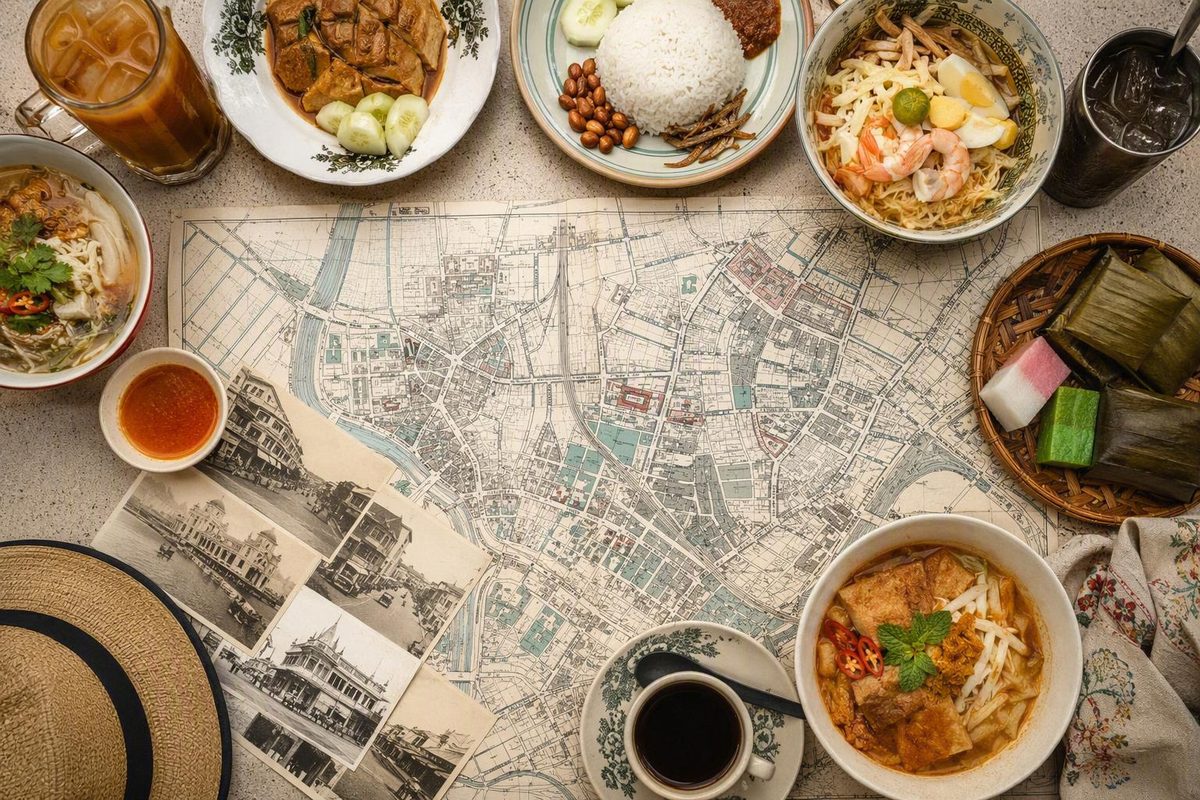
A useful Jalan Tuanku Abdul Rahman food heritage itinerary is not a race through as many restaurants as possible. It is a walk along one historic Kuala Lumpur commercial corridor, with food pauses spaced between traditional retail, garment shops, larger shopping complexes, older façades, and the daily movement of the city.
This route should be understood as a historical planning framework rather than a field-tested current itinerary. Its three principal food anchors come from a feature published in 2014, and the available evidence does not confirm that those businesses, menus, entrances, or operating hours remain unchanged. Verify every intended stop before departure.
Chow Kit and Jalan Masjid India work as optional extensions, but neither should distract from the central idea: walking the former Batu Road as a connected food-and-commerce corridor.
Before You Start: The Right Street, Scope, and Expectations
This itinerary is centered on Jalan Tuanku Abdul Rahman in Kuala Lumpur, commonly abbreviated to Jalan TAR. The formal spelling is Tuanku, not Tunku. Some commercial and user-generated listings use “Jalan Tunku Abdul Rahman,” so compare any result with the complete mapped address before relying on it. One private tour itinerary, for example, uses the inconsistent “Jalan Tunku Abdul Rahman” spelling.
Similar names and inconsistent user posts make it easy to open a listing for the wrong part of the city.
Penang’s Jalan Burma is another unrelated route. A food-and-heritage feature about hotel architecture, noodle stalls, temples, and walking in George Town is explicitly about Jalan Burma in Penang. Its restaurants, distances, and landmarks do not establish anything about Jalan TAR.
Broad recommendations for exploring Malaysia are equally unsuitable for planning this street. National travel coverage may discuss rail trips, Butterworth food, or traditional cuisine in Negri Sembilan, but it supplies no street-level evidence for a Jalan Tuanku Abdul Rahman walk.
The route therefore uses a deliberately narrow scope:
- Core corridor: Jalan Tuanku Abdul Rahman.
- Historical food anchors: three addresses reported on the road in 2014.
- Heritage layer: façades, garment commerce, traditional retail, and changing forms of shopping.
- Northern extension: Chow Kit and a possible wet-market visit.
- Southern extension: Jalan Masjid India and its surrounding trading streets.
- Separate walks: the Colonial Core, Central Market, and Chinatown.
“Near Jalan TAR” is not the same as “on Jalan TAR.” Restaurant directories and review platforms may include venues well outside a compact walking sequence. Check the full address of every proposed substitute instead of relying on a proximity label.
Before leaving, verify the current business name, address, opening status, entrance, and menu for every food stop you intend to use. If planning around a market, obtain same-day or authoritative confirmation of its location and schedule. The sources available here are useful for reconstructing a food corridor, not for guaranteeing current operations.
Why Food and Heritage Belong Together on the Former Batu Road
Jalan Tuanku Abdul Rahman was formerly known as Batu Road. Time Out’s 2014 account says it was renamed for Malaysia’s first Yang di-Pertuan Agong, Tuanku Abdul Rahman ibni Almarhum Tuanku Muhammad, and presents the road through its restaurants, shops, markets, and communities rather than as a collection of isolated monuments.
That commercial emphasis matters. Batu Road was associated with shopping and trade, and a broader heritage-walk description presents Jalan Tuanku Abdul Rahman as a former main shopping street now associated with garments and multigenerational businesses. That does not mean every older-looking shop is protected, continuously operated, or independently documented as a heritage institution.
Food belongs to the same story because people eat where they work, shop, travel, and trade. Cafés, nasi kandar restaurants, textile businesses, traditional retailers, altered shopfronts, and larger shopping complexes form one working commercial environment.
The culinary vocabulary linked to the corridor is correspondingly broad. Historical editorial coverage associates the road with nasi kandar, kopi, roti bakar, and satay. Commercial tour descriptions add examples such as murtabak, pan mee, and roti canai. Market promotions and traveler posts mention rice dishes, noodles, fried snacks, grilled foods, and sweet drinks.
A dish’s presence also does not prove the history, identity, or heritage credentials of its current seller. Discuss food in relation to a documented historical listing or a menu you can inspect when visiting.
The most comfortable rhythm is:
- one substantial anchor meal;
- a commercial-streetscape walk;
- one smaller snack or drink;
- a longer heritage or rest interval;
- one final verified stop.
This structure avoids over-ordering and leaves the route intact if a historical business is closed. The street remains worth observing even when an intended dining room is unavailable.
The Core Route at a Glance: A Provisional Southbound Walk
The clearest route follows descending street numbers southward. It is an organizing sequence, not a turn-by-turn navigation track.
Begin by orienting yourself near Medan Tuanku. Tripadvisor lists Medan Tuanku and Sultan Ismail as short walks from Jalan Tuanku Abdul Rahman, showing Medan Tuanku as the slightly closer of the two, but the platform does not establish the best exit, safest path, or step-free route. Check live station information and map the walk to your first confirmed address before departure.
| Sequence | Historical anchor or waypoint | Suggested role |
|---|---|---|
| Start | Medan Tuanku area | Rail-based orientation point |
| 1 | Nasi Kandar Kudu bin Abdul, reported at 335 Jalan Tuanku Abdul Rahman | Possible anchor meal |
| Pause | Traditional shopfronts and garment retail | Streetscape interval |
| 2 | Capital Café, reported at 213 Jalan Tuanku Abdul Rahman | Possible kopi, toast, or shared snack |
| Pause | SOGO and Pertama Complex area | Orientation and retail contrast |
| 3 | Coliseum Café, reported at 98 Jalan Tuanku Abdul Rahman | Possible final stop and exterior observation |
| Optional finish | Jalan Masjid India | Southern extension outside the core road |
The three numbered addresses above were published together in Time Out’s 2014 account of Batu Road. They are historical leads and require current confirmation.
Route box — check before going
- Rail start: Check current service, station access, and the route to your first stop.
- Number 335: Check the current business, address, hours, menu, and entrance.
- Number 213: Check the current business, address, hours, menu, and entrance.
- Number 98: Check the current business, address, hours, menu, and entrance.
- Saturday market: Check the current day, hours, boundaries, and traffic arrangements.
- Chow Kit or Masjid India extension: Check access, walking conditions, and return transport.
- Field-test status: This sequence has not been established by the supplied evidence as a recently walked or accessibility-audited route.
Use large visible landmarks as pacing points rather than compulsory attractions. SOGO can help with orientation, while Pertama Complex offers a contrast with narrower shopfronts. Businesses and signs can change, so keep a live map available rather than navigating by a static shop list.
Allow approximately three to four hours for an unhurried core walk, but treat that as a planning range rather than a measured duration. A wider Kuala Lumpur heritage itinerary advertises about four hours for its own route, food samples, and landmarks; it does not validate the timing of this exact walk.
If the historically reported number 335 stop is verified and suitable, it can provide the substantial meal. Number 213 can then function as a smaller drink or snack pause, followed by a longer walk before number 98. If the first anchor is closed, continue the heritage sequence rather than compensating with a full meal at every later stop.
Jalan Masjid India can provide a southern finish, but it is an adjacent trading area, not another numbered stop on Jalan Tuanku Abdul Rahman. Skip the extension if weather, energy, or operating uncertainty makes the core route sufficient.
Three Historically Reported Food Anchors—and What the Evidence Actually Says
The distinction throughout this section is simple:
- Publication-era fact: what a 2014 feature reported.
- Current visitor instruction: what you must confirm before attempting to eat there.
The old listing explains why a stop belongs in the story. It does not establish whether the business is open today.
Nasi Kandar Kudu bin Abdul — historically reported at number 335
Time Out listed Nasi Kandar Kudu bin Abdul at 335 Jalan Tunku Abdul Rahman, using “Tunku” rather than the formal “Tuanku” spelling. It also published operating hours, but those hours are obsolete for current planning unless independently reconfirmed.
Nasi kandar is the logical meal category to investigate at this stop. Build any order from the menu displayed during your visit. The evidence does not establish a current signature combination, price, portion size, payment method, or halal certification.
The feature said P. Ramlee “supposedly” frequented Kudu. That qualification makes the association an unverified story, not a settled historical fact.
If the business is confirmed open and suitable, consider one plate to share where practical. Ask what is available and state dietary requirements before food is served rather than constructing an elaborate order from an old article.
Capital Café — historically reported at number 213
The same feature listed Capital Café at 213 Jalan Tuanku Abdul Rahman and associated it with kopi, roti bakar, and satay. Those are useful categories to look for on a current menu, not guaranteed present-day offerings.
An operator quoted in the article said his family ran the café and that the arrangement of tables and chairs had remained unchanged for decades. Treat this as oral testimony recorded in a travel feature, not independent archival proof of ownership continuity or an unchanged interior.
For crawl pacing, Capital works conceptually as a lighter second stop. A drink, toast, or shared order would leave room for the remainder of the route, but the current menu and serving pattern should determine what you order.
Coliseum Café — historically reported at number 98
Time Out listed Coliseum Café at 98 Jalan Tuanku Abdul Rahman and described it as having opened in 1921. “Opened in 1921” does not mean “operated continuously since 1921,” nor does it confirm that the café remains open at the address today.
Approach the property as a food-and-built-environment pairing. Verify whether the business operates, where its active entrance is, and whether public access is available. If it is open, order from the current menu. If not, observe only what is lawfully visible from the public street.
Do not assume that a theatre, historic dining room, or preserved interior is accessible merely because the Coliseum name remains associated with the site.
What about Mohd Yaseem Nasi Kandar?
A Trip.com user post presents Mohd Yaseem Nasi Kandar as another on-street possibility. That makes it a research lead, but the supplied evidence does not verify its precise address, hours, prices, menu, or heritage credentials. The same user-generated page contains inconsistent place names elsewhere, reducing its usefulness for navigation.
Use this fallback rule:
- If a historical anchor is currently verified and suitable, order one shareable item shown on its present menu.
- If it is closed or cannot be confirmed, continue the walk.
- Select an alternative only after checking its complete address and current operation.
- Do not allow a platform’s “nearby” category to pull the route into another neighborhood.
What to Notice Between Meals
The former name Batu Road provides the route’s narrative thread. Think of the street as an evolving commercial corridor rather than a row of separate attractions. Its later name added another historical layer without erasing the older shopping geography.
Look above the display windows. Older façades may show narrow frontage, repeated upper-storey windows, decorative edges, covered frontage, or visible alterations. Describe only what you can see. Appearance alone does not establish a construction date, original use, protected status, or intact interior.
A Klook tour description promotes “pre-war buildings with distinctive facades” along Jalan Tuanku Abdul Rahman. That is a useful prompt for observation, but it is promotional framing rather than an architectural inventory.
Traditional commerce
Notice how garments, textiles, general retail, cafés, and restaurants occupy the same corridor. The shopfronts are not merely scenery between meals; they represent the trading environment that brought workers, shoppers, and diners to Batu Road.
Avoid assuming that an old-looking business remains under original ownership. The road may be associated with multigenerational commerce, but the history of an individual shop requires evidence beyond appearance or an informal conversation.
Pertama Complex
There is no need to turn it into a long shopping stop. Pause outside, compare its scale with nearby frontage, check your route, and continue. If you plan to enter, confirm current access and operating arrangements.
SOGO
Its role in this walk is practical and visual: it helps locate the walker while contrasting with smaller premises and older frontage.
That mixture is central to understanding Jalan TAR. It is not a frozen historical quarter. Large retail buildings, traditional shops, food premises, altered façades, and contemporary signage coexist along the same corridor.
The Coliseum property
Near the historically reported number 98, the Coliseum name creates a natural connection between food history and the built environment. Do not promise yourself entry to a theatre, dining room, or historically intact interior. Current use and visitor access must be checked separately.
If the café is unavailable, the exterior can still prompt a useful question: what survives through names, façades, stories, and commercial memory, and what cannot be inferred from those traces?
Optional Masjid India extension
Jalan Masjid India and the surrounding trading streets form a logical southern extension. A commercial heritage itinerary associates the area with textile trade, roti canai, and teh tarik, but it does not identify a currently verified stall for this self-guided route.
Before entering a mosque or another religious property, check visitor access, dress expectations, worship times, and photography rules. Exterior observation is the safer default when current information is unavailable.
Keep this extension bounded. The Colonial Core, Central Market, and Chinatown merit separate walks; adding all three would turn a focused Jalan TAR itinerary into a general old-Kuala Lumpur circuit.
Choose the Version That Fits the Time of Day
There is no objectively best time for this route because current operating patterns for the historical anchors and reported market are not established. Choose a framework only after checking the businesses that matter to you.
Morning framework
A morning version works in principle if you have verified a breakfast or nasi kandar stop:
- Reach the Medan Tuanku area.
- Start with a confirmed food anchor toward the northern part of the route.
- Continue through the traditional retail corridor.
- Observe façades from the public street.
- Use Capital Café only if its current operation and menu are confirmed.
- Pause around the larger shopping landmarks.
- Finish near the historically reported Coliseum address.
- Add Chow Kit only if its current conditions suit your plan.
Do not assume that morning will necessarily be cooler, quieter, or more accessible. Weather, construction, crowds, and business schedules can vary.
Ordinary daytime or early-evening framework
This is the most dependable fallback because it does not depend on a market:
- Confirm one substantial meal stop and one lighter stop.
- Follow the descending street-number sequence.
- Insert a walking or rest interval after each order.
- Skip any premises you cannot identify confidently.
- Finish on the core road or continue to Jalan Masjid India.
- Use a live transport plan for the return journey.
Do not build the evening around general claims that cafés or mamak eateries stay open late. The evidence does not verify the present hours of a named venue.
Reported Saturday market version
Time Out’s older feature, an M Palace Hotel promotional page, and traveler posts report Saturday market activity around Jalan Tuanku Abdul Rahman or Chow Kit. None supplies authoritative current boundaries, operating hours, or traffic arrangements.
Promotional and user-generated sources mention satay, roti canai, nasi lemak, char kway teow, pisang goreng, curries, teh tarik, sugarcane juice, air bandung, fried cempedak, kebab, and keropok lekor. Treat these as reported examples, not guaranteed offerings.
Do not assume that:
- the market operates every Saturday;
- the road closes to traffic;
- stalls occupy the same boundaries as before;
- a particular dish will be available;
- the market is suitable for every mobility need.
Use a strict decision rule:
- Market independently confirmed: add it as an evening extension and follow the verified location and hours.
- Market not confirmed: use the ordinary core walk.
- Conflicting information: do not organize the itinerary around it.
A four-hour commercial food tour associated with 449 Jalan Tuanku Abdul Rahman was marked “currently unavailable” on the supplied Klook listing. It should not be presented as a bookable alternative.
Optional Extensions: Chow Kit and Jalan Masjid India Without Losing the Plot
Add only one extension unless you have extra time, energy, and a clear return plan.
Chow Kit: the northern extension
Chow Kit is the extension most closely connected with commercial food-tour coverage of the corridor. A Klook listing used 449 Jalan Tuanku Abdul Rahman as the meeting point for a four-hour experience combining Chow Kit wet-market exploration, an area described as Little Indonesia, food tastings, and observation of pre-war façades.
The advertised foods included satay, murtabak, pan mee, and roti canai. These are examples from a tour description, not guarantees that a particular vendor will serve them or that the unavailable itinerary can be reproduced independently.
The operator also characterized Chow Kit as one of Kuala Lumpur’s largest wet markets. Treat that as promotional language rather than an independently established ranking. More importantly, the evidence does not confirm current visitor hours, appropriate public sections, photography expectations, accessibility, vendor arrangements, or underfoot conditions.
Before adding Chow Kit, establish:
- whether the section you want to visit is operating;
- when public visitors are expected;
- which entrance or section is appropriate;
- whether crowding or wet conditions affect mobility and footwear;
- how you will reconnect with the core route.
If those questions remain unanswered, begin near Medan Tuanku and save Chow Kit for another visit.
Jalan Masjid India: the southern extension
Jalan Masjid India is the more natural extension for a southbound walk. It continues the themes of textile commerce, food, trade, and religious life, but it is not a numbered section of Jalan Tuanku Abdul Rahman.
A wider heritage walk includes roti canai and teh tarik around Jalan Masjid India. That supports those foods as part of the area’s visitor narrative, but it does not establish a current unnamed stall. Choose a business only after checking its address and operation.
Respect working commercial and religious spaces. Keep entrances clear, ask before photographing people closely, and confirm visitor rules before entering a place of worship.
What not to add
Do not fill route gaps with every result returned by a “near Jalan TAR” search. One Yelp results page includes restaurants as far as 1.2 miles from the search location, which does not prove that they are on the street or practical for this sequence.
Central Market and Chinatown also deserve more time than a hurried add-on allows. Save them for a separate old-Kuala Lumpur itinerary rather than reducing Batu Road to a small segment of a citywide walk.
Heat, Rain, Etiquette, Diet, and Mobility: Plan for What the Sources Cannot Confirm
Carry water, use sun protection, and leave room for indoor or sheltered pauses. Keep a rain fallback, such as delaying the start, shortening the route, or spending longer at a confirmed indoor stop. These are general Kuala Lumpur planning precautions, not claims that this particular pavement is shaded or weatherproof.
Do not describe the route as wheelchair accessible, stroller friendly, child friendly, or suitable for limited mobility without checking current conditions. Station lifts, curbs, crossings, pavement width, construction, restaurant steps, toilets, and seating can change independently.
Investigate any factor essential to your trip:
- step-free station access and lift status;
- pavement obstructions or roadworks;
- curb cuts and crossing conditions;
- steps or narrow entrances at intended venues;
- seating and toilet availability;
- realistic distances between rest points;
- return transport if the walk ends early.
A historical address cannot answer an accessibility question. Contact the relevant station or venue directly if access is essential.
Etiquette in busy food spaces
Treat each stop as a working food business rather than a backdrop. Queue properly, inspect the menu before reaching the counter, decide as a group before ordering, and state the order clearly. Keep entrances, counters, and service lanes open.
Ask before taking extended photographs, especially when staff or customers will be identifiable. A quick image of your own food is different from turning a stall into a photo set. Leave promptly after eating when tables are scarce and others are waiting.
This approach follows KL Observer’s respectful food-crawl guidance: organize the outing around an anchor meal, a smaller snack or drink, a walking or rest interval, and a final stop.
Sharing modest portions makes the crawl more resilient. Alternate a substantial dish with kopi, tea, toast, a walk, or a seated pause. Completing the route does not require ordering at every historical address.
Dietary requirements
The supplied evidence does not verify halal certification, pork-free preparation, vegetarian or vegan suitability, allergy procedures, or cross-contamination controls at any named venue. Do not infer those qualities from a restaurant name, cuisine category, neighborhood, or dish appearance.
Ask direct questions before ordering. Depending on your needs:
- Does the dish contain pork, lard, meat stock, fish sauce, shrimp paste, egg, or dairy?
- Is the fryer, grill, or cooking surface shared?
- Are sauces prepared in advance?
- Can staff identify the ingredients confidently?
- Is there a current certification you need to inspect?
If the answer is unclear, do not rely on an assumption that the dish is “probably fine.” Keep an independently verified alternative and be prepared to skip a stop.
Money and payment
Do not set a fixed food budget from this itinerary. Current prices and portion sizes are not established, and costs will vary with group size and sharing.
Carry more than one payment method, but do not assume that any named business is cash-only or accepts cards or mobile payments. If payment method matters, ask before ordering.
Pre-departure checklist
- [ ] Confirm the current name, address, entrance, and opening status of each food stop
- [ ] Check current menus and ask essential dietary questions
- [ ] Obtain same-day or authoritative market confirmation, if relevant
- [ ] Check weather and choose a rain or heat fallback
- [ ] Save a route map with the historical addresses marked
- [ ] Check station operation and step-free access where required
- [ ] Investigate pavements, crossings, construction, toilets, and seating as needed
- [ ] Confirm entry, dress, worship-time, and photography rules for religious sites
- [ ] Carry more than one usable payment method
- [ ] Plan return transport from the core finish or optional extension
How long should I allow for a Jalan Tuanku Abdul Rahman food heritage walk?
Allow roughly three to four hours for a relaxed core walk with one anchor meal, one smaller stop, and several observation or rest intervals. This is a loose planning range informed by commercial Kuala Lumpur food-and-heritage walks advertised at about four hours, not a field-tested duration for this exact route.
Add time for Chow Kit or Jalan Masjid India. Shorten the route if weather, mobility, construction, or an unexpected closure makes the full sequence impractical.
Which rail station is closest to Jalan Tuanku Abdul Rahman?
Tripadvisor lists Medan Tuanku and Sultan Ismail as short walks from the street, with Medan Tuanku shown as slightly closer on that platform. This makes the Medan Tuanku area a plausible orientation point, but it does not establish the best exit, simplest pedestrian route, or step-free path.
Check live rail service, station access, lift status where necessary, and the route to your first confirmed address before departure.
Does the Jalan Tuanku Abdul Rahman Saturday night market still operate?
Several editorial, promotional, review, and user-generated sources report Saturday market activity, but the supplied evidence does not provide authoritative current confirmation of its schedule, boundaries, or traffic arrangements.
Include a market only after obtaining same-day or authoritative confirmation. Otherwise, use the ordinary core route and currently verified food businesses rather than planning around expected stalls.
Are Capital Café, Nasi Kandar Kudu, and Coliseum Café still open?
Their current operation is not established by the available evidence. All three appeared in a 2014 feature, but historical addresses and publication-era hours cannot confirm present status.
Check the complete address, a recent first-party business channel where available, and a current map listing. Contact the venue directly if it is essential to your plan. If a stop cannot be confirmed, continue the walk instead of replacing it automatically with an unverified nearby recommendation.
Is it Jalan Tuanku Abdul Rahman, Jalan Tunku Abdul Rahman, or Jalan TAR?
The formal name is Jalan Tuanku Abdul Rahman. Jalan TAR is a common abbreviation. “Jalan Tunku Abdul Rahman” appears in some third-party listings but is inconsistent in this Kuala Lumpur context.
It is also not Jalan Tun Abdul Razak. Use the complete formal street name and verify the mapped location whenever checking transport, accommodation, or restaurant information.
The former Batu Road remains the organizing idea: one historic commercial street, three publication-era food anchors, and heritage details observed between meals. Begin around Medan Tuanku, proceed provisionally toward the historically reported numbers 335, 213, and 98, and add Chow Kit or Jalan Masjid India only as a clearly labeled extension.
Verify every venue and market before leaving, share portions, and keep the core walk compact. An unexpected closure does not make the outing a failure; it shifts the emphasis from eating inside one historical address to reading the commercial street around it.