 KL Observer
Overview
The best lunch spots in Kuala Lumpur fall into four tiers: street food and kopitiam plates at roughly RM5 to RM15, casual restaurants at RM20 to RM40 per person, café set lunches with bundled drinks, and bookable skyline dining near the Petronas Towers. Pick the tier that fits your budget, then pick the venue nearest your day plan.
Those price bands come from Hayley on Holiday’s Kuala Lumpur food guide, which reports street food at RM5 to RM15 and casual restaurant meals at RM20 to RM40 per person. At the bottom end, Migrationology documented a single plate of nasi lemak for RM2 (about US$0.60). At the top end, OpenTable’s lunch list covers hotel dining rooms like Contango and Yun House.
Two things set this guide apart from the all-day food guides you have probably already skimmed. First, it applies a strict lunch filter, because several famous KL “food spots” are actually evening venues. Second, it folds in the MICHELIN Guide Kuala Lumpur & Penang 2026, announced 11 November 2025, which recognises 151 establishments, many of them at street-food prices that suit a midday meal.
What Counts as a Lunch Spot in This Guide
Everything recommended here should be realistically available between roughly 11am and 3pm, because a surprising number of famous KL food destinations fail that test. Most guides ranking for this search are all-day or dinner-leaning food roundups, and they mix evening-only venues into their lists without flagging it.
The two failure modes matter in opposite directions. Some venues open too late: Jalan Alor, the single most-recommended food destination across the sources reviewed for this article, is widely described as an evening street-food destination whose stalls mostly open in the late afternoon, so verify current opening times before planning a midday visit. Others finish too early: Migrationology reports that local friends warn Nasi Lemak Tanglin sells out of rice and toppings before lunchtime even properly starts, often by 11:30am.
So the working rule for this guide is simple. A lunch spot has to be open, serving, and not sold out in the middle of the day. Where a famous name fails that rule, you will read that plainly rather than finding it quietly listed anyway. Where a spot is technically open but running down its food, you will get an arrival time, not just an address.
Best Lunch Spots by Neighbourhood
Organise lunch around where you will already be at midday, not around a venue worth crossing town for in the heat. The three anchors below (Bukit Bintang, Chinatown, and KLCC) are where most visitors spend their sightseeing hours, and each has lunch options across the price spectrum. Nerd Nomads’ KL restaurant guide makes the useful point that the best restaurants in KL are not the poshest ones, but the charming, authentic places conveniently located in popular areas, where prices are low and staff speak English so you can ask about ingredients and get recommendations. That is the selection logic applied here, with each area’s entries kept to venues you can actually eat at between 11am and 3pm.
Bukit Bintang and the City Centre
Bukit Bintang is KL’s shopping and eating core, and at lunch it works best for café set lunches and Malaysian sit-down meals rather than the street-food scene the area is famous for at night. Jalan Alor runs through this neighbourhood, but its hours make it a dinner plan, covered in its own section below.
For a recognised Malaysian lunch here, Congkak in Bukit Bintang holds a Bib Gourmand in the MICHELIN Guide Kuala Lumpur & Penang 2026, Michelin’s good-quality, good-value tier, and the guide’s directory lists it at a moderate spend. That puts a Michelin-recognised Malaysian meal within a normal lunch budget in the middle of the tourist core.
The city centre café tier is where the lunch deals live. Hayley on Holiday describes one café offering daily lunch specials where every main comes with complimentary tea, coffee, or lemon iced tea, and another running a weekday lunch special where buying a hot meal gets you a free drink and dessert. The same writer names Bubble Bee Cafe as her pick for dessert in the whole city, useful if lunch leaves room for a sweet course. Details of those deals date from her visit, so treat them as the pattern to look for rather than a guaranteed menu, and confirm current offers on the day.
Chinatown and Petaling Street
Chinatown and the streets around Petaling Street are kopitiam and heritage-restaurant territory, and this is where a KL lunch gets both cheapest and most atmospheric. Nerd Nomads reports that prices in these local restaurants are low, the food is fresh and prepared to a high hygienic standard, and everyone speaks English, which makes ordering easy even on a first visit.
The area’s best-known heritage stop is Yut Kee, an old Chinese kopitiam that Nerd Nomads calls a favourite among both locals and tourists, with a warning attached: the queue for a table can be long, especially around lunchtime or when tour buses arrive. Go early or late in the lunch window rather than at 1pm.
For a sense of what this tier costs, Migrationology’s KL restaurant guide documented an entire meal for four people coming to RM35 (about US$8.50), with single nasi lemak plates at RM2. Those figures are from an older visit and will have drifted, but the order of magnitude holds: this is the neighbourhood where a full, memorable lunch costs less than a coffee at home.
The 2026 Michelin Bib Gourmand list also clusters around this part of town. Nam Heong Chicken Rice in the city centre, Lai Foong Lala Noodles, and Sek Yuen in nearby Pudu all appear on Michelin’s KL Bib Gourmand roster, giving you vetted names within walking or one-stop-train distance of Petaling Street.
KLCC and the Petronas Towers Area
If your midday anchors are the Petronas Towers, Suria KLCC, or the park, your lunch choice is mainly between mall dining at ground level and view-led dining above it. This is the one neighbourhood where paying more at lunch buys something specific: the skyline.
Two view venues stand out in the source material. La Vie en Marine’s KL food guide says the best thing about Marinis is the view, since the restaurant sits directly next to the Petronas Towers with what the writer calls the best view over the city’s rooftops. Hayley on Holiday picks Envi Skydining as her choice for lunch with a view, perched on the 36th floor with the skyline and the Petronas Towers visible from nearly every angle. Both are covered in more detail in the upscale section below, including when to book.
If you want a cheaper KLCC lunch, the practical move is to ride one or two train stops out to the kopitiam tier rather than paying tower-district prices for an ordinary meal. The rail network makes Chinatown a short hop away, and the price difference between the tiers, RM5 to RM15 street plates versus a premium dining room, is large enough to justify ten minutes on a train if the view is not the point of your meal.
Is Jalan Alor Worth It for Lunch?
The short answer: plan Jalan Alor for dinner, not lunch. The street is primarily an evening venue, with stalls generally described as setting up in the late afternoon, so the most-recommended food destination in the entire KL guide corpus is not reliably a lunch option, and you should check current hours before counting on a midday visit. No other guide reviewed for this article flags that, which is exactly the kind of gap that wastes a midday slot.
Whether it is worth an evening visit depends on what you value, because the sources genuinely disagree. Hayley on Holiday names Jalan Alor one of her top three places to eat in KL for affordability and variety, reports eating there multiple times without a bad meal (butter chicken, fried noodles, fresh tropical fruit), and says she rarely spent more than $6 AUD per meal. Girl on a Zebra takes the dissenting view that the street is a bit overpriced for what you get, while still finding the atmosphere worth experiencing. La Vie en Marine splits the difference, calling it the best place to go if you only have a short stay in KL because everyone finds something they like.
A fair reading of all three: Jalan Alor is an experience purchase. The food is decent and cheap by international standards, slightly marked up by KL hawker standards, and the draw is the scale and energy of the street at night. For your actual lunch in Bukit Bintang, use the café deals and sit-down options in the neighbourhood section above, and keep Jalan Alor for the evening it is built for.
Must-Try Malaysian Dishes at Lunch
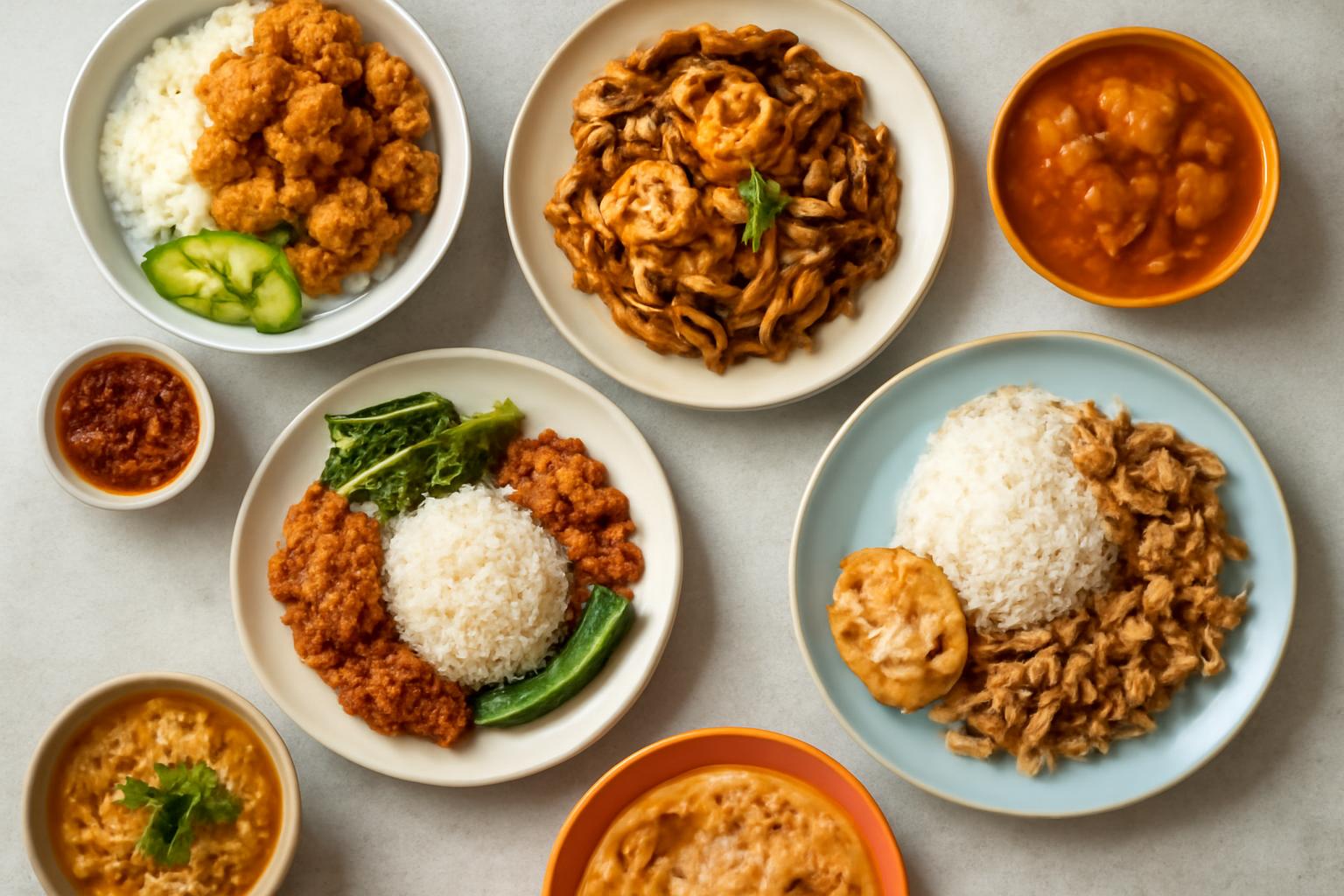
Order from the national canon and you can eat well at any tier, because the same dishes appear at RM5 hawker stalls and in hotel dining rooms. KL’s lunch variety comes from its mix of Malay, Chinese, and Indian food cultures side by side, often on the same street, which is why a three-day visit can cover three distinct cuisines without repeating a meal.
Hayley on Holiday’s list of foods worth seeking out in Kuala Lumpur is a solid ordering cheat sheet:
- Nasi lemak: rice cooked in coconut milk with hard-boiled egg, dried anchovies (ikan bilis), fried peanuts, curries, and sambal chili sauce. Nerd Nomads calls it the number one dish in Malaysia, and it is a natural lunch order because many specialists sell out by afternoon.
- Roti canai: the flaky Malaysian flatbread, usually with a curry dip.
- Laksa: the spice-and-noodle soup family, with regional variations worth comparing across venues.
- Char kway teow: stir-fried flat rice noodles, a wok-heat benchmark dish.
- Satay: skewered grilled meat with peanut sauce.
- Apam balik: a folded pancake with a sweet filling, better as a walking dessert than a meal.
The practical lunch logic: soups and rice plates are kitchen staples all day, while some signature dishes at heritage spots run out as the lunch rush ends. If a specific dish is the reason you are visiting a venue, order it first and treat anything else as a bonus round.
What Lunch Costs in Kuala Lumpur
Budget RM5 to RM15 for a street-food lunch, RM20 to RM40 per person at a casual restaurant, and premium pricing for hotel and view dining, based on Hayley on Holiday’s reported ranges. The wider corpus supports an even lower floor: Migrationology paid RM2 for a single nasi lemak plate and RM35 for a full meal for four people.
The real decision this section resolves is one no single guide addresses: the “best lunch” lists split into two worlds that never meet. OpenTable’s best-lunch roundup is entirely upscale hotel dining, while the travel blogs champion RM2 to RM15 plates, and Nerd Nomads explicitly prefers charming low-priced local restaurants over the poshest rooms. Neither side is wrong; they answer different days of your trip. This matrix maps each tier to the situation it fits:
| Lunch tier | Reported price signal | Sourced examples | Best for |
|---|---|---|---|
| Street food and hawker plates | RM5–15 per dish (Hayley on Holiday); plates from RM2 (Migrationology) | Nasi Lemak Tanglin | Fast, cheap, most local; arrive early, pay cash |
| Kopitiam and casual restaurants | RM20–40 per person (Hayley on Holiday) | Yut Kee | Sit-down heritage lunch with English-speaking service |
| Café set lunches | Main plus complimentary drink; some weekday deals add free dessert (Hayley on Holiday) | City-centre cafés with daily lunch specials | Air-conditioned value lunch on a work or shopping day |
| Bookable hotel and view dining | Premium pricing; reservations expected | Contango, Yun House (OpenTable); Envi, Marinis | Business meals, special occasions, skyline views |
Two caveats keep this honest. The RM figures are historical price points from guides written between 2019 and 2022, so treat them as relative anchors rather than exact bills. And the tiers are not a quality ranking: some of KL’s Michelin-recognised food sits in the cheapest row, as the Michelin section below shows.
Weekday Set-Lunch Deals and Specials
Lunch, not dinner, is the value window in KL’s café tier, because that is when venues bundle extras into the price of a main. Hayley on Holiday documents two concrete versions of the mechanic. At one café she recommends, daily lunch specials mean every main comes with complimentary tea, coffee, or lemon iced tea. At another, she spotted a weekday lunch special where buying a hot meal earned a free drink and dessert.
The pattern is worth more than the specific venues, because deals rotate. When you sit down anywhere in the café tier on a weekday, check the counter or the first page of the menu for a set-lunch board before ordering à la carte. A bundled drink and dessert can shift a café lunch from costing more than a kopitiam meal to roughly matching it, which changes the tier comparison in the table above for that day.
Two practical notes. These offers are typically weekday and lunch-hours only, so they do not help a weekend plan. And since the documented examples date from the source’s visit, confirm the current deal at the venue rather than expecting the exact terms described. The habit of asking “is there a lunch set?” costs nothing and pays off often.
Upscale Lunches and Skyline Views
If lunch is the occasion rather than the fuel stop, KL’s premium tier delivers views that cheaper meals cannot, and it is the one tier where booking ahead is the sensible default. This is also the segment the travel blogs mostly skip and OpenTable’s best lunch restaurants in Kuala Lumpur list covers exclusively.
For views, two names recur. Envi Skydining sits on the 36th floor with, per Hayley on Holiday, sweeping skyline views and the Petronas Towers visible from nearly every angle; she names it her pick for lunch with an epic view. Marinis is directly next to the Petronas Towers, and La Vie en Marine calls its rooftop outlook the best view over the city.
For hotel dining rooms, OpenTable describes Contango, in the Tower Wing, as a contemporary restaurant with an open-kitchen interactive dining concept and seating for 250, and Yun House as Cantonese with an edge, elevated Chinese favourites in a dramatic dining space with wide views. Both take online reservations, which makes them the practical choice for a business lunch where you cannot risk a queue.
The reservation rule of thumb across this whole guide: hawker stalls and kopitiams are walk-in by design, and no source suggests booking them. Hotel and view venues are the bookable tier, and for a specific table (a window at Marinis, a weekend slot at a hotel dining room) reserve ahead and confirm lunch hours directly with the venue, since view restaurants sometimes run different lunch and dinner services.
Michelin-Recognised Lunches on a Budget
Kuala Lumpur now has 25 Bib Gourmand venues, Michelin’s award for good-quality, good-value cooking, and most of them sit squarely in lunch-price territory. The MICHELIN Guide Kuala Lumpur & Penang 2026, announced on 11 November 2025, recognises 151 establishments in total: nine Starred, 84 Michelin Selected, and 58 Bib Gourmand. Two KL venues joined the Bib Gourmand tier this cycle: Gulainya, a Peranakan restaurant, and Lama.
This is a genuine update on what older guides say. Hayley on Holiday’s page cites the 2025 edition’s figures (140+ establishments, 56 Bib Gourmands), and earlier blog-era guides predate Michelin’s Malaysia coverage entirely, so the 2026 numbers above supersede what you will read elsewhere in the search results.
Why this matters for lunch specifically: the Bib Gourmand tier skews cheap. On Michelin’s own Bib Gourmand directory for Malaysia, 36 of the 57 listed venues carry the “on a budget” price band, street food is the single largest cuisine category at 18 venues, and only one venue is priced at the special-occasion level. In KL that translates to places like Heun Kee Claypot Chicken Rice in Pudu, Nam Heong Chicken Rice in the city centre, Nasi Ayam Hainan Chee Meng on Jalan Kelang Lama, and Sek Yuen, all on the 2026 KL list.
Treat the list as a lunch-hunting map rather than a set of guaranteed midday openings: the directory lets you filter by lunch service and days open, so check a venue’s current hours on the official guide before you build a day around it.
Timing Your Lunch: Queues, Sell-Outs, and Closing Days
At KL’s most famous local spots, when you arrive matters as much as where you go, and “lunchtime” is often too late. The clearest documented case is Nasi Lemak Tanglin: Migrationology reports that local friends warn it finishes its rice and ingredients every day without fail before lunch proper, often selling out by 11:30am. The same guide’s advice for busy spots is blunt: get there at 10am to have time to sit before the rush.
Queues are the second failure mode. Nerd Nomads reports that the line for a table at Yut Kee can be long, especially around lunchtime or when tour buses pull up. The workable strategy at heritage kopitiams is to eat at 11am or after 1:30pm and leave the 12pm to 1pm peak to the office crowd.
Two further caveats deserve planning space even though the specifics vary by venue. First, signature dishes at traditional restaurants can be day-limited or can sell out well before closing, so if one dish is the reason for your visit, check ahead and order it the moment you sit down. Second, traditional kopitiams and family-run restaurants commonly keep a fixed weekly closure day. Before making a special trip for a specific spot, verify its current hours and closing day that same week, since published schedules in older guides are the least reliable fact about them.
Beating the Midday Heat: Air-Conditioned Lunches and Food Courts
Kuala Lumpur’s midday heat is a real constraint on lunch planning, so decide up front whether today is an open-air day or an air-conditioned one. Hawker and street-side eating is at its most pleasant early in the lunch window, before the hottest stretch of the afternoon; if you are queuing for a famous stall, the arrive-by-10am advice in the timing section doubles as heat strategy.
When you want a cool room, three of the tiers in this guide come with air conditioning as standard: café set lunches, mall dining around shopping anchors like Bukit Bintang and KLCC, and the hotel and view tier. Even within the budget tier, indoor options exist; Michelin’s Bib Gourmand directory lists air conditioning as a facility at 24 of its 57 Malaysian venues, so cheap and cool are not mutually exclusive.
The simplest sequencing rule: put your open-air eating at the edges of the day, use an indoor lunch to reset during the hottest hours, and never plan a long uncovered walk between sightseeing and a far-away stall at 1pm.
Halal and Vegetarian Lunch Options
No mainstream KL lunch guide covers halal or vegetarian needs directly, but you can verify both yourself using Michelin’s directory filters rather than guessing. On the Bib Gourmand listing for Malaysia, you can use the directory’s filters to check for halal, vegetarian, and vegan options yourself, and you should confirm any dietary status directly with the venue before visiting.
For vegetarians specifically, KL has a dedicated Bib Gourmand address: MTR 1924, listed in the 2026 KL Bib Gourmand roster as Indian Vegetarian and shown in Michelin’s directory at the budget price band. That makes it a rare case where the dietary need, the price tier, and independent recognition all line up in one venue.
For anything not covered by a filter, ask the venue directly. Nerd Nomads notes that staff at KL’s local restaurants speak English and are happy to explain ingredients, so confirming whether a dish contains meat, pork, or alcohol is a normal conversation, not an imposition. Do not rely on a blog’s dietary description of a specific venue; menus and certifications change, and the venue itself is the only current source.
Practical Logistics: Cash, Safety, and Getting Around
Three habits prevent most wasted lunches in KL: carry small cash, pick busy stalls, and eat along your train line. On payment, Hayley on Holiday advises that many street food stalls prefer cash, and that carrying small Malaysian ringgit notes is useful at hawker stalls and markets. Michelin’s Bib Gourmand directory backs the pattern with numbers: 14 of its 57 Malaysian venues do not accept credit cards, and 7 are cash only. Cards work fine at cafés, malls, and hotels, so the rule is simply to keep notes for the cheapest tier.
On safety, the sources agree. Hayley on Holiday calls street food in KL generally safe, with the sensible heuristic of choosing busy stalls where food is cooked fresh and locals are eating, since those have high turnover. Nerd Nomads goes further, saying it is entirely safe to eat in local restaurants because the food is fresh, ingredients are top-notch, and meals are prepared to a high hygienic standard. Applying the busy-stall rule also keeps your visit respectful: these are working kitchens at their peak hour, so order, eat, and free the table rather than treating the stall as a photo stop.
On getting there, let the rail network do the work. Choose lunch near your base or along the line you are already riding, rather than backtracking across town in the heat for a single dish; that is the same base-plus-train logic KL Observer applies to planning KL days generally, picking a base, connecting the city by train, and eating well without fighting the heat. A slightly less famous lunch two stops away beats a famous one that costs you an hour of midday transit.
Frequently Asked Questions
Are these restaurants’ opening hours and prices still accurate in 2026?
Treat the two kinds of facts in this guide differently. The Michelin data is current: the 2026 guide was announced on 11 November 2025 per Says.com’s coverage, and Michelin’s directory is maintained continuously. The blog-sourced details (RM prices, set-lunch deals, specific opening hours, sell-out times) come from guides written between roughly 2019 and 2022, so treat them as reliable patterns but not current fact. Before building a day around any single venue, confirm its hours, closing day, and current deals directly with the venue or its listing that same week.