 KL Observer
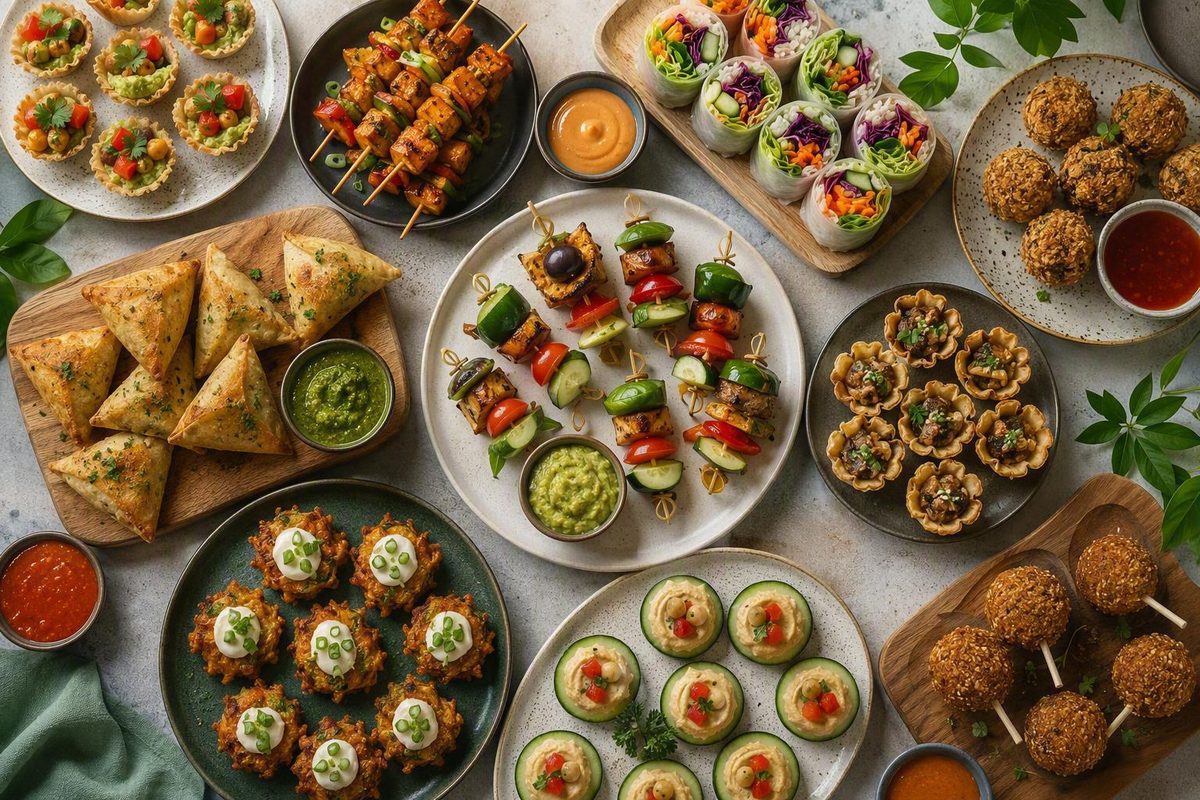
A practical vegan finger-food menu begins with a service question: what can guests genuinely pick up and eat, what needs a separate dipper, and what is likely to require a plate? Once that distinction is clear, it becomes easier to build contrast through fresh, crisp, creamy, spicy, and substantial choices rather than serving several versions of the same pastry or breaded bite.
The 35 numbered ideas below are the article’s definitive list of handheld formats. Dips and spreads are covered separately as accompaniments, not counted as standalone finger foods. Some ideas are conditionally handheld: size, sauce, temperature, and filling stability can make a small plate sensible.
This is a sourced selection guide, not a set of tested recipes. Recipe collections often provide only titles and summaries, so open the complete recipe you intend to use for quantities, yield, ingredients, method, timing, and dietary information. The formats described here should not be treated as original or independently tested recipes.
What Counts as Vegan Finger Food?
Rolls, pinwheels, poppers, stuffed mushrooms, falafel, pastry bites, lettuce cups, mini quiches, and compact potato bites can fit that definition.
Three practical service labels help clarify how a dish functions:
- Cleanly handheld: Usually self-contained and easy to lift directly from a platter.
- Handheld with an optional dip: The main item can be eaten by hand, but a separate sauce introduces a second service component.
- Plate or utensil recommended: The item is oversized, heavily sauced, loosely filled, or otherwise difficult to eat neatly while standing.
Dips require a separate category:
- Dip-and-scoop: Hummus, guacamole, salsa, queso-style sauce, tapenade, baba ganoush, layered dip, and similar spreads served with vegetables, chips, crackers, pita, bread, or crostini.
A bowl of hummus is therefore a party appetizer, but it is not self-contained finger food. The same applies to guacamole, salsa, seven-layer dip, tapenade, and queso-style sauce. Individual dip cups may make service tidier, but the dip remains a separate component.
Recipe collections use “finger food,” “small bites,” and “appetizers” inconsistently. One plant-based small-bites index includes handheld foods such as avocado egg rolls and pizza pinwheels alongside dips, roasted vegetables, and other dishes that may require serving vessels or utensils (Kathy’s Vegan Kitchen small-bites collection).
| Format | Usual classification | Qualification |
|---|---|---|
| Spring roll or pinwheel | Cleanly handheld | Sauce can remain optional |
| Falafel or croquette | Cleanly handheld | Plate advisable if served in sauce |
| Stuffed mushroom or mini quiche | Usually handheld | Depends on size and filling stability |
| Hummus or guacamole | Dip-and-scoop | Requires a separate carrier |
| Layered dip | Dip-and-scoop | Best served in a broad dish |
| Loaded or heavily sauced bite | Plate may be recommended | Loose toppings reduce portability |
| Soup or loose salad | Utensil required | Not finger food |
A format can also change categories according to the finished recipe. A dry falafel is cleanly handheld; a falafel covered in sauce is not. A compact lettuce cup may work in one hand, while an overfilled one may spill. A small stuffed mushroom can be lifted easily, but an oversized cap with a loose filling may need a plate.
The word “vegan” also requires verification at recipe and product level. A dish may sound plant-based while relying on a wrapper, pastry, seasoning, sauce, or topping that contains an animal-derived ingredient. The numbered ideas identify useful formats, not universal guarantees about every recipe bearing the same name.
Fresh, Cold, and No-Fuss Handheld Ideas
Cold and fresh choices help when oven space is committed to pastry or baked bites. They also provide contrast through cucumber, lettuce, herbs, fruit, rice paper, nori, and other lighter-looking components.
The first 10 entries in the definitive list are:
-
Vietnamese-style fresh spring rolls — handheld with an optional dip. Rice-paper rolls can enclose vegetables, herbs, noodles, tofu, or another recipe-specific filling. Keep peanut sauce beside the platter instead of pouring it over the rolls.
-
Mango-and-avocado summer rolls — handheld with an optional dip. This variation combines soft avocado, fresh mango, herbs, or vegetables inside a rice-paper wrapper.
-
Tofu lettuce wraps — conditionally handheld. Lettuce leaves provide an edible vessel for seasoned tofu and vegetables. Compact portions are easier to handle than heavily filled leaves.
-
Black bean and avocado lettuce wraps — conditionally handheld. Beans add substance while avocado and lettuce keep the format fresh. Loose or generous fillings may make small plates useful.
-
Cucumber bites with sundried-tomato spread — usually cleanly handheld. Thick cucumber slices replace bread or crackers with a firm vegetable base. The topping should be stable enough to remain in place.
-
Mini sushi cups — usually cleanly handheld. Rice and toppings are portioned in muffin-shaped cups rather than sliced from a conventional roll. A plate may help if the toppings are loose.
-
No-rice sushi — cleanly handheld when tightly rolled. Nori can enclose vegetables, tofu, or another recipe-specific filling without a rice layer.
-
Vegetable wraps — cleanly handheld when cut into compact pieces. Tortillas or other wraps can be rolled around vegetables and a plant-based spread, then sliced into manageable portions.
-
Tea sandwiches — usually cleanly handheld. Small sandwiches can use vegetable, herb, or plant-based spread fillings. Neatly trimmed portions are easier to lift from a platter.
-
Fruit skewers — cleanly handheld. Cut fruit threaded onto individual picks provides a fresh counterpoint to pastry, breaded foods, and rich dips.
These formats solve different serving problems. Lettuce cups hold loose fillings inside an edible vessel. Spring and summer rolls contain narrow ingredients inside a flexible wrapper. Cucumber bites provide a firm base for a topping. Sushi cups create individual portions without requiring guests to separate pieces from a larger dish.
A Vietnamese-style fresh spring-roll listing describes the named recipe as vegan and gluten-free and pairs it with peanut sauce. That description applies to the documented recipe, not every spring-roll formula; wrappers, fillings, and sauces still need to be checked. The peanut sauce also introduces peanuts, while other versions may use different allergens (Vegangela’s appetizer and starter index).
Sauces affect service as much as flavor. Spring rolls with sauce are handheld with an optional dip, while vegetables served with hummus are dip-and-scoop. If guests will be standing, place sauce where they can stop without balancing several items, or choose rolls that can be eaten without dipping.
Displayed recipe times also vary. Black bean, avocado, and lettuce wraps are listed at 10 minutes, vegetable sung choi bao at 15 minutes, and muffin-pan sushi cups at 25 minutes. The collection does not consistently explain whether each figure represents preparation, cooking, or total time, so consult the individual recipe before building a schedule (Taste.com.au’s vegan party-food collection).
Cold does not necessarily mean little work. Spring rolls require filling preparation and careful wrapping. Sushi cups may involve cooking rice, while tea sandwiches need portioning and trimming. These descriptions concern serving temperature and format, not tested difficulty.
There is also no general evidence here that these foods can be assembled a day ahead, transported without shifting, or displayed for a particular period without wilting. Follow the complete recipe’s instructions rather than assuming that every cold bite performs the same way.
Crisp Baked and Air-Fried Bites
Baked and air-fried choices can provide crisp textures without making every hot item conventionally deep-fried. The cooking method should be treated as a practical distinction, not proof that the finished food is nutritionally superior.
The next 12 entries are:
-
Buffalo or BBQ cauliflower wings — handheld, often with a dip. Cauliflower florets form the central bite, while buffalo or barbecue seasoning supplies the flavor variation. Generous sauce can make plates advisable.
-
Tofu wings — handheld with an optional dip. Tofu can be cut into discrete pieces, coated, seasoned, and cooked in an oven or air fryer when the selected recipe provides those instructions.
-
Jalapeño poppers — usually cleanly handheld. A compact pepper portion contains a plant-based filling. Filling stability and pepper size determine whether a plate is useful.
-
Falafel — cleanly handheld or served with a dip. The formed legume-based bite works well on a platter when dry or lightly dressed.
-
Loaded potato bites — conditionally handheld. Individual potato rounds or compact portions contain toppings more effectively than a shared mound of loaded fries. Loose toppings may still call for plates.
-
Ranch-seasoned chickpeas — cleanly handheld as a dry snack. Air-fried or otherwise crisped chickpeas can be served in small bowls or cups without a sauce.
-
Sweet-potato fries — handheld with an optional dip. Fries are easy to pick up, although shared sauces move the service toward dip-and-scoop.
-
Crispy broccoli — handheld with an optional dip. Coated broccoli pieces provide a vegetable-centered alternative to nuggets or wings.
-
Tofu nuggets — handheld with an optional dip. Breaded or coated tofu creates discrete portions that can be served dry or beside ranch-style sauce.
-
Mushroom fries — handheld with an optional dip. Sliced mushrooms can be coated and cooked as fry-shaped pieces.
-
Cauliflower bites — handheld with an optional dip. This broader format can use a coating or seasoning distinct from buffalo and barbecue wing versions.
-
Air-fried tortilla chips — dip-and-scoop carrier. Chips are handheld, but their primary function on this menu is to carry salsa, guacamole, queso-style sauce, or layered dip.
Several of these are naturally centered on vegetables or legumes. Falafel begins with a legume-based mixture; seasoned chickpeas remain recognizable pulses; and sweet potatoes, broccoli, cauliflower, and mushrooms retain an obvious vegetable base.
Others adapt familiar party-food structures. Tofu wings, tofu nuggets, cauliflower wings, and dairy-free jalapeño poppers use established formats while changing the central ingredient or filling. It is more accurate to describe their structure, coating, and seasoning than to promise that they reproduce meat or cheese exactly.
Selected recipes present jalapeño poppers, BBQ tofu wings, loaded potato bites, and ranch-seasoned chickpeas as baked, air-fried, or suitable for either appliance. The cited roundup says its poppers can be oven-baked or air-fried, its loaded potato bites can use an air fryer or oven, and its ranch chickpeas are made in an air fryer (Glue & Glitter’s vegan party-food roundup).
Those methods should not be transferred automatically to every similarly named recipe. Coating, moisture, portion size, and filling can change how an item cooks. One collection labels a cauliflower popper as air-fried while its summary also refers to baking, so the complete recipe—not the roundup label—should determine the appliance and method.
The displayed times underline that crisp foods are not uniformly quick. Vegan zucchini fritters are listed at 25 minutes, while vegan buffalo wings are listed at 1 hour 15 minutes (Taste.com.au’s vegan zucchini fritter and buffalo-wing listings). Another collection says most of its recipes take under an hour and many take less than 30 minutes, but that summary applies only to recipes in that collection (Forks Over Knives’ appetizer collection).
For menu planning, organize these choices by texture and method:
- Sauced or battered: cauliflower wings and coated cauliflower bites.
- Breaded and substantial: tofu nuggets, tofu wings, and jalapeño poppers.
- Roasted or air-fried without a wet coating: potato bites, fries, and seasoned chickpeas.
- Carriers for dips: tortilla chips, fries, falafel, and selected vegetable bites.
Avoid making every hot item spicy. Buffalo cauliflower and jalapeño poppers already supply heat; falafel, mushroom fries, or simply seasoned potato bites can provide milder alternatives. Likewise, mixing breaded foods with dry-seasoned or roasted choices creates more visual and textural contrast.
Pastry, Pinwheels, Rolls, and Stuffed Bites
Enclosed, rolled, and filled formats provide individually portioned choices with more structure than a dip or loose topping.
The final 13 entries complete the list of 35:
-
Vegan sausage rolls — usually cleanly handheld. Pastry encloses a savory filling, creating a recognizable party format. Large or very hot rolls may be easier to manage on a plate.
-
Spinach-artichoke puff-pastry bites — usually cleanly handheld. A creamy filling is divided among individual pastry pieces instead of served as a communal dip.
-
Pizza pinwheels — cleanly handheld. Tomato sauce, vegetables, herbs, and verified vegan fillings or toppings are rolled inside a flat base and cut into slices.
-
Southwest-inspired pinwheels — cleanly handheld. Beans, corn, peppers, greens, or a plant-based spread can supply a distinct filling while retaining the same rolled-and-sliced structure.
-
Tortilla pierogies — usually cleanly handheld. This shortcut format uses flour tortillas rather than traditional dumpling-style dough.
-
Mini quiches — usually handheld. Individual portions convert a normally sliced dish into a small bite, although the crust or packaged substitute requires checking.
-
Filo pumpkin tartlets — usually handheld. Filo creates an individual shell for pumpkin, herbs, vegetables, or another recipe-specific filling.
-
Stuffed mushrooms — conditionally handheld. Mushroom caps act as edible containers. Compact caps with a firm filling are tidier than large or loosely filled versions.
-
Mini taco cups — conditionally handheld. Individual shells contain beans, vegetables, sauce, or other toppings more effectively than an open shared tray.
-
Potato croquettes — cleanly handheld when served dry. Formed potato portions can be breaded or coated and served with sauce on the side.
-
Avocado egg rolls — handheld with an optional dip. A sealed wrapper contains the filling, while any sauce remains a separate component.
-
Dumplings and bao buns — usually handheld. Sealed dumplings are generally tidier; filled bao may benefit from a plate if they are large or generously sauced.
-
Cabbage rolls — conditionally handheld. Compact, lightly dressed rolls may be lifted directly, while larger rolls or versions served in abundant sauce are plate-recommended.
Each format manages filling differently. Pastry and wrappers enclose it. Pinwheels spread filling across a flat base, roll it, and divide it into individual slices. Mushrooms and hollow shells become edible containers. Mini cups keep beans, vegetables, and sauces in defined portions.
One documented sausage-roll version uses premade puff pastry, while spinach-artichoke pastry bites place a creamy filling inside individual pastry pieces. Convenience does not establish that every commercial pastry is plant-based, so check the exact product selected. The same roundup documents the premade pastry, baked or air-fried poppers, and other packaged-format party foods (Glue & Glitter’s party-food ideas).
Tortilla pierogies are a deliberate variation rather than traditional miniature pierogies: the documented version uses flour tortillas instead of dumpling-style dough. That shortcut also makes wheat an evident consideration (Vegangela’s appetizer index).
Displayed recipe times show that pastry is not automatically the quickest category. Filo pumpkin, sage, and fennel tartlets are listed at 45 minutes; one vegan sausage-roll recipe is listed at 1 hour 20 minutes; and another sausage-roll version is listed at 1 hour. These figures belong to those specific recipes and should not be transferred to other versions.
Packaged versions should be checked for both animal-derived ingredients and allergens because formulations can differ among products and regions.
Falafel, Mushrooms, Tofu, Beans, and Other Substantial Bases
The numbered list is organized primarily by serving format and cooking style. Looking at the same ideas by base ingredient helps explain where structure and substance come from without creating a second list of “extra” recommendations.
Chickpeas and beans
Chickpeas can anchor falafel, while other beans can add body to lettuce wraps, stuffed mushrooms, taco cups, and compact fillings.
A documented vegan meatball formula—not one of the numbered 35—uses chickpeas, mushrooms, brown rice, and whole-wheat panko. A smoky stuffed-mushroom description uses cannellini beans, vegetables, seasonings, and dates. These are examples of how beans and grains can create structure, not evidence that the results exactly reproduce meat-based foods (Forks Over Knives’ appetizer collection).
Mushrooms
Mushrooms perform two roles within the list. Whole caps become edible containers for stuffing, while sliced mushrooms can be coated and cooked as fries. Stuffed caps are usually tidier when the filling is firm and the mushroom is small enough to lift comfortably.
Tofu
Tofu can be cut into nuggets or wings, or crumbled into lettuce-wrap filling. Ranch-style dip can accompany tofu bites, but the sauce remains a separate dip-and-scoop component.
Cauliflower
Cauliflower florets are naturally divided into portions suitable for wings, poppers, and coated bites. Their stems can provide a convenient point to hold, although generous sauce or a loose coating can make a plate advisable.
Potatoes
Within the numbered list, potatoes appear as loaded bites, sweet-potato fries, and croquettes. The same base can support related formats such as wedges or potato skins, but those are variations rather than additional entries in the core 35. Individual loaded rounds are generally easier to contain than a shared pile of loaded fries.
Quinoa
Quinoa can supplement legumes in a formed bite. One quinoa-falafel recipe combines quinoa and chickpeas, is described by its source as naturally gluten-free, and is paired with avocado-tahini dressing. Tahini introduces sesame, so the sauce must be considered separately from the falafel’s dietary description.
Other vegetables
Cucumber, lettuce, broccoli, sweet potato, jalapeños, and other vegetables can provide the base, wrapper, container, or central form of a bite. Recipe-specific binders, coatings, wrappers, and toppings still determine whether the finished dish is vegan or suitable for a particular dietary requirement.
Useful documented pairings include:
- Baked falafel with cashew-based dill-and-cucumber tzatziki
- Tofu bites with ranch-style dip
- Quinoa falafel with avocado-tahini dressing
- Mushroom fries with a recipe-specific dip
- Potato bites with salsa or queso-style sauce
These pairings may introduce more dietary concerns than the main bite. Cashew-based tzatziki contains tree nuts, tahini contains sesame, tofu introduces soy, and panko or wrappers may contain wheat. The functional point is straightforward: beans, mushrooms, tofu, cauliflower, quinoa, and potatoes can provide body or structure without requiring every substantial bite to depend on a specialty meat or cheese substitute.
Dips, Spreads, and the Dippers That Complete Them
Dips broaden the menu without counting toward the 35 handheld ideas. They belong in the dip-and-scoop category and need an appropriate carrier.
Options supported by the recipe collections include:
- Hummus
- Black bean dip
- White bean dip
- Guacamole
- Cowboy caviar
- Salsa
- Baba ganoush
- Muhammara
- French onion dip
- Spinach-artichoke dip
- Queso-style sauce
- Rocket-cashew spread
- Seven-layer dip
Pair thick dips with sturdy dippers. Hummus can accompany peppers, carrots, cucumber, pita, or crackers. Black bean dip, guacamole, queso-style sauce, cowboy caviar, and salsa work with tortilla chips or crisp vegetables. Baba ganoush and muhammara can be served with vegetables, pita, crostini, or crackers. French onion and spinach-artichoke dips need carriers strong enough to lift their thicker textures.
Rocket-cashew spread can be served with crostini or crackers. The spread contains cashews, while ordinary crostini and many crackers contain wheat. If either ingredient matters to a guest, select and verify a suitable alternative rather than relying on the serving suggestion alone.
Some documented dips have short listed times. A vegan and gluten-free appetizer roundup describes selected hummus and black bean dips as taking 5 minutes, cowboy caviar as taking 15 minutes, and cashew-and-carrot queso as taking under 20 minutes. The same collection describes a seven-layer dip made with refried beans, vegan sour cream, cashew queso, guacamole, pico de gallo, olives, and green onions (Eating by Elaine’s appetizer roundup).
Another seven-layer structure uses beans, guacamole, seasoned corn, tomatoes, vegan sour cream, radishes, and scallions. Optional additions can change the literal number of layers, but not the service principle: use a broad dish that allows a sturdy chip or vegetable piece to pass through several components.
That recipe provides limited, specific assembly guidance. It calls for cooling the bean layer before adding the other layers, deseeding the tomatoes to reduce excess moisture, and optionally chilling the completed dip for 1 hour to help the layers hold together. Those instructions apply to that recipe, not to layered dips in general (Nikki Vegan’s seven-layer dip).
Cowboy caviar is one of the few choices with explicit advance-preparation information in the supplied material. Its source says it can be made hours or a day ahead, with avocado added shortly before serving. The same collection describes French onion dip made with cashew sour cream, baba ganoush containing tahini, and muhammara as a red-pepper and walnut spread (Love and Lemons’ vegan appetizer collection).
Those ingredients warrant clear identification. Cashews can appear in queso, sour cream, tzatziki, and cheese-style spreads. Walnuts appear in muhammara, almonds can form dip bases, peanuts occur in some spring-roll sauces, and tahini introduces sesame. Seed crackers may also contain sesame even when described as nut-free.
Dietary Labels and Packaged-Ingredient Checks
Dietary labels should be attributed to the selected recipe source rather than treated as independent guarantees. “Described by the recipe author as gluten-free” is more precise than assuming every item in a broadly labeled collection has been verified for every guest’s needs.
Examples explicitly described by their sources include:
- Quinoa falafel: Described as naturally gluten-free.
- Vietnamese-style fresh spring rolls: Described as vegan and gluten-free.
- Sweet-potato appetizer rounds: Identified as gluten-free.
- Socca: Identified as a gluten-free chickpea flatbread.
- Almond-flour crackers: Presented in a vegan and gluten-free collection and described as grain-free.
- Seed crackers: Described as vegan, gluten-free, soy-free, nut-free, and oil-free.
The seed-cracker description does not eliminate the need to read the complete recipe. Its listed mixture includes sesame, demonstrating why “nut-free” should not be interpreted as “free from every seed allergen.” The full ingredients and the source’s dietary descriptions need to be considered together (Eating by Elaine’s vegan and gluten-free appetizer guide).
A concise ingredient checklist can help when comparing recipes:
- Tree nuts: Cashew cream, cashew queso, almond-based dips, walnut muhammara, pecan coatings, and some cheese-style spreads.
- Peanuts: Peanut dipping sauce for spring or summer rolls.
- Sesame: Tahini in hummus, baba ganoush, dressings, and some seed crackers.
- Soy: Tofu, tempeh, and some processed plant-based products or sauces.
- Wheat: Pastry, bread, crostini, flour tortillas, wrappers, panko, pizza dough, bao, and many crackers.
A collection heading does not establish the suitability of every linked recipe for someone with strict requirements. Roundup pages may omit complete ingredients, optional products, substitutions, and preparation details.
Check the current labels on:
- Puff pastry and filo
- Spring-roll, egg-roll, dumpling, and wonton wrappers
- Crackers, chips, bread, and tortillas
- Refried beans
- Seasoning blends and prepared sauces
- Vegan cheese and sour-cream alternatives
- Plant-based meat products
- Prepared dips and guacamole
Formulations can vary by brand, product, and region or change over time. Older store-bought recommendations do not establish current ingredients or availability.
Finally, labels such as raw, baked, air-fried, gluten-free, or oil-free describe an ingredient rule, preparation method, or dietary characteristic. They do not by themselves establish the overall nutritional value of a dish.
How to Assemble a Varied Vegan Finger-Food Spread
A coherent menu does not require all 35 ideas. Start by assigning four roles:
- A fresh bite
- A crisp or baked bite
- A substantial filled or legume-based bite
- A dip with suitable dippers
Then check for contrast:
- Fresh versus baked
- Crisp versus creamy
- Mild versus spicy
- Vegetable-centered choices versus pastry
- Naturally plant-based formats versus veganized party classics
- Cleanly handheld pieces versus dip-and-scoop foods
If two items occupy the same role, vary their flavor or structure. Buffalo cauliflower and BBQ tofu wings use different bases, but both may feel similar if they are heavily coated and saucy. Replacing one with cucumber bites or stuffed mushrooms creates a clearer contrast.
A cold spread
Combine fresh spring rolls, cucumber bites with sundried-tomato spread, mini sushi cups, hummus, and cut vegetables.
The spring rolls, cucumber bites, and sushi cups are individual portions. Hummus and vegetables provide the dip-and-scoop component. If the rolls are served with peanut sauce, identify that sauce clearly and keep it separate from other accompaniments.
A game-day spread
Serve buffalo cauliflower, jalapeño poppers, loaded potato bites, and ranch-style dip.
This menu already contains heat and rich textures, so season at least one item more mildly. Keep ranch beside the food rather than coating everything. If the potato bites have loose toppings, provide small plates.
A pastry-focused spread
Choose vegan sausage rolls, spinach-artichoke puff-pastry bites, pizza pinwheels, and filo pumpkin tartlets.
These have distinct fillings but a similar pastry-or-bread emphasis. Fruit skewers or raw vegetables can add a fresher element. Verify each pastry, base, filling, and topping instead of assuming the entire group is vegan by default.
A lower-specialty-ingredient spread
Build around falafel, bean-filled stuffed mushrooms, seasoned chickpeas, vegetables, hummus, salsa, and tortilla chips.
This menu relies mainly on legumes, vegetables, mushrooms, and familiar grain or potato components. Falafel and stuffed mushrooms provide substantial bites, seasoned chickpeas add crunch, and the two dips offer different textures.
A gluten-aware spread
Use choices explicitly described by their sources as gluten-free, such as quinoa falafel, Vietnamese-style fresh spring rolls, sweet-potato appetizer rounds, socca, and seed crackers.
Love and Lemons identifies its sweet-potato rounds and socca as gluten-free while directing readers to the individual recipes for complete ingredients and methods (Love and Lemons’ vegan appetizer ideas). This remains a gluten-aware example, not a universal guarantee. Review the complete recipes and every packaged component against the guest’s requirements.
Do not invent planning certainty where the recipes do not provide it. The evidence here does not establish universal serving quantities, buffet holding times, transport performance, reheating results, or day-before suitability. The documented advance guidance is narrow: cowboy caviar can be prepared ahead with avocado delayed, while one layered dip calls for a cooled bean layer and offers optional chilling.
The final service check is simple: can guests tell how each item should be eaten? Put self-contained bites on platters, place dips beside suitable carriers, and offer plates for heavily filled or sauced choices.
What is the difference between vegan finger food and a vegan appetizer?
Vegan finger food is a subset of vegan appetizers. It is individually portioned and intended to be picked up without cutlery, as with a pinwheel, falafel, stuffed mushroom, or compact pastry bite.
“Vegan appetizer” is broader. It can include hummus, layered dip, nachos, soup, salad, or another starter requiring a bowl, plate, dipper, fork, or spoon. A dip belongs on a finger-food table when paired with chips, crackers, bread, or vegetables, but it is not self-contained finger food.
Which vegan party foods have documented preparation times under 30 minutes?
The displayed under-30-minute examples include black bean, avocado, and lettuce wraps at 10 minutes; vegetable sung choi bao at 15 minutes; and zucchini fritters and muffin-pan sushi cups at 25 minutes. The source does not consistently define whether these are preparation, cooking, or total times.
Among dips, selected hummus and black bean dips are described as taking 5 minutes, cowboy caviar as taking 15 minutes, and vegan queso as taking under 20 minutes. Check the complete recipe for any cooking, soaking, chilling, or assembly not apparent from a collection summary.
Which vegan finger foods are explicitly described as gluten-free?
The cited sources describe quinoa falafel and Vietnamese-style fresh spring rolls as gluten-free. Sweet-potato appetizer rounds and socca are also identified as gluten-free.
Seed crackers are described by their source as vegan, gluten-free, soy-free, nut-free, and oil-free, while almond-flour crackers appear in the same vegan and gluten-free collection. These descriptions are starting points rather than guarantees for every strict dietary need; the complete recipe and packaged ingredients still require review.
Which vegan appetizers can be prepared ahead?
The clearest documented example is cowboy caviar, which its source says can be prepared hours or a day ahead if avocado is added shortly before serving.
One seven-layer dip also has limited assembly guidance: cool the bean layer before adding the other layers, deseed the tomatoes to reduce moisture, and optionally chill the completed dip for 1 hour to help the layers hold together (Nikki Vegan’s assembly instructions). These directions should not be extended to unrelated dips, fresh rolls, pastry, lettuce cups, or crisp bites.
Do packaged pastry, wrappers, crackers, and meat substitutes need to be checked for vegan ingredients?
Yes. Check the current label on the exact product you intend to use. Puff pastry, filo, wrappers, crackers, chips, sauces, seasonings, refried beans, vegan cheeses, and plant-based meat products can differ by brand or region, and formulations may change.
Also review ingredients relevant to your guests. Pastry, wrappers, breading, tortillas, and crackers may contain wheat, while substitutes, fillings, and sauces may contain soy, tree nuts, peanuts, sesame, or other ingredients of concern.
A functional vegan finger-food spread starts with a clear service distinction: choose genuinely handheld pieces, treat dips as a separate category with appropriate dippers, and provide plates when loose fillings or sauces make them sensible. Combine fresh, crisp, creamy, and substantial elements, then confirm every complete recipe and current product label—especially when vegan status, gluten, nuts, peanuts, sesame, soy, or another strict dietary requirement matters.