 KL Observer
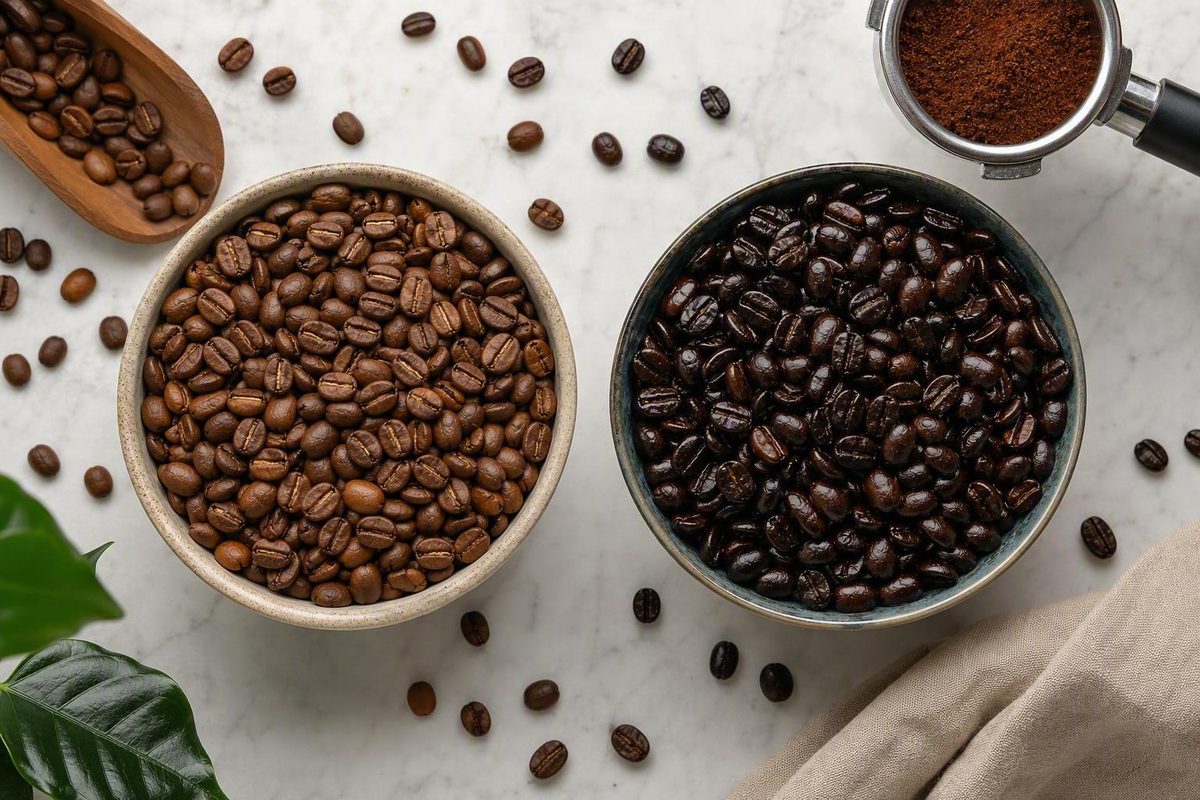
The short answer: espresso beans are coffee beans
There is no separate espresso-bean plant, species, or botanical category. Espresso beans and regular coffee beans are the same underlying product. A bag marked “espresso” usually contains coffee that the roaster selected, blended, roasted, or marketed with espresso preparation and a particular flavor profile in mind.
Coffee beans are the seeds of coffee fruit, commonly called coffee cherries. Those green seeds are then roasted before grinding and brewing. Calling the roasted result an “espresso bean” does not change its botanical identity; espresso beans and other coffee beans come from the same coffee plants, as this overview of coffee beans and espresso preparation explains.
Espresso primarily describes how coffee is prepared. An espresso machine pushes hot water under pressure through finely ground coffee over a short extraction, producing a small, concentrated beverage. These methods differ in contact time, flow, grind requirements, and how the resulting coffee is presented.
A coffee seed does not become a different botanical product when it is roasted for, labeled for, or brewed as espresso. The practical differences arise from decisions made after harvest.
It helps to separate five variables that packaging can blur together:
- Bean identity: The coffee species and variety.
- Origin or blend: Where the coffee came from and whether multiple coffees were combined.
- Roast level: Broadly light, medium, medium-dark, or dark.
- Grind size: How finely or coarsely the roasted beans are ground.
- Brewing method: Espresso, drip, pour-over, French press, or another method.
These variables influence one another, but they are not interchangeable. Espresso is not a roast level, and whole espresso beans do not possess a built-in grind size.
In brief
- Same underlying product: Espresso beans and regular coffee beans are both roasted coffee seeds.
- Commonly different intention: Espresso-labeled coffee may be blended or roasted for concentrated brewing and a particular flavor profile.
- Substantially different preparation: Espresso normally uses fine grounds, pressure, and a short extraction.
Espresso beans vs. coffee beans at a glance
The practical differences between espresso beans and coffee beans are mostly conventions of roasting, blending, packaging, grinding, and preparation—not differences in the raw ingredient.
| Point of comparison | Espresso-labeled beans | Coffee beans without an espresso label |
|---|---|---|
| Botanical identity | Ordinary coffee beans; not a separate plant or species | Ordinary coffee beans |
| Package label | Usually signals the roaster’s intended use, roast approach, or flavor target | May recommend drip, filter, pour-over, French press, or no particular method |
| Common roast range | Often medium-dark or dark, but may be light or medium | May be light, medium, or dark |
| Blend composition | May be a blend or a single-origin coffee | May also be a blend or a single-origin coffee |
| Whole-bean grind | None; whole beans have not yet been ground | None; whole beans have not yet been ground |
| Brewing method | Commonly intended for concentrated, pressure-based extraction | Commonly associated with longer, gravity-based or immersion brewing |
| Typical flavor direction | Often designed around body, sweetness, balance, or roast-forward flavors | May emphasize clarity, origin character, brightness, balance, or roast intensity |
| Cross-use | Can be used for drip, pour-over, French press, and other methods | Can be used in an espresso machine |
The words “typical” and “often” matter. Not every espresso blend is dark, chocolatey, heavy, or low in perceived acidity. Not every filter coffee is light or bright. The coffee, roast profile, grind, recipe, equipment, water, drink format, and individual palate all affect the cup.
The most meaningful contrast appears during preparation. Espresso normally calls for a fine, consistent grind because water passes through a compact bed of coffee during a short extraction. A drip brewer, pour-over cone, or French press generally uses a coarser grind suited to its longer contact time and different flow pattern. A roaster’s comparison of espresso and regular brewing similarly presents espresso as a quick, pressure-based method rather than a distinct bean category.
That is why the same whole-bean coffee can be used in several brewers. The coffee remains the same; the grind and brewing conditions change.
What an espresso label on a coffee bag usually means
On a whole-bean bag, “espresso” is best read as a recommendation. The roaster expects the coffee to work with concentrated, pressure-based extraction or to produce a flavor profile commonly sought in espresso.
That recommendation may reflect roast development, the coffees chosen for a blend, expected body and acidity, or how the resulting shot is intended to taste alone or with milk. It does not mean the coffee contains a special espresso ingredient.
Three common labels communicate somewhat different ideas:
- Espresso roast refers broadly to a roasting approach intended for espresso. It often suggests medium-dark or dark coffee, but it does not establish one universal roast level.
- Espresso blend means the roaster combined multiple coffees into a recipe intended for espresso. The term does not identify a fixed number of components, a required origin, or a mandatory roast.
- Single-origin espresso is coffee from one defined origin presented as suitable for espresso. It shows that blending is optional.
A roaster may blend coffees to combine body, sweetness, acidity, complexity, or consistency. One component might contribute weight and chocolate-like flavors while another adds sweetness or brightness. Those are design goals, not guarantees: an espresso blend can still be difficult to dial in, and a single-origin coffee can still taste balanced.
Single-origin espresso takes a different approach. Instead of combining several coffees, it foregrounds the character of one place or lot. That character may be familiar and restrained or bright and unusual. Neither approach is inherently more authentic or higher quality. They simply give the roaster different tools.
Coffee labeled for drip, pour-over, or French press may have been roasted with those longer extraction methods in mind. Even so, the recommendation does not prohibit espresso use. It tells you what the roaster was targeting, not everything the coffee can do.
Product format also matters:
- Whole-bean espresso coffee has no inherent grind size. You select the grind during preparation.
- Pre-ground espresso coffee may already be ground finely for espresso equipment.
- Pre-ground drip coffee is generally coarser and may not provide the grind characteristics needed by an espresso setup.
- Espresso-fine grounds may be unsuitable for brewers designed around a coarser grind.
Read the entire package, not just its largest word. Roast level, tasting notes, origin, blend information, whole-bean or ground format, and the roaster’s brewing recommendation reveal more than “espresso” alone.
Does espresso have to be dark roast?
No. Light-, medium-, and dark-roasted coffee can all be prepared as espresso. Dark roasting is a familiar espresso convention, not a technical requirement.
The association exists because many traditional and commercially labeled espresso coffees are roasted toward the darker end of the range. In a small, concentrated serving, these coffees can emphasize body and recognizable roast-forward flavors. They are also a familiar option for drinkers who want the coffee to remain prominent after milk is added.
Broad flavor tendencies can help shoppers, provided they are not mistaken for rules:
- Lighter roasts may produce brighter, more acidic-tasting, fruit-forward, or complex shots.
- Medium roasts may occupy a middle ground between origin character and roast-derived flavor.
- Darker roasts may emphasize heavier body and chocolate, caramel, smoky, or other roast-forward notes.
These descriptions are starting points rather than promises. A particular light roast may taste balanced and sweet, while a particular dark roast may taste harsh or hollow. Origin, processing, roast execution, grind, recipe, equipment, and palate can outweigh the broad category printed on the bag.
Espresso’s concentration can make both desirable and undesirable traits feel prominent. A bright coffee may produce an expressive shot for one drinker and an excessively sharp one for another. A dark coffee may taste rich and full to one person but too smoky to someone else.
Drink context also matters. Fuller, roast-forward coffee is one common option for lattes and cappuccinos because its flavor can remain noticeable with milk. Lighter, fruitier coffee can create a different but equally intentional milk drink, and some people prefer it as straight espresso. These are sensory choices, not equipment requirements. The Coffee Roaster’s Journal discussion of coffee for espresso likewise considers both blends and single origins, with roast choices depending on the intended flavor and drink.
Espresso is not inherently bitter, and dark roasting does not guarantee a balanced shot. Bitterness can reflect the coffee and roast, but grind, flow, extraction, recipe, and personal sensitivity can also affect how the shot tastes. Pronounced sourness is not proof that a coffee is unsuitable for espresso either. It may reflect the coffee’s natural profile, an extraction problem, or both.
Choose roast level according to the flavors you want, not according to the idea that “real” espresso must be dark.
Can you use regular coffee beans in an espresso machine?
Yes. Any suitable roasted coffee can be tried in an espresso machine. A bag does not need the word “espresso” to be compatible with pressure-based brewing.
What changes from coffee to coffee is how the beans behave and how the resulting shot tastes. A grinder setting that works for one bag may produce a very different flow with another. Roast level, bean structure, coffee age, dose, equipment, and other variables can affect extraction, so changing coffee often means dialing in again.
A practical first-shot workflow is:
- Start with your machine’s normal espresso preparation. Avoid changing every variable before learning how the coffee behaves.
- Grind the beans finely. Espresso generally needs a much finer grind than drip or French press.
- Prepare the shot and observe the flow. Notice whether the coffee rushes through, drips extremely slowly, or flows between those extremes.
- Taste before adjusting. Appearance alone cannot tell you whether the result suits your palate.
- Change one grinder setting at a time. Keeping the rest of the process reasonably consistent makes each adjustment easier to assess.
- Repeat until the flow and flavor improve.
As cautious troubleshooting guidance, a shot that runs quickly and tastes thin or sour may benefit from a finer grind. A shot that flows extremely slowly and tastes harsh or bitter may benefit from a coarser grind. This broad relationship between grind, flow, and extraction is outlined in a coffee-company guide to espresso preparation.
Treat those changes as diagnostic starting points, not infallible rules. A shot can taste sour because of the coffee’s flavor profile, and bitterness can come from dark roasting or personal taste rather than flow alone. Grind, dose, extraction, roast, equipment, water, and palate interact. The absence of an espresso label does not explain a disappointing shot by itself.
There is also practical, though informal, evidence that coffee without an espresso label can work. In one food-media test, a reviewer prepared several dark roasts not specifically marketed for espresso and found examples she enjoyed. The test included straight shots and macchiatos, but it reflected one writer’s preferences rather than controlled proof that particular brands or dark roasts are universally best.
Coffee marketed for drip can therefore make enjoyable espresso. It may be brighter, lighter-bodied, more roast-forward, or simply different from the profile its roaster intended. Compatibility is not the same as guaranteed preference.
Can espresso beans be used for drip, pour-over, or French press?
Yes. Espresso-labeled beans remain roasted coffee, so you can prepare them with a drip machine, pour-over brewer, or French press.
The brewing method changes how the coffee is extracted and presented. A concentrated espresso shot may emphasize intensity and texture, while drip or pour-over spreads the coffee’s flavors across a larger, less concentrated drink. French press immersion can present the same coffee differently again. The result may taste substantially different even though it began with the same bag.
The essential step is to grind for the brewer you are using:
- Use an appropriate drip grind for a drip coffee maker.
- Use a grind suited to the pour-over brewer and recipe.
- Use a coarser grind for French press than for espresso.
- Use a fine espresso grind when the selected espresso setup calls for it.
This distinction makes whole beans particularly flexible. You can grind the same coffee differently for each brewer. Pre-ground espresso coffee is less adaptable because its fine grind may be unsuitable for methods designed around coarser grounds.
An espresso-labeled dark roast may produce a heavier, more roast-forward brewed cup. That does not mean it will automatically be bitter or inferior. Some people enjoy that flavor direction in drip coffee or French press, while others prefer more clarity or brightness. Brewing method, grind, recipe, and palate determine whether the result suits you.
You therefore do not need to discard or replace a bag merely because its suggested method differs from the equipment you own. Brew a small amount, use the appropriate grind for your brewer, and judge the cup rather than the category.
Moka pots and AeroPress brewers can also produce concentrated, espresso-style drinks. Their brewing conditions differ from those of conventional espresso machines, however, so it is more accurate to describe the results as concentrated or espresso-style coffee rather than assume they reproduce machine espresso exactly.
How to choose coffee for espresso without relying on the label
An espresso label can narrow the shelf, but it should not make the decision for you. Choose according to the drink and flavor you want, then use the roaster’s recommendation as supporting information.
Start with your preferred flavor direction
If you prefer substantial body and roast intensity, consider medium-dark or dark coffee with chocolate, caramel, or nut-oriented tasting descriptions. This is a useful starting point for a familiar, fuller profile—not a guarantee that the coffee will taste sweet, balanced, or easy to brew.
If you prefer brightness, fruit, floral character, or a clearer expression of origin, consider a lighter roast or single-origin coffee. Its espresso may taste more acidic, and it may require a different grind or recipe from the coffee you used previously. Brightness is not automatically a flaw, just as darkness is not automatically richness.
Use them to identify broad directions that resemble flavors you already enjoy.
Consider how you will drink it
For lattes and cappuccinos, a fuller, roast-forward coffee is one accessible option because its flavor can remain noticeable with milk. Medium-dark coffee with chocolate, caramel, or nut-like descriptions is therefore a practical place to begin. It is not the only valid choice: lighter, fruitier coffee can create a contrasting milk drink.
For straight espresso, choose according to sensory preference. Do not assume the darkest option is the most authentic. If you enjoy clarity and lively acidity, a lighter single origin may appeal to you. If you want weight and roast intensity, move darker. If you are uncertain, a medium roast offers a middle-ground profile, though it is not objectively best.
Also consider whether you will dilute the espresso with water, add milk, or serve it over ice. A coffee that suits one format may not be your preferred choice in another.
Compare blends and single origins
A blend combines coffees to reach a target profile. The roaster may be seeking body, sweetness, controlled acidity, complexity, or consistency. Blending can create a combination that one component alone might not provide.
A single-origin coffee presents coffee from one defined origin rather than combining several sources. It may foreground that origin’s particular character, but “single origin” does not automatically mean more complex or higher quality.
Neither format has an inherent quality advantage. A thoughtfully designed blend can be distinctive, and a single origin can be balanced. Either can also be unremarkable or poorly suited to your taste. Sweet Maria’s explains that its own “good for espresso” recommendations are subjective judgments based partly on how individual coffees perform as single-origin espresso.
Check the product format
Buy whole beans if you have a grinder capable of making consistent adjustments for your brewer. Whole beans let you change the grind when a shot runs too quickly or too slowly, and they provide flexibility if you switch to drip, pour-over, or French press.
That flexibility does not mean whole beans automatically guarantee good espresso. The grinder must be suitable, the coffee still has to fit your taste, and the preparation still needs adjustment.
Pre-ground coffee may be convenient when you do not own a grinder. Check whether it is ground for your brewing method. “Espresso” on a package of pre-ground coffee can refer to grind as well as intended use or flavor, whereas “espresso” on whole beans cannot mean the beans are already finely ground.
Use this shopping checklist
Before buying, ask:
- What roast level is listed?
- Do the tasting notes resemble flavors I enjoy?
- Will I drink it straight, with water, with milk, or over ice?
- Is it a blend or a single-origin coffee?
- Is it whole bean or pre-ground?
- Which brewing method does the roaster recommend?
- Does the package explain the intended profile, or is “espresso” the only useful information?
The simplest decision path is: choose the drink, choose a broad flavor direction, check the roast and composition, and then treat the espresso label as guidance rather than a requirement.
Common myths about espresso beans
Myth: Espresso beans come from a special plant.
Fact: They are ordinary coffee beans. A roaster may select, blend, roast, or market them for espresso, but those decisions do not create a new botanical category.
Myth: Espresso must use dark roast.
Fact: Dark roast is common in espresso traditions and commercial packaging, but light, medium, and dark coffee can all be prepared as espresso. Each roast offers different potential flavors and may require different adjustments.
Myth: Espresso requires a blend.
Fact: Blends are useful for combining characteristics or pursuing a target profile, but single-origin coffee can also make valid espresso. Neither format is inherently superior.
Myth: Whole espresso beans are already finer.
Fact: Whole beans have no grind size. Grinding creates particle size during preparation. Only pre-ground coffee arrives with a grind already selected.
Myth: Ordinary beans cannot be used under espresso-machine pressure.
Fact: Coffee without an espresso label can be prepared in an espresso machine. Whether you enjoy it depends on the coffee, roast, grinder setting, preparation, and your preferences.
Myth: Espresso-labeled beans cannot make regular coffee.
Fact: They can be used in drip, pour-over, French press, or other brewers when ground appropriately. The cup may differ from the roaster’s intended espresso profile, but the beans remain usable.
Myth: Espresso always has more caffeine.
Fact: Caffeine concentration per ounce and total caffeine per serving are different comparisons. Espresso may be more concentrated, while a larger serving of brewed coffee may contain more caffeine overall. The answer depends on the coffee, dose, preparation, and serving size rather than the beverage name alone, as this comparison of espresso and brewed-coffee caffeine also notes.
Myth: Abundant crema proves a shot is excellent.
Fact: Crema is influenced by the coffee and preparation variables. It can be one visual feature of espresso, but it does not independently establish good flavor, balance, or overall quality.
Frequently asked questions
Can I use any coffee beans in an espresso machine?
You can try any suitable roasted coffee in an espresso machine; it does not need an espresso label. Grind it finely, prepare a test shot, observe the flow, and taste it. If it runs quickly and tastes thin or sour, try a finer grind. If it flows extremely slowly and tastes harsh or bitter, try a coarser grind. Make one adjustment at a time.
The result will depend on the coffee, roast, grind, preparation, machine, and your palate. Compatibility with an espresso machine does not mean every coffee will match your preferred flavor.
Are espresso beans always dark roasted?
No. Espresso-labeled coffee is often medium-dark or dark, but espresso can be made from light, medium, or dark roasts. Dark roast is a convention and flavor choice, not a technical requirement.
Lighter roasts may produce brighter or more complex shots, while darker roasts may emphasize body and roast-derived flavors. These are broad tendencies rather than guarantees.
Is an espresso blend better than single-origin coffee?
No. An espresso blend and a single-origin coffee represent different approaches.
A blend lets a roaster combine coffees to pursue qualities such as body, sweetness, acidity, complexity, or consistency. A single origin can foreground the character of one place or lot. Either can make enjoyable or disappointing espresso, depending on its design, preparation, and compatibility with your taste.
Can I use espresso beans in a drip coffee maker or French press?
Yes. Grind the beans appropriately for the chosen method rather than using an espresso-fine grind. Whole-bean espresso coffee is particularly flexible because you can select a different grind for drip or French press.
Pre-ground espresso coffee may be too fine for those methods. A darker espresso roast may also produce a heavier or more roast-forward brewed cup, but it is not automatically bitter or inferior.
Does espresso have more caffeine than regular coffee?
It depends on what you are comparing. Espresso may contain more caffeine per ounce because it is concentrated, but brewed coffee is usually served in a much larger volume and may contain more total caffeine per serving. The distinction between concentration and total serving caffeine is summarized in this espresso and coffee comparison.
Coffee type, dose, preparation, beverage yield, and serving size all affect the comparison. Neither espresso nor brewed coffee should be declared categorically higher in caffeine without defining the portion and recipe.
The useful distinction is simple: espresso beans are coffee beans, while espresso is a preparation method. The label can communicate a roaster’s intended flavor or brewing recommendation, but it is neither a requirement nor a guarantee. Choose a roast and flavor profile that fit your drink, grind for the brewing method, and adjust according to how the coffee flows and tastes.