 KL Observer
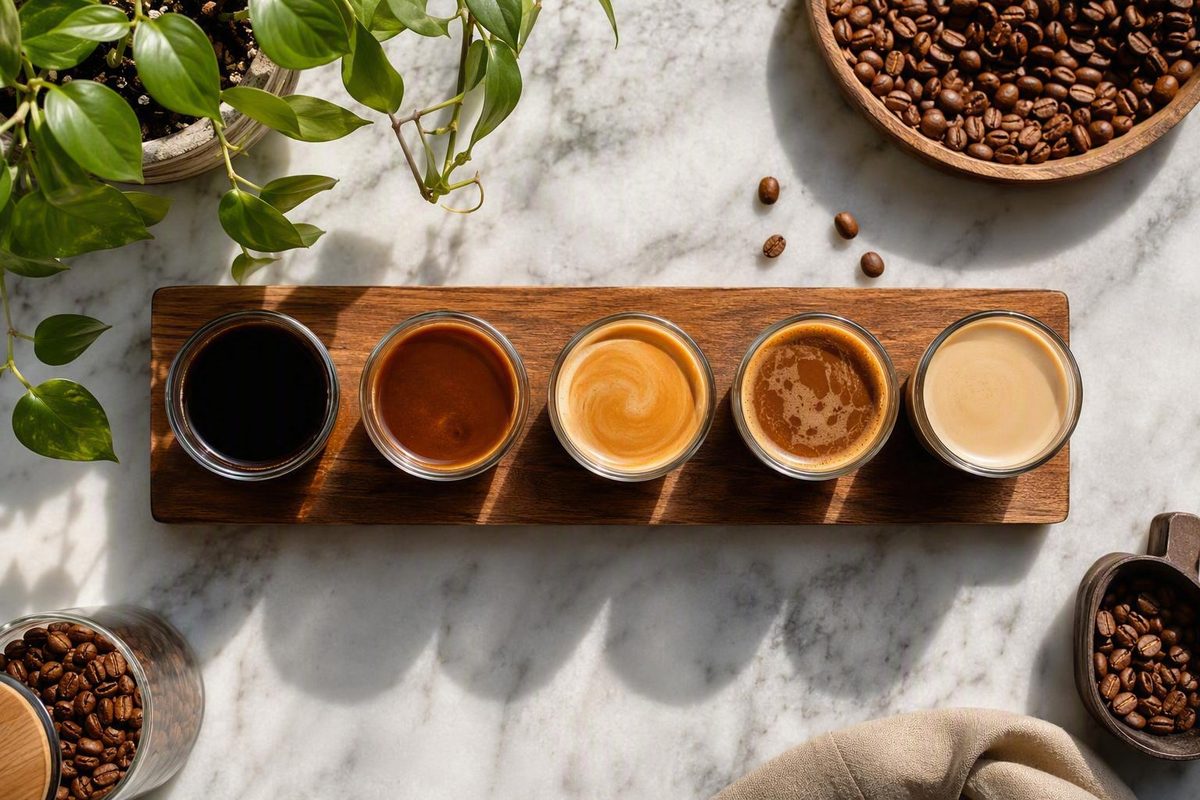
Coffee flights turn a café order into a comparison. Instead of choosing one full-size drink, you receive several smaller servings together and move between them, noticing contrasts in aroma, sweetness, texture, roast character, preparation, or flavoring.
The term describes a format, not a standardized product. One café might compare three single-origin filter coffees. Another might serve the same beans as espresso, filter coffee, and a small milk drink. Elsewhere, a coffee flight could mean four flavored iced lattes designed as a seasonal or social experience.
None of these versions is inherently the correct one. The useful question is what a particular flight was designed to do. Before ordering—or making a special trip—check its theme, portions, ingredients, tasting order, customization policy, price, and current availability.
What Is a Coffee Flight?
A coffee flight is a group of small coffee drinks prepared and served together for side-by-side comparison. The servings may arrive on a tray or paddle, in numbered positions, or beside a card identifying each drink.
Coffee flights are commonly described as containing three to five samples, but there is no universal rule governing the number of cups, serving volume, ingredients, preparation method, or presentation (Fresh Cup describes the common range and several flight formats).
The main advantage is immediate contrast. If you drink one coffee on Monday and another on Friday, it can be difficult to remember precisely how their aromas, textures, and finishes differed. When the cups are side by side, you can return to each one and ask focused questions:
- Which smells more floral, nutty, chocolate-like, or roasted?
- Which feels lighter or heavier in the mouth?
- Which seems brighter, sweeter, more bitter, or more muted?
- Which flavor disappears quickly, and which lingers?
- Does one become more appealing as it cools?
A flight also differs from ordering several full-size drinks. Smaller portions usually make it more practical to compare multiple options without committing to a complete serving of each. Even so, “small” is relative. A specialty-focused flight might use only a few ounces per cup, while a flavored sampler may contain drinks large enough to resemble separate menu orders.
The label alone does not reveal which experience you will receive. A flight might be a carefully arranged comparison of origins brewed by the same method, or it might showcase lattes containing different syrups, milk proportions, and toppings. The first isolates coffee differences more clearly; the second helps you explore a café’s finished drinks.
Both can be worthwhile. They simply answer different questions. Inspect the actual lineup instead of assuming every coffee flight is an origin tasting, a bargain bundle, or a formal sensory exercise.
The Main Types of Coffee Flights
Coffee flights can be organized around almost any meaningful menu theme. Understanding the most common structures will help you choose one that matches your interests.
Different origins or varieties
In an origin flight, several coffees are prepared using the same brewing method. One cup might come from Ethiopia, another from Colombia, and another from Indonesia. A more specialized version could compare coffee varieties or processing methods.
Keeping the brewing method consistent makes the coffee itself the main variable. The cups may still differ because of roast, processing, freshness, or small preparation differences, but there are fewer moving parts than in a flight composed of unrelated beverages.
This format is useful if you want to understand why two black coffees can taste noticeably different without added milk, sugar, or flavoring.
Light-to-dark roast comparisons
A roast flight places coffees with different roast profiles side by side, ideally using the same preparation method. It may progress from a lighter roast toward medium and darker options.
This structure can reveal differences in roast aroma, bitterness, perceived brightness, body, and finish. There is no need to treat lighter or darker as inherently better. The purpose is to identify which characteristics you prefer and whether that preference changes with milk, food, temperature, or brewing style.
The most controlled version would use the same coffee roasted to different levels. In ordinary café service, however, each roast may come from a different origin or blend. Ask what has been kept consistent if you want to understand exactly what is being compared.
One coffee brewed several ways
A method flight keeps the coffee consistent but changes the brewing process. The lineup might include drip coffee, pour-over, immersion brewing, espresso, or another available method.
The servings will not necessarily have the same concentration or texture. That variation is part of the exercise. A coffee may seem delicate in a filtered cup, heavier through an immersion method, and much more concentrated as espresso.
This is one of the clearest ways to explore how preparation affects what you perceive, rather than treating the brewing method as a neutral delivery system.
Espresso, filter, and milk-drink flights
Some flights show how one coffee behaves across substantially different menu preparations. Perfect Daily Grind has reported that Moving Coffee offers one coffee as espresso, filter coffee, and piccolo, while The Coffee Movement offers specialty-focused filter flights (see the publication’s account of both formats).
An espresso, filter, and milk-drink flight is less controlled than a set of comparable filter brews because concentration and the presence of milk vary. Yet that variation is the point: the flight demonstrates how one coffee is expressed in different café contexts.
A filter-only flight places more attention on differences among the coffees themselves. If the same preparation method is used throughout, it becomes easier to compare aroma, acidity, sweetness, body, and finish without milk or major changes in concentration becoming dominant variables.
Cold-brew flights
A cold-brew flight may compare different beans prepared as cold brew, several cold-brew recipes, or finished drinks containing cold brew with flavoring or cream.
Check the descriptions carefully. Three unsweetened single-origin cold brews create a very different comparison from three flavored drinks built on the same cold-brew base. Neither is incorrectly labeled, but sweetness and dairy may become the dominant variables in the latter.
Flavored-latte flights
Flavored-latte flights are primarily designed for menu exploration. They may contain several syrups, sauces, spices, or seasonal combinations. The espresso and milk base might remain consistent, but each flavoring changes the finished drink.
At the time represented by its published café page, Toasted listed a four-drink flight containing cold brew, vanilla latte, caramel macchiato, and mocha latte in four-ounce pours. Because the drinks differ in milk, chocolate, vanilla, caramel, sweetness, and preparation, this format compares finished beverages rather than isolating one coffee variable (Toasted describes the lineup and serving size on its café page).
This can be ideal if your real question is, “Which drink should I order next time?” It is less suitable if you want to compare subtle differences between beans.
Seasonal and themed samplers
Seasonal flights may feature pumpkin, chocolate, floral, holiday, or fruit flavors. They can be elaborate and considerably larger than focused tasting flights.
At the time represented by its product page, Style Pop Cafe listed four 10-ounce iced latte or cold-brew drinks: Brown Sugar Banana, Cinnamon Vanilla, Pumpkin Spice, and Sweet Potato Pie. That is a substantial set of finished beverages rather than a few tasting sips (the merchant page lists the sizes, flavors, and dairy policy).
Historical regional roundups have also described hot, iced, cold-foam, chiller, hot-cocoa, and alcoholic flight formats. These examples demonstrate how broadly cafés and writers use the term, but they do not establish that any particular flight remains available.
As a practical guide:
- Choose an origin, roast, or brew-method flight for a focused coffee comparison.
- Choose an espresso, filter, and milk-drink flight to explore a café’s core menu.
- Choose a flavored, cold, or seasonal flight for variety, indulgence, or a shared social order.
How Many Drinks and How Large Are the Samples?
Three to five drinks is a commonly described range, and four-position trays recur in commercial presentation guidance. These are conventions rather than standards; cafés can use larger or smaller trays and determine their own portions (The Restaurant Store outlines common tray and presentation formats).
Published examples demonstrate how broad the serving range can be. Fresh Cup notes that portions may be as small as two ounces. These small servings suit comparative tasting, but they should not be treated as a universal minimum or normal size (see Fresh Cup’s examples of tasting portions).
Perfect Daily Grind reports that The Coffee Movement serves three coffees in four-ounce glasses. Toasted’s first-party page also lists four-ounce pours. By contrast, Style Pop Cafe’s listing describes four 10-ounce flavored drinks. These examples come from different businesses and serve different purposes, so they should not be combined into an industry average (Perfect Daily Grind reports The Coffee Movement’s serving format).
Sample count therefore tells you little about total volume. A three-cup tasting flight could contain less liquid than one standard café drink, while a four-drink seasonal sampler could amount to several substantial beverages.
Larger portions are not automatically better for focused comparison. They provide more beverage, make sharing more practical, and may let you observe how the drinks change with temperature. They can also make the experience cumbersome, especially when the lineup is rich, sweet, or milk-heavy. For comparative tasting, enough coffee to smell, sip more than once, and revisit is often more useful than sheer volume.
Presentation varies almost as much as portion size. Common aids include:
- A wooden paddle or fitted tray
- Numbered or left-to-right positions
- Labels beside each cup
- Write-on surfaces naming the drinks
- A printed tasting card
- Notes about origin, roast, processing, or preparation
- A recommended tasting order
- A brief introduction from a barista
These details are functional, not merely decorative. Without labels, it is easy to lose track of which sample is which. A simple numbered order also helps everyone at the table discuss the same drink.
When reading a menu, determine what the stated size describes. “Four ounces” could mean brewed black coffee, a complete four-ounce milk drink, or a vessel containing espresso plus milk, syrup, and foam.
Avoid estimating value from ounces alone. Espresso, manually brewed coffee, milk, house-made syrup, and guided service involve different ingredients and preparation. No general calorie or caffeine total can be inferred from the word “flight” because recipes, coffee doses, concentration, milk, syrups, ice, and serving volumes vary.
If total volume, caffeine, ingredients, or nutrition matters to you, ask the café for information about the actual recipes rather than calculating from the number of cups.
How to Taste a Coffee Flight
You do not need an elaborate flavor vocabulary to compare coffee. A beginner-friendly approach starts with identifying the purpose of the lineup and asking the same simple questions about every sample.
1. Identify the flight’s purpose
Read the labels or tasting card before taking the first sip. Determine what the flight is intended to compare:
- Different origins?
- Different roasts?
- One coffee brewed in several ways?
- Espresso, filter, and milk preparations?
- Cold brews?
- Flavored lattes?
- Seasonal menu creations?
This tells you which differences deserve attention. In an origin flight, you might focus on aroma, brightness, sweetness, body, and finish. In a flavored-latte flight, you may care more about syrup balance, milk texture, espresso presence, and whether the flavor remains appealing after several sips.
2. Smell each sample
Smell the drinks before tasting, preferably while they are easy to identify and before stronger flavors dominate your attention.
You do not need to name a specific flower, fruit, or spice. Start with broad observations:
- Strong or faint?
- Sweet-smelling or roasty?
- Fruity, nutty, chocolate-like, spicy, or smoky?
- Similar to another cup, or clearly different?
Aroma may change as the coffee cools, so return to the cups later if the tasting remains comfortable and enjoyable.
3. Compare a few sensory characteristics
Use a manageable framework rather than searching for perfect terminology.
Aroma is what you perceive through smell. It can be subtle or pronounced and may remind you of familiar foods, plants, spices, or roasted ingredients.
Acidity is the bright, lively, tart, or crisp quality in a coffee. It is not automatically the same as unpleasant sourness. Ask whether the cup feels vivid and sharp, soft and rounded, or relatively muted.
Sweetness is the impression of natural or added sweetness. Black coffee may remind you of fruit, caramel, or chocolate without containing added sugar. In a latte flight, distinguish the coffee’s character from syrup or sauce where possible.
Body or mouthfeel describes physical weight and texture. Does the drink feel light, tea-like, silky, creamy, thick, or coating?
Flavor is the overall taste impression. Familiar associations are useful, but personal descriptions are valid. “Toast,” “cocoa,” “citrus,” “nuts,” or simply “roasty” can be more helpful than forcing a precise note you do not perceive.
It may be short or lingering, clean or coating, sweet, bitter, fruity, roasted, or dominated by flavoring.
People do not perceive every coffee in the same way. Treat a tasting card as a set of prompts, not an answer key.
4. Choose a sensible order
If the drinks differ substantially, begin with the subtler, less sweet, or less intensely flavored samples. Move toward chocolate-heavy, syrup-rich, strongly roasted, or otherwise dominant drinks.
For its own listed recipes, Toasted recommends progressing from cold brew to vanilla latte, caramel macchiato, and mocha latte. That sequence moves broadly from less sweet toward more flavor-forward drinks, but it is a café-specific recommendation rather than a universal tasting rule (see Toasted’s stated order).
For similar black coffees, follow the café’s intended order if one is provided. The sequence may reflect roast, origin, processing method, or expected intensity.
You can also compare one characteristic across the entire lineup before moving to the next. Smell every sample first. Then compare body across all the cups. Next, examine sweetness, flavor, and finish. This can be easier than trying to produce a complete description of cup one before touching cup two.
5. Take brief notes
A few words are enough. The goal is to preserve contrasts while the cups are still in front of you.
Try prompts such as:
- Light or heavy?
- Bright or muted?
- Dry or sweet?
- Clean or coating?
- Familiar or unusual?
- Short or lingering finish?
- Would I order a full cup?
- Better hot, warm, or cool?
You can rank the drinks, but ranking alone may hide useful information. The cup you find most interesting is not necessarily the one you would want in a full serving.
A beginner’s notes might look like this:
| Sample | Illustrative notes |
|---|---|
| Coffee 1 | Floral aroma, bright, light body, short clean finish |
| Coffee 2 | Cocoa-like, rounder sweetness, medium body, easy to drink |
| Coffee 3 | Strongly roasted, heavier texture, lingering bitter finish |
These are examples of note-taking style, not expected conclusions. Another person could perceive the same cups differently.
6. Account for milk, sugar, temperature, and preparation
If one sample is black coffee and another contains milk and syrup, you are not comparing only the beans. Sugar and syrups add sweetness and their own aromas.
These differences are not flaws when they are part of the intended menu experience. Simply describe what you are actually comparing.
If your goal is to evaluate the underlying coffee, taste it without additions first when possible. You can then add milk or sugar and observe what changes. Pause when needed and keep the experience comfortable; there is no strong evidence in the supplied research that a particular food, drink, or espresso shot scientifically resets the palate.
How to Choose a Café Flight That Matches Your Goal
The best flight is the one designed for the experience you want. A large seasonal sampler and a small origin comparison should not be ranked solely by volume because they serve different purposes.
If you want a focused coffee comparison
Look for a flight that changes one main variable at a time:
- Several origins brewed by the same method
- Several roast levels brewed consistently
- One coffee prepared through different brewing methods
- Several unsweetened cold brews
- A guided filter-coffee tasting
Ask whether the coffees will be labeled and whether the barista can explain their origin, processing, roast, or preparation. Guidance can provide useful context, but it should not be treated as a guarantee that everyone will perceive the same notes or improve their coffee knowledge in the same way.
If you want to explore the menu
Choose a flight containing espresso, filter coffee, and milk drinks, or several of the café’s signature beverages. This can answer practical ordering questions: Do you prefer the café’s cold brew or latte? Does its mocha overwhelm the coffee? Is a small milk drink more appealing than straight espresso?
Because these drinks may differ in several ways, do not expect a controlled comparison. The purpose is breadth.
If you want a sweeter social experience
A flavored-latte or seasonal flight may be the better fit. Look for appealing flavor combinations, hot or iced service, and portions suited to your group.
These flights can be substantial, so check whether the order is intended for one person or commonly shared. Sharing may be practical, but do not assume it is permitted or convenient. Vessel size, place settings, service policy, and the purpose of the tasting should guide the decision.
If you want instruction
Look for a guided tasting rather than relying on the word “flight.” A useful guided service may explain:
- Where the coffees came from
- How they were processed or roasted
- How each cup was brewed
- Why the sequence was chosen
- Which sensory differences to consider
Guided service may require additional time and may not be offered during busy periods. Confirm whether instruction is included, scheduled separately, or available only when staffing permits.
Check customization rules
Some lineups are fixed because the progression is part of the experience. Others allow customers to swap flavors or choose from a wider menu.
On the pages represented in the supplied evidence, Toasted says substitutions may be requested. Perfect Daily Grind reports a different style of specialty service: Moving Coffee generally serves its flights without cream or sugar, most without milk, and provides tasting-note cards, while The Coffee Movement makes cream, sugar, and alternative milk available on request.
Neither approach is universally better. A fixed lineup creates a shared and potentially more coherent comparison. Customization makes it easier to accommodate preferences and explore drinks you actually want. If you require decaf, plant milk, reduced sweetness, or an allergen-related change, ask before ordering.
Because menu policies can change, verify current options directly rather than relying on an older article or product page.
A compact pre-order checklist
Before ordering, check:
- Theme: What is the flight comparing?
- Count: How many drinks are included?
- Size: What is the serving volume of each?
- Format: Hot, iced, or mixed?
- Lineup: Fixed, customer-selected, or substitutable?
- Ingredients: Milk, syrups, toppings, alcohol, or other additions?
- Coffee options: Are decaf or lower-sugar versions available?
- Guidance: Are labels, notes, a suggested order, or barista explanation included?
- Service: Dine-in only, takeaway, preorder, or reservation?
- Sharing: Is sharing practical and permitted?
- Timing: Permanent item or limited to certain days, seasons, or hours?
- Price: What is the current total, including substitution charges?
A concise question at the counter—“Could you explain the sizes, lineup, and whether substitutions are possible?”—will often reveal more than the flight’s name.
Availability, Price, Ingredients, and Other Details to Verify
A published coffee-flight listing is not proof of current availability. Flights may be permanent menu items, rotating seasonal specials, holiday promotions, brunch-only orders, or drinks prepared only during particular service periods.
Historical regional articles illustrate this variability. A Minnesota roundup described seasonal flights at several venues and reported that Silver Fern Cafe usually stopped flight service later in the day (the roundup provides historical examples that require direct verification). A Metro Detroit article described hot, iced, cold-foam, chiller, seasonal, hot-cocoa, and boozy formats, including a brunch flight restricted to particular days and hours (see the historical Metro Detroit roundup).
These third-party roundups are useful for discovering possibilities, not confirming a trip. Old hours, photographs, hearsay, contradictory schedules, or inclusion in a broad list should never be treated as evidence that a flight is available today.
When the flight is the main reason for visiting, check:
- The café’s current official menu or ordering page.
- Its recent first-party social posts.
- Whether the flight can currently be added to an online order.
- The applicable day and service window.
- Direct confirmation from the café if the available information is unclear.
Verify the current price, number of samples, serving volumes, flavors, hot or iced format, dine-in or takeaway rules, substitutions, advance-order requirements, and reservation policy.
If alcohol is involved, ask about service times, applicable age and identification requirements, food-purchase conditions, and nonalcoholic alternatives. Do not assume ordinary coffee-service rules apply.
Ingredient questions deserve the same attention. Depending on your needs, ask about:
- Dairy in the drink, syrup, sauce, foam, or topping
- Plant-milk availability and possible cross-contact
- Other relevant allergens
- Decaffeinated espresso or coffee
- Added syrups and whether sweetness can be reduced
- Unsweetened alternatives
- Alcohol-free versions
- Whether substitutions apply to online, in-person, and takeaway orders
At the time represented by its merchant page, Style Pop Cafe specified that every drink in its listed flight contained dairy and that milk substitutions were unavailable for online orders. The same page displayed contradictory stock messages, illustrating why a product listing should not automatically be read as confirmation of immediate availability (see the merchant’s product and ordering details).
Price comparisons also require context. A flight’s cost may reflect serving size, espresso doses, manual brewing, premium coffee, dairy, syrups, presentation, or guided service. Compare what is included rather than looking only at the number of cups.
For travelers, build a coffee flight into the day only after confirming the practical details. A carefully planned route cannot compensate for a seasonal item that has ended or a service window that closes before arrival. The supplied evidence does not establish that any particular Kuala Lumpur café currently offers coffee flights, so this guide should be used as a location-neutral framework rather than a local venue directory.
Coffee Flights, Guided Tastings, and Cupping Are Not the Same
A café flight is a flexible menu format. There are no universal rules for its brewing method, portion size, number of drinks, ingredients, serving vessels, or level of explanation.
A guided tasting adds instruction to the comparison. A barista or host might discuss origin, variety, processing, roasting, brewing, and expected sensory characteristics. The drinks may still be prepared as ordinary café beverages, but the explanation gives the experience more structure.
Cupping-style tasting is more controlled. Coffees are prepared using consistent quantities, vessels, water, timing, and tasting steps so participants can compare them under similar conditions. It generally focuses on the coffees rather than latte recipes, syrups, or decorative presentation.
Starbucks publishes one branded at-home cupping-style method using three to four coffees. Its instructions specify nine grams of coffee and 150 grams of water per sample, with the water heated to 200°F. The crust is broken and removed after four minutes, after which the coffee cools before participants smell and taste it by spoon, including a slurping step (Starbucks provides the complete branded procedure).
That recipe is one published method, not proof of a single universal professional standard. Cafés, roasters, trainers, and professional protocols may use different requirements.
| Format | Primary purpose | Degree of control | Typical service |
|---|---|---|---|
| Café flight | Compare or explore several menu items | Low to variable | Several small drinks served together |
| Guided tasting | Compare with explanation and context | Variable | Flight plus instruction |
| Cupping-style tasting | Evaluate coffees under consistent preparation | Higher | Measured coffee, water, timing, vessels, and tasting steps |
A flavored-latte or cold-brew flight can still be worthwhile even though it is not a controlled evaluation of origin or roast. It might help you find a preferred menu drink, enjoy seasonal flavors, or share a varied café order. Calling it less formal describes the method, not its value or enjoyment.
How to Build a Simple Coffee Flight at Home
You do not need specialized café equipment to create a useful home flight. The most important decision is what you want to compare.
Template 1: Three origins, one brewing method
Choose three coffees from different origins and brew all of them using the same method. Keep the coffee dose, water amount, water temperature, grind approach, brew time, and serving volume as consistent as practical.
This format directs attention toward differences among the coffees. For a fairer comparison, choose coffees with reasonably similar roast levels, although perfect control is not necessary for an enjoyable beginner tasting.
Template 2: One coffee, three brewing methods
Use one bag of coffee and prepare it three ways—for example, with filter, immersion, and espresso methods if your equipment permits.
The servings will not have identical concentration or texture, so the goal is not strict equivalence. Instead, consider which characteristics each method emphasizes. Does one feel cleaner? Does another have more body? Which has the clearest aroma or longest finish?
Template 3: Three roast levels, one method
Choose light-, medium-, and dark-roasted coffees and brew them with the same method.
Because the coffees may also differ in origin or blend composition, present this as a broad roast comparison rather than a controlled experiment. Note roast aroma, brightness, bitterness, sweetness, body, and finish without assuming that one level is objectively superior.
Keep the lineup manageable
Three or four coffees are enough for a beginner flight.
Use small servings. You need enough to smell, taste, revisit, and observe as the coffee cools—not necessarily a full mug of every sample. Stop when the exercise is no longer enjoyable rather than forcing yourself to finish every cup.
There is no responsible universal caffeine estimate for a home flight without knowing the coffees, doses, brewing recipes, concentrations, and amount consumed.
Gather practical equipment
For an ordinary brewed flight, use the equipment required by your chosen brewing method and matching cups where possible. A scale and timer make consistency easier.
For a cupping-style setup, useful items include:
- Coffee grinder
- Kitchen scale
- Timer
- Similar bowls or cups
- Spoons
- Kettle
- Water glasses
- A receptacle for removed grounds
- Labels or numbered paper
- Pen and tasting sheet
Try one published cupping-style method
For a structured option, the Starbucks method uses nine grams of coffee and 150 grams of 200°F water for each sample. Its instructions call for breaking and removing the crust after four minutes, followed by additional cooling before tasting (see the complete preparation and tasting sequence).
Label the bowls before adding water. Smell the dry grounds and then the wet coffee. Once the samples have cooled enough to taste comfortably, use a spoon to compare them.
This is a practical branded recipe, not an industry mandate. If you choose another established method, consistency across the samples matters more than copying these exact measurements.
For a normally brewed flight, control what you can
When preparing filter or immersion coffee, keep these factors as steady as your equipment allows:
- Coffee dose
- Water amount
- Water temperature
- Grind approach
- Brewing time or technique
- Agitation
- Filter type
- Serving volume
- Time between brewing and tasting
If you are comparing brewing methods, some of these variables will necessarily change. Record those differences instead of describing the comparison as fully controlled.
Make a simple tasting sheet
Use one row per coffee and a few consistent categories:
| Coffee | Aroma | Acidity | Sweetness | Body | Flavor | Finish | Overall preference |
|---|---|---|---|---|---|---|---|
| 1 | |||||||
| 2 | |||||||
| 3 | |||||||
| 4 |
Short descriptions work well. “Floral, bright, light, short finish” may be enough. You can also use simple scales such as low, medium, and high, provided you apply them consistently.
Taste the coffees without additions first when comparison is the goal. After recording your initial impressions, add milk or sugar if you normally use them. Then ask what changed: Did the coffee seem smoother? Did its aroma become harder to notice? Did sweetness reveal or obscure another flavor? Would you prefer it black or with additions as a full drink?
Frequently Asked Questions About Coffee Flights
How many drinks are usually in a coffee flight?
Coffee flights are commonly described as containing three to five drinks, and four-position presentation trays are widespread in commercial guidance. Neither convention is a binding standard, so a café may serve fewer or more samples depending on its theme, portion sizes, and service model (The Restaurant Store describes the usual range and tray options).
Check the menu rather than assuming “flight” means four cups. The total beverage volume can vary dramatically even when two flights contain the same number of drinks.
Can a coffee flight include lattes, cold brew, or non-coffee drinks?
Yes. Coffee flights may include black coffee, espresso, lattes, cold brew, or a mixture of preparation styles. Some cafés also apply the flight format to tea, matcha, lemonade, hot cocoa, or other non-coffee drinks.
A mixed lineup is useful for menu exploration, but it is not a controlled comparison of coffee origins or roasts. Read each drink description to understand what you are ordering.
Can I request decaf, plant milk, or substitutions in a coffee flight?
Possibly, but policies differ. Some cafés allow swaps, while others use a fixed lineup or cannot modify preassembled or online orders. Plant milk may be available for one flight but unavailable for another.
Ask whether decaf is possible for every sample or only some, whether syrups or sauces contain dairy or other allergens, whether plant milk costs extra, and whether substitutions apply to online as well as in-person orders.
How is a coffee flight different from coffee cupping?
A coffee flight is a flexible menu presentation in which several drinks are served together. The samples may have different ingredients, serving sizes, temperatures, or preparation methods.
Cupping is a more controlled tasting approach. Coffees are prepared with consistent doses, water, vessels, timing, and tasting steps to make comparison easier. A café flight can borrow elements from cupping, and a guided tasting may sit between the two, but the terms are not interchangeable.
How can I find coffee flights near me?
Search for “coffee flights” plus your city, neighborhood, or intended travel area. Seasonal terms such as “latte flight,” “cold brew flight,” or “holiday coffee flight” may reveal options that a general search misses.
Treat directories, roundups, photographs, and older articles as leads rather than current confirmation. Check the café’s official menu, ordering page, and recent first-party posts. Contact the business when the flight is central to your visit, and confirm the date, service window, price, portions, ingredients, dine-in rules, and reservation or preorder requirements.
Ultimately, a coffee flight is a format rather than a fixed product. Decide whether you want a focused comparison, an introduction to a café’s menu, or a sweet seasonal sampler. Then verify the lineup, portions, ingredients, customization rules, price, and availability.
Once the cups arrive, do not worry about finding one objectively best coffee. Compare aroma, acidity, sweetness, body, flavor, and finish, and notice which drink suits the experience you want. The same straightforward framework works whether a barista serves the flight or you assemble it at home.