 KL Observer
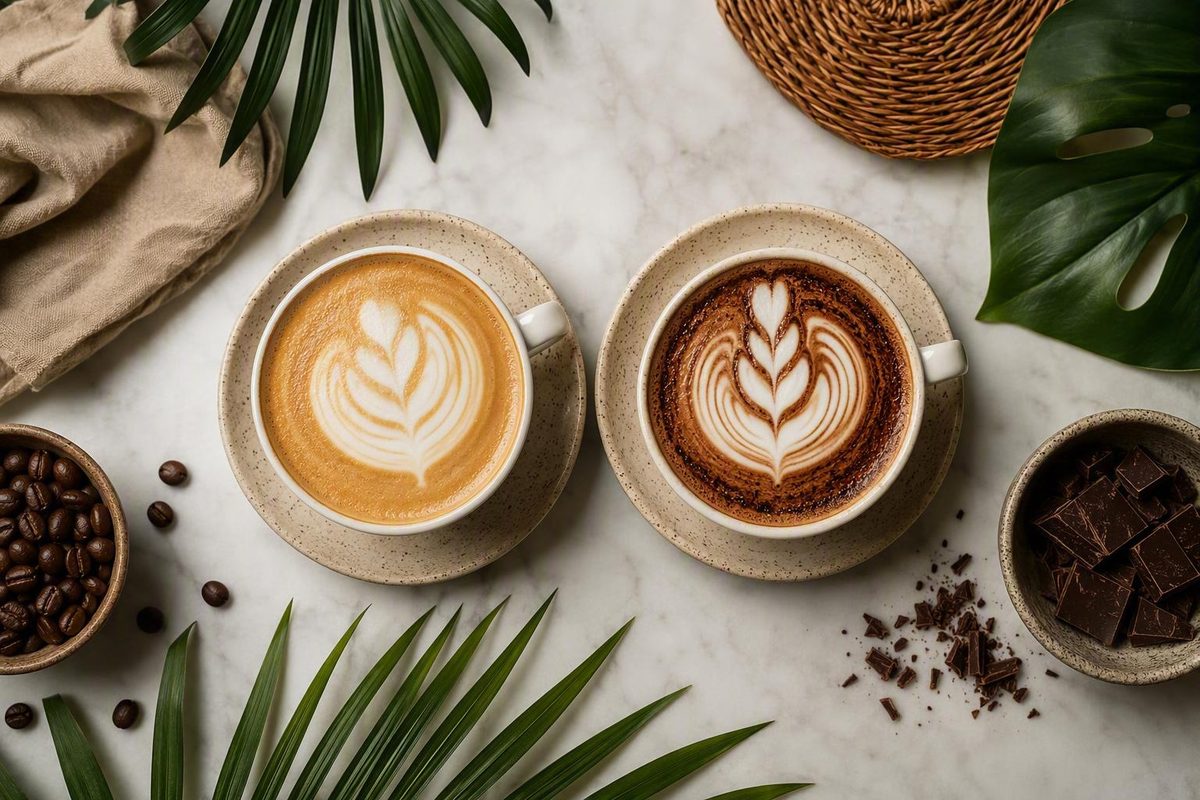
The quick verdict: should you order a mocha or a latte?
Choose a mocha when you want espresso and milk with a sweet, rich chocolate character. Choose an unflavored latte when you want a smooth, creamy espresso drink without chocolate or default flavored syrup.
Neither is objectively better. The practical question is whether chocolate should be central to your drink—and, if so, how sweet you want it to be.
| Point of comparison | Latte | Mocha |
|---|---|---|
| Core ingredients | Espresso and steamed milk, usually with a thin foam layer | Espresso, milk, and chocolate |
| Chocolate | Not included in a standard unflavored latte | The defining addition |
| Typical sweetness | Mild, mainly from the milk unless syrup is added | Usually sweeter because of the chocolate preparation |
| Coffee prominence | Generally more noticeable than in a comparable mocha | Often softened or masked by chocolate and sweetness |
| Texture | Smooth, creamy, and milk-forward | Creamy and often perceived as richer |
| Main caffeine driver | Espresso type and number of shots | Espresso type and number of shots; chocolate may add a small amount |
| Usual calorie direction | Usually lower than a comparable unflavored mocha | Usually higher because of chocolate and possible toppings |
| Common customizations | Extra shot, less milk, flavored syrup, alternative milk, iced, or decaf | Less chocolate, extra shot, no whipped cream, alternative milk, iced, or decaf |
With the same espresso type and shot count, the two drinks usually receive similar caffeine from the coffee; chocolate may contribute a small amount. A comparable mocha will generally have more calories and sugar than an unflavored latte because it adds chocolate and may include toppings. Both comparisons remain recipe-dependent, as the commercial guides from Breville and Wabilogic emphasize.
The stable distinction is the ingredient list: a latte combines espresso and milk, while a mocha adds chocolate. Shot count, milk quantity, serving size, chocolate dose, toppings, caffeine, calories, and sugar depend on the café’s recipe. Naming and preparation can also vary between coffee shops.
Use this four-question decision flow:
-
Do you want chocolate? If yes, start with a mocha. If no, choose a latte.
-
Do you want significant added sweetness? A standard mocha is more likely to provide it. For little or no added sweetness, choose an unflavored latte—or ask whether the café can prepare a mocha with less chocolate or unsweetened cocoa.
-
Do you want the espresso to remain more noticeable? Start with a latte. If the standard version tastes too milky, request less milk or another espresso shot.
-
Are you willing to modify the standard recipe? If so, either drink becomes more flexible. A reduced-chocolate mocha can suit someone who likes cocoa flavor but dislikes dessert-like sweetness. An extra-shot latte can provide a more pronounced espresso character without chocolate.
When caffeine or nutrition matters, compare exact orders rather than treating “mocha” and “latte” as fixed formulas. A small double-shot latte and a large single-shot mocha are not matched drinks, even if the mocha tastes richer.
What is actually in each drink?
A standard latte combines espresso with a comparatively generous amount of steamed milk and usually a thin layer of foam. The milk softens the espresso’s bitterness and creates a smooth, creamy texture.
A standard mocha uses the same broad foundation—espresso and milk—but adds chocolate. It can therefore reasonably be described as a chocolate-flavored latte. An example café guide from Canal Coffee defines the drinks this way while also illustrating how shot counts, milk quantities, and chocolate amounts can vary.
Chocolate is the defining addition. Whipped cream is not. A café may serve a mocha with whipped cream, chocolate drizzle, shavings, cocoa dust, or no garnish at all. Removing the whipped cream does not turn it into a latte as long as chocolate remains in the espresso-and-milk mixture.
A café might make its mocha with:
- Sweetened chocolate syrup
- Chocolate sauce
- Cocoa powder
- Melted dark or milk chocolate
- Chocolate chips or pieces melted by the espresso
- White chocolate sauce
- A proprietary chocolate mixture
These preparations do not produce identical drinks. Sweetened syrup can create a pronounced dessert-like flavor, while unsweetened cocoa can produce a drier, more bitter chocolate note. Dark, milk, and white chocolate preparations can also differ in flavor, sweetness, and richness.
The same naming logic applies to flavored lattes. A vanilla latte remains a latte flavored with vanilla. Caramel and hazelnut lattes do not become mochas simply because syrup has been added. Chocolate is the relevant distinction.
Menus may use names such as mocha latte, caffè mocha, or chocolate latte. Although recipes can differ, these names generally point to the same central combination: espresso, milk, and chocolate.
Avoid treating any one espresso-to-milk ratio as universal. Some cafés use the same shot count across several cup sizes and increase only the milk. Others add shots as the cup gets larger. Independent cafés and large chains may also use different serving sizes and preparation conventions. Boise Coffee’s ordering guide explicitly notes that drink names and practices can vary by location and shop, so the menu label is only a starting point.
The practical definitions are therefore simple:
- Latte: Espresso plus a generous amount of steamed milk, normally with light foam.
- Mocha: Espresso plus milk and chocolate, with toppings optional.
How mocha and latte differ in flavor, sweetness, and texture
A typical mocha is richer, sweeter, more chocolate-forward, and more dessert-like than an unflavored latte. Chocolate broadens the flavor beyond coffee and milk, while sweetened sauces or syrups can make espresso bitterness less noticeable.
An unflavored latte is generally smooth, creamy, milk-forward, and mildly sweet. Its sweetness comes mainly from the milk rather than from standard chocolate or flavored syrup. Espresso remains part of the flavor structure, although a generous amount of milk can make it taste gentle rather than sharp.
This creates an important distinction: a drink that tastes less like coffee does not necessarily contain less coffee. If a mocha and latte use the same espresso, chocolate and sweetness may make the mocha seem less coffee-forward by competing with roasted or bitter notes.
Flavor intensity is not a caffeine measurement. A bittersweet mocha may taste bold because of cocoa and espresso flavors. A sweet mocha may taste rich because of its chocolate and milk. Neither sensation tells you how many espresso shots are in the cup.
How the form of chocolate changes a mocha
“Chocolate” is not one uniform ingredient:
- Sweetened chocolate syrup mixes readily and normally adds noticeable sweetness.
- Unsweetened cocoa contributes chocolate flavor without adding sugar in the same way as sweetened syrup, although the finished drink may still contain sugar from milk or other ingredients.
- Dark chocolate can create a deeper, more bitter profile.
- Milk chocolate generally produces a softer, sweeter character.
- White chocolate preparations commonly create a sweet, creamy result distinct from cocoa-based dark or milk chocolate.
Dose matters as much as format. A small quantity of syrup can create a subtle chocolate accent; a larger quantity can dominate the espresso and milk. Two cafés can therefore sell drinks under the same name that taste substantially different.
Milk quantity also shifts the balance. More milk will generally make either drink milder and creamier, while less milk can make the espresso easier to perceive. Different milks may change the drink’s sweetness, body, flavor, and foam, so a substitution is not always neutral.
The coffee itself matters as well. Espresso can bring different levels and types of roasted, bitter, bright, or fruity flavor depending on the coffee and preparation. The best match with chocolate is a matter of preference rather than a universal rule.
Toppings can push a mocha further toward dessert. Whipped cream adds richness, while chocolate drizzle introduces another concentrated chocolate layer. Without those toppings—and with a restrained dose of chocolate—a mocha can resemble a lightly chocolate-accented latte.
Consider three common preferences:
- You like chocolate but not heavy sweetness: Order a mocha with half the usual chocolate and no whipped cream. Ask whether unsweetened cocoa is available.
- You want a mild introduction to espresso drinks: Either drink can work. A latte offers a gentle coffee-and-milk profile, while a mocha adds familiar chocolate that may make bitterness less apparent. Choose according to whether you want chocolate, not according to a rule about which drink is “for beginners.”
- You want espresso to remain noticeable: Choose an unflavored latte, then ask for less milk or an extra shot if needed. If you still want chocolate, request a mocha with less chocolate.
The familiar profiles—dessert-like mocha and creamy latte—are useful starting points, not fixed outcomes.
Which is stronger? Separate caffeine, concentration, and taste
The word stronger causes much of the confusion in a mocha-or-latte comparison. It can refer to at least three different qualities:
- Total caffeine: How much caffeine is in the entire drink.
- Espresso concentration: How much espresso there is relative to milk, chocolate, ice, and other ingredients.
- Perceived flavor intensity: How bold, bitter, roasted, sweet, or rich the drink tastes.
Those qualities can move independently.
Total caffeine depends mainly on the espresso order
When espresso type and shot count are equal, a mocha and latte usually receive similar caffeine from the coffee. Chocolate may add a small amount, with the amount varying by chocolate type and quantity, but espresso is normally the main caffeine source. Breville’s commercial comparison supports this qualified matched-shot conclusion while cautioning that recipes and chocolate preparations vary.
Published comparisons can appear contradictory because they often compare different drinks. One “typical mocha” may contain two espresso shots, while the latte in the same comparison has one. Another recipe may assign a double shot to both. Cup size, coffee dose, extraction, and house recipes may also differ.
There is therefore no reliable universal rule that a mocha always has more caffeine—or that a mocha and latte always contain exactly the same amount.
A two-shot latte can contain more caffeine than a one-shot mocha because it contains more espresso. Conversely, a mocha with more espresso shots can contain more caffeine than a single-shot latte. The operative variable is the espresso order, not the chocolate or the menu name.
Concentration changes taste without necessarily changing total caffeine
Imagine two drinks made with the same double shot. If one contains less milk, it may taste more concentrated because the espresso is less diluted. Both cups still contain the caffeine supplied by that same double shot.
“More caffeine per sip” is therefore not the same as “more caffeine in the cup.” A smaller drink can taste stronger and deliver a more concentrated mouthful without containing a greater total amount of caffeine.
Chocolate further complicates perception. Cocoa can make the flavor seem bolder, while sweet chocolate can make espresso bitterness less obvious. Depending on the recipe, a mocha may taste either more intense or less coffee-forward than a latte.
How to order by caffeine rather than by name
If caffeine matters, ask:
- How many espresso shots come in this size?
- Do larger sizes receive additional shots?
- Can the drink be made with fewer shots?
- Is decaf or half-caf available?
- Does an “extra shot” mean one additional single shot at this café?
For more caffeine, request an additional caffeinated espresso shot. For a stronger espresso flavor without changing the existing caffeine dose, ask for less milk. For less caffeine, request fewer shots, decaf, or half-caf where available.
If you want more coffee flavor without another fully caffeinated shot, ask whether the café can add a decaf shot. Availability and preparation practices vary, so confirm the order rather than assuming.
Calories and sugar: what changes the comparison
For matched drinks, a standard mocha will usually contain more sugar and calories than an unflavored latte because it adds chocolate and may also include whipped cream or drizzle. This is a general direction, not a universal numerical rule. Wabilogic’s retailer comparison attributes the usual difference to chocolate and optional whipped cream while noting that milk and other additions can change the result.
A useful comparison must account for:
- Cup size
- Number of espresso shots
- Quantity of milk
- Type of milk
- Chocolate product
- Amount of chocolate
- Other flavored syrups
- Added sweeteners
- Whipped cream
- Chocolate drizzle, shavings, or other toppings
Chocolate format is particularly important. Unsweetened cocoa should not be treated as nutritionally identical to sweetened syrup, milk chocolate, or white chocolate. Even two chocolate sauces may use different formulations and serving quantities.
It is also too broad to call a latte universally healthier. A large latte containing several pumps of flavored syrup can differ substantially from a smaller mocha made with restrained chocolate and no whipped cream. The most suitable choice depends on the exact order and the drinker’s priorities, not a blanket ranking.
Use a matched-order comparison
To compare a mocha and latte sensibly:
- Choose the same cup size.
- Hold the espresso type and shot count constant.
- Use the same milk and approximately the same quantity.
- Identify the chocolate added to the mocha.
- Include whipped cream, drizzle, and other toppings.
Once size, espresso, and milk are matched, chocolate and toppings become the main additional variables to examine. Exact nutrition information must still come from the café’s actual ingredients, recipe, and serving size.
To reduce the additions without abandoning the drink you enjoy, you can:
- Request less chocolate.
- Ask for unsweetened cocoa if it is available and works with the café’s recipe.
- Skip whipped cream and drizzle.
- Choose an unflavored latte.
- Order a smaller serving.
- Select a milk suited to your taste and dietary preferences.
- Ask for ingredient or nutrition information when exact values matter.
Specificity is more useful than the drink name. “Latte” does not guarantee low sugar when flavored syrups are added, and “mocha” does not reveal how much chocolate or whipped cream the café uses.
How to customize either drink without ordering the wrong thing
Treat the listed recipe as a starting point. You can change sweetness, espresso prominence, caffeine, milk, temperature, and toppings while preserving the drink’s basic identity.
For a less-sweet mocha
Try:
“Could I have a mocha with half the usual chocolate and no whipped cream? If you offer unsweetened cocoa, could that replace some of the sweetened sauce?”
Not every café stocks unsweetened cocoa or can substitute it directly. Ask what chocolate preparation it uses so you know whether “half sweet” means fewer syrup pumps, less sauce, or a smaller quantity of premixed powder.
For a more coffee-forward mocha
Try:
“Could I have a mocha with less chocolate and an extra espresso shot?”
Reducing the chocolate can make the coffee easier to perceive. A caffeinated extra shot will also increase the drink’s caffeine, so request a decaf shot if you want more coffee flavor without another fully caffeinated serving.
For a more coffee-forward latte
Try:
“Could I have an unflavored latte with an extra shot?”
Or:
“Could you make the latte with a little less milk?”
Neither adjustment turns the drink into a mocha because no chocolate has been added. An extra caffeinated shot changes both caffeine and coffee concentration. Using less milk changes concentration and flavor without changing the caffeine already supplied by the existing espresso.
For less caffeine
For either drink, ask for:
- Decaf espresso
- Half-caf, where available
- Fewer shots
- An additional decaf shot if you want more espresso flavor without another fully caffeinated shot
Do not assume that the sweeter or smaller-sounding drink contains less caffeine. Confirm the shot count.
Milk and iced options
Both drinks can commonly be prepared with alternative milk. The substitution may change flavor, sweetness, body, and foam, so ask which available milk best suits the result you want.
Both can also be served iced:
- An iced latte combines espresso, milk, and ice.
- An iced mocha adds chocolate to that foundation.
Chocolate remains the defining distinction. As ice melts, the drink becomes more diluted and may taste less intense even though its original espresso dose has not changed.
Three questions prevent most ordering surprises:
- How many espresso shots are included in this size?
- What type and quantity of chocolate do you use?
- Does the standard drink include whipped cream, drizzle, or flavored syrup?
These questions are more reliable than assuming every café follows the same formula.
How to make a latte and turn it into a mocha at home
Use one shared method to remember the difference:
- Prepare espresso or concentrated coffee.
- For a mocha, mix chocolate into the hot coffee.
- Heat and froth the milk.
- Add the milk to make either a latte or mocha.
There is no need to commit to a universal espresso-to-milk ratio. Coffee concentration, cup size, milk, roast, and personal preference all affect the balance.
A flexible home latte method
-
Brew the coffee. Use one or more espresso shots if you have an espresso machine. Otherwise, make a small amount of concentrated coffee.
-
Heat the milk. Warm it without boiling it aggressively. Latte milk is commonly heated to approximately 150–160°F, while excessive heating can reduce its quality, according to Food Republic’s home-latte temperature guidance.
-
Froth the milk. Use a steam wand, handheld frother, or French press.
-
Combine. Pour the warm milk into the coffee, holding back a little foam if you want to spoon a thin layer on top.
-
Taste and adjust. Add more milk for a milder drink or use less milk when you want the coffee to remain more prominent.
To froth with a French press, add warmed milk and carefully move the plunger up and down until the milk is aerated. Do not overfill the press, because the milk will expand as air is incorporated.
Food Republic includes French-press and jar-based alternatives among its methods for frothing without an espresso machine.
Turn the latte into a mocha
Mix the chosen chocolate into the hot coffee before adding milk. The heat helps syrup, powder, or small pieces distribute more evenly.
A basic sequence is:
- Put the chocolate in the cup.
- Add hot espresso or concentrated coffee.
- Stir until the mixture is as smooth as possible.
- Add warm frothed milk.
- Taste before adding more chocolate or sweetener.
- Add whipped cream only if you want it.
Chocolate syrup mixes easily and adds sweetness. Unsweetened cocoa does not add sugar in the same way, but it may clump and can taste dry or bitter when used heavily. Begin with a small amount, stir it thoroughly into the hot coffee, and adjust after adding milk.
If you use chopped chocolate, cut it into small pieces so that it melts more readily. Dark, milk, and white chocolate preparations produce different results, so adjust by taste rather than relying on one fixed measurement.
Without an espresso machine
A moka pot or AeroPress can make concentrated coffee suitable for an at-home approximation. A French press or pour-over brewer can also make strong coffee, but it does not create true pressure-extracted espresso.
Brew the coffee more strongly than you would for an ordinary cup so its flavor remains noticeable after adding milk and chocolate. The result can still be enjoyable and latte-like or mocha-like even when the coffee base is not technically espresso.
Make either drink iced
For an iced latte:
- Brew the espresso or concentrated coffee.
- Let it cool briefly.
- Combine it with milk.
- Pour it over ice.
For an iced mocha, first dissolve the chocolate in the hot coffee. Let the mixture cool briefly, add the milk, and then pour it over ice.
Coffee ice cubes can reduce dilution. Freeze brewed coffee in an ice tray and use those cubes in place of some or all of the regular ice. As they melt, they add coffee rather than plain water.
Home preparation works best through tasting and adjustment. Change one variable at a time—coffee concentration, milk quantity, chocolate type, or chocolate dose—so you can identify what improves the drink.
A final choice framework for different coffee preferences
Order an unflavored latte if you want creamy espresso and milk without chocolate or standard flavored syrup.
Order a standard mocha when a pronounced chocolate component is part of the experience you want.
Order a modified mocha when you like chocolate but not dessert-like sweetness. Request less chocolate and omit the whipped cream or drizzle.
Order a latte with less milk or an extra shot when you want the espresso to remain more apparent without adding chocolate.
For caffeine, choose the drink by flavor first and then specify the shot order: standard, extra, fewer, half-caf, or decaf. The menu name alone is not a dependable caffeine measurement.
When size, sweetness, caffeine, ingredients, or dietary preferences matter, ask how the café prepares the drink. An explicit order—such as “small double-shot mocha, half chocolate, no whipped cream”—is more useful than relying on an assumed universal recipe.
Is a mocha just a latte with chocolate?
Essentially, yes. Both normally use espresso and milk, while a mocha adds chocolate. That is why names such as chocolate latte and mocha latte can describe substantially the same type of drink.
Recipes still vary. A mocha may use syrup, cocoa, melted chocolate, or another preparation, and its milk balance may not exactly match that café’s standard latte. Whipped cream is optional rather than defining.
Can a latte have more caffeine than a mocha?
Yes. A latte with more espresso shots can contain more caffeine than a mocha with fewer shots. With the same espresso type and shot count, they generally receive similar caffeine from the coffee, while chocolate may add a small amount. Ellianos Coffee’s comparison likewise notes that caffeine changes with drink size, espresso strength, and shot count.
How can I order a mocha that is not very sweet?
Ask for half the usual chocolate, no whipped cream, and no chocolate drizzle. If the café offers unsweetened cocoa, ask whether it can replace some of the sweetened sauce.
For a more coffee-forward balance, combine less chocolate with an additional espresso shot. Request decaf for that extra shot if you do not want another fully caffeinated serving.
Can mocha and latte both be iced, decaf, or dairy-free?
Yes, cafés commonly offer both drinks iced, with decaf espresso, or with alternative milk. An iced mocha still includes chocolate; an iced latte does not include it unless requested.
Milk substitutions may change flavor, sweetness, body, and foam. Decaf availability and shot options also vary, so confirm the café’s choices when ordering.
Can I make a mocha or latte without an espresso machine?
Yes. Use concentrated coffee from a moka pot or AeroPress as an approximation, then add warm frothed milk. Mix chocolate into the hot coffee only when making the mocha.
A French press or handheld frother can aerate the milk. French press and pour-over brewers do not create true pressure-extracted espresso, but their coffee can still form the base of an enjoyable homemade milk drink.
Ultimately, choose a latte when you want smooth espresso and milk without chocolate. Choose a mocha when chocolate is part of the experience you want. If neither standard version fits, adjust the chocolate, milk, toppings, or shot count. The most reliable comparison is between drinks of the same size made with the same espresso dose.