 KL Observer
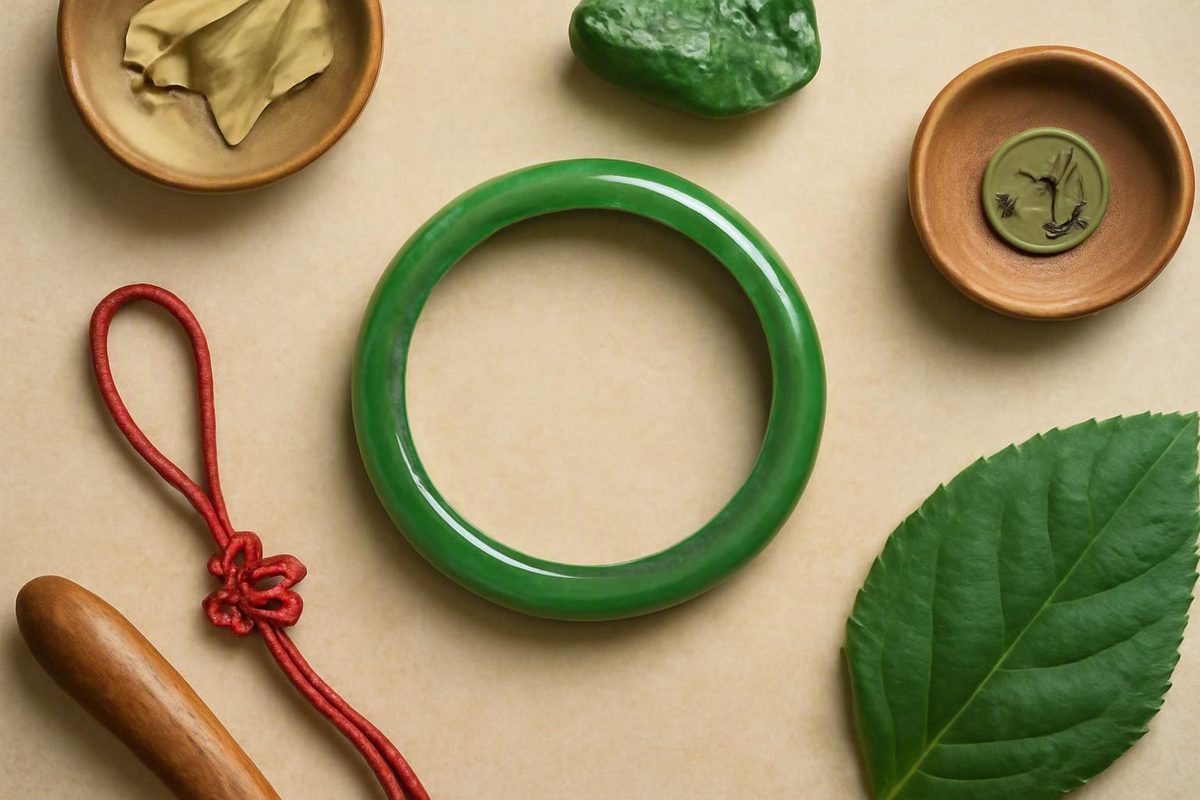
The short answer: what does a jade bangle mean?
A jade bangle is commonly associated with protection, harmony, prosperity, longevity, virtue, family connection and continuity. There is no single jade bangle meaning, however. Its significance can change with the culture, community, family, occasion and individual wearer.
A useful meaning map includes:
- Protection: Some families understand jade as a protective amulet or as an expression of a loved one’s wish for the wearer’s safety.
- Harmony and continuity: The bangle’s unbroken circular form is often interpreted as wholeness, balance, enduring relationships or continuity between generations.
- Family love and memory: A gift from a parent or grandparent may preserve a blessing, relationship or family story.
- Identity and belonging: In personal diaspora narratives, wearing jade can become a way to reconnect with cultural heritage.
- Prosperity and longevity: These are reported traditional wishes associated with jade, not outcomes the material can guarantee.
- Personal intention: A wearer may choose a bangle as a reminder of courage, steadiness or change—or simply because they appreciate its appearance.
An inherited bangle, a wedding gift and a self-purchased bangle may look similar while carrying very different meanings. One might recall the person who wore it before. Another might convey a wish for a harmonious relationship. A third might mark cultural reconnection, a personal transition or an aesthetic choice.
It helps to distinguish four kinds of statement:
- Material fact: What jade is, how a rigid bangle is constructed or how it can be damaged.
- Reported tradition or folklore: A belief that jade protects its wearer or that a broken bangle has absorbed misfortune.
- Contemporary symbolic interpretation: A modern association, such as choosing green jade to represent growth.
- Individual experience: What a particular bangle means to its owner or family.
These categories can overlap, but they are not interchangeable. A belief may have deep cultural and emotional importance without being a scientifically demonstrated property of the stone.
The evidence available for broad interpretation is also limited. Much of the general material about Chinese customs, gifting occasions, colors and wrist etiquette comes from commercial jewelry guides that do not cite primary cultural or historical research. The richest accounts of family, heritage and identity are first-person narratives. Those stories illuminate particular Chinese, Chinese-American and Vietnamese-Australian experiences, but they cannot represent every family or community.
The most reliable interpretation of a particular bangle therefore begins with common symbolism and then asks: Who gave it? Who wore it before? What occasion did it mark? What does the family say about it?
Protection, harmony and virtue in the traditions described
Protection is one of the most frequently reported meanings of a jade bangle in the supplied accounts concerning Chinese customs and family life. Some wearers describe jade as an amulet that guards the body or spirit. Others understand it more symbolically, as an object embodying a parent’s or grandparent’s wish that they remain safe.
In one Chinese first-person family account, Yan Xiu C. describes a grandmother giving a bangle to the author’s mother as a symbol of love and protection. The author also associates jade with compassion, courage, justice, wisdom and modesty, presenting those virtues as knowledge passed from mother to daughter. This is a record of one person’s cultural and family understanding, not a universal list accepted by every Chinese wearer. Read Yan Xiu C.’s community heritage story.
Harmony, steadiness, prosperity, health, longevity and good fortune also recur in the supplied sources. In this context, they are best understood as wishes. Giving someone a bangle may communicate, in effect, “May your life be balanced, long and fortunate.” It does not ensure wealth, health or freedom from hardship.
That distinction does not make the symbolism empty. A bangle may remind its wearer of a relative’s care, a family teaching or a commitment to face difficulty with courage. Its presence on the wrist can give material form to an otherwise intangible relationship or intention.
Meaningful objects often work this way. They do not create the qualities they represent, but they can direct attention toward them. A jade bangle can serve as a daily reminder of steadiness or of the person who chose it, even if the wearer does not interpret its protection literally.
Careful language preserves that meaning without overstating the evidence:
- Jade is believed to protect the wearer.
- Jade is traditionally associated with harmony or good fortune.
- The bangle represented protection for this family.
- The wearer uses it as a reminder of courage or balance.
The supplied evidence does not demonstrate that jade prevents accidents, repels spirits, cures illness, changes luck or absorbs measurable negative energy. Those remain matters of tradition, folklore or personal belief.
Why the circle, the giver and the occasion matter
A rigid bangle forms a continuous circle without a visible beginning or end. Commercial jewelry guides commonly interpret that form as wholeness, completion, harmony, enduring love or continuity between generations. Retailer Gemporia, for example, describes the circle as a symbol of continuity and harmony and connects jade-bangle gifts with protection and prosperity. This records widely circulated symbolism, but it is not independent historical evidence. See Gemporia’s commercial overview of jade-bangle significance.
The circle does not carry an objective message that every wearer must accept. Someone may value a bangle for its color, texture or family history without thinking about its shape symbolically. Where the interpretation does matter, however, the continuous form lends itself readily to ideas of connection and continuity.
The occasion can add another layer:
- At a wedding: Retailer guides describe jade bangles as gifts expressing hopes for harmony, lasting love and prosperity.
- At a coming of age: Some commercial accounts present a bangle as a marker of transition and family continuity.
- Between generations: A bangle may communicate care, blessing, remembrance or the transfer of family knowledge.
- As a memorial object: It may preserve a connection with someone who has died.
- As a gift to oneself: It may represent personal intention, identity, aesthetic preference or reconnection with heritage.
The wedding and coming-of-age associations should be treated cautiously because the supplied support comes chiefly from sellers rather than primary historical or community sources. They are reported interpretations, not established customs followed uniformly throughout China, Vietnam or diaspora communities.
The giver’s explanation may be more useful than a generic symbolism chart. Consider three otherwise similar pieces:
- An inherited bangle may preserve memories of the sound it made on a grandmother’s wrist.
- A newly gifted bangle may communicate a parent’s blessing or a partner’s commitment.
- A self-purchased bangle may mark the wearer’s decision to reclaim a cultural identity or recognize a private turning point.
The stone alone cannot reveal which interpretation applies.
Nor does market price determine emotional importance. Mineral identity, treatment, color, translucency and rarity may affect a commercial transaction, but they do not establish what a bangle means to its owner. A modest or treated piece connected to a loved one may be irreplaceable, while an expensive piece may carry little personal history.
Family inheritance, heritage and cultural reconnection
An inherited jade bangle can feel more significant than ordinary jewelry because it preserves a relationship as well as an object. Wear marks, photographs and remembered gestures can connect its present owner with the person who selected or wore it before.
In Yan Xiu C.’s account, the bangle given by a grandmother to the author’s mother is understood through love, protection and knowledge passed between women. Its meaning comes not only from jade’s general symbolism but also from a particular act of giving.
A Vietnamese-Australian essay offers a distinct example. Vivian Huynh writes that her mother bought a jade bangle six months after her birth and gave it to her 29 years later. Wearing it became connected with accepting a Vietnamese identity she had previously tried to suppress and with her memories of older Chinese and Vietnamese women wearing jade. The bangle also became a source of comfort and part of how she understood herself. Read Huynh’s first-person SBS Voices essay.
This is one Vietnamese-Australian woman’s diaspora experience, not evidence of a single Vietnamese custom. Its value lies in showing how the meaning of visible cultural jewelry can change. An object that once seemed conspicuous or old-fashioned may later become a chosen sign of belonging when the wearer’s relationship with family and identity changes.
Chinese-American jewelry designer Bliss Lau has similarly described jade as a bridge to her late father and Chinese heritage. She also recounts restoring an aunt’s broken bangle and interpreting inherited jade as a connection between ancestors and future generations. Her essay is both personal and brand-based, so it should not be treated as independent cultural history. It nevertheless documents how jade can become entwined with grief, creative work and family continuity. Read Bliss Lau’s personal account of jade, memory and legacy.
Across these individual narratives, an heirloom may hold meanings such as:
- memory of a particular person;
- comfort associated with family care;
- connection with mothers, grandmothers or aunts;
- continuity between generations;
- belonging within a cultural community;
- reconciliation with an identity once hidden or rejected;
- remembrance after bereavement.
Saying that an heirloom “carries” someone’s memory need not mean that the stone literally stores that person’s essence or energy. It may carry stories, sensory associations, photographs and evidence of a shared life.
To understand a particular bangle, begin with details that can still be recovered:
- Who owned it?
- Who gave it to that person?
- Where was it acquired?
- Was it worn daily or saved for particular occasions?
- Did it mark a wedding, migration, anniversary or other transition?
- Are there photographs showing it being worn?
- What did relatives say about its meaning?
- Was protection important in this family’s interpretation?
Recording those details can preserve the bangle’s specific history without replacing it with a generic or unsupported legend.
What a broken jade bangle is believed to mean
In reported folklore, a broken jade bangle is sometimes understood to have absorbed misfortune or taken harm intended for its wearer. A family may say that the jade completed its protective purpose by breaking instead of allowing something worse to happen.
That interpretation can be emotionally reassuring, especially if a valued bangle breaks during a frightening event. It may turn the loss of the object into a story of protection or sacrifice. Breakage does not, however, prove that the bangle prevented an injury, changed fate or absorbed supernatural energy.
There is also a material explanation. Commercial jewelry sources describe jade as tough and durable while acknowledging that it can still crack when struck with sufficient force. A thin, rigid ring may therefore chip or break after being dropped or hit against a hard surface. See Talisa’s retailer explanation of jade’s composition and durability.
A physical cause and symbolic meaning can coexist. A wearer may understand how the damage occurred while still finding comfort in the family belief attached to it.
There is no single culturally required response to a broken heirloom. A repaired piece may also acquire a new personal meaning connected with resilience or continuity.
Bliss Lau’s account of using kintsugi to restore her late aunt’s bangle is one individual response. For her, the repair honored the object’s history and represented transformation. It is not evidence that kintsugi is a standard Chinese response to broken jade, nor does the account provide general technical or safety guidance.
The supplied evidence does not establish which repair methods are appropriate for a particular bangle or whether a repaired rigid piece is suitable for continued wear. For that reason, symbolic discussion should not be mistaken for repair instruction.
Healing, luck and energy: belief versus evidence
Claims about jade often blend tradition, metaphor, personal comfort and alleged physical effects. These ideas can be separated without dismissing their cultural importance.
| Claim | How the supplied evidence supports describing it |
|---|---|
| Jade symbolizes protection | A reported traditional and personal interpretation |
| Jade represents harmony, longevity or luck | A symbolic association or wish, not a guaranteed outcome |
| Jade absorbs misfortune or harmful energy | Folklore or spiritual belief, not an established measurable effect |
| Wearing jade provides comfort | A valid individual experience that does not establish a medical mechanism |
| Jade cures illness or changes bodily functions | Not scientifically established by the supplied evidence |
| Jade serves as a reminder of courage or balance | A personal symbolic use that does not depend on supernatural efficacy |
The sources report beliefs that jade can protect, heal, attract luck, absorb energy or ward off harmful forces. Some retailer material goes further, mentioning blood pressure, circulation, immunity, sleep, acupuncture points, toxins, chakras or the aura. The supplied evidence does not scientifically establish any of those effects.
One commercial guide illustrates why such claims require caution. BMjade presents physical and energetic claims but later says jade has cultural and symbolic rather than medical effects. That internal inconsistency is especially relevant because the page also sells jewelry. Review BMjade’s conflicting commercial discussion of symbolism and health effects.
Personal comfort remains real as an experience. Someone may feel calmer when touching a bangle given by a parent, just as another person may feel reassured by a photograph or keepsake. That experience does not demonstrate that jade itself has altered circulation, removed toxins or treated an illness.
Accurate formulations include:
- “Jade is traditionally associated with healing.”
- “Her family believed the bangle offered protection.”
- “For this wearer, it represented harmony and safety.”
- “He wore it as a reminder of steadiness.”
- “Some traditions interpret breakage as absorbed misfortune.”
These should not be converted into promises that jade improves health, blocks negative energy or prevents bad luck. A bangle can be culturally and emotionally powerful without being a medical device or supernatural shield.
Color meanings and wrist customs are not universal rules
The supplied evidence does not establish fixed meanings for jade colors or a universally correct wrist on which to wear a bangle.
Contemporary seller guides offer associations such as:
- Green: growth, renewal, calm or prosperity;
- White: purity, clarity or peace;
- Lavender: romance, nobility or intuition;
- Dark or black jade: protection, boundaries or strength.
The lists differ among sellers. That inconsistency makes them unsuitable as definitive Chinese or Vietnamese cultural rules. A color association can still be meaningful to a wearer, but it should be described as a chosen or reported interpretation rather than an inherent property of the material.
Wrist customs vary as well. Some feng shui-oriented seller guidance presents a “left in, right out” interpretation, associating the left wrist with receiving luck or auspicious influence and the right with giving, releasing or protection. Other accounts emphasize personal preference instead. KAGAKI’s commercial guide, for example, reports left-versus-right symbolism while also allowing the wearer to choose according to comfort. See KAGAKI’s discussion of wrist customs and treatment terminology.
A family may have its own practice, and a giver may attach a particular intention to one wrist. Where no such custom is known, the evidence does not support presenting either side as culturally mandatory.
One retailer also reports an etiquette rule against wearing identical bangles on both wrists because they may resemble handcuffs. The supplied material does not establish this as a universal prohibition. It is more accurately described as one seller’s reported rule, which may or may not matter in a particular family or setting.
Online charts can suggest possible interpretations, but they cannot override what a specific family or wearer says the bangle means.
What jade is—and what to know before wearing or buying a rigid bangle
“Jade” is a general name applied to two distinct minerals: jadeite and nephrite. Both are used in jewelry. Mineral identity may matter for description, authentication and a commercial transaction, but it does not determine a bangle’s family or cultural significance.
A solid bangle also differs from a flexible bracelet. Commercial guides describe a traditional rigid bangle as a continuous ring without a clasp or stretch. Because it must pass over the hand to reach the wrist, its internal dimensions and shape are materially relevant.
The supplied evidence does not provide an independently verified universal sizing conversion, safe fitting procedure or removal method. It therefore cannot support instructions for forcing a tight bangle over the hand.
In her SBS essay, Vivian Huynh describes relatives using sunflower oil to push her bangle over her hand. She reports bruising and says the tightly fitted bangle could not readily be removed. That episode is part of her personal narrative, not fitting or safety guidance.
Before a commercial purchase, relevant questions include what measurements the seller provides, whether they describe diameter or circumference, whether the bangle is round or oval, and what the return conditions are. The supplied retailer sources discuss these considerations, but they are not a substitute for independent fitting or safety expertise.
The evidence also supports only a limited statement about care: seller guides warn that jade can chip or crack after a hard impact. More detailed care recommendations in those guides—including advice about chemicals, temperature changes and contact with other jewelry—have not been independently verified in the supplied source base and should be treated as commercial guidance rather than professional gemological instruction.
Buyers may encounter Type A, B and C or Grade A, B and C language. In the cited commercial guides, these terms generally refer to jadeite treatment:
- Type or Grade A: described by the retailers as untreated jadeite;
- Type or Grade B: described as acid-treated and polymer- or resin-impregnated jadeite;
- Type or Grade C: described as dyed jadeite.
This is a summary of retailer terminology, not a complete treatment standard. The supplied evidence is insufficient to explain every qualification or variation in professional gemological usage.
It is likewise insufficient for a detailed authentication guide. The commercial sources caution that appearance, touch, color or price alone cannot establish whether an object is jadeite, nephrite, treated jade or an imitation. Where identity affects a purchase, the relevant issues are clear written description, treatment disclosure and—when warranted—independent professional assessment. The evidence pack does not support home-testing procedures.
Commercial and sentimental value should remain separate. Mineral identity and treatment can matter greatly when deciding whether an item matches a seller’s description. They do not decide what an heirloom means.
Ultimately, the most useful answer to the meaning of a jade bangle is layered rather than absolute. It may express protection, harmony, virtue, prosperity, longevity, family love or continuity. The significance of a particular piece depends on its giver, occasion, family history and wearer.
Preserve what can be known: names, dates, photographs, occasions and the explanations relatives gave. Keep material facts distinct from folklore and personal symbolism. Jade does not need to provide literal healing, guaranteed luck or supernatural protection to carry profound cultural and emotional value.
What does a jade bangle symbolize in Chinese tradition?
In the Chinese family account and commercial descriptions examined here, jade bangles are associated with protection, harmony, prosperity, longevity, virtue, family love and continuity. The circular form is sometimes interpreted as wholeness or an enduring relationship, while a gifted or inherited bangle may embody a relative’s care. These associations vary among families and communities and should not be treated as a rule followed by every Chinese wearer.
What does it mean when a jade bangle breaks?
Some traditions interpret a broken bangle as having absorbed misfortune or taken harm intended for its wearer. This is folklore, not proof that jade prevented an injury or changed fate. Materially, the supplied commercial sources report that jade is tough but can still crack or chip after sufficient impact. What happens to the damaged piece afterward depends on its owner and family meaning; the evidence does not provide general repair or continued-wear guidance.
Should a jade bangle be worn on the left or right wrist?
There is no universally supported correct wrist. Some feng shui-oriented seller guides associate the left wrist with receiving and the right with giving or releasing. Other accounts leave the choice to family custom or personal preference. Neither interpretation is established here as a requirement.
Do green, white, lavender and dark jade have fixed meanings?
No. Commercial guides variously associate green with growth or prosperity, white with purity or clarity, lavender with romance or intuition, and dark jade with protection or boundaries. Because those lists differ, they are better understood as variable contemporary interpretations than as standardized Chinese or Vietnamese meanings.
What is the difference between jadeite and nephrite?
Jadeite and nephrite are two distinct minerals to which the name “jade” is applied. Both can be used in bangles and other jewelry. Their identity and treatment status may matter for authentication and commercial description, but neither is automatically more meaningful as a family or cultural object. Sentimental value may come primarily from who owned the bangle, who gave it and the history attached to it.