 KL Observer
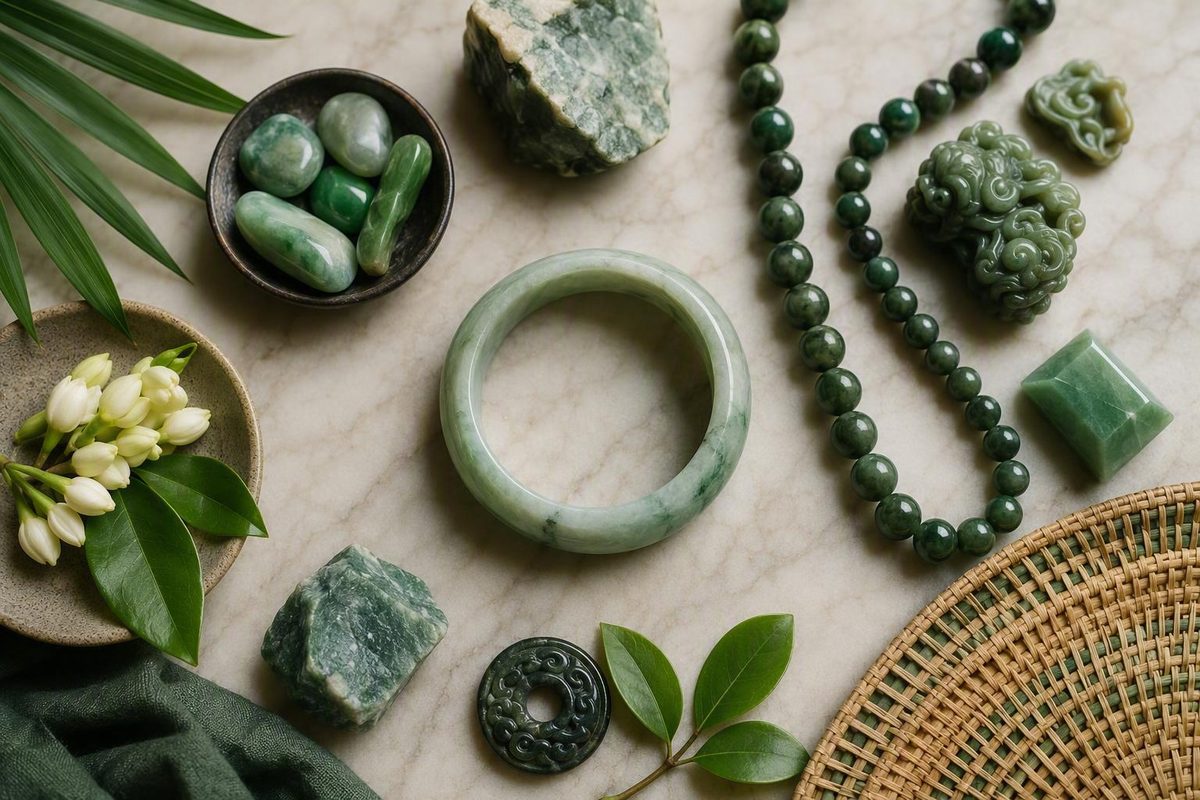
Jade benefits at a glance: belief, experience, and evidence
Jade can have substantial cultural, symbolic, aesthetic, and personal value. It is associated in various spiritual traditions with luck, prosperity, protection, harmony, grounding, clarity, calm, and mature relationships. These are attributed meanings, however—not demonstrated outcomes caused by the stone.
This article is a limited review of common jade claims, not a comprehensive cultural history, gemology guide, or clinical assessment. The supplied evidence does not establish crystal healing or show that jade treats any medical condition. Facial tools made from jade may produce temporary cosmetic effects through gentle massage or cooling, but that is different from jade possessing a unique healing property.
A useful way to assess a claimed jade benefit is to identify what kind of claim it makes:
| Claim category | Examples | How to interpret it |
|---|---|---|
| Traditional or spiritual belief | Luck, prosperity, protection, harmony, grounding, clarity, mature relationships | These are meanings attributed to jade in spiritual or cultural practice. They are not guaranteed or clinically demonstrated effects. |
| Subjective ritual value | Feeling calmer while meditating, enjoying jade jewelry, using the stone as a reminder of an intention | The experience can be personally real and worthwhile without proving that the stone emits healing energy. |
| Possible temporary massage or cooling effect | A less-puffy appearance, increased surface circulation, reduced redness from cooling, a brief glow | These changes may follow massage, fluid movement, or exposure to a cool tool. The evidence does not show that jade is uniquely responsible. |
| Unsupported medical or permanent cosmetic claim | Treating disease, detoxifying the body, permanently lifting the face, substantially increasing collagen, producing lasting rejuvenation | These claims are not established by the evidence considered here and should not guide health decisions. |
This distinction leaves room for appreciation without turning meaning into medicine. Holding jade during meditation may help someone mark the start of a quiet routine, focus attention, or recall a chosen value. That experience does not become false merely because it is subjective. It simply is not proof of a gemstone-healing mechanism.
The same distinction applies to skincare. A cool roller moving gently over the face may temporarily make the skin look less puffy or red. Massage may also increase blood flow near the surface, producing a short-lived glow. These proposed effects concern technique and temperature, not spiritual energy or jade’s mineral identity.
Jade should not replace medical or dermatologic care. Anyone concerned about symptoms, persistent skin changes, pain, fertility, hormonal problems, or possible organ disease should seek appropriate professional assessment rather than rely on a crystal or facial tool.
What jade is: jadeite, nephrite, and a long history of use
“Jade” is not the mineralogical name of one stone. It commonly refers to two distinct materials: jadeite and nephrite. They share an everyday name but should not be described as the same mineral. Jade also has a long history of use in jewelry, statues, tools, utensils, and cultural practices, according to a general wellness overview of the stone’s history and reported meanings (Healthline’s overview of jade).
That history helps explain why jade can carry meaning beyond its appearance. An inherited pendant may represent family continuity. A carving may have artistic, ceremonial, religious, or cultural importance. A buyer may simply appreciate the stone’s color, weight, texture, or craftsmanship. None of these forms of value depends on a clinical effect.
Longstanding use is not proof of medical efficacy. A material can be important in art, adornment, household life, or spiritual practice without having a physiological healing mechanism. History can show what people have valued and how they have used an object; it cannot by itself show that the object treats illness.
The distinction between jadeite and nephrite also should not be turned into an unsupported wellness comparison. The supplied evidence establishes that they are different stones, but it does not show that one has stronger emotional, spiritual, massage, or skincare effects.
Nor is this evidence sufficient to teach jade authentication or grading. Color and appearance alone are not presented as complete authentication methods.
Authenticity can still matter for reasons unrelated to wellness. A buyer may care about material identity, craftsmanship, cultural meaning, collectibility, appearance, or honest representation. Those are legitimate considerations. They should not be confused with evidence that authentic jade works better on the skin or creates stronger spiritual effects.
For facial massage, the supplied evidence does not show that genuine jade outperforms glass, metal, quartz, another polished stone, or the hands. Paying more may be reasonable when the material itself is important to the buyer, but price and authenticity are not measures of healing power.
Traditional meanings and spiritual benefits attributed to jade
Jade is commonly associated with luck, calm, grounding, mental clarity, mature relationships, prosperity, harmony, and protection. These ideas are best understood as reported spiritual or cultural associations, not predictable effects that every wearer will experience.
Commonly described practices include:
- Wearing jade as jewelry or carrying a small stone
- Holding it during meditation or reflection
- Placing it in a home, office, or another meaningful space
- Choosing it as a symbol of prosperity, protection, balance, or relational intention
- Giving it as a personally significant gift
A wearable object can influence a routine in an ordinary, non-mystical way. A bracelet selected to represent patience may remind its wearer to pause before reacting. A pendant associated with courage may prompt someone to recall a commitment.
Meditation offers a similar context. Holding jade may give the hands a resting place, provide a sensory focus, or make the practice feel more intentional. If that helps someone settle into reflection, the experience may involve attention, expectation, environment, repetition, symbolism, and personal preference. It does not establish that the stone emits therapeutic energy.
Decorative placement can also be meaningful without being causal. A jade carving in a workspace might represent steadiness or prosperity. Seeing it may recall an intention, much as a photograph, written note, religious object, or work of art can. That differs from claiming that the object directly attracts wealth or controls events.
General wellness coverage also discusses green, lemon, lilac, dark, pale-green, and lavender jade while assigning different symbolic meanings to particular colors. The supplied evidence does not show that any shade changes health, mood, income, luck, protection, or relationship outcomes. Color-specific interpretations should therefore remain within the realm of attributed belief.
Concepts such as Qi, chakras, gemstone energy, and feng shui belong to particular spiritual or cultural frameworks. They should not be converted into claims that jade measurably regulates hormones, circulation, organ function, or the nervous system. Symbolic and physiological language answer different questions, and blending them can make an untested claim sound medically established.
Evidence-aware discussion should not become cultural dismissal. Clinical research is not the only measure of artistic, familial, spiritual, or ceremonial importance. A practice may be valuable because it supports identity, creates continuity, marks an intention, or offers a satisfying ritual. The necessary boundary is narrower: cultural significance should not be presented as proof that jade cures disease or guarantees material outcomes.
This overview is intentionally limited. The supplied sources do not provide an authoritative account of jade traditions across regions, communities, languages, or historical periods. Readers seeking that depth would need specialist, museum, academic, or community-grounded work beyond the evidence available here.
Does jade have scientifically proven healing properties?
No. The supplied evidence does not establish jade as a treatment for any disease or medical condition. Claims involving the kidneys, bladder, spleen, bones, fertility, or hormones are not supported as medical uses. Jade should not delay diagnosis, prescribed treatment, or advice from a qualified professional (Healthline’s discussion of jade and the limits of crystal-healing evidence).
This distinction matters because crystal-healing discussions often move between subjective and objective claims without making the transition clear. “Holding jade helps me feel calm” reports a personal experience. “Jade treats kidney disease” is an objective medical claim that would require strong clinical evidence. The second claim cannot be inferred from the first.
The label “medically reviewed” can also be misunderstood. Medical review may improve an article’s terminology, warnings, or safety framing. It does not automatically validate every spiritual belief, traditional association, or practitioner quotation included in that article. The strength of a claim depends on its supporting evidence, not solely on an editorial label.
Expectation and ritual may help explain some reported experiences. Choosing a quiet setting, handling a valued object, slowing down, and concentrating on an intention can change how a moment feels.
The source material refers to an older study presented at conferences in 1999 and 2001 as suggesting that perceived crystal effects might reflect placebo. But the supplied account does not provide the study’s methods or detailed results. It would therefore be excessive to treat it as a conclusive explanation of every experience reported with jade.
Several ordinary influences can coexist. A person may enjoy the stone’s texture, associate it with someone important, become calmer because a ritual encourages stillness, or pay closer attention to sensations because something is expected to happen. None demonstrates that jade emits therapeutic energy. Conversely, the absence of a demonstrated gemstone mechanism does not require denying that someone felt calmer.
The safest interpretation is that jade may be used alongside ordinary self-care but not in place of healthcare. Jewelry, meditation, decorative placement, rolling, and gentle facial gua sha may be enjoyable rituals. They should not be used to diagnose symptoms, alter prescribed treatment, or avoid professional evaluation.
Jade roller benefits: temporary effects of massage and cooling
A jade roller is a handheld facial-massage tool with a smooth stone mounted on one or both ends. The cited consumer beauty article presents it as a massage tool rather than as a treatment.
Gentle rolling may produce temporary cosmetic changes through several proposed mechanisms:
- Massage: Movement across the skin may increase surface blood flow and create a short-lived glow.
- Fluid movement: Gentle strokes may temporarily reduce the appearance of puffiness. Beauty coverage describes this as supporting lymphatic drainage, but it does not quantify the effect.
- Cooling: A cool roller may temporarily constrict blood vessels, reduce visible redness, and make the skin appear brighter.
- Product distribution: Rolling over previously applied serum or oil can spread the product. Joshua Zeichner, a board-certified dermatologist quoted by the publication, suggested that rolling might enhance penetration, but the article does not provide clinical measurements establishing an absorption benefit.
Susan Bard, another board-certified dermatologist quoted in the article, describes circulation, drainage, and reduced puffiness as effects of facial massage rather than proof of jade healing. The publication also reports that lasting results and significant collagen stimulation are unlikely, while disclosing that it may earn commissions from featured products (Oprah Daily’s jade-roller overview).
The most defensible expectations are therefore modest and temporary. Skin may look somewhat fresher, less puffy, or brighter immediately after use. The article does not cite controlled trials quantifying how large these changes are or how long they last.
A visible glow is better attributed to massage-related blood flow than to jade itself. Similarly, if cooling reduces redness, temperature is the relevant proposed factor—not the stone’s spiritual associations.
Claims of permanent lifting, substantial collagen stimulation, or lasting rejuvenation go beyond the available support. The evidence also does not establish treatment of scars or acne marks as a jade-roller benefit.
Most importantly, the supporting article does not compare jade with metal, glass, quartz, manual massage, or another smooth chilled object. It therefore cannot show that jade offers a special skincare advantage. A roller may still be pleasant to use, but its immediate effects should be attributed to massage or cooling unless comparative evidence demonstrates otherwise.
Jade gua sha: what comes from the technique, not the gemstone
Facial gua sha involves gliding a smooth, flat tool over lubricated skin with gentle, massage-like strokes.
People may find slow, repetitive facial massage relaxing. It may ease the subjective feeling of facial tension and produce a temporarily less-puffy or more defined appearance. Any brief contour change should be interpreted as a possible effect of massage and fluid movement—not permanent facial restructuring.
The supplied evidence does not establish that facial gua sha:
- Detoxifies the body
- Permanently lifts or sculpts the face
- Produces lasting improvement in muscle tone
- Removes dark circles
- Creates a clinically significant nervous-system effect
- Balances Qi as a demonstrated physiological mechanism
- Provides a jade-specific healing effect
The commercial guide used here says jade, rose quartz, and amethyst are popular materials but also states that any smooth, polished tool should glide similarly. It supplies practical instructions but does not cite clinical studies for many of its detoxification, drainage, lifting, muscle-tone, dark-circle, or nervous-system claims (Rare Earth Gallery’s gemstone gua sha guide).
That source is a retailer selling crystals and related tools, which creates a direct commercial interest. Its practical instructions can describe how the seller recommends using a tool, but they do not prove medical efficacy.
For the immediate massage experience, practical features may matter more than gemstone symbolism:
- Smooth edges help the tool glide comfortably.
- A manageable shape makes pressure easier to control.
- Lubrication reduces dragging.
- Light pressure is less likely to irritate the skin.
- An intact surface is preferable to a chipped one.
- Personal comfort influences whether the ritual is enjoyable.
Jade’s associations with balance, harmony, and prosperity may still add personal meaning. Someone who values those traditions may prefer jade even if another polished material performs the same basic massage function. That is a symbolic or aesthetic preference, not evidence of superior physiological performance.
Facial gua sha is therefore best positioned as self-care or gentle massage. It may feel soothing and may produce short-lived cosmetic changes. The supplied evidence does not establish it as medical treatment or a reliable way to reshape the face permanently.
How to use and care for jade facial tools
Technique should be gentle. The available beauty source warns that excess pressure may irritate the skin; more force is not presented as producing better results.
For a jade roller:
- Clean the face and roller.
- Apply a serum, facial oil, or another product that provides comfortable slip.
- Roll gently upward and outward.
- Avoid pressing hard.
- Wash and dry the tool after use.
Serum or oil serves a practical purpose by reducing friction and helping the roller move comfortably. If the tool drags or use becomes irritating, reducing pressure or stopping is more appropriate than forcing the movement.
The roller article does not establish an optimal frequency. It quotes a dermatologist who considers daily or twice-daily use acceptable if desired, but that is expert commentary rather than a universal schedule supported by trials. It should not be generalized to every skin type, condition, or recent procedure. The same article recommends washing and drying the roller after use (Oprah Daily’s roller instructions).
For facial gua sha:
- Cleanse the face and tool.
- Apply enough serum or oil for the tool to glide without dragging.
- Hold the tool comfortably rather than digging an edge into the skin.
- Use light, outward strokes.
- The retailer’s routine suggests repeating each stroke three to five times.
- Stop if the process becomes painful or irritating.
The repetition count is a retailer’s instruction, not a clinically validated dosage. The evidence does not establish an ideal session length, pressure, or weekly frequency.
The same commercial guide recommends washing the tool after use with mild soap and warm water, drying it thoroughly, and storing it in a clean, dry place. It also notes that stone tools may chip or break if dropped (Rare Earth Gallery’s gua sha use and care instructions).
These are routine care instructions, not a validated clinical disinfection protocol. The supplied evidence does not establish that ordinary washing makes shared tools safe, nor does it provide a clinical-grade method for disinfection.
The evidence also does not offer condition-specific guidance for active acne, rosacea, eczema, infections, wounds, broken capillaries, or recently treated skin. It does not establish when facial massage is appropriate after injections, lasers, peels, surgery, or other procedures. Anyone with an active condition, unexplained skin symptoms, or a recent procedure should obtain guidance from the relevant clinician rather than assume that a general facial-tool routine applies.
Discomfort should not be interpreted as proof that toxins are leaving the body or that stronger pressure is making the practice more effective.
How to decide whether jade belongs in your routine
Whether a jade product is worthwhile depends on what you want from it. Start with the intended use rather than the marketing promise.
If you want symbolic jewelry, ask whether you value the material, design, craftsmanship, history, appearance, or meaning. Jade can represent calm, harmony, protection, or another intention. It cannot guarantee luck, wealth, healing, or relationship success.
If you want a meditation prompt, consider whether holding or seeing the object helps you begin the ritual and sustain attention. Its usefulness may come from association, touch, repetition, and personal meaning. A ritual does not need a proven crystal-energy mechanism to feel worthwhile.
If you want decorative placement, choose an object whose appearance and symbolism suit the space. A jade object can represent prosperity or balance without being expected to alter events in a home or workplace.
If you want a facial-massage tool, consider practical qualities:
- Is the surface smooth and free from chips?
- Is the shape comfortable to hold and control?
- Does it glide easily over lubricated skin?
- Is it easy to wash and dry?
- Does it feel too heavy, fragile, or awkward?
- Do you enjoy its temperature and texture?
- Is the price reasonable for the material and construction?
- Are you paying for craftsmanship and appearance, or for unsupported healing promises?
The available evidence does not show that authentic jade massages the face more effectively than another smooth, polished material. Authenticity may justify a price difference for gemological, aesthetic, cultural, or collecting reasons, but it should not be interpreted as a therapeutic strength rating.
Set realistic expectations. A soothing ritual may be sufficient value. A temporary reduction in visible puffiness or a brief post-massage glow may also be satisfying. Permanent lifting, detoxification, major collagen growth, lasting rejuvenation, and disease treatment are not supported.
Before accepting a claim about jade benefits, use this checklist:
- Identify the claim. Is it about an emotion, an external event, a cosmetic change, or a medical outcome?
- Separate symbolism from physiology. “Jade represents harmony” is not the same as “jade changes the body.”
- Look for independent evidence. Testimonials and practitioner beliefs cannot establish medical efficacy.
- Consider commercial incentives. A seller may provide usable care instructions while overstating benefits.
- Ask whether jade was compared with alternatives. Without comparison, an effect of massage or cooling cannot be credited uniquely to jade.
- Reject substitution claims. Do not use jade in place of diagnosis, prescribed treatment, or professional care.
Frequently asked questions
Does jade really have healing benefits?
Jade has healing meanings in some spiritual traditions, and an individual may find a jade ritual calming or emotionally significant. That does not establish a medical healing effect.
The evidence reviewed here does not show that jade treats disease, regulates hormones, improves fertility, heals organs, or repairs bones. It may be used as a symbolic object or alongside ordinary self-care, but it should not replace medical evaluation or treatment.
What is the difference between jadeite and nephrite?
Jadeite and nephrite are two distinct stones commonly called jade. They should not be treated as the same mineral even though both fall under the everyday jade name.
That mineralogical distinction does not establish different wellness powers. The evidence reviewed here does not show that either stone has superior spiritual, medical, or facial-massage effects. Authentication may still matter for identity, appearance, cultural meaning, collectibility, or honest pricing.
Do jade rollers reduce puffiness or improve the skin?
They may temporarily reduce the appearance of puffiness through gentle massage and fluid movement. A cool roller may also briefly reduce visible redness, while massage-related surface blood flow can create a short-lived glow.
The size and duration of these changes are not established. Jade rollers have not been shown here to produce permanent lifting, significant collagen growth, or lasting rejuvenation, and the evidence does not demonstrate that jade works better than another smooth, cool massage tool.
Does jade gua sha work better than another smooth tool?
The supplied evidence does not show that it does.
Jade may still be preferable for its appearance, feel, cultural significance, or symbolic associations. Personal preference is not proof of superior physiological performance.
Do different jade colors have different benefits?
Different colors are assigned different meanings in some spiritual coverage. Green, lemon, lilac, dark, pale-green, and lavender jade may be linked with particular intentions or themes.
Those associations are symbolic. The evidence does not show that jade color determines health, mood, wealth, luck, protection, or relationship outcomes. Choose a color for its appearance or personal meaning rather than an expected medical or material result.
Jade can hold cultural, symbolic, aesthetic, and personal value without possessing clinically proven healing powers. Jewelry, meditation, decorative placement, rolling, and gua sha may all be enjoyable rituals. Facial tools should be treated as gentle massage tools with, at most, temporary cosmetic effects. Use light pressure, follow routine cleaning guidance, and keep a firm boundary between self-care and healthcare.