 KL Observer
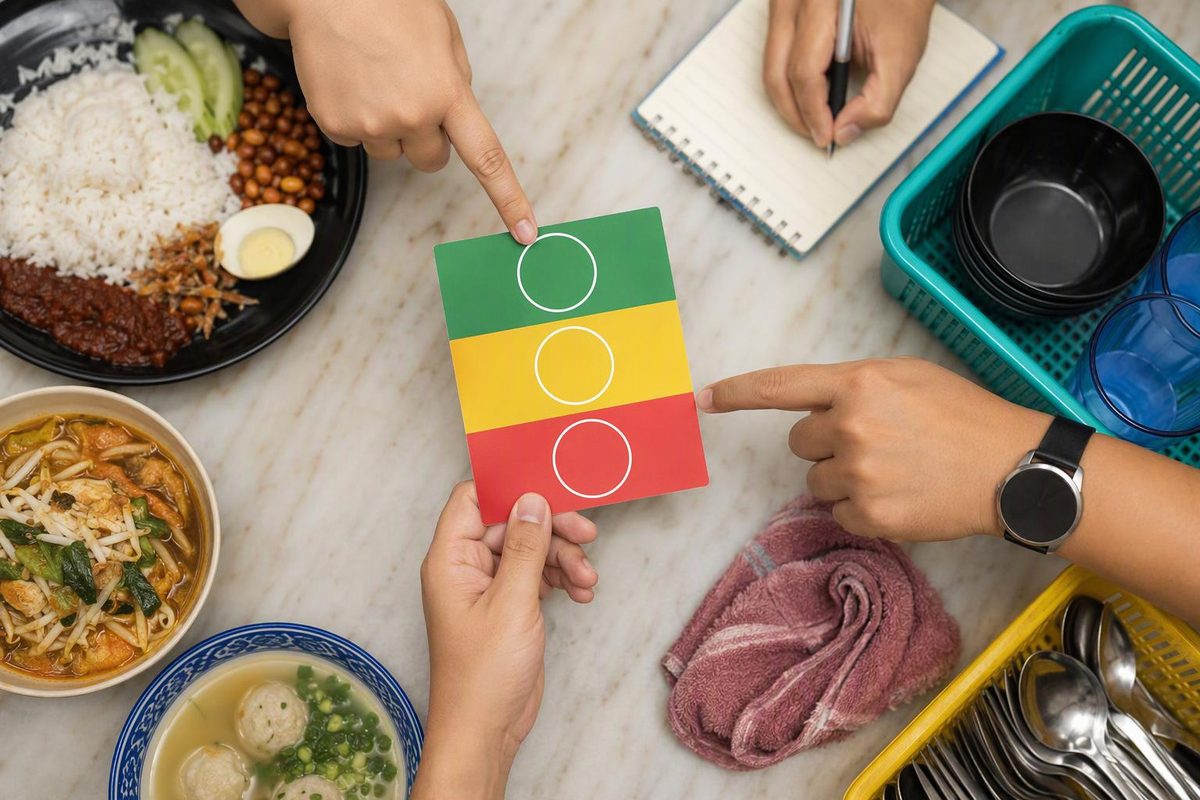
Look for the outlet’s DBKL A/B/C hygiene card, check any dates shown, then look at how food is being handled now. A displayed grade is useful information, not a reason to ignore cockroaches, dirty utensils or contamination.
Find the right card
Before ordering:
- Look around the entrance, counter and visible walls for the hygiene category card, often described as a Premis Bersih sign.
- Check the issuing council and any premises details shown. You want the card for this outlet—not another branch or a different council area.
- Read any inspection, issue or expiry dates printed on it. A photograph in an old review is not a check of today’s display.
- If you cannot see it, ask: “Could you show me this outlet’s latest DBKL hygiene grade?”
KL’s rules are explicit: once DBKL has assessed and classified a food establishment, it issues a category card showing A, B or C. The licensee must display it conspicuously and must not remove, deface or damage it. DBKL can revise the grade and issue a new card. See by-law 27 of KL’s food-establishment licensing rules.
Do not confuse that card with the premises’ registration certificate. Regulation 8 of Malaysia’s Food Hygiene Regulations 2009 separately requires the registration certificate to be displayed.
What A, B and C tell you
A is the highest of the three grades; B is intermediate; C is the lowest. Avoid applying a percentage chart from another city to KL: Cilisos’s older grading explainer reported different score thresholds in different councils. Those examples are not a current DBKL scoring table.
DBKL’s assessment covers premises sanitation, food hygiene, food handlers and handling practices—not just whether the dining room looks polished. Even an A does not prevent enforcement: the classification rule preserves liability to prosecution, and the council can order an establishment closed if it is suspected of being, or likely to become, a source of infection. By-laws 27–28 keep grading and closure powers separate.
That distinction matters after the viral BBQ video. Malay Mail reported on 28 August 2026 that insects believed to be cockroaches were filmed in a raw-meat container, and DBKL ordered the outlet closed from 26 August to 9 September 2026 for corrective work and thorough cleaning. Those historical dates alone do not establish its current operating status.
Red flags you can check yourself
Without entering staff-only areas, look for:
- Pests near food: cockroaches in containers, rats or flies repeatedly landing on exposed food.
- Raw-to-cooked contamination: the same uncleaned utensils used for raw meat and cooked food, or raw-meat juices reaching ready-to-eat items.
- Dirty food-contact surfaces: visibly soiled plates, serving tools or containers.
- Unprotected displays and waste: exposed food beside accumulating rubbish or dirty surroundings.
- Poor washing facilities: no running water or soap, or a dirty, strongly malodorous toilet.
These checks reflect the national hygiene requirements, including pest control, clean equipment, cleaning and sanitising utensils between raw and cooked food, protected displays and functioning washing facilities. They cannot reveal every food-safety problem, but obvious contamination is enough reason to stop eating and choose somewhere else.
Toilets also have a separate licensing role. Bernama reported the minister’s policy announcement that, from 1 January 2026, food premises in 20 city-council areas would not have licences renewed if toilets failed the BMW—Bersih, Menawan, Wangi standard: clean, attractive and pleasant-smelling. As of 1 October 2026, DBKL’s eLesen portal instructs restaurant and eating-house businesses to upload a completed BMW self-check form with supporting documents during applications or information updates. BMW is not another name for an A hygiene grade.
If the card is missing or conditions concern you
Ask the manager first if the issue is simply finding the card. An absent display is not proof of contaminated food; if DBKL has issued a category card, it should be conspicuously displayed.
For a KL premises complaint or verification query, use DBKL’s Adu@KL service page, which links to its public complaints system. Include the outlet name, exact address or mall unit, date, time and a factual description; attach photographs taken safely from customer-accessible areas and retain the receipt. The system supports locations, attachments and status checks.
For departmental guidance, DBKL’s Health and Environment Department lists 03-2109 2100 and jkas@dbkl.gov.my. For your meal, keep the decision simpler: you do not need to wait for an official inspection before moving to another nearby option.