 KL Observer
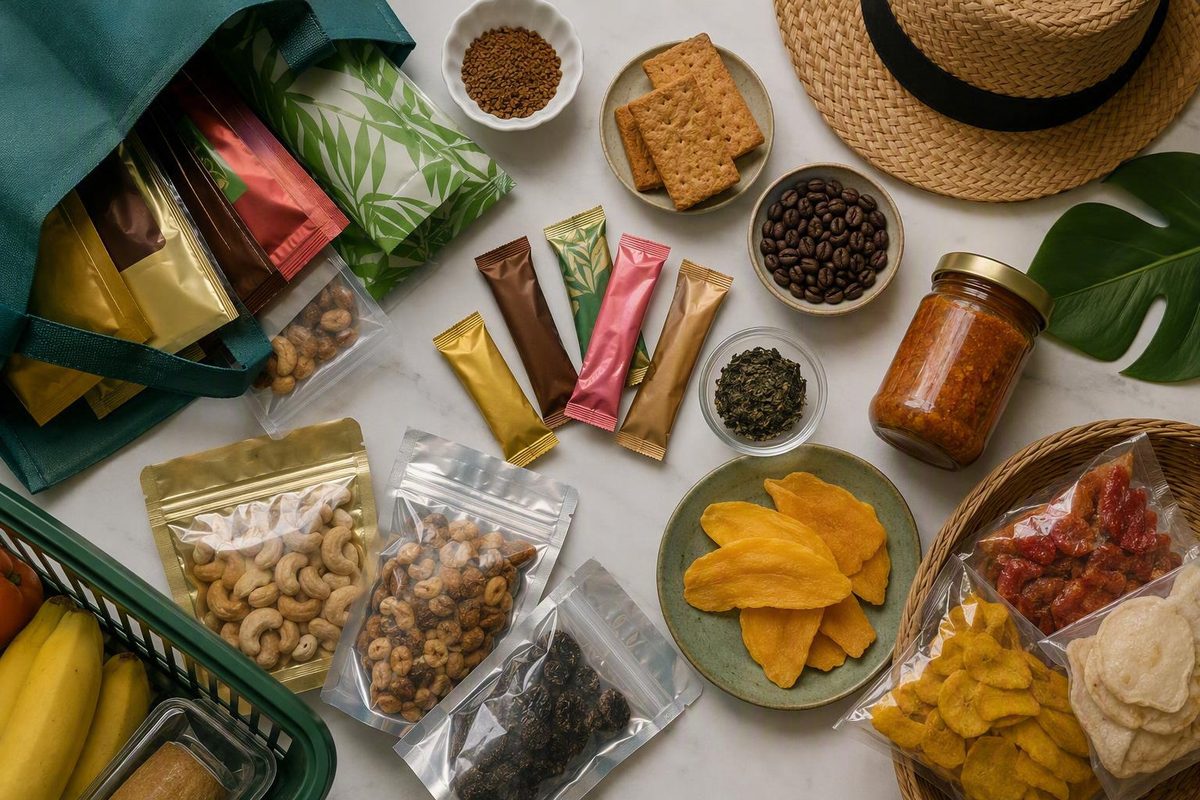
Kuala Lumpur supermarkets are useful places to look for edible souvenirs that fit naturally into an ordinary grocery stop: sealed coffee sachets, tea, chocolate, biscuits, snacks, noodles, kaya, spice mixes, and sauces. Grocery shopping has also become a souvenir strategy for travelers interested in practical, locally relevant products rather than conventional trinkets, as described in The Star’s overview of supermarket souvenirs.
The limitation is availability. Inventories, promotions, prices, and opening hours change, and the available evidence does not verify stock at individual Kuala Lumpur branches. Treat every retailer and product below as something to check—not as a promise that it will be waiting on the shelf.
Related: What to Do in Kuala Lumpur When It Rains: Rail-Linked Indoor Plans by Neighborhood.
Why a Kuala Lumpur Supermarket Works for Souvenir Shopping
A supermarket works best when you want edible or everyday gifts that can be added to the final day of your itinerary. Instead of making a separate trip to a tourist-oriented shop, you can shop for gifts while buying water, travel snacks, or breakfast supplies.
The strongest candidates usually meet several practical criteria:
- They have a clear connection to Malaysian food or everyday consumption.
- The recipient is unlikely to find the exact product or flavor at home.
- The package is factory-sealed and suitable for the remaining journey.
- The item fits your available luggage space.
- It can be divided among several people if necessary.
- Its origin, ingredients, storage directions, and expiry date are readable.
- Its current shelf price suits your budget.
These are selection criteria, not guarantees of quality or authenticity. Affordability, taste, attractive packaging, and gift appeal vary by shopper, recipient, exchange rate, and current price. A decorative tea box may look like a ready-made present to one person and like ordinary groceries to another.
Supermarkets are also not substitutes for every kind of souvenir shop. They suit packaged food, drink mixes, biscuits, snacks, noodles, spreads, and cooking ingredients. They are less useful if you want batik, pottery, jewelry, handmade stationery, KL-branded objects, or a decorative keepsake that visibly represents the city.
Start with the recipient. A coffee drinker may appreciate unfamiliar sachets more than a magnet. Someone who does not cook may have little use for kaya or curry paste, however relevant those products appear. Conversely, a traveler looking for an object specifically associated with Kuala Lumpur may prefer a print, craft, or tower-shaped keepsake over food.
There is also an important distinction between “sold in Malaysia,” “widely consumed in Malaysia,” and “made in Malaysia.” Local manufacturers, Malaysian-market versions of international products, and imports can appear on the same supermarket shelf. If manufacturing origin matters, let the package—not the shelf setting or a travel article—decide.
Finally, choose a store that already fits your route rather than crossing the city for a product that may not be stocked. If one particular item is indispensable, contact the branch before making the trip.
The Best Types of Supermarket Souvenirs to Look For
There is no defensible universal ranking of Kuala Lumpur supermarket souvenirs. A better approach is to shortlist categories according to the recipient, luggage space, and journey home.
White coffee
Instant white coffee is frequently suggested as a Malaysian grocery gift. Third-party guides name OldTown, Aik Cheong, and Ah Huat among brands travelers may encounter. Sachets are compact, portioned, and easy to divide between households or colleagues; the same guides also suggest tea, noodles, spices, and sauces as supermarket-friendly gifts (see the broader Malaysian souvenir guide).
Do not assume that every flavor or product line is manufactured in Malaysia. Check the origin statement on the exact box.
For a group gift, compare the number of sachets with the number of recipients. A larger box may divide more efficiently than several decorative packs, provided the inner sachets remain clearly identifiable and practical to distribute.
Tea and other drink mixes
Travel sources mention BOH tea, BOH Seri Songket varieties, Sabah Tea, teh tarik mixes, and instant mango tea. Loose tea can also work, although it may be harder to divide and may require an infuser.
Instant mixes need closer inspection. Read the preparation directions, ingredient list, sugar information, and allergen statement. Confirm whether the product requires only water or additional ingredients, and check for milk components if the recipient avoids dairy.
Chocolate and sealed sweets
Beryl’s chocolate appears repeatedly in Kuala Lumpur souvenir discussions. One Trip.com creator specifically recommends Beryl’s Caramel & Biscuit Ball, but that is an individual recommendation rather than an objective ranking.
Durian candy, coconut candy, and other sealed confectionery can also work, especially when the pieces are individually wrapped. Distinctive flavors are better suited to recipients who enjoy trying unfamiliar foods than to a conservative office gift.
Limit its exposure to direct sun, warm vehicles, and prolonged non-air-conditioned storage.
Savory snacks
Travel sources name MONSTER Snack, Mamee, Super Rings, and Cheezels among products shoppers may encounter. A commercial travel guide also lists Mamee and Cheezels or Super Rings while naming several supermarket chains, although its recommendations and prices should be treated as dated travel guidance rather than current retail verification (see the Trip.com food-souvenir guide).
These products differ in their relationship to Malaysia. Some may be locally produced, while others may be multinational brands, Malaysian-market variations, or products that are locally familiar without being uniquely Malaysian. Check the manufacturing statement if that distinction matters.
They work best near the top of a suitcase or in an uncompressed carry bag, subject to the applicable baggage rules.
Biscuits and share packs
Check the inner wrapper as well as the outer carton. Decorative packaging does not compensate for a broken seal. If you intend to divide the contents, confirm whether individual pieces retain enough information for recipients with allergy or dietary concerns. Otherwise, photograph the full outer label before separating them.
The same sharing logic applies to wrapped candy, tea envelopes, and coffee sachets. Count realistic portions rather than judging generosity by the apparent size of the box.
Instant noodles
MyKuali Penang white curry noodles are commonly suggested alongside Mamee, Maggi, and other Malaysian-market varieties. Cup noodles consume substantially more space.
A broken noodle cake remains usable, but it makes a less polished gift. Keep packets away from heavy objects and avoid forcing them into an overfilled suitcase.
Read the seasoning ingredients carefully. The exact packet—not the product name alone—should determine whether it suits the recipient’s diet.
Kaya, spices, curry mixes, and sauces
Cooking gifts are best for recipients who already enjoy Malaysian food or are willing to follow preparation directions. Possibilities include kaya, dry spice blends, curry mixes, satay sauce, Nyonya-style sauces, and soup-mix packets.
Kaya and bottled sauces require more protection. Check the factory seal, cap, jar material, storage directions, and expiry date. If the journey is long, favor a sealed product that can be stored according to its printed directions rather than a fresh or chilled item.
Choose these products as food, not for alleged medicinal or performance benefits. Claims involving herbal drinks, oils, gamat preparations, or similar products should not replace qualified medical advice.
Named Products Worth Checking, Without Treating Them as Guaranteed Stock
The following matrix combines products reported by a Kuala Lumpur-focused creator with broader categories mentioned in travel guides. It is a scouting list, not a live inventory.
| Category | Examples named in travel sources | Best fit | Main packing concern | What to verify |
|---|---|---|---|---|
| Chocolate | Beryl’s chocolate; Caramel & Biscuit Ball | Individual gift or host gift | Heat and crushed presentation box | Origin, ingredients, nuts, dairy, expiry, storage |
| Savory snack | MONSTER Snack | Informal or shareable gift | Bulky bag and crushing | Origin, seasoning ingredients, allergens, expiry |
| Tea | BOH Seri Songket: Lychee & Rose, Earl Grey & Tangerine, Passion Fruit | Tea drinker or colleague | Crushed box; flavored tea may not suit everyone | Origin, ingredients, flavoring, expiry |
| Instant tea | BOH Instant Tea Mix ICE TEA, mango | Household or sweet-drink fan | Split sachets or damaged carton | Sugar information, ingredients, directions |
| White coffee | OldTown, Aik Cheong, Ah Huat | Coffee drinker or office pack | Compressed box; mixed ingredients | Origin, dairy, sugar, ingredients, expiry |
| Other drink mixes | BOH tea, Sabah Tea, teh tarik mixes | Household gift | Crushed carton or punctured sachet | Origin, milk ingredients, sugar, seal |
| Noodles | MyKuali Penang white curry; other Malaysian-market varieties | Recipient who enjoys noodles or spicy food | Bulky multipack; broken blocks | Origin, ingredients, allergens, expiry |
| Biscuits | Boxed or individually wrapped biscuits | Office, family, or group | Broken biscuits and dented cartons | Origin, wheat, nuts, dairy, inner seal |
| Candy | Durian candy, coconut candy | Shareable informal gift | Heat, torn bag, divisive flavor | Origin, ingredients, individual wrapping |
| Spread | Kaya | Breakfast fan or home cook | Leakage, weight, glass breakage | Seal, ingredients, storage, expiry |
| Dry cooking mix | Curry blend, spice packet, soup mix | Recipient who cooks | Torn sachet | Origin, ingredients, preparation directions |
| Sauce | Satay, Nyonya-style, or curry sauce | Household that cooks | Leakage, weight, glass | Seal, allergens, storage, expiry |
The creator source behind the four most specific entries—Beryl’s chocolate, MONSTER Snack, BOH Seri Songket Tea, and BOH mango instant tea—also offers two preparation observations. The creator describes MONSTER Snack as being seasoned in its bag and shaken before eating. These are the creator’s reported method and taste preference, not universal instructions or judgments; the account appears in the Trip.com Kuala Lumpur supermarket-souvenir post.
Have substitutes in mind. If Lychee & Rose tea is absent, another sealed tea may suit the same recipient. If a chocolate box looks heat-affected, biscuits or wrapped candy may be a safer purchase. If kaya is available only in glass, a dry curry mix can provide a cooking-focused gift with less weight and leakage risk.
Shop by function first—coffee gift, office share pack, savory snack, or cooking ingredient—and by brand second. That reduces the temptation to make an unnecessary cross-city search for one flavor.
Which Kuala Lumpur Supermarkets Should You Check?
Retailer names in travel articles are leads, not branch-level recommendations. They do not establish current stock, opening hours, prices, or the breadth of a chain’s Malaysian-made range.
A Kuala Lumpur-focused Trip.com creator names Village Grocer and airport shops as places where the featured Beryl’s, MONSTER, and BOH products may be available. The post does not identify branches, stock-check dates, package sizes, or prices. Village Grocer is therefore somewhere to check if a current branch already suits your route—not a reason to make a long detour.
Broader travel guides have named these retailers in connection with packaged Malaysian groceries:
- AEON
- Giant
- NSK
- 99 Speedmart
- Village Grocer
- Tesco in older recommendations
For example, the Trip.com food guide names AEON, Speedmart, Giant, and Tesco, while other travel guidance names Giant, AEON, and NSK for MyKuali noodles. These are historical or general shopping suggestions, not proof of present-day branch inventory.
Treat old Tesco references with particular caution. The supplied evidence does not establish how an older Tesco recommendation maps to a current retailer, branch, or product range. Search for current retailer information independently and contact the relevant store if a particular item matters.
No available source establishes which chain is cheapest, which offers the widest souvenir selection, or which branch currently carries any named product. A small convenience-oriented branch may stock coffee and snacks but lack a broad tea or sauce range. A larger grocery store may offer more choice while still missing the flavor you saw online.
Use this route-based process:
- List your non-negotiable categories. For example, choose one drink, one sweet item, and one office share pack.
- Find current stores. Use the retailer’s current official website, locator, app, or verified contact channel.
- Check the day’s opening hours. Do not rely on an undated travel listing.
- Contact the branch if one product is essential. Ask about the exact brand, flavor, and package.
- Prepare a substitute. Tea can replace coffee, biscuits can replace chocolate, and a dry spice packet can replace a glass sauce jar.
- Keep airport shopping as a fallback. The evidence does not establish equivalent supermarket and airport pricing, stock, or package sizes.
Do not build the stop around an assumed branch near Bukit Bintang, KLCC, Chinatown, or a particular station. The efficient choice is a currently operating store that already fits your day.
How to Choose Gifts That Survive the Journey Home
For most journeys, package format matters more than brand. A modest tea box that arrives intact is more useful than a large snack bag reduced to crumbs.
As a general packing-convenience guide—not a safety, customs, or quality ranking—consider this order:
- Flat tea bags and coffee sachets
- Sealed dry spice or drink-mix packets
- Sturdy boxed biscuits or wrapped candy
- Protected instant-noodle packets
- Snack bags
- Chocolate in warm conditions
- Cans, jars, and bottled sauces
- Fresh or refrigerated products
Jars and bottles add leakage or breakage concerns. Fresh products create a shorter timetable: fresh bread, for example, is specifically identified as a short-shelf-life souvenir in The Star’s supermarket-shopping discussion cited earlier. The broader portability principle—favoring practical, shareable products—is also reflected in that supermarket-souvenir overview.
Tea, coffee, and dry mixes
Keep boxes flat and protect their corners from pressure. Place decorative cartons between clothing or against a firm suitcase panel rather than beneath shoes or heavy toiletries.
Individual sachets are convenient for sharing but can puncture beside sharp objects. A sealed secondary bag keeps loose sachets together and contains powder if one splits.
Snacks and noodles
Air-filled bags are light but bulky. Do not force them into an overpacked suitcase or compress them beneath packing cubes. Place them near the top or in a rigid-sided shopping bag if your applicable baggage conditions permit it.
Keep noodle multipacks intact unless every inner packet retains adequate identification and preparation information. Protect them from heavy pressure.
Chocolate
Buy chocolate late in the day when practical, keep it out of direct sun, and avoid leaving it in a warm vehicle. Inspect the package before paying and reject boxes that already appear deformed or stained.
Kaya and sauces
Check the factory seal, cap, and surrounding package for residue. Put potential leaks inside a sealed secondary bag and cushion rigid containers on every side. Keep glass away from suitcase edges and hard objects.
Good packing does not establish that an item is suitable for your flight or destination. Verify the relevant baggage, security, and entry requirements through the applicable airline, airport, and destination authorities.
Fresh versus shelf-stable products
For longer journeys, favor sealed products that can be stored according to the package directions. A product requiring refrigeration may be unsuitable if you cannot maintain the printed storage conditions.
Before buying, inspect:
- The factory seal
- The outer box or pouch
- Any visible swelling, puncture, leakage, or staining
- The expiry or best-before date
- The amount of remaining shelf life
- Storage directions before and after opening
- Whether the label remains readable
- Whether the package can withstand the rest of your itinerary
Before closing your suitcase:
- Place crushable products near the top.
- Protect presentation boxes from pressure.
- Put spreads and sauces in sealed secondary bags.
- Cushion glass on every side.
- Keep heat-sensitive items away from prolonged sun and hot vehicles.
- Separate food from toiletries or other products that could leak.
- Check the added luggage weight.
- Consult the applicable official baggage and destination guidance.
Do not infer cabin-baggage compliance from the fact that an item came from a supermarket. This guide does not establish how a particular airport or route will classify a container or product.
Read the Label Before Calling a Product Malaysian or Diet-Suitable
A product can be common in Malaysian supermarkets without being manufactured in Malaysia. It may be imported, produced locally by an international company, packed elsewhere, or made in different facilities for different markets.
If Malaysian manufacture matters, look for a clear country-of-origin, “manufactured by,” or “made in” statement. Do not rely only on tropical imagery, a Malaysian-sounding name, a locally popular flavor, or a travel article describing the product as Malaysian.
Check the exact flavor and package you are buying. Relevant details include:
- Country of origin or place of manufacture
- Manufacturer or importer
- Ingredient list
- Allergen statement
- Nutrition panel
- Storage directions
- Preparation directions
- Expiry or best-before date
- Relevant certification marks
For halal requirements, inspect the current package for the certification required by the recipient. Do not assume halal status from the brand, product category, or the fact that the item is sold in Malaysia. If the requirement is strict or the certification is unfamiliar, verify it through the appropriate official certification authority.
Apply the same discipline to vegetarian, vegan, low-sugar, and allergy-related gifts.
Categories deserving closer attention include:
- Coffee or tea mixes that may contain dairy-derived creamer
- Biscuits and chocolate that may contain nuts
- Sauces that may contain seafood-derived ingredients
- Soup and noodle seasonings that may contain meat-derived ingredients
- Satay-related products that may contain peanuts
- Sweetened drink mixes that may not suit someone limiting sugar
These are prompts to inspect the label, not claims about every product in a category.
If you cannot confidently read the label, choose a simpler item or photograph the package and ask the recipient. For gifts that will be divided, photograph the complete ingredient and allergen panels before discarding the outer packaging.
Avoid turning a souvenir purchase into an unsupported health claim. Products containing Tongkat Ali, gamat, nutmeg oil, or other traditional ingredients should not be presented as improving strength, sexual performance, recovery, or healing.
Supermarket, Central Market, or Airport Shop?
The best venue depends on the kind of gift you need—not on a universal claim that one place is cheaper, more authentic, or more comprehensive.
| Venue | Best used for | Main limitation |
|---|---|---|
| Supermarket | Coffee, tea, chocolate, biscuits, snacks, noodles, kaya, spices, sauces | Branch stock and product origin vary |
| Central Market | Batik, crafts, pottery, stationery, homeware, magnets, keychains, KL-themed keepsakes | Individual shops and products may change |
| Airport shop | Last-minute packaged gift or contingency purchase | Price and selection should not be assumed equivalent to supermarkets |
Choose a supermarket for grocery gifts
A supermarket is the natural first stop for everyday packaged products. It is especially practical when you want several small gifts, a shareable office pack, or a combination of sweet and savory items.
It also lets you compare formats within a category: tea bags against instant tea, a glass kaya jar against a flat curry mix, or a fragile snack bag against a sturdy biscuit box.
Choose Central Market for visible keepsakes
Central Market is better aligned with recipients who want an object visibly connected with Kuala Lumpur or Malaysian craft traditions. Its official Gift & Souvenir directory lists businesses including I LOVE KL, Arch Collection, APOM, C Batik Differently Gallery, and other craft and gift retailers. The directory demonstrates a concentration of souvenir-oriented shops but does not establish current stock or the availability of any particular item.
A third-party Central Market guide suggests batik, crafts, pottery, stationery, KL-themed gifts, homeware, magnets, keychains, and packaged foods. Its author describes the venue as air-conditioned, clearly priced, and easier than bargaining; those are personal impressions, not a comparative guarantee (read the Central Market account).
Central Market is not a supermarket. Although individual retailers may sell packaged food, its stronger role in this comparison is craft, decorative, and city-themed shopping.
Use the airport as a contingency
Airport shops can be a fallback if you have not bought anything or need one additional packaged gift. The available evidence does not establish whether their prices, flavors, package sizes, or stock match those found in supermarkets.
Inspect the same details you would check elsewhere: origin, ingredients, expiry, seal, storage directions, and packing practicality. Buying something at an airport does not establish that the destination will admit it.
Avoid the Kuching–Kuala Lumpur mix-up
Not every Malaysian souvenir recommendation applies to KL. One travel article suggests traditional handwoven bags, textiles, and kek lapis around Kuching Waterfront. That advice concerns Kuching in Sarawak—not Kuala Lumpur supermarkets—as shown in The Star’s domestic-getaway article.
The simple decision rule is:
- Buy sealed grocery gifts during an existing supermarket stop.
- Visit Central Market when the recipient would prefer a craft or visible KL keepsake.
- Use airport shopping as a contingency rather than an assumed equivalent.
A Low-Stress Shopping and Customs Checklist
Start with recipients, not products. A supermarket aisle becomes difficult when every colorful package looks potentially giftable. A short list keeps the stop focused and reduces the risk of buying too much weight or too many fragile items.
Group recipients into three types:
- Individual gifts: a full tea box, chocolate box, coffee pack, or cooking ingredient for one person.
- Household gifts: complementary products for a family or shared kitchen.
- Office or group gifts: individually wrapped biscuits, candy, tea, or coffee that can be divided.
For a household, use a simple basket framework:
- One drink product
- One sweet item
- One savory item
Then adjust quantities using the prices displayed in the store. Do not rely on old forum estimates or undated online lists. One long-running traveler discussion suggests durian candy, coconut candy, and OldTown White Coffee, but its age makes it unsuitable for current budgeting (see the older Kuala Lumpur souvenir discussion).
Set a total budget, compare shelf labels, and calculate the cost per usable gift. A large box is not economical if the recipient will not enjoy it, and a small decorative pack is not automatically good value.
Keep the stop compact. Choose a supermarket near your accommodation or already on your planned route. Avoid a long cross-city trip unless a branch has confirmed the exact product you need.
At the store:
- Compare package formats, not just brands.
- Check whether inner pieces are individually wrapped.
- Read the ingredient and allergen panels.
- Confirm origin if Malaysian manufacture matters.
- Look for the certification required by the recipient.
- Inspect expiry dates and storage directions.
- Reject visibly leaking, swollen, punctured, or badly damaged packages.
- Consider weight and suitcase space before adding quantity.
- Photograph shelf labels if you are tracking spending.
Photograph receipts and product labels when recipients may need ingredient or allergen information later. This is particularly useful if you plan to remove outer cartons or divide a multipack.
This article cannot determine whether a particular food is admissible at your destination or on your route. Products suggested in general Malaysian souvenir guides include noodles, spices, sauces, soup mixes, spreads, and other foods, but those travel guides do not establish legal entry status for a specific country (examples of the product categories). Before buying an item that may raise questions, consult the destination’s official customs or biosecurity authority and any applicable airline or airport guidance. If an official form or authority requires a declaration, follow that instruction.
Use this final checkout checklist:
- Origin: Is it made where you think it is?
- Seal: Is the factory packaging intact?
- Expiry: Is there enough remaining life for the journey and recipient?
- Dietary label: Does it meet the recipient’s requirements?
- Ingredients and allergens: Have you checked the exact flavor?
- Quantity: Are there enough usable portions without overbuying?
- Weight and bulk: Will everything fit within your baggage allowance?
- Leakage risk: Does the item need a secondary sealed bag?
- Heat risk: Can you protect it during the rest of the day?
- Baggage status: Have you checked the applicable official guidance?
- Destination status: Have you checked the relevant official authority?
What are the safest Kuala Lumpur supermarket souvenirs for luggage?
“Safe” is relative. Boxes can crush and sachets can puncture, while dietary suitability and destination acceptance depend on the exact product and applicable rules. Inspect the packaging, protect it from pressure, and verify official requirements for your journey.
Can I buy Beryl’s chocolate and BOH tea at Village Grocer?
A Kuala Lumpur-focused Trip.com creator reports that Beryl’s chocolate and selected BOH products may be available at Village Grocer and airport shops. That report is not a live stock check and does not identify a particular branch.
Use Village Grocer as a place to check, not as a guarantee. Find a current branch that suits your route and contact it directly if you need a specific Beryl’s product or BOH flavor.
Are all products sold in Malaysian supermarkets made in Malaysia?
No. A Malaysian supermarket can sell Malaysian-made goods, imported products, multinational brands, and products manufactured in different countries for different markets.
Read the country-of-origin or manufacturing statement on the exact package. Malaysian imagery, a locally familiar flavor, or repeated mention in travel guides does not establish where the product was made.
Should I buy souvenirs at a supermarket or Central Market?
Choose a supermarket for sealed grocery gifts such as coffee, tea, biscuits, chocolate, snacks, noodles, kaya, spices, and sauces. It is particularly convenient when the stop already fits your route.
Choose Central Market for batik, crafts, pottery, stationery, homeware, magnets, keychains, and KL-themed keepsakes. Neither venue is universally cheaper or better; the right choice depends on what the recipient will use or value.
Can I take kaya, sauces, noodles, and snack foods through customs?
This guide cannot determine whether those products are admissible on a particular route. The answer depends on the destination’s current official requirements and the exact product, ingredients, and packaging.
Retain the original label, consult the relevant official customs or biosecurity authority before travel, and follow any declaration instructions that apply. If you cannot confirm the status of an item, choose a simpler alternative or leave it behind.
For the easiest last-day purchase, prioritize sealed coffee, tea, biscuits, candy, snacks, or another sturdy package. Inspect every label instead of assuming origin, halal status, or dietary suitability. Choose Central Market when the recipient would prefer a craft or KL-themed keepsake, and verify current retailer details, baggage guidance, and destination requirements before paying.