 KL Observer
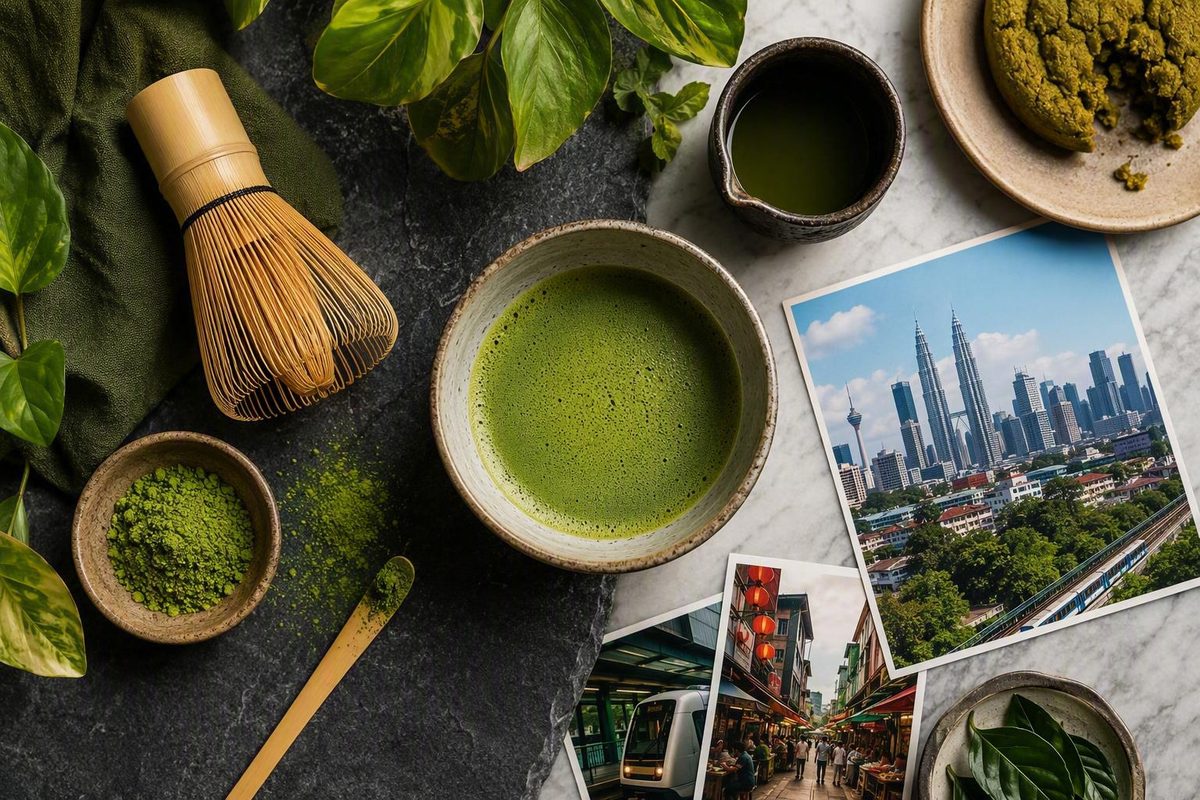
The short answer: matcha is grassy, savory and gently bitter
Matcha commonly tastes like concentrated green tea: vegetal and grassy, with savory umami, mild natural sweetness and some bitterness. A balanced cup feels smooth and rounded rather than sugary, bland or aggressively bitter. Because the powder remains in the drink, matcha also has a fuller, creamier body than most steeped green teas.
“Grassy” does not necessarily mean chewing raw grass. It may suggest the aroma of freshly cut grass, while the flavor can be closer to steamed spinach, cooked leafy greens, nori or vegetable broth. These comparisons help convey matcha’s savory character, but no comparison fits every powder or palate. One retailer’s flavor guide, for example, describes matcha through a combination of savory, vegetal, sweet and mildly bitter characteristics, not one dominant flavor.
The most common descriptions are:
- Grassy: fresh, green and plant-like.
- Vegetal: reminiscent of leafy greens or cooked vegetables.
- Savory or umami-rich: broth-like, rounded and mouth-filling.
- Gently sweet: subtly sweet, without tasting like added sugar.
- Mildly bitter: a noticeable edge that can provide contrast and structure.
Individual matcha powders may also seem nutty, floral, chestnut-like, earthy or slightly oceanic. These are possibilities, not requirements. A matcha without floral or chestnut notes is not necessarily inferior, and a mild oceanic impression is not automatically a fault.
Taste language is subjective. One person’s “fresh and grassy” may be another person’s “too vegetal.” Someone accustomed to unsweetened green tea may find matcha pleasantly rich, while a person expecting a sweet café latte may be surprised by its savoriness and bitter finish.
Plain matcha can therefore be an acquired taste. Milk and sugar soften bitterness and vegetal intensity, so drinking the powder with water exposes qualities that a latte may partially conceal. On a first tasting, there is no need to identify every possible note. A more useful question is: Do the grassy, savory, sweet and bitter elements feel balanced, or does one overwhelm everything else?
Balance does not require an absence of bitterness. It means bitterness remains one part of the cup rather than erasing its sweetness, body and savory depth. Matcha can be intense and still taste coherent.
Detailed tasting notes should be treated as predictions rather than universal standards. Much of the accessible preparation and flavor guidance comes from tea sellers describing their products, and controlled comparisons are not supplied here. Terms such as “creamy,” “nutty” and “oceanic” can help you anticipate a powder, but they are not flavors every drinker is expected to find.
Why matcha feels richer than ordinary green tea
Ordinary green tea is generally made by steeping leaves in water and then removing them. Matcha is finely powdered tea whisked into water. The particles remain suspended in the cup rather than dissolving completely.
That difference changes both flavor and texture. A clear infusion extracts flavor from tea leaves but leaves the leaf material behind. Matcha’s suspended powder creates a more concentrated taste and denser mouthfeel, which is why it may feel creamy, full-bodied or soft on the tongue even without milk. A retailer comparison similarly describes matcha as fuller-bodied than light, clear steeped tea.
A well-mixed cup may have fine foam on top and an even density underneath. Some settling is possible because the powder is suspended rather than dissolved; a quick swirl can redistribute it between sips.
Normal density is different from dry clumps. A clump delivers a sudden concentration of powder, producing a chalky, stronger-tasting mouthful. Poorly dispersed matcha may therefore seem inconsistent—watery in one sip and powdery or harsh in the next.
The practical distinctions are:
- Desirable body: even, creamy and smoothly suspended.
- Poor mixing: visible dry pockets, gritty lumps or concentrated mouthfuls.
- Excessive concentration: evenly mixed but thicker and stronger than the drinker enjoys.
Whisking improves dispersion and can create foam, but neither thickness nor foam proves quality. A highly aerated cup may still taste stale, too concentrated or unbalanced. A cup without a dramatic foam cap may still be smooth and enjoyable.
The intensity can surprise anyone expecting a light mug of green tea. Even a small bowl of matcha may taste more forceful than a larger cup of steeped tea because it combines concentrated flavor with suspended-powder texture. The result is greener, denser and often more savory than a clear infusion.
How the serving style changes the flavor
Matcha whisked with water offers the clearest view of the powder. With no milk or sweetener to intervene, its vegetal aroma, savory depth, natural sweetness, bitterness and finish are easier to distinguish. This makes plain matcha useful for tasting a new product, even if it is not the serving style you ultimately prefer.
Thin matcha is often called usucha. It is prepared as a relatively light, whiskable drink, commonly with foam on the surface. It still tastes concentrated compared with ordinary green tea, but it is generally easier to sip than a thick preparation.
Concentrated matcha is often called koicha. It uses much less water relative to the powder and is mixed into a dense, creamy drink rather than a light, foamy one. Published recipes vary, so usucha and koicha are better understood as contrasting styles than as formulas that every powder must follow.
Greater concentration magnifies nearly everything in the cup. Savory character becomes deeper, texture becomes heavier, and bitterness or perceived dryness may become more conspicuous. A powder that tastes balanced in a thin preparation may feel severe when used at a much higher concentration. That does not necessarily make either preparation wrong; the product or your palate may simply suit one style better.
A matcha latte is usually a softer introduction. Milk dilutes the matcha base, adds body and reduces the prominence of vegetal and bitter notes. Sweetened café versions may taste primarily creamy and sweet, with matcha appearing as a grassy, earthy or savory background flavor. An unsweetened latte preserves more of the tea’s character.
Milk choice can also shift the experience, although the evidence available here reflects retailer guidance rather than controlled sensory testing. Whole milk is described as adding richness and body, while oat milk is described as contributing smoothness and gentle sweetness. These should be treated as reported sensory tendencies, not universal rankings; the milk formula, matcha, proportions and drinker’s palate all matter.
A modest amount of honey, maple syrup or another sweetener can soften a bitter edge. Add it gradually. Too much may conceal the flavor you were trying to assess, producing a sweet drink with only a faint matcha note. That may still be enjoyable, but it reveals less about how the powder tastes with water.
In smoothies, cakes, biscuits and other desserts, matcha has to compete with fruit, dairy, fat, flour and sugar. A delicate powder can disappear. A stronger, more bitter or more vegetal matcha may be useful because it remains recognizable beside the other ingredients. In this setting, intensity serves a purpose rather than automatically indicating a defect.
There is no single best serving style:
- Choose matcha with water for the clearest expression of the powder.
- Choose a thin preparation for a lighter plain drink.
- Choose a concentrated preparation for a dense, intense experience.
- Choose a latte for a milder, creamier cup.
- Choose a robust powder for recipes when the matcha must remain noticeable.
Serving temperature can alter aroma and perception, but the supplied evidence does not establish that cold matcha is inherently less bitter than hot matcha. Cold recipes also tend to change concentration and other ingredients, making simple hot-versus-cold conclusions unreliable.
Is matcha supposed to be bitter?
Yes. Some bitterness can be normal in matcha. A mild bitter note may complement the tea’s natural sweetness and savory umami, adding definition rather than making the drink unpleasant.
The absolute claim that good matcha should never taste bitter is too rigid. Commercial guides disagree: some describe premium matcha as almost free of bitterness, while others consider a slight bitter note compatible with a balanced cup. One guide explicitly presents a touch of bitterness as compatible with sweetness and umami. Individual sensitivity also varies, so the same preparation may seem smooth to one person and distinctly bitter to another.
The more useful distinction is between noticeable bitterness and overwhelming bitterness.
Balanced bitterness may:
- Appear after the first grassy or savory impression.
- Contrast with subtle natural sweetness.
- Fade into a rounded or lingering finish.
- Remain one element of the overall flavor.
Harsh bitterness tends to:
- Dominate both the first sip and the finish.
- Obscure sweetness, umami and other nuances.
- Become less pleasant with each sip.
- Arrive in concentrated bursts from dry clumps.
- Accompany a preparation that is stronger than the drinker enjoys.
For practical tasting, it can also help to describe the flavor and the mouthfeel separately. Use bitter for what you taste and words such as dry, rough or puckering for what remains in the mouth. Tea descriptions often call the latter sensation astringency, but that vocabulary alone cannot diagnose the powder’s chemistry, age or production quality.
Several factors may contribute to harshness. Very hot water can make bitterness more prominent, while too much powder or too little water raises the intensity of every flavor. Dry clumps create concentrated mouthfuls. A powder that has lost freshness may seem flatter or sharper, and a recipe-oriented product may be intentionally assertive enough to remain noticeable beside milk and sugar.
An unpleasant cup is therefore not always a preparation error, but it is not automatic proof of defective powder either. If one cup tastes harsh, change one variable and try again. Cooler water may indicate that temperature was contributing; greater dilution may show that the original ratio was too strong. If sensible adjustments make little difference, the powder may not suit plain drinking or your preferences.
Avoid treating one dramatic descriptor as a conclusive fault test. “Earthy” may mean pleasantly grounded to one person and dull to another. A seaweed-like or oceanic note may read as savory rather than defective. Even “fishy” is used inconsistently. Judge the cup as a whole: aroma, clarity, balance, texture and finish.
The preparation choices that change a cup most
For practical troubleshooting, focus first on water temperature, concentration and dispersion. Change only one at a time so you can identify what materially improves the drink.
A flexible beginner range is 70–80°C (158–176°F). A cautious starting ratio is approximately 1–2 grams of matcha in 60–80 milliliters of water, followed by adjustment for the product and your preferences. These numbers are common retailer recommendations rather than universal sensory standards, but they provide a workable starting point. Maison Koko gives both ranges in its beginner preparation guidance.
Starting near the lower end of the powder range is sensible if you are sensitive to bitterness or intensity. You can increase the amount in a later cup; an overwhelmingly strong first attempt usually requires dilution.
| What you notice | Possible explanation | Adjustment to try |
|---|---|---|
| The cup is sharply or overwhelmingly bitter | The water may be too hot, or the drink may be too concentrated | Use cooler water or less powder, changing only one variable |
| The flavor is strong but not unpleasant | The powder-to-water ratio may be high for your preference | Add water or milk gradually |
| The cup feels uniformly heavy | Too little liquid may be amplifying every flavor | Increase the water in small amounts |
| You encounter dry, bitter pockets | The powder may not be evenly dispersed | Sift it and whisk first with a small amount of water |
| The matcha disappears in milk | There may be too little powder for the total drink volume | Add slightly more powder or use less milk |
| Every aspect feels overwhelming | The product may be assertive, the ratio may be high, or both | Prepare a smaller, more dilute test cup |
| The texture is chalky | Clumps may remain, or the suspension may be too concentrated | Sift carefully, whisk in stages and dilute if needed |
| The flavor stays harsh after reasonable adjustments | Freshness, storage or intended use may be contributing | Compare it with another recently opened powder prepared the same way |
For smoother mixing, sift the dry powder into the bowl or cup. Add a small amount of warm water and whisk until no dry pockets remain, then add the remaining water or milk. This staged method is particularly helpful for lattes because adding milk directly to dry powder can leave difficult clumps.
A bamboo whisk is traditional and well suited to creating an even suspension, but it is not required. A small kitchen whisk or handheld frother can also disperse matcha. The objective is to distribute the fine particles evenly, not to own a particular tool.
Whisking changes dispersion and mouthfeel more reliably than it changes the powder’s underlying character. It can make the drink smoother and more consistent, but it cannot guarantee that stale or naturally forceful matcha will become delicate. Foam can improve the experience without curing every flavor problem.
A simple side-by-side test can show whether preparation matters:
- Divide the same powder between two small cups.
- Use the same powder amount and water volume in each.
- Prepare one with water near the lower end of the recommended range and the other with warmer water.
- Keep the whisking method equal.
- Smell and taste both before adding milk or sweetener.
If the warmer cup is noticeably harsher, temperature is affecting your result. On another day, repeat the test with equal water temperature but different powder amounts to isolate concentration.
Do not assume that water above exactly 80°C (176°F) inevitably ruins every matcha. Guides commonly recommend staying at or below that point, but products and palates vary. Treat the range as a starting point, not a universal cutoff.
How freshness and storage affect taste
Repeated exposure to air, light, heat or moisture may diminish matcha’s fresh character. Over time, its aroma can become less vivid and its flavor may seem flatter, duller or sharper. Distinct grassy, savory or subtly sweet notes may lose definition.
Older or oxidized matcha is sometimes described as muted or hay-like. Such language can provide a clue, but it is not a conclusive test. A hay-like impression may reflect the product itself or the drinker’s vocabulary, while an earthy note does not independently prove poor storage.
After opening, keep matcha:
- In an airtight container.
- Away from direct light.
- Away from heat and steam.
- Protected from moisture.
- Closed promptly after measuring.
A commercial preparation guide notes that exposure to light and air can reduce flavor as matcha oxidizes. Buying an amount you can use while it still tastes fresh is therefore more practical than keeping a large container open for a long time. No precise universal deadline is warranted here because packaging, storage conditions and frequency of opening differ.
Color is a clue, not a verdict. Fading or yellowing may accompany age, storage problems or differences between products. Conversely, vivid green powder does not guarantee a smooth, sweet or complex cup. Lighting and photography also make color unreliable as a stand-alone purchasing test.
A practical freshness check combines several observations:
- Smell the dry powder. Note whether it has a discernible green, vegetal, savory or subtly sweet aroma.
- Prepare a small unsweetened sample. Milk and syrup can conceal flatness as well as bitterness.
- Assess clarity. Can you identify vegetal, savory or sweet character, or does the cup seem mostly dull and harsh?
- Notice the finish. Does it remain rounded, become unpleasantly sharp or disappear immediately?
- Compare under equal conditions. If possible, prepare another powder using the same temperature, concentration and mixing method.
Moisture also encourages clumping. Keep the scoop dry and avoid holding an open container over steam. Sifting can improve the texture of clumped powder, but it cannot restore lost aroma or freshness.
Most importantly, do not diagnose a matcha from one dramatic word. Fishy, earthy, dirt-like or hay-like impressions are subjective and may relate to the product, preparation, storage or personal associations. The defensible conclusion may simply be that the cup does or does not taste fresh and balanced to you.
Ceremonial versus culinary matcha: useful clues, not guarantees
“Ceremonial” and “culinary” should not be treated as consistently comparable grades across brands. Commercial matcha guides themselves acknowledge that companies define and use the labels differently; Naoki Matcha, for example, says Japan does not apply a regulated ceremonial-versus-culinary grading system in its explanation of the labels.
Because that regulatory-status statement comes from a seller rather than a regulator or standards body, the safest practical conclusion is narrower: a ceremonial label from one company does not guarantee the same flavor or quality as the same label from another.
The terms can still offer intended-use clues. Products marketed as ceremonial or suitable for water are often described as smoother, sweeter, more savory and less harsh. Products marketed as culinary or recipe-oriented are often described as stronger, more bitter or more assertive. These are common market patterns, not rules.
A delicate powder may suit whisking with water because there are no other ingredients to hide its subtle qualities. A bolder powder may work better in a smoothie, latte or cake because it must compete with milk, fruit, sugar or flour. Robust flavor is useful when that is the powder’s intended job.
Culinary matcha is therefore not automatically defective. A powder can be too forceful for your preferred plain drink and exactly right for a sweet dessert. One seller guide frames ceremonial and culinary primarily as indicators of intended use rather than strict grades.
Latte recommendations are especially variable. A smooth, delicate matcha can create a refined latte with a softer tea flavor. A stronger powder can produce a more assertive drink that remains recognizably grassy and savory after milk is added. Neither result is universally better:
- Choose smoother matcha for a mild, creamy latte.
- Choose stronger matcha for a prominent green-tea flavor.
- Add more milk or sweetener when you want the tea softened.
- Use less milk when the matcha disappears.
Specific sensory descriptions are usually more informative than the word “ceremonial” alone. Look for terms such as:
- Smooth
- Savory or umami-rich
- Naturally sweet
- Nutty
- Delicately grassy
- Strong or bold
- Low-astringency
- Intended for water
- Intended for lattes or baking
These descriptions remain predictions, not guarantees. Water temperature, concentration, storage and personal sensitivity can all affect what reaches the cup.
When small packs are available, sampling resolves more uncertainty than a label or promotional photograph. Prepare different powders under similar conditions and compare their aroma, balance, body and finish. Actual taste is more useful than assuming one loosely defined market category must be superior.
A beginner-friendly way to taste matcha
The easiest way to discover whether you like matcha is to taste it in stages. Smell the dry powder, prepare a small cup with water, and add milk or a modest amount of sweetener only after tasting it plain. This avoids beginning with either a punishingly concentrated drink or a latte that conceals the tea completely.
First, smell the powder. Do not search for an exact aroma. Simply note whether it seems fresh, green, grassy, savory, sweet, nutty or muted.
Next, prepare a small cup. Use water around 70–80°C (158–176°F) and begin near the lower end of approximately 1–2 grams in 60–80 milliliters of water. These are flexible starting ranges reported in commercial preparation guidance, not requirements every powder must follow. Sift the powder if possible, whisk it first with a little water, and then add the rest.
Taste before adding anything. Use this checklist:
- Aroma: Fresh, grassy, vegetal, savory, nutty, sweet or muted?
- First impression: Soft, bright, intense, bitter or creamy?
- Vegetal character: Fresh and leafy, cooked-green-like, earthy or overwhelming?
- Umami: Is there a broth-like or nori-like savoriness?
- Sweetness: Can you detect gentle natural sweetness?
- Bitterness: Is it mild, balancing or dominant?
- Mouthfeel: Does it leave the mouth smooth, dry, rough or puckering?
- Body: Light, creamy, dense, even or chalky?
- Finish: Sweet, savory, bitter, clean, flat or lingering?
Judge balance rather than searching for one correct matcha taste. A cup may be clearly grassy and mildly bitter while still being pleasant. Another may be naturally sweeter but too light for your preference. The aim is to identify what you enjoy, not reproduce a seller’s tasting notes.
If the first cup is too intense, use less powder or more water next time. If it is sharply bitter, lower the water temperature while keeping the ratio steady. If it is weak, increase the powder slightly. If it is clumpy, improve the sifting and mixing before changing the recipe.
Three beginner pathways cover most preferences:
- Plain but dilute: The clearest flavor with restrained intensity.
- Milk-based latte: A softer, creamier introduction.
- Lightly sweetened matcha: An option for someone who likes the green flavor but is sensitive to bitterness.
Change one variable at a time—temperature, powder amount, water amount, milk or sweetener. Changing everything at once may produce a pleasant drink, but it will not reveal which adjustment helped.
You may discover that you enjoy matcha only in lattes or desserts. You may prefer it plain and dilute, or favor a bold recipe-oriented powder over a delicate one. You may also decide that its grassy, savory profile is not for you. Matcha is distinctive, and no preparation guarantees that every palate will enjoy it.
For future purchases, choose according to use. Prioritize smoothness, sweetness and low harshness for drinking with water. For milk drinks, smoothies and baking, choose enough intensity to remain noticeable beside the other ingredients.
In short, matcha is usually grassy and vegetal, savory with umami, gently sweet, mildly bitter and fuller-bodied than steeped green tea. Balance matters more than any single note. Begin with a small cup and moderately warm water, then adjust concentration, milk or sweetness one variable at a time.
Does matcha taste like grass?
Matcha often has a grassy or freshly green quality, but it does not necessarily taste like raw lawn grass. “Grassy” usually describes its fresh plant-like aroma and vegetal flavor. Depending on the powder and your palate, it may remind you more of steamed spinach, nori, cooked leafy greens or vegetable broth.
A balanced cup offers more than grassiness. Savory umami, subtle sweetness, mild bitterness and creamy body can round out the green flavor. If the vegetal intensity overwhelms everything else, try more water or add milk; reserve cooler-water adjustments primarily for a cup that tastes harsh or excessively bitter.
What does a matcha latte taste like?
A matcha latte usually tastes milder, creamier and often sweeter than matcha prepared only with water. Milk softens the prominence of vegetal and bitter notes while adding body. The result may taste gently grassy, earthy or savory beneath the milk.
An unsweetened latte preserves more of the tea’s character. A sweetened version can resemble a creamy dessert drink, especially when the matcha dose is modest. Stronger powder creates a more assertive green flavor, while a smoother or more delicate powder produces a subtler latte.
Why does my matcha taste extremely bitter?
Possible causes include very hot water, too much powder, too little water or concentrated clumps. Change one factor first: use cooler water while keeping the ratio steady, or reduce the powder while keeping the temperature unchanged.
If careful preparation does not help, the powder may have lost freshness, been poorly stored or been selected for enough intensity to remain noticeable in milk and recipes. One harsh cup cannot identify the cause conclusively, so compare two small preparations that differ only in temperature or concentration.
Is ceremonial matcha always smoother than culinary matcha?
No. Products marketed as ceremonial are often positioned as smoother and more suitable for drinking with water, while culinary matcha is commonly made or selected to taste stronger in recipes. Brands do not use these labels consistently, however, so they cannot guarantee flavor.
Use the terms as intended-use clues. Read the specific tasting description, consider how you plan to serve the powder and sample it when possible. A culinary matcha may work well in a latte or cake, while a product labeled ceremonial may still be more bitter than you prefer.
How is matcha different from regular green tea?
Regular green tea is usually steeped and then removed from the water. Matcha is a fine powder whisked into water, where its particles remain suspended rather than dissolving completely.
That suspension gives matcha a more concentrated flavor and a fuller, creamier mouthfeel. It is generally more vegetal, savory and intense than a light, clear green-tea infusion. Some density is normal, but dry clumps or chalky pockets indicate that the powder needs better dispersion or more liquid.