 KL Observer
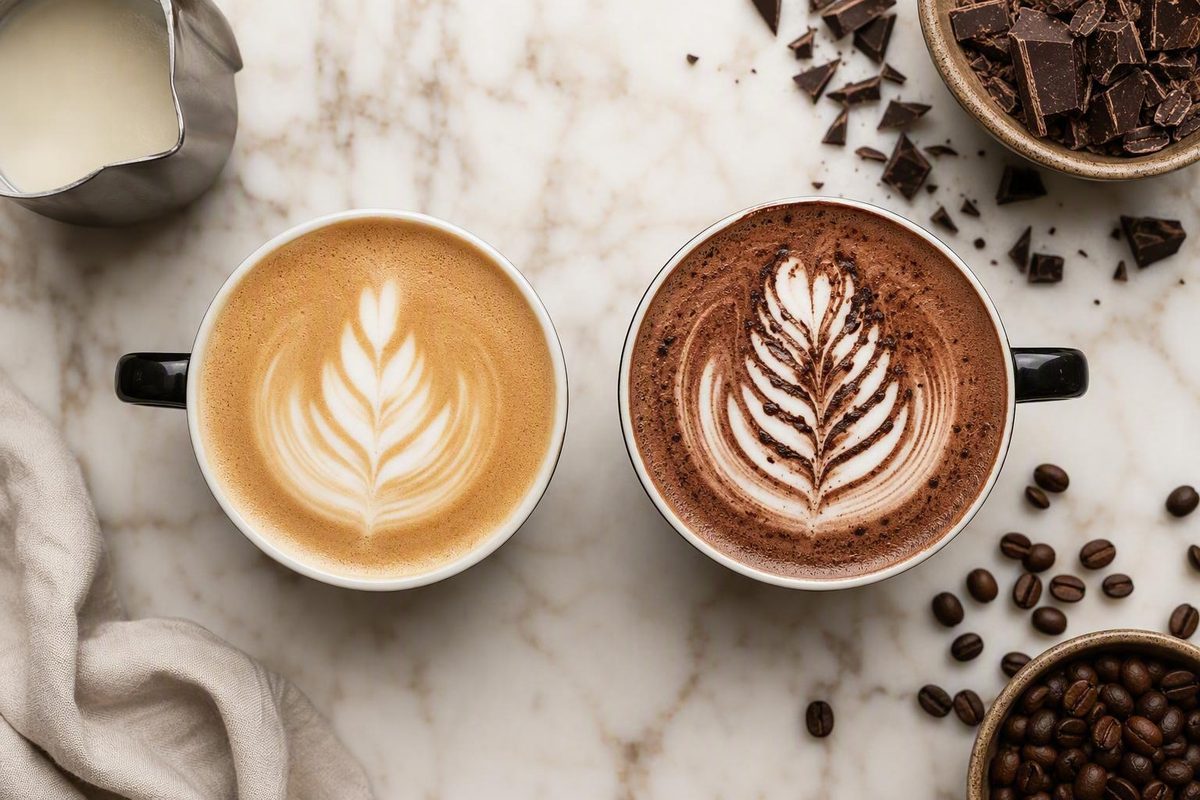
The difference between a mocha and a latte at a glance
The simplest difference is chocolate. A standard latte combines espresso with a generous amount of steamed milk and usually a thin layer of foam. A mocha uses a similar espresso-and-milk base but adds chocolate, commonly as cocoa powder, chocolate syrup, chocolate sauce, or melted chocolate.
That is why a mocha is often described as a chocolate-flavored latte. Recipes vary by café, but chocolate remains the defining distinction. Whipped cream, chocolate drizzle, and shavings are optional finishes, not requirements.
| Feature | Latte | Mocha |
|---|---|---|
| Core ingredients | Espresso and steamed milk, usually with a thin foam layer | Espresso, steamed milk, and chocolate |
| Chocolate | Not included in a plain latte | Defining ingredient |
| Typical flavor | Creamy, mellow, and focused on espresso and milk | Rich, chocolate-forward, and more dessert-like |
| Typical sweetness | Lower when served plain | Usually higher when made with sweetened chocolate |
| Foam | Commonly finished with thin foam or microfoam | May include foam, depending on the recipe |
| Common toppings | Foam or latte art | Optional whipped cream, cocoa, drizzle, or shavings |
| Caffeine | Determined mainly by the espresso dose | Usually similar with the same espresso dose; chocolate may add a small amount (Breville) |
| Calories and sugar | Usually lower when plain | Usually higher because of the chocolate and possible toppings (Canal Coffee) |
This comparison assumes equivalent cup sizes, espresso doses, and relatively plain preparations. A large flavored latte can be sweeter and more caloric than a small, lightly sweetened mocha. A double-shot latte can also contain more caffeine than a single-shot mocha. Size, milk, syrups, toppings, and café recipes all affect the result.
For the quickest ordering decision: choose a latte for a creamy, less-sweet espresso-and-milk balance; choose a mocha for pronounced chocolate flavor and sweetness.
What goes into each drink
A plain latte starts with espresso and a generous amount of steamed milk. It is typically finished with a delicate layer of foam or microfoam, which creates a soft surface and can support latte art. The milk mellows the espresso without adding another defining flavor.
A mocha starts with the same broad foundation but includes chocolate. The chocolate can take several forms:
- Cocoa powder
- Chocolate syrup
- Chocolate sauce
- Melted chocolate
- Chocolate pieces melted into hot espresso
A common preparation sequence is:
- Prepare one or more shots of espresso.
- For a mocha, mix the chocolate with the hot espresso.
- Add steamed or frothed milk.
- Finish with foam if the recipe calls for it.
- Add optional whipped cream, cocoa, drizzle, or chocolate shavings.
This is a common method rather than a universal standard. Some cafés place chocolate sauce in the cup before adding espresso, while others stir cocoa or a prepared chocolate mixture into the drink. Breville’s mocha latte guide similarly describes the drink as a latte base with chocolate flavoring added.
One or two espresso shots are common in both drinks, but shot count does not define either beverage. A café may adjust the number of shots according to cup size, and customers can often request an extra or reduced shot. There is also no single official milk-to-espresso or chocolate-to-espresso ratio used by every café.
It helps to separate essential ingredients from presentation choices:
- Latte essentials: espresso and milk
- Typical latte finish: thin foam or microfoam
- Mocha essentials: espresso, milk, and chocolate
- Possible mocha finishes: foam, whipped cream, cocoa, drizzle, or shavings
Foam can appear on either drink. Whipped cream may make a mocha more elaborate, but removing it does not turn the drink into a latte. If chocolate remains part of the espresso-and-milk base, the drink is still a mocha.
Likewise, chocolate is not part of a standard plain latte. Lattes can be customized with vanilla, caramel, hazelnut, spices, or chocolate, but a latte whose defining added flavor is chocolate will commonly be called a mocha or mocha latte.
How mocha and latte differ in taste, sweetness, and texture
A plain latte generally tastes creamy, smooth, and mellow. It still tastes like coffee, but the generous quantity of milk softens the sharper, more bitter, or roasted qualities of the espresso. Without flavored syrup, its sweetness comes primarily from the milk.
A mocha is generally richer, sweeter, and more dessert-like. Chocolate introduces a second prominent flavor that can complement or partially cover the espresso. When made with sweetened chocolate sauce, a mocha can taste like a meeting point between a latte and hot chocolate.
Milk softens espresso’s bitterness in both drinks. Chocolate usually masks it further by adding cocoa flavor and, in many recipes, extra sweetness. A mocha may therefore suit someone who wants coffee without a pronounced bitter edge.
A latte often makes the espresso-and-milk relationship more apparent—not because it necessarily contains more espresso or caffeine, but because it has no chocolate competing with the coffee flavor. In a mocha, the same coffee notes may still be present, yet chocolate can move them into the background.
Descriptions such as rich, strong, smooth, and coffee-forward are sensory judgments, not standardized measurements. Someone may call a dark-chocolate mocha strong because it tastes intense, while another person may find a plain latte more coffee-forward because its espresso is easier to notice.
The chocolate choice also changes a mocha’s character:
- Dark chocolate can contribute deeper cocoa flavor and more bitterness.
- Milk chocolate tends to create softer, creamier sweetness.
- White chocolate produces a sweeter, more vanilla-like profile without the same dark cocoa character.
All remain mochas because each contains a chocolate component. However, a restrained dark-chocolate mocha may taste bittersweet, while a white mocha may be distinctly sweet and confectionery.
Sweetness is not fixed by the drink’s name. A mocha made with unsweetened cocoa can be less sweet than one made with a heavily sweetened sauce. A latte with several pumps of vanilla or caramel syrup can also become sweeter than a lightly flavored mocha.
Texture varies with the preparation. Properly steamed milk can make either drink feel silky. Chocolate sauce or melted chocolate may give a mocha a richer, more coating quality, but the result depends on the product and amount used.
As a practical sensory guide:
- Choose a latte for creamy coffee without a defining chocolate flavor.
- Choose a mocha for coffee softened by both milk and chocolate.
- If you dislike obvious bitterness, a mocha will usually cover more of it.
- If you want to notice the espresso-and-milk balance, begin with a plain latte.
Does a mocha have more caffeine—or just taste stronger?
A mocha is not inherently more caffeinated than a latte. Espresso supplies most of the caffeine in both drinks, so servings made with equivalent espresso doses should have broadly similar caffeine levels. Chocolate may contribute a small additional amount, but espresso-shot count is usually the more important variable (Breville).
Several factors prevent a universal comparison:
- Cup size
- Number of espresso shots
- Quantity of coffee used for each shot
- Coffee beans and roast
- Extraction method
- Café recipe
- Chocolate type and amount
Comparing unmatched menu examples can therefore be misleading. A large mocha might contain more caffeine than a small latte because it receives an additional espresso shot, not simply because it is a mocha. Conversely, a double-shot latte can contain more caffeine than a single-shot mocha.
Perceived strength is different from caffeine content. A mocha may taste richer or more intense because it contains chocolate. Dark cocoa can add bitterness, and a concentrated chocolate flavor can make the drink seem bolder. Those sensory qualities do not prove that it contains substantially more caffeine.
A latte can create the opposite impression. Its smooth, milky flavor may make it taste gentle even when it contains multiple espresso shots. Milk changes the flavor and texture, but it does not remove the caffeine already present in the espresso.
If caffeine is your priority, ask:
- How many espresso shots does this size contain?
- Does the next cup size include another shot?
- Can I request an extra or reduced shot?
- Is the drink available with decaffeinated espresso?
The practical rule is simple: choose the caffeine level through the espresso dose, then choose latte or mocha according to flavor.
Which usually has more sugar and calories?
A mocha generally contains more sugar and calories than a comparable plain latte because it adds chocolate to the espresso-and-milk base. Sweetened chocolate sauce, whipped cream, and extra drizzle can widen that difference. Exact totals nevertheless depend on the specific recipe, serving size, milk, and toppings (Canal Coffee).
This does not mean every mocha contains more sugar or calories than every latte. A meaningful comparison requires matching the cup size, espresso dose, and milk. Once sizes and customizations differ, the drink name alone provides little nutritional precision.
The main variables are:
- Serving size
- Type and quantity of milk
- Form and amount of chocolate
- Added sugar or syrup
- Whipped cream
- Chocolate drizzle or shavings
- Other flavored syrups
A plain latte gets most of its calories and sugar from its milk. A mocha contains that milk base plus chocolate, which may add sugar and energy depending on the product used. Unsweetened cocoa and sweetened chocolate sauce are therefore not interchangeable from a nutritional perspective.
Avoid treating “latte” as an automatic synonym for a lighter order. A large latte made with flavored syrup may exceed a smaller mocha prepared with modest milk, unsweetened cocoa, and no topping. Published comparisons should not be transferred to an unfamiliar café unless the sizes and recipes match.
For an exact total, consult the nutrition information for the specific café, cup size, milk, chocolate, syrups, and toppings. If that information is unavailable, compare the ingredients rather than relying on a generic estimate.
To simplify a mocha, you can:
- Ask for less chocolate sauce.
- Choose unsweetened cocoa if available.
- Request fewer pumps of sweetened syrup.
- Skip whipped cream.
- Leave off chocolate drizzle.
- Order a smaller size.
- Avoid adding other flavored syrups.
When all other elements are matched, a plain latte is usually the lower-sugar and lower-calorie option because it omits the chocolate. That is a useful comparison, not a declaration that every latte is healthier than every mocha.
Hot, iced, dairy-free, and flavored versions
Both drinks can be served hot or iced without changing their core identities.
A plain iced latte contains espresso, milk, and ice. Sweeteners and flavorings are optional. An iced mocha follows the same general cold-drink structure but adds chocolate. Temperature does not change the central distinction.
Dairy milk is not required for either beverage. Oat, soy, almond, coconut, and other plant-based alternatives can be used in both. An oat-milk mocha remains a mocha because it contains coffee, milk, and chocolate. A soy latte without chocolate remains a latte.
Milk choice can change:
- Perceived sweetness
- Body and creaminess
- How clearly the espresso comes through
- How the chocolate tastes
- Sugar, calorie, fat, and protein totals
Those effects depend on the particular product and serving size. Some plant-based milks are sweetened, while others are not, so the label “plant-based” does not by itself establish whether a drink is lower in sugar or calories (Majesty Coffee).
Flavored syrups can blur the sensory comparison. A generously sweetened vanilla latte may taste sweeter than a restrained mocha made with unsweetened cocoa. A caramel latte may also feel more dessert-like than a dark-chocolate mocha. Even so, chocolate remains the practical naming distinction.
Chocolate variations stay within the mocha category:
- A dark mocha uses dark chocolate or a darker cocoa profile.
- A milk-chocolate mocha emphasizes creamy sweetness.
- A white mocha uses white chocolate flavoring.
- An iced mocha serves the espresso, milk, and chocolate combination cold.
Toppings do not determine the category. Removing whipped cream from a mocha does not turn it into a latte if chocolate remains in the drink. Adding whipped cream to a plain latte does not make it a mocha if no chocolate is present.
When comparing customized drinks, check the ingredients in this order:
- Cup size
- Number of espresso shots
- Milk choice
- Chocolate type and amount
- Other syrups
- Whipped cream and drizzle
That approach gives a clearer picture of flavor and nutrition than assuming all lattes or all mochas follow the same recipe.
Mocha, mocha latte, and caffè mocha: what the menu names mean
In ordinary café usage, mocha, mocha latte, and caffè mocha commonly refer to the same general drink: espresso and milk with chocolate added. The longer names emphasize the drink’s latte-like construction, but recipes and terminology can still vary between cafés.
The safest approach is to read the menu description. Look for three components:
- Espresso
- Milk
- Chocolate
If all three appear, the drink is functioning as a café-style mocha regardless of whether the menu calls it a mocha, mocha latte, or caffè mocha. A simple mocha latte recipe from Snacks and Sips illustrates this common definition with espresso, milk, and chocolate syrup while treating whipped cream as optional.
Does adding chocolate to a latte turn it into a mocha? In everyday café language, generally yes. Begin with a latte-like espresso-and-milk base, add chocolate as a defining flavor, and the result is usually called a mocha.
Home recipes sometimes use strong brewed coffee instead of espresso. This can reproduce a similar coffee-and-chocolate flavor without an espresso machine, but brewed coffee and espresso are not identical preparations. It is more precise to regard such recipes as homemade mocha-style adaptations.
When a menu description is unclear, ask:
- What kind of chocolate is used?
- How sweet is the standard recipe?
- How many espresso shots come in this size?
- Does it include whipped cream or drizzle?
Those details are more useful than the label alone.
Which one should you order?
Choose a latte if you want a smooth, creamy espresso drink with less sweetness and no defining chocolate component. It is usually the better choice when you want to taste the balance between espresso and milk.
Choose a mocha if chocolate is central to the appeal. It will usually taste sweeter, richer, and more dessert-like, with chocolate covering more of the espresso’s bitterness.
If caffeine is your main concern, either drink can work. Select the number of espresso shots you want instead of assuming that a mocha is stronger.
If you are trying to limit sugar or calories, begin with a plain latte or simplify a mocha. A smaller size, less chocolate sauce, and no whipped cream or drizzle will generally produce a less elaborate order than a fully topped version (Majesty Coffee).
If you dislike bitter coffee, both drinks soften espresso with milk. A mocha usually covers bitterness more effectively through chocolate and sweetness. If you still want the espresso to remain noticeable, choose a plain latte.
Use this short decision tree:
- Do you actively want chocolate?
- Yes: Order a mocha.
-
No: Order a latte.
-
Do you want the less-sweet option in a matched comparison?
- Yes: Choose a plain latte.
-
No, you want dessert-like sweetness: Choose a mocha.
-
Do you want the espresso-and-milk balance to remain noticeable?
- Yes: Choose a plain latte.
-
No, you prefer chocolate to lead: Choose a mocha.
-
Do you want more caffeine?
-
Request the desired number of espresso shots in either drink.
-
Do you want fewer additions?
- Skip whipped cream, drizzle, and extra syrup.
The distinction worth remembering is simple: both drinks normally combine espresso with milk, but a mocha adds chocolate. Because café recipes differ, confirm the size, shot count, chocolate level, and toppings instead of relying on the drink’s name alone.
Is a mocha just a chocolate latte?
In practical café terms, yes. A mocha is commonly understood as a latte-like combination of espresso and milk with chocolate added. The chocolate may be cocoa powder, syrup, sauce, or melted chocolate. Recipes vary, but chocolate is the key distinction.
Does a mocha always have more caffeine than a latte?
No. Caffeine depends mainly on the espresso dose. If a mocha and latte contain equivalent espresso, their caffeine levels should be broadly similar, although chocolate may add a small amount. A latte with more espresso shots can contain more caffeine than a mocha with fewer shots (Ellianos Coffee).
Is whipped cream required on a mocha?
No. Whipped cream is an optional topping, as are chocolate drizzle and shavings. A drink remains a mocha without them as long as chocolate is still part of its espresso-and-milk base.
Which drink tastes more like coffee?
A plain latte usually makes the espresso-and-milk relationship more apparent because chocolate does not compete with the coffee flavor. A mocha still contains espresso, but its chocolate and sweetness often mask more of the bitterness. The exact result depends on the espresso dose, milk quantity, and strength of the chocolate.
Can lattes and mochas both be iced or made with plant-based milk?
Yes. Either drink can be served hot or iced and made with dairy or plant-based milk. Temperature and milk choice can alter sweetness and texture, but they do not change the basic distinction: a mocha includes chocolate, while a plain latte does not.