 KL Observer
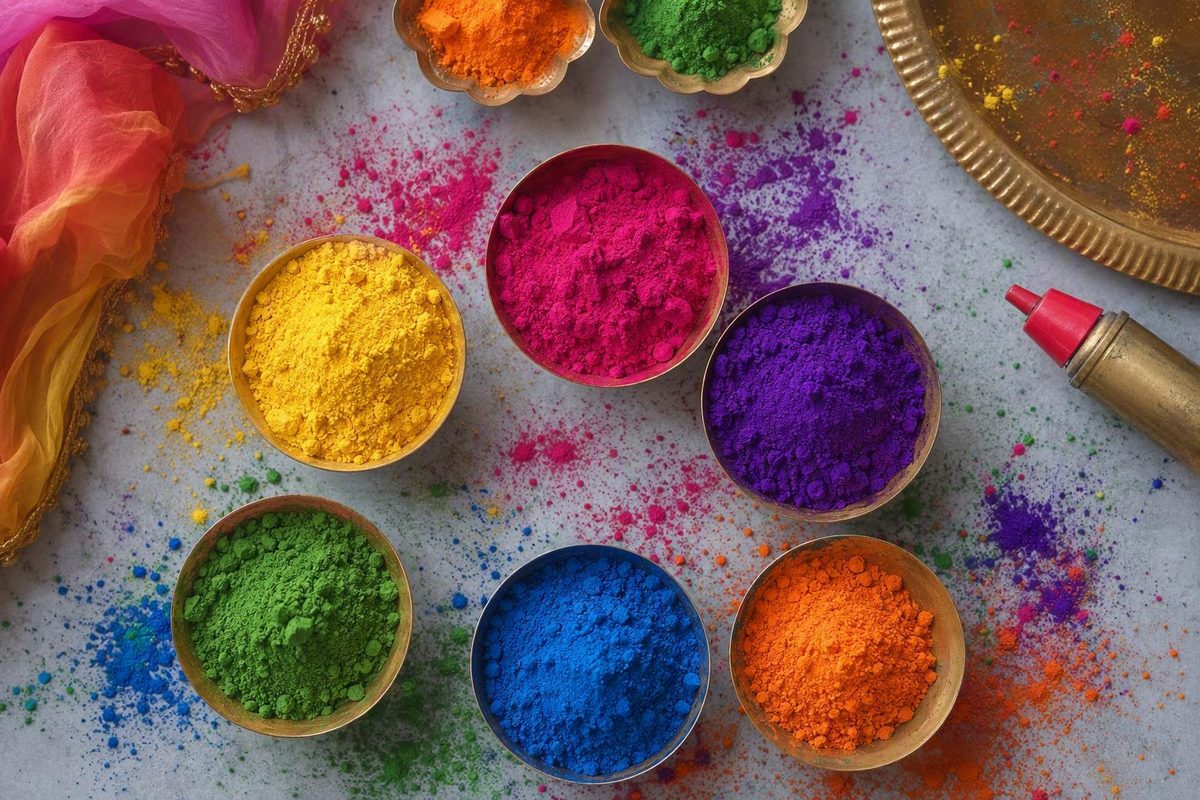
Buying colour powder for Holi involves more than choosing vivid shades or finding the lowest package price. Products differ in formulation, format, documentation, handling demands and suitability for a particular gathering. Reassuring labels such as “natural,” “non-toxic” and “food-grade” do not, by themselves, establish that a powder is safe for eyes, lungs, skin or accidental ingestion.
This guide is therefore a pre-purchase framework rather than a ranking of current products. It explains how to compare formats and historical displayed prices, estimate an order from explicit assumptions, examine supplier documentation and plan for exposure and cleanup. Buyers must still verify current availability, delivery terms, ingredients and batch-specific records directly with the seller.
The aim is not to identify a universal “best” powder. It is to choose the least complicated product that fits the event while making the assumptions, evidence gaps and remaining risks explicit.
What Holi colour powder is—and why cultural context matters
Holi colour powder is commonly called gulal. It is the coloured powder applied, shared or thrown during Holi celebrations.
Holi is a Hindu spring festival associated with colour, community, renewal and the triumph of good over evil. Practices and meanings vary among families, regions and communities, so that broad description should not be treated as a complete account of every celebration. A commercial Holi guide offers similar general cultural framing but cannot establish community-specific practice (Holi festival and colour-powder overview).
Traditional colours have been made from flowers, turmeric, herbs and other plant-derived materials. Modern commercial products are often described as starch-based powders coloured with dyes. That does not mean every contemporary product uses the same starch, pigments, additives or manufacturing process.
Ingredient origin alone does not settle the safety question. A plant-derived ingredient may still irritate an individual or trigger an allergy, while contaminants or fine airborne particles may present other concerns. A dye permitted for a particular food or cosmetic use is not automatically proven safe when dispersed into the air and inhaled.
Cultural context also distinguishes a Holi celebration from the other uses for which commercial powders are sold. Sellers market similar-looking products for colour runs, gender reveals, photography, school activities, fundraisers and generic colour parties. Those activities may use comparable materials, but they are not interchangeable with a Hindu festival carrying religious and cultural significance.
Organizers unfamiliar with Holi should consult participating Hindu families, community representatives or cultural organizations about the event’s meaning, language and local traditions. Ask what the community wants the occasion to include—not only how powder will be purchased and distributed. The available product literature cannot establish region-specific or community-specific practice.
Packets, bottles, loose bags, balls, and kits: choosing a practical format
The most practical format is usually the one that permits controlled distribution with the fewest open containers and transfers. Convenience can simplify logistics, but it is not evidence of safety.
Commercial catalogs illustrate the range. One seller offers packets, loose bags and squeeze bottles, including 350- and 500-gram bottles and loose powder in 1-, 5- and 20-pound quantities (Color Powder Supply’s Holi catalog). Another lists 1-, 5- and 25-pound bags, packet assortments, powder balls, accessories and bundles reaching 500 pounds (Color Blaze product catalog). A separate seller advertises 70-gram packets, 5- and 25-pound formats, powder balls and a party box (Chameleon Colors’ Holi formats).
These are seller listings, not comparative product tests.
| Format | Portion control | Distribution effort | Transport and storage | Leftover management | Best cost comparison | Practical fit |
|---|---|---|---|---|---|---|
| Individual packets | High when each person receives a fixed number | Low to moderate; packets must be counted and issued | Easy to box and count, but creates many wrappers | Unopened packets are easy to separate from used stock | Cost per packet and per pound or kilogram | Families, classrooms and controlled rounds |
| Squeeze bottles | More directed than open bags, but users can still dispense large amounts | Bottles must be issued and potentially collected | Bulkier than flat packets; caps must remain secure | Partly used bottles need secure, dry storage | Cost per bottle, total powder weight and cost per pound | Small or medium gatherings wanting directed application |
| Loose bags | Low unless staff measure portions | High; requires scoops, cups, stations or repacking | Efficient by weight but vulnerable to spills and moisture | Open bags must be resealed and identified | Delivered cost per pound or kilogram | Staffed events with controlled distribution |
| Powder balls or pouches | Pre-portioned but designed to release powder on impact | Easy to hand out; difficult to control after issue | Must be protected from accidental rupture | Unused items are countable; broken items require immediate cleanup | Cost per item and powder weight per item | Only where impact use has been specifically assessed |
| Party boxes or kits | Depends on the included components | Convenient if the contents match the plan | Consolidated packaging, although contents vary | Mixed components can complicate inventory | Total powder weight rather than box price alone | Small planned gatherings wanting an assortment |
| Large event packages | Depends on whether powder is loose or individually packed | May require substantial staffing and staging | Requires dry storage, delivery planning and controlled access | Greatest potential for excess stock | Delivered cost per pound plus handling costs | Large events with trained distribution teams |
Loose powder may reduce packaging and displayed unit cost, but organizers must measure it, transfer it between containers and control access.
Powder balls, blasters, cannons, extinguishers, balloons and other projectile or forceful-release methods appear in commercial catalogs. The supplied seller material does not provide adequate corresponding evidence about eye, respiratory, impact or fire hazards. As a conservative organizer decision, avoid these methods unless a competent event-safety assessment addresses the equipment, exact powder, release method, participant separation, supervision and emergency arrangements.
No supplied evidence provides particle-size measurements or comparative airborne-dust testing for packets, bottles, balls and bags. It would therefore be unjustified to rank the formats by measured dust generation.
For a family gathering, individually issued packets may be simpler than an open bulk bag. In a classroom, sealed units can make counting and staged distribution easier, although indoor throwing should not be the default. For a large outdoor gathering, bulk powder may be economical only if trained staff manage measuring, distribution and reserve stock.
Colours, package sizes, and what catalog variety does not tell you
Recurring advertised colours across the reviewed seller catalogs include:
- Red
- Orange
- Yellow
- Green
- Blue
- Pink
- Purple
- Teal
- Turquoise
- White in selected listings
No reviewed seller is shown to carry every colour in every package size or format. Availability may vary by shade, quantity and delivery location.
Colour names are visual descriptions, not ingredient disclosures. “Blue” does not identify a dye or pigment, while “pink” does not reveal additives, allergens, staining behaviour or contaminant-testing history. Products carrying the same broad colour name may use different formulations.
Ask whether the ingredient list changes by colour. If it does, review each shade separately. A laboratory report for one red formulation should not be assumed to cover blue, green or an assorted pack unless the report explicitly identifies every covered product.
Assorted packs simplify palette selection and reduce the need to calculate each shade separately. They may be practical when equal variety matters more than precise colour allocation. Single-colour bags provide more control when an organizer wants specific quantities by shade or needs to exclude one formulation.
Choose the palette only after reviewing:
- Ingredients and disclosed allergens for each shade.
- Supporting documents and their batch or lot coverage.
- Clothing guidance given to participants.
- Venue surfaces and nearby equipment.
- The cleanup and disposal plan.
- Whether stronger colours may be difficult to remove.
Photographic impact should follow these checks, not precede them. Brightness does not establish contaminant control, washability or suitability for a particular participant.
How to compare prices without mistaking price for quality
Headline prices are difficult to compare because one offer may contain individual packets, another a single loose bag and another an assortment of several bags. Normalize each offer by total powder weight, packet count and delivered cost.
The supplied records do not establish when every original offer was observed, and the entries were not verified as live offers on the compilation date. They should not be read as current prices, stock confirmations or purchasing recommendations.
| Seller or marketplace | Format and total weight | Packet count | Historical displayed price | Calculated unit cost | Source |
|---|---|---|---|---|---|
| Amazon marketplace | Eight 75 g packets; 600 g or approximately 1.32 lb | 8 | $17.36 | $2.17 per packet; approximately $13.12 per lb | Marketplace product page |
| Amazon marketplace | Eight 5 lb bags; 40 lb total | Not applicable | $176.39 | Approximately $4.41 per lb | Marketplace search result |
| Color Blaze catalog | 1 lb bag; 40 lb multicolour pack; and 500 lb bulk package | Not stated as packets | $12.95; $195.99; and $1,750 respectively | $12.95, approximately $4.90 and $3.50 per lb respectively | Seller catalog |
| Color Powder Supply | Single-colour 20 lb loose bag | Not applicable | $86.00 | $4.30 per lb | Seller catalog |
The packet conversion uses 600 grams as the total weight and approximately 453.592 grams per pound. Calculated values are rounded to two decimal places.
These examples illustrate a familiar bulk-pricing pattern: displayed cost per pound may decline as the order grows. That apparent saving comes with additional handling. A 500-pound purchase creates substantially greater storage, lifting, measuring, access-control and leftover-management demands than a one-pound bag or a box of packets.
Use these formulas when comparing offers:
- Cost per packet = displayed price ÷ number of packets
- Cost per pound = displayed price ÷ total pounds
- Delivered cost per pound = (product price + shipping + taxes + duties) ÷ total pounds
- Cost per planned round = delivered order cost ÷ number of rounds
- Cost per participant = delivered order cost ÷ expected participants
Do not count empty bottles, applicators or accessories as powder weight. If a kit does not disclose its total powder weight, ask before comparing it with a loose-powder offer.
A lower price, prominent badge, high rating or large purchase count does not establish ingredient quality, authenticity, washability, safety or batch consistency. Seller-hosted reviews describe customer experiences but are not substitutes for formulation records or independent test reports.
Before ordering, recheck:
- Product price and any discount conditions
- Shipping and handling charges
- Taxes, customs duties and import requirements
- Geographic delivery restrictions
- Lead time and event-date commitments
- Current stock by colour and package size
- Return restrictions, particularly for opened or non-returnable products
- Damage and replacement procedures
- Whether substitutions are permitted
- Lot numbers and document availability
Treat prices, discounts, ratings, badges, purchase counts and stock labels as temporary seller or marketplace information.
Estimating an order when there is no verified universal amount per person
The supplied evidence does not establish a defensible universal “light,” “moderate” or “intensive” grams-per-person recommendation. Vendor packages described as serving 100, 250 or 500 participants do not solve that problem because the underlying allocation assumptions may not be disclosed. Such packages may presume a particular number of rounds, release style, event duration or reserve amount.
Instead, select and disclose an event-specific planning allowance:
Total grams = attendees × grams per person per round × number of rounds × (1 + contingency rate)
Then convert the result:
- Kilograms = total grams ÷ 1,000
- Pounds = total grams ÷ 453.592
- Calculated package count = total grams ÷ grams in each package
Round the package count up to a whole package and record the resulting excess.
Hypothetical arithmetic example
Suppose an organizer enters these assumptions solely to test the calculation:
- 80 attendees
- 30 grams per attendee per round
- 2 controlled rounds
- 10% contingency
- 75-gram packets
The arithmetic is:
80 × 30 × 2 = 4,800 grams4,800 × 1.10 = 5,280 grams5,280 ÷ 1,000 = 5.28 kilograms5,280 ÷ 453.592 ≈ 11.64 pounds5,280 ÷ 75 = 70.4 packets- Round up to 71 packets
This is a hypothetical calculation, not a recommended exposure allowance. The 30-gram input has not been established as safe or appropriate.
The selected allowance should reflect the event design. Sparing individual application, staff-issued portions and a limited number of rounds require different purchasing assumptions from unrestricted access to open bags. The objective should be controlled participation, not the largest possible dust cloud.
To reduce excess stock and unnecessary distribution:
- Issue powder in stages rather than all at once.
- Keep reserve stock sealed and away from general access.
- Use a fixed number of distribution rounds.
- Pause distribution when conditions no longer match the event plan.
- Record opened and unopened stock after each round.
- Do not release contingency stock merely because it was purchased.
If a supplier offers a calculator, ask what it assumes about portion size, rounds, spillage, reserve stock and application method. Its output is a commercial planning estimate, not a universal benchmark or safety threshold.
Downloadable worksheet specification
Copy the following line into a plain-text file and save it as holi-colour-powder-order-worksheet.csv. It can then be opened in spreadsheet software:
Attendance,Grams per person per round,Number of rounds,Contingency rate,Base grams,Total grams with contingency,Total kilograms,Total pounds,Package weight grams,Calculated package count,Packages to order,Price per package,Shipping taxes and duties,Total cost,Cost per attendee,Assumptions and notes
Useful spreadsheet formulas include:
Base grams = Attendance × Grams per person per round × Number of roundsTotal grams with contingency = Base grams × (1 + Contingency rate)Packages to order = ROUNDUP(Total grams with contingency ÷ Package weight grams, 0)Total cost = (Packages to order × Price per package) + Shipping taxes and dutiesCost per attendee = Total cost ÷ Attendance
Enter the contingency as a spreadsheet percentage or decimal—for example, 10% or 0.10, not the whole number 10. If the sheet instead uses whole-number percentages, the formula must divide that field by 100.
Keep the assumptions field visible. It should state whether the estimate represents sparing application, individual issue, controlled rounds or another clearly described method.
A buyer checklist for separating documentation from marketing language
Marketing terms can identify questions to ask, but they rarely answer those questions on their own.
| Claim on the package or page | What it does not prove | Documentation or clarification to request |
|---|---|---|
| Natural | Purity, low dust, allergy suitability or absence of contaminants | Complete ingredients, source materials and relevant contaminant report |
| Herbal | Identification of each plant or safety when inhaled | Botanical names, additives, allergen information and test scope |
| Non-toxic | Safety for every route, dose, age or medical condition | Definition used, exposure routes assessed and supporting toxicological report |
| Skin-friendly | Suitability for sensitive skin or absence of irritation | Formulation-specific assessment and complete ingredient disclosure |
| Food-grade | Safety when inhaled or placed in eyes | Exact approval context and evidence relevant to the intended exposure |
| Cosmetic-grade | Suitability for throwing, dust clouds or accidental ingestion | Intended cosmetic use, assessment scope and stated limitations |
| Washable | Complete removal from every fabric, hair type or surface | Test method, tested materials, contact time and limitations |
| Biodegradable | Harmlessness to drains, soil, plants or waterways | Test standard, conditions, timeframe and complete formulation |
| Eco-friendly | Measured environmental performance | Evidence addressing packaging, disposal and relevant environmental effects |
| Certified | Which product, standard, test or batch was assessed | Certificate, issuer, date, standard, formulation and lot coverage |
| Authentic | Cultural suitability, ingredient quality or safety | Country of manufacture, supply-chain information and a precise definition |
Ask every shortlisted seller for:
- A complete ingredient list for every colour.
- Disclosed allergens and cross-contact information.
- An SDS or equivalent safety document.
- Storage, shelf-life and moisture-control instructions.
- Spill, disposal and leftover-stock instructions.
- Batch or lot identification.
- Independent laboratory reports relevant to the exact formulation.
- Product-specific information on heavy metals and other contaminants.
- Any available particle-size or comparative dust-generation data.
- Product-specific flammability and explosibility testing.
A credible laboratory report should identify the laboratory, test date, standard or method, tested formulation, colours, results and batch or lot coverage. Reject an undated certificate, an illegible logo, a document for a different product or a report that cannot be connected to the stock being offered.
Some suppliers invoke FDA, EU, SGS, ISO, EN71, OSHA, VDI, SDS or MSDS terminology. One commercial page lists several such standards and tests without supplying the underlying documents in the reviewed page text (supplier certification and safety claims). Buyers should request the actual records and determine what each one covers rather than treating a list of names as a combined safety guarantee.
Regulatory or certification language may apply only to one ingredient, manufacturing process, toy-related requirement, contaminant screen or test condition. It may not assess inhalation, eye exposure, environmental effects or every colour in an assortment. Food- or cosmetic-use status for an ingredient does not automatically establish that dried airborne particles are safe to breathe.
Schools, councils and public-event organizers should keep written supplier answers with the purchasing record. Record unresolved questions and the reasons for accepting or rejecting a product. Do not rely on a phone assurance that cannot be matched to a formulation and batch.
No reviewed product should be described as the safest, best, most authentic or most environmentally responsible without suitable comparative evidence.
Eye, skin, breathing, ingestion, and fire risks to plan around
Formulations vary. Public-health guidance reports that metals, industrial pigments, talc, asbestos, mica granules and other hazardous materials have been identified in some Holi powders; this does not mean every powder contains those substances. Reported concerns include eye irritation or injury, skin reactions, inhalation exposure, gastrointestinal effects after ingestion and ignition or explosion when some dispersed powders encounter an ignition source (Poison Control’s Holi colour guidance).
Poison Control also summarizes a published case involving a 57-year-old man who experienced serious eye and surrounding-tissue injury and infection after a Holi festival and ultimately required reconstructive surgery. The case demonstrates that severe harm is possible; one case does not establish how often such an outcome occurs.
Because the supplied evidence does not identify a universally safe formulation or exposure amount, event design should aim to limit uncontrolled exposure. Practical measures include:
- Prefer an outdoor location.
- Monitor wind and pause distribution if powder is no longer remaining within the planned activity area.
- Prohibit aiming, rubbing or blowing powder at faces.
- Avoid simultaneous mass releases and dense clouds.
- Use trained distributors rather than unrestricted access to bulk powder.
- Keep powder away from candles, torches, bonfires, smoking areas and other ignition sources.
- Offer protective goggles or sunglasses.
- Tell participants not to wear contact lenses.
- Consider masks as an additional precaution without claiming that a particular mask eliminates exposure.
- Encourage clothing that covers arms and legs.
- Provide accessible washing and eye-rinsing facilities.
Wind monitoring, limited distribution and separating powder from additional heat-producing equipment are conservative organizer controls. They should be incorporated into a venue-specific assessment rather than presented as proof that an event is safe.
Create a separate participation plan for people who report asthma, respiratory sensitivity, sensitive skin or known ingredient allergies. The organizer should provide ingredient information and describe the activity in advance, but should not make an individualized medical decision on someone else’s behalf. A participant may need professional medical guidance or may decide not to take part.
Participants should receive advance notice that airborne powder will be present. Provide a powder-free viewing area and a straightforward way to opt out. Children require active adult supervision rather than reliance on a general announcement.
Volunteers should be briefed on distribution limits, the no-face rule, conditions for pausing activity, ignition controls, first-aid arrangements, incident reporting and activity boundaries. A written response plan should identify washing facilities, emergency access, responsible staff and the local medical or poison-information service.
First aid and cleanup without unrealistic washability promises
If powder enters an eye, Poison Control advises rinsing immediately with comfortably warm, comfortably pressured water for 15 minutes. Seek medical care for eye pain, light sensitivity or vision changes, and for severe or persistent breathing problems. In the United States, Poison Control offers online assistance and can be reached at 1-800-222-1222; readers elsewhere should use their local poison-information or emergency service (Poison Control’s exposure and first-aid directions).
Rinsing is general first aid, not a diagnosis. It does not replace professional evaluation when concerning symptoms are severe or persist. Event staff should not attempt to identify a pigment or contaminant from its appearance.
For routine cleanup, remove as much dry powder as practical before adding water. Brush or shake affected clothing in a controlled location where the dust will not expose other people or drift back into a building.
A vendor-recommended clothing sequence is:
- Shake or brush off loose powder.
- Rinse with cold water.
- Wash affected items separately.
- Repeat washing if needed.
For skin and hair, remove loose dry powder before washing with ordinary soap and shampoo. The same commercial guidance acknowledges that repeated washing may be necessary and that fair skin and very light or bleached hair may retain pigment temporarily (vendor clothing, skin and hair cleanup guidance).
Do not promise complete removal. Test the proposed cleanup method on an inconspicuous area before the event and protect sensitive surfaces where practical.
Outdoor use is generally preferable. Commercial guidance notes that indoor powder can create dust buildup, difficult cleaning, temporary staining and concerns around electrical equipment. If indoor activity is being considered, obtain venue approval and ask the venue to assess ventilation, alarms, electronics, food-preparation areas and cleaning requirements.
A cleanup plan can identify:
- Areas that need protective coverings
- Separate bags for affected clothing
- Dry collection tools
- Where washing may occur
- Venue requirements concerning drains and landscaping
- Instructions for unopened and partly used stock
- Disposal directions from the product documentation and local rules
These are planning considerations, not evidence that a particular powder is environmentally hazardous or harmless. Do not claim that powder is safe for paving, drains, soil, plants, pets, wildlife or waterways without product-specific evidence. “Biodegradable” does not answer every disposal or environmental question.
Homemade Holi-style powder versus commercial products
A documented craft recipe uses:
- 1 cup of flour
- Approximately ½ cup of water
- Food colouring
The method mixes the flour and water into a thick paste, adds food colouring, forms the mixture into a ball and rolls it into a disk about one-quarter inch thick. The disk is dried overnight, crumbled and ground back into powder. The source recommends that an adult perform or assist with the coffee-grinder step and suggests gloves because food colouring may stain hands (Little Passports’ homemade powder craft).
The recipe does not provide an expected yield, storage life, allergen assessment, microbial-risk assessment, washability test or inhalation-safety evidence. Familiar or edible ingredients do not prove that a dried powder is suitable for lungs, eyes or throwing at people.
Its missing allergen assessment also means organizers cannot infer suitability for every participant.
Treat this as an educational craft example, not evidence that homemade powder is safer, natural, child-safe or equivalent to a commercially tested formulation. A small supervised craft in which material remains on a work surface raises different questions from a mass-participation activity where powder is dispersed around faces.
Organizations requiring documented testing, consistent batches, procurement approval or institutional risk review should obtain suitable product records. A DIY ingredient list does not automatically satisfy those requirements.
Frequently asked questions
Is Holi colour powder safe for skin and lungs?
There is no universal answer. Formulations, contaminants, particle characteristics, exposure amounts and individual sensitivities can differ. Labels such as “natural,” “non-toxic” and “food-grade” are not enough to establish skin or inhalation safety.
Use the exposure controls described above, disclose ingredients where possible and provide a powder-free participation option. Anyone concerned about a medical condition or allergy should make an informed personal decision and seek individual professional guidance where appropriate.
What is Holi colour powder usually made from?
Traditional gulal has been made from flowers, turmeric, herbs and other plant-derived sources. Modern commercial powders are often described as starch-based products coloured with dyes, but there is no single formulation shared by every manufacturer, product or shade.
Ask for a complete ingredient list for each colour. Do not assume that every shade in an assorted pack has an otherwise identical formulation.
How much colour powder do I need per person?
No verified universal grams-per-person amount is established here. Choose and disclose an event-specific purchasing allowance based on controlled application and the planned number of rounds, then calculate:
attendees × grams per person per round × rounds × (1 + contingency rate)
The allowance is a planning assumption, not a safety threshold. Issue powder in stages and keep reserve stock sealed rather than treating everything purchased as something that must be used.
Will Holi colour powder wash out of clothes and hair?
It may wash out, but complete removal cannot be guaranteed. Remove loose dry powder first, rinse clothing in cold water and wash affected items separately. More than one wash may be necessary.
Remove loose powder from skin and hair before using ordinary soap and shampoo. Light fabrics, fair skin, bleached or very light hair and porous surfaces may retain colour temporarily. Follow the instructions for the exact product and test sensitive materials in advance.
Can I make Holi colour powder at home?
A flour, water and food-colouring craft recipe exists, but it does not establish that the finished material is safe to inhale, place near eyes or throw at people. It also supplies no verified yield, shelf life, microbial assessment, allergen evaluation or washability test.
The method may serve as a supervised educational craft. For a school, public festival or mass-participation event, do not assume that a homemade recipe meets documentation, consistency or institutional-approval requirements.
The final decision should follow a sequence rather than a product ranking: understand gulal’s cultural role; consult the participating community; choose the least complicated format that fits the gathering; calculate the order from disclosed assumptions; verify ingredients and batch-specific records; control dust and ignition sources; brief participants and volunteers; and prepare first aid and cleanup before opening any powder. Vivid colour, low price, familiar ingredients and reassuring marketing terms cannot replace transparent product evidence and careful event planning.