 KL Observer
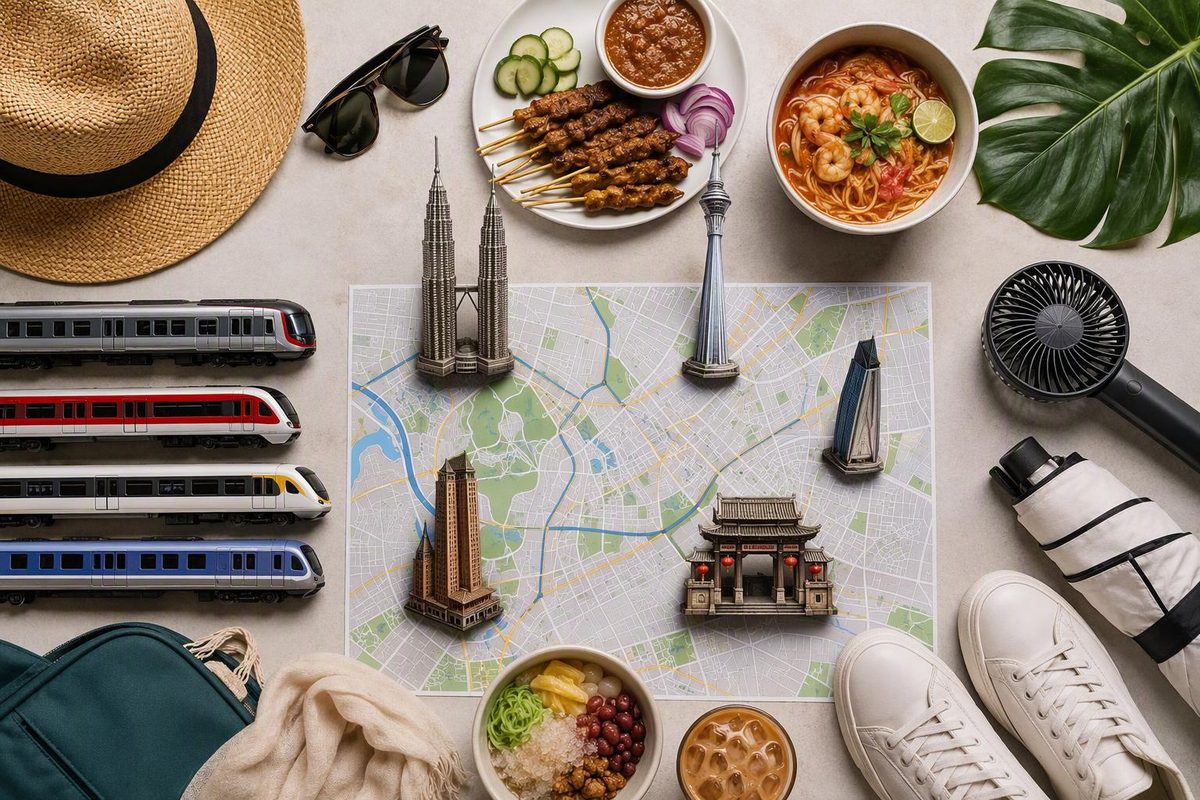
“City centre Kuala Lumpur” does not identify one universally understood neighbourhood. For most visitors, the practical choice is KLCC for the towers and indoor convenience, Bukit Bintang for the broadest mix of food and evenings, or Pasar Seni and Chinatown for heritage. KL Sentral is better treated as a transport base than the sightseeing centre.
All three visitor districts are central, but they produce different trips. KLCC—the named precinct around the Petronas Twin Towers—is only one part of the wider area that hotels and booking sites may describe as the city centre.
Choose your main priority; the tool shows the central district that fits best.
Find Your Most Useful Central Base
Bukit Bintang
Choose it for the most flexible combination of rail, shopping, dining and evening activity. Expect busy streets.
KLCC
Twin Towers, KLCC Park, business hotels and indoor breaks.
Bukit Bintang
Shopping, restaurants, Jalan Alor and evenings out.
Chinatown and Pasar Seni
Heritage streets, temples, markets and cafés.
KL Sentral and Brickfields
Airport, intercity and regional transport connections.
Source: District, station and route details cited in this guide from Rapid KL, Tourism Malaysia and the relevant operators.
Rapid KL’s integrated transit map places these districts on different but connected rail corridors. Choose one as your base, then use rail instead of assuming every central landmark will be a comfortable walk away.
Stay in KLCC for Landmarks and Indoor Breaks
KLCC suits a short first visit focused on the Petronas Twin Towers, Suria KLCC and KLCC Park. Useful stations include KLCC, Persiaran KLCC and Ampang Park.
Tourism Malaysia describes KLCC Park as a 50-acre space below the towers (Tourism Malaysia). The towers’ Skybridge and Observation Deck require timed tickets; the official PETRONAS ticket page encourages online purchase and says admission remains subject to availability.
This zone makes it easy to alternate between the park and air-conditioned interiors. It is a sensible choice for families, business travellers and visitors who want the towers outside the hotel rather than a late-night food street. Its main trade-off is that the immediate area feels more mall-oriented than the historic centre.
Stay in Bukit Bintang for Food and Evening Energy
Bukit Bintang is the more practical base if the day should finish with dinner or nightlife. Pavilion KL and several other malls cluster around the main shopping streets, with Bukit Bintang, Imbi and Raja Chulan among the useful stations.
Tourism Malaysia calls Bukit Bintang the city’s main shopping and entertainment district. It lists Jalan Alor’s stalls as opening from approximately 5pm until late, while noting that most close on Mondays (Tourism Malaysia). Treat those hours as a planning guide rather than a promise for every stall.
KLCC and Bukit Bintang can be combined without spending the entire journey beside traffic. Tourism Malaysia documents a 562-metre, fully air-conditioned walkway connecting the two shopping districts (Kuala Lumpur shopping guide). That figure covers the elevated link, not the complete door-to-door walk: allow time for Pavilion’s corridors, the convention-centre side and the onward underpass toward Suria KLCC.
Bukit Bintang’s trade-off is its busy streets and stronger evening activity. For a closer look at station choice, evening noise and walking routes, use the Bukit Bintang guide.
Stay Near Pasar Seni for the Historic Centre
Pasar Seni is the strongest rail anchor for Chinatown. Central Market, Petaling Street, Sri Maha Mariamman Temple and nearby heritage streets form a compact cluster. Merdeka and Masjid Jamek are also useful stations for different sides of the historic centre.
Central Market says its building began as a wet market in 1888 and now focuses on Malaysian culture, art and craft (Central Market).
This district works best as a sequence of short walks. Start around Central Market, continue into Chinatown and stop for one proper meal rather than trying to sample continuously. Shelter between stops is less consistent than in KLCC or Bukit Bintang, so the exact order matters in heat or rain.
The Chinatown walking route puts the stops in a workable order. Use the Central Market guide if shopping and shelter matter more than temples. For the civic landmarks north of Chinatown, follow the Dataran Merdeka visitor guide.
Use KL Sentral as a Transport Base
KL Sentral is a major interchange and a useful base for an early airport departure or repeated regional rail trips. The airport rail operator lists KLIA Ekspres and KLIA Transit alongside the Kelana Jaya LRT, Kajang MRT via Muzium Negara, Monorail, KTM Komuter, KTM Intercity and ETS connections (KLIA Ekspres). Brickfields and Little India are beside the station complex.
It is not the best default base if the priority is stepping directly into KLCC, Bukit Bintang or Chinatown. In heat or rain, use the short rail connections rather than treating “Sentral” as a promise that the main sights are comfortably walkable.
Follow This One-Day Route With Limited Exposed Walking
Morning: Historic Centre
Arrive at Pasar Seni. Walk through Central Market, then continue to Petaling Street and one or two nearby temples. Add Dataran Merdeka only if the weather and your walking energy permit; otherwise keep it for another morning.
Lunch and Early Afternoon: Bukit Bintang
Take a direct Kajang Line MRT train from Pasar Seni to Bukit Bintang. Rapid KL’s Kajang Line station information lists Pasar Seni, Merdeka and Bukit Bintang consecutively on the line.
Eat near the station, then use a mall or café for the hottest part of the day.
Late Afternoon: KLCC
From the Pavilion side of Bukit Bintang, use the air-conditioned pedestrian link toward the Kuala Lumpur Convention Centre and continue to Suria KLCC. Walk in KLCC Park when conditions are comfortable, then see the towers after dark.
If you plan to visit the Skybridge or Observation Deck, book a timed ticket in advance.
Dinner: Stay Put or Return to Bukit Bintang
Return to Bukit Bintang for Jalan Alor only if you still want a busy food-street setting. Otherwise, eat in KLCC and avoid an unnecessary extra journey.
This route uses one substantial pedestrian connection and rail for the cross-city leg. METMalaysia says thunderstorms occur throughout the year, usually in the evening or early evening, and advises entering a strong building when lightning begins (METMalaysia). If a storm starts while you are inside a mall, pause there rather than rushing to complete the route.
Check the Exact Block Before Booking
A hotel’s “city centre” label is less useful than its nearest station and exact street. Two properties marketed under the same broad area can involve very different amounts of exposed walking.
Choose Bukit Bintang for the most flexible mix of rail, shopping, food and evenings; KLCC for the towers, park and indoor convenience; or Pasar Seni and Chinatown for heritage and compact food-led walks. Choose KL Sentral when airport, intercity and regional transport connections outweigh doorstep sightseeing.
Before booking, check the nearest station, the exact block and the amount of exposed walking between the hotel and the places you plan to visit.