 KL Observer
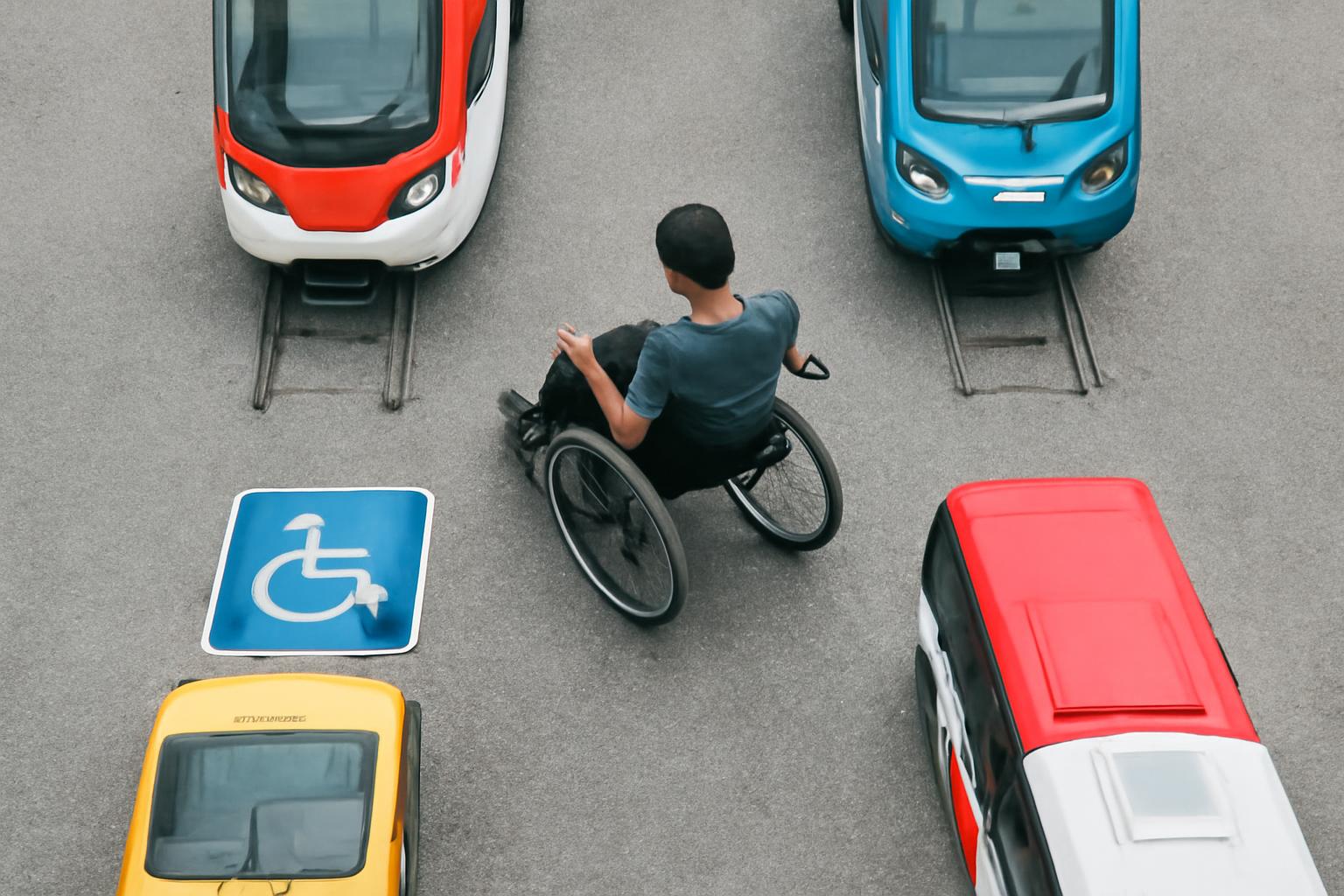
Overview of Wheelchair Accessibility in KL Public Transport
If you are researching wheelchair accessible KL public transport, the clearest evidence points to a rail-first answer rather than a blanket citywide one. The most detailed wheelchair-specific source in this evidence pack is a 2016 firsthand report, which found all 48 stations on the Ampang and Kelana Jaya LRT lines accessible by ramps and elevators, with level platforms, minimal gaps, wide gates, and reserved wheelchair spaces on newer trains. That same report also described KLIA Ekspres as level-entry and listed KTM Komuter as a wider regional network rather than the easiest intra-city mode (Wheelchair Travel’s guide to Kuala Lumpur public transportation).
More recent but broader evidence supports the idea that newer rail infrastructure is the city’s strongest accessibility layer. A 2025 Malaysia accessibility overview says newer KL MRT and LRT stations typically include elevators, tactile paving, wheelchair-accessible entrances, and level boarding. That is encouraging, but it is still a high-level design snapshot rather than a station-by-station audit of lift uptime, interchange routing, or platform operations (4S To Go’s overview of public transport accessibility in Malaysia).
The weak point is usually not the train itself. A separate wheelchair travel account based on a 2017 visit found streets and sidewalks were often the hardest part of the trip, with high curbs, damaged pavement, and obstacles between stations and destinations. The same traveler found the monorail broadly usable thanks to wide barriers and lifts, but reported one broken lift and said KTM boarding could require help because of the train-platform gap (I Wheel Travel’s Kuala Lumpur wheelchair accessibility tips).
For fares, there has been a real policy improvement for eligible riders. Disability-rights reporting says Prasarana’s OKU SMILE Pass began activation on 15 January 2024, with free rides from 1 February 2024 on RapidKL rail and bus services in the Klang Valley for holders of a valid Prasarana OKU Concession Card. The same reporting also mentions keeping at least RM5 stored on the card during activation (OKU Rights Matter’s public transport page). What that does not prove is tourist eligibility. The benefit appears tied to a local concession card, not simply to being a wheelchair user.
Regular buses are where this guide has to stay conservative. The evidence pack does not support a route-by-route claim that RapidKL buses are uniformly accessible today. What it does support is narrower: some buses and trains are designed to accommodate wheelchair users, some stations have lifts and accessible toilets, but barriers still include a lack of wheelchair-accessible vehicles in some cases, unsafe or poor pedestrian approaches, and stations without full step-free access in practice (OKU Rights Matter public transport page). In other words, this is a practical rail-led overview with cautious bus guidance, not a definitive every-route bus audit.
So the most honest takeaway is specific. Kuala Lumpur can be workable for many wheelchair users if you build days around LRT and newer MRT lines, keep station approaches short, and expect contingencies. It becomes much less predictable when the trip depends on sidewalks, older equipment, a narrow timetable, or a bus stop approach that has not been verified in advance. Just as important, some high-intent details remain unverified in this evidence pack: current lift reliability by station, official broken-lift fallback procedures, interchange-by-interchange accessibility, and whether an international visitor can obtain the concession card needed for free rides.
LRT Lines: Ampang and Kelana Jaya Accessibility
The strongest wheelchair-specific evidence in this pack is still the older reporting on the Ampang and Kelana Jaya LRT lines. In that 2016 firsthand account, all 48 stations on those two lines were described as wheelchair accessible by ramps and elevators, with station platforms level with trains and only minimal boarding gaps. The same report also noted wide fare gates and reserved wheelchair spaces on newer trains (Wheelchair Travel’s guide to Kuala Lumpur public transportation).
That matters because it addresses the three points that usually decide whether a rail system feels merely compliant or genuinely usable: getting through the gate, reaching the platform without stairs, and boarding without a stressful gap. On those basics, the Ampang and Kelana Jaya lines were reported very positively.
The date matters too. Because the detailed evidence comes from 2016, it should be read as strong historical directional evidence, not as a fresh audit proving that every lift, gate, and reserved space is operating exactly the same way now. The article’s value is that it shows these lines were built and experienced as substantially more accessible than many visitors might expect. Its limit is that it cannot certify today’s operational reliability.
The same 2016 report says LRT fares started at RM1 and could be paid at electronic ticket machines or with a reloadable MyRapid card. That is useful as a fare baseline, but travelers should treat it as a dated snapshot rather than a guaranteed current fare table.
One detail from that report needs careful framing: the author received a complimentary MyRapid card with stored value during a supported visit. That is evidence of what happened on that trip, not proof of a standard visitor entitlement. In practice, assume you will buy or top up your own transit media.
Power wheelchair users should also read the good news with one extra caveat. The reported reserved spaces on newer LRT trains included an optional seatbelt, but the same source warned that this setup might not be suitable securement for every power chair because there were no other securement points. So yes, LRT looks like the best-supported rail option in the pack, but “has a wheelchair space” is not the same as “fits every chair equally well.”
That is still an inference from limited evidence, but it is a much firmer one than any equivalent claim for KTM, monorail, or regular buses.
MRT and Newer Stations: Elevators and Step-Free Boarding
Where LRT has the clearest detailed wheelchair narrative, MRT has the clearest newer-infrastructure pattern. The most relevant evidence says newer MRT and LRT stations in the Klang Valley are equipped with elevators, tactile paving, wheelchair-accessible entrances, and platforms level with trains for step-free boarding (4S To Go’s overview of public transport accessibility in Malaysia). Even allowing for the source’s blog-style tone, those are the exact features wheelchair users usually need first.
That newer-station pattern matters because retrofitted accessibility and integrated accessibility do not feel the same on the ground. A station built around elevators and level boarding is often easier to use than one where access exists but feels bolted on, hidden, or operationally fragile.
For schedules and fares, the best available operational snapshot in this pack is a general 2026 MRT guide, not an operator accessibility document. It lists the Kajang and Putrajaya lines as running daily from 6:00 AM to 12:00 AM, with weekday peak frequencies around 4 to 6 minutes and off-peak or weekend frequencies around 7 to 10 minutes. It also lists single-journey fares from RM1.20 to RM6.20 and a 50% concession fare for registered OKU riders (Trip.com’s KL MRT guide). Use that as planning context, not as a substitute for a current official fare or service page.
The same guide notes Touch ’n Go card use and a small card-based discount in its fare structure. For wheelchair users, the practical value of a stored-value card is less about saving a few cents and more about reducing friction at machines, queues, and tight station layouts. If you expect repeated rides in a day, cashless entry is usually easier than buying a token every time.
Broader accessibility support at major terminals is also mentioned in the 2025 accessibility overview, which says major bus and train terminals include elevators, adapted restrooms, and designated waiting areas for passengers with reduced mobility (4S To Go overview of public transport accessibility in Malaysia). That is helpful context, but again, not a current hub-by-hub operational check.
The unresolved part is important. This evidence pack does not provide a reliable station-by-station list of the best elevators, the most dependable accessible exits, or the easiest transfer interchanges. So the right conclusion is not “MRT is verified end to end.” It is “newer MRT and LRT stations have the strongest documented design features, and that usually makes them better bets than older or gap-prone modes.”
Monorail and KTM Komuter: Gaps and Assistance Needs
Monorail and KTM Komuter are the modes where accessibility shifts from “likely manageable” to “manage expectations.” Both appear usable in some circumstances.
For the monorail, the best evidence is a 2017 wheelchair travel account describing wider ticket barriers, lifts, and priority wagons. That same account also reported a small platform gap and one broken wheelchair lift during the trip (I Wheel Travel’s Kuala Lumpur wheelchair accessibility tips). The result is a mode that may work well when equipment is functioning and crowds are manageable, but can quickly become an assistance-dependent option if one lift is out.
That distinction matters for solo travelers. A system can be “accessible” in principle and still feel operationally risky if one broken lift or awkward gap forces an improvised plan. The monorail evidence in this pack points to exactly that kind of conditional usability.
KTM Komuter has a different profile. In the 2016 Wheelchair Travel report, KL Sentral was experienced as barrier-free, and KTM was described as a distance-based system with 68 stations and fares based on distance traveled (Wheelchair Travel guide, 2016 report). In the 2017 account, KTM stations were described as having lifts, ramps, and wide platforms, but boarding often still required another person’s help because of a larger train-platform gap. The same account also mentioned a closed disabled restroom at Batu Caves station, a reminder that station infrastructure on paper is not always usable in the moment.
It may be entirely workable with staff help or a travel companion, especially for a specific destination. But the evidence here does not support treating KTM as the easiest central-KL sightseeing backbone.
Frequency matters as well. The 2016 report specifically suggested KTM was less compelling for intra-KL use because frequency was lower than on the city’s stronger rail spines. That is not a wheelchair issue by itself, but it matters more when every extra wait, every platform change, and every gap negotiation costs more energy.
Power chairs sharpen these tradeoffs. A small gap on monorail or a larger gap on KTM may feel routine for one setup and uncomfortably risky for another. That is why the best practical label for both modes is not “yes” or “no,” but “possible, with higher odds of needing help.”
Airport Links and Hop-On Buses for Wheelchair Users
For airport access, the evidence is relatively consistent even though it is older. The 2016 wheelchair-specific report described KLIA Ekspres as wheelchair accessible with level-entry boarding, connecting the airport to KL Sentral in about 30 minutes for RM55 one way, with a RM100 round-trip fare valid for one month. A 2017 wheelchair travel account repeated the same one-way and return fare figures. That does not amount to fresh operator verification, but two separate wheelchair-oriented reports point in the same direction.
What remains unverified here is current on-the-day assistance practice, not the broader pattern that the airport rail link has historically been a good fit for wheelchair users.
The hop-on, hop-off sightseeing buses are more mixed. The earlier 2016 report described them as having a ramp, a reserved wheelchair space, 23 stops, and fares of RM45 for 24 hours and RM79 for 48 hours. The 2017 account also described ramps and reserved spaces at 23 stops, but listed higher fares of RM55 for 24 hours and RM95 for 48 hours, with disabled riders paying child rates of RM30 and RM50 in that traveler’s reported pricing. Both accounts also noted that ramp angle could be steep depending on the stop and bus position (Wheelchair Travel guide, 2016 report; I Wheel Travel account, 2017 report).
That fare mismatch is useful, not problematic. It shows exactly why older traveler reports should be treated as directional rather than definitive for price-sensitive planning: service can remain similar while fares change.
Just as important, sightseeing buses are not the same thing as regular RapidKL buses. The evidence for hop-on buses is specific enough to say the vehicles were at least designed with wheelchair boarding in mind. The evidence for everyday RapidKL bus use is weaker. According to OKU Rights Matter, some buses are designed to accommodate wheelchair users and the OKU SMILE Pass covers RapidKL bus rides financially, but the same source also says barriers remain, including a lack of wheelchair-accessible vehicles in some cases and poor pedestrian paths to public transport. That is why regular buses should be treated as conditional tools rather than the default backbone for a wheelchair-using tourist.
Rail has its own problems, but at least the strongest evidence in this pack gives clearer reasons to trust LRT and newer MRT first.
So the practical split is simple. Hop-on buses may be useful for a lower-transfer sightseeing day. Regular buses remain the least verified part of the system for visitors who need dependable step-free travel.
OKU SMILE Pass: Free Rides on RapidKL Services
The most important concession change in this pack is the OKU SMILE Pass. According to disability-rights reporting, activation began on 15 January 2024 and free rides began on 1 February 2024 for holders of a valid Prasarana OKU Concession Card using Prasarana services, including RapidKL rail and bus services in the Klang Valley (OKU Rights Matter’s public transport page).
That same reporting includes a concrete activation example: a wheelchair user said the pass was activated at the KL Sentral LRT ticket counter after showing the required card and keeping at least RM5 balance on it. It also names other RapidKL hubs such as Pasar Seni and KLCC as activation points. For eligible local riders, that is a meaningful affordability improvement.
The concession picture is slightly more complicated than a simple before-and-after story. Before free rides on qualifying RapidKL services, the more common structure described in this evidence pack was a 50% discount for registered OKU riders. The general 2026 MRT guide still lists a 50% concession for registered people with disabilities on MRT fares (Trip.com KL MRT guide).
For tourists, the key issue is eligibility, not generosity. The public evidence here ties free rides to a valid Prasarana OKU Concession Card. It does not say that an overseas disability card, wheelchair use by itself, or a foreign doctor’s letter automatically qualifies. So international travelers should budget as if they will pay standard fares unless RapidKL or Prasarana confirms otherwise directly.
It is also worth separating financial access from physical access. Free rides help with cost. They do not repair a broken lift, flatten a steep ramp, widen a gap, or clear a blocked sidewalk. OKU Rights Matter does mention that some stations have lifts and accessible toilets, but the same source also emphasizes that transport planning still does not consistently meet the diverse needs of disabled users. Even a successful concession arrangement does not remove the need for conservative routing.
For someone who does qualify, though, the pass changes the economics of a rail-heavy KL itinerary. A day built around RapidKL services becomes far cheaper, which makes it easier to abandon an awkward bus or rideshare fallback and stay on the better-supported rail network instead.
Challenges: Last-Mile Barriers and Equipment Reliability
The wheelchair-specific 2017 travel account repeatedly points to poor streets and sidewalks, including high curbs, damaged pavement, and obstacles that complicate access to stations and attractions. A broader Bernama article on Greater KL transport adds general urban context, arguing that improper pedestrian paths to bus stops and rail stations discourage public transport use more widely (Bernama’s Greater KL accessibility article). That Bernama piece is not wheelchair-specific on its own, but it aligns with the wheelchair traveler’s more concrete observations.
This matters because “station accessible” is not the same as “trip accessible.” A journey can be step-free inside the fare gates and still become unworkable if the station exit opens onto a curb without a cut, a broken footpath, or a route blocked by parked motorcycles or street furniture. For disabled travelers, the last stretch is often the part most likely to collapse an otherwise good transport plan.
Equipment reliability is the second recurring problem. The local evidence includes a broken monorail lift during one trip and a closed disabled restroom at Batu Caves station. Those are individual observations, not a systemwide audit, but they fit the broader pattern identified in a 2024 scoping review of 34 studies on public transport use by people with disabilities: common barriers included lack of ramps, long walking distances, long waiting times, missing information, and negative driver attitudes, while facilitators included ramps, courteous staff, and better travel confidence (PMC scoping review on public transport use among people with disabilities).
That review is not Kuala Lumpur-specific, so it should not be used as proof that every one of those barriers exists in the same way in KL. What it does offer is explanatory weight. It helps show why a single broken lift, a long detour, or uncertain staff communication matters so much more to disabled riders than to the average traveler. Accessibility is not only a hardware question. It is also an information, timing, and staff-response question.
Power wheelchair users face an additional layer of risk. A wide gate may still be awkward at certain angles. A marked wheelchair space may still be a poor securement fit. And the most common fallback used by nondisabled tourists—a quick rideshare—is much less reliable when a traveler uses a heavy or non-folding chair. The 2017 wheelchair account explicitly notes that Uber or Grab can be cheap, but often requires a foldable wheelchair and a passenger transfer, making it a poor backup for many power-chair users.
This is also where the current evidence simply runs out. The pack does not provide a verified map of the most reliable accessible exits, a current broken-lift escalation procedure, or dependable interchange guidance at complex hubs. So a careful reader should not confuse honest synthesis with full operational certainty. The safe planning assumption is not that something will definitely go wrong, but that the day should be flexible enough to absorb a sidewalk problem, a lift issue, a closed toilet, or a boarding delay without collapsing.
Planning Tips: Rail Spines, Contingencies, and Heat Adaptation
The best way to use wheelchair accessible KL public transport is to organize the city around the parts that are best supported by evidence and least dependent on luck. In this pack, that means building around LRT and newer MRT first, treating monorail and KTM as secondary tools, and using buses cautiously unless a specific stop and boarding setup has been checked.
As a house routing philosophy rather than accessibility evidence, KL Observer plans Kuala Lumpur by choosing one base, using rail as the main spine, and limiting long exposed walks. Neighborhoods such as Bukit Bintang, KLCC, and Chinatown are useful examples because they are often discussed as rail-connected bases that can reduce backtracking and heat exposure. That does not prove equal wheelchair accessibility in every street around them. It does make them sensible starting points when you want shorter, repeatable trip shapes.
The most wheelchair-friendly version of that idea is simple: stay where a good LRT or MRT station is close, keep the day clustered, and avoid turning every outing into a chain of transfers. The more your itinerary depends on a single exact exit, a marginal sidewalk, or a gap-prone mode, the more fragile it becomes.
A practical rail-first plan usually looks like this:
- Choose a hotel near a stronger LRT or newer MRT station rather than near a destination that only looks central on a map.
- Group sights by corridor so you are not constantly switching lines and relying on multiple lifts.
- Prefer destinations with short approaches from the station, especially if afternoon heat or rain is likely.
- Treat monorail and KTM as useful only when they clearly shorten the day enough to justify their extra uncertainty.
- Use regular buses as optional supplements, not as the day’s main backbone, unless you have verified both the vehicle and the stop approach.
- Keep a fallback nearby: a mall, hotel lobby, museum, or café where you can cool down, recharge, and rethink the route if an exit or lift fails.
Heat adaptation matters almost as much as accessibility adaptation. KL routing advice generally emphasizes shade, shorter walks, and fewer wasted crossings, and that logic becomes even more important for wheelchair users. What looks like a manageable approach in the morning can feel much harder later if it is exposed, sloped, crowded, or broken up by repeated road crossings.
Crowding matters too. That is especially true for larger power chairs, which often need more time to align at gates and more space to turn at carriage doors.
If you are traveling with a companion who can help at a gap or during a lift failure, the city becomes more flexible.
The most useful mindset is conservative, not fearful. Assume the strongest modes will often work. Assume the weak point is most likely to be the approach, the lift, or the boarding interface. And let your hotel location do as much accessibility work as the transport system itself.
Is the OKU SMILE Pass available to international wheelchair users?
Do not assume so. The public evidence ties free rides to holding a valid Prasarana OKU Concession Card, and this pack does not verify that an overseas visitor can get one simply by showing a foreign disability ID or proof of wheelchair use (OKU Rights Matter public transport page). For trip budgeting, the safest approach is to assume standard fares unless RapidKL or Prasarana confirms eligibility directly.
Which KL stations have the most reliable elevators for wheelchairs?
This evidence pack does not support a current station-by-station ranking. What it does support is a broader pattern: newer MRT and LRT stations are reported to have elevators, tactile paving, wheelchair-accessible entrances, and level boarding, while major terminals are reported to include elevators and adapted restrooms (4S To Go overview of public transport accessibility in Malaysia). That makes newer MRT and LRT stations the better general bet, but it does not prove day-to-day lift reliability at any named station.
Do power wheelchairs fit LRT fare gates and reserved spaces?
Often, apparently yes, but with limits. The detailed 2016 LRT report describes wide fare gates and reserved wheelchair spaces on newer trains, which is promising for many users. The same report also warns that the onboard seatbelt may not be suitable securement for every power chair because there are no other securement points (Wheelchair Travel guide, 2016 report).
What if a lift is broken at an LRT or MRT station?
This pack does not include an official RapidKL or MRT broken-lift procedure. That caution is consistent with the 2017 wheelchair account that encountered a broken monorail lift and also found surrounding sidewalks could be difficult (I Wheel Travel account, 2017 report). If you are alone, it is usually safer to retreat to a known workable point than to improvise through poor street conditions.
Are RapidKL buses wheelchair accessible with ramps?
Only partially verified. The evidence here says some buses are designed to accommodate wheelchair users and that the OKU SMILE Pass covers RapidKL bus rides financially, but it also says barriers remain, including cases where wheelchair-accessible vehicles are lacking and pedestrian paths to public transport are poor. The clearer ramp-specific bus example elsewhere in this pack is actually about Rapid Penang, not Kuala Lumpur, which is exactly why strong route-by-route claims for RapidKL buses cannot be made from this evidence alone. For most wheelchair-using tourists, rail remains the better-supported plan and buses are best treated as occasional backups.