Skip to Content
KL Observer
← All Guides

Food And Beverage Explainers

What People Mean When They Call a Lunch Truck a “Roach Coach”

The nickname is most closely associated with workplace-oriented lunch service, and even operators using that model may not recognize or welcome it.

Aina Rahman Updated Aug 24, 2026 15 Min Read

The short answer: what is a roach coach food truck?

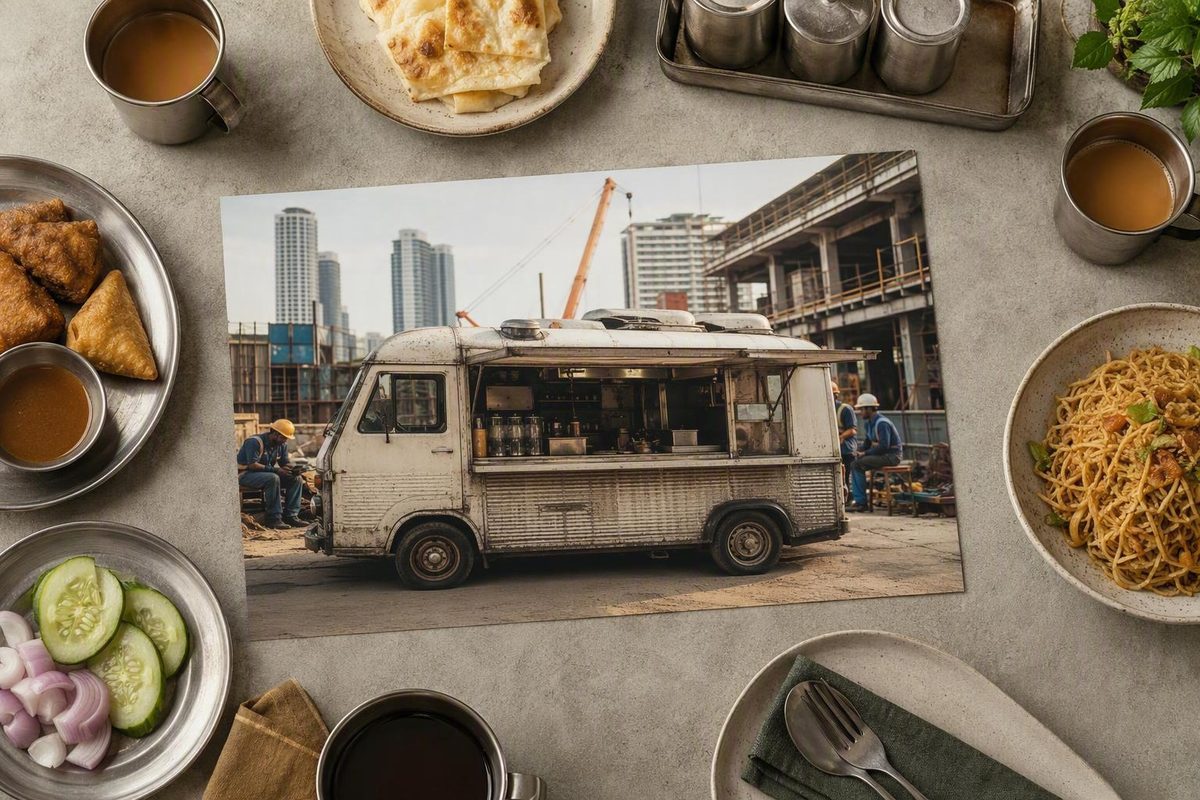
A roach coach is an informal, often dated nickname for a mobile lunch or catering truck, especially one that visits construction sites, factories, car dealerships, corporate parks, and other workplaces.

The expression describes a service tradition, not an official vehicle type, licensing class, or regulatory category. A truck associated with the nickname might be a van, a pickup fitted with a service body, or a larger mobile food unit. Historical summaries treat “roach coach” as one nickname for worksite food trucks rather than a technical classification (overview of food trucks and their historical nicknames).

The basic operating idea is straightforward: bring quick food and drinks to workers who may have short breaks or few convenient alternatives nearby. A truck may make recurring breakfast or lunch stops, serve a brief rush, and then continue to another workplace. That pattern is common in accounts of traditional lunch trucks, but it is not universal.

More neutral terms include:

  • Lunch truck
  • Catering truck
  • Food truck
  • Mobile food vendor
  • Mobile kitchen
  • Snack truck

Not every food truck, cart, trailer, or mobile kitchen is a roach coach. The nickname is most closely associated with workplace-oriented lunch service, and even operators using that model may not recognize or welcome it. Because “roach” suggests pests and poor sanitation, the term can sound insulting even when a longtime customer intends it affectionately.

Context also matters because Roach Coach may refer to three different things:

  1. The generic nickname for a workplace lunch truck
  2. A food-truck discovery website using Roach Coach as its brand
  3. A particular vendor known locally by that name

A business name, location, map, or reference to workplace rounds will usually indicate which meaning is intended.

Why workplace lunch trucks became useful

Route-based lunch trucks became useful because they brought food directly to people who could not easily leave work or had limited nearby meal options. Construction crews, factory employees, dealership staff, technicians, and workers in corporate or industrial areas might not have enough time during a short break to travel to a restaurant, order, eat, and return.

The truck reversed the usual restaurant relationship: instead of requiring customers to go to the food, it brought the food to a concentrated group of customers.

A representative route may include several workplaces. The operator arrives around an expected time, opens the service window, serves customers quickly, and then moves to the next stop. Some trucks make separate breakfast and lunch rounds; others focus on one meal period. Routes and schedules depend on the operator and the workplaces served.

Speed is central to the model. Coffee, pastries, wrapped sandwiches, burritos, packaged snacks, and ready-to-serve hot items can be sold within a brief break.

Lunch-truck visits can also become a workplace ritual. In one dealership reminiscence, a horn announces the truck’s arrival, employees gather in the parking lot, buy food, talk briefly, and return to their departments while the operator continues along the route. That account presents the stop as both a meal opportunity and a short period of coworker interaction, although it should not be treated as representative of every route or workplace (Shop Press’s dealership lunch-truck reminiscence).

Someone who remembers a familiar driver, a favorite breakfast item, or a predictable daily break may hear “roach coach” as affectionate workplace slang. The operator, however, may hear the same words as a criticism of the business.

The defining feature of the traditional model is not a particular profession or truck design. It is the truck’s role in bringing quick food to recurring groups of workers. A similar vehicle operating mainly at festivals or private events may belong to the same broad mobile-food category while using a different business model.

What a traditional lunch truck might sell

There is no standard roach coach menu. Offerings vary by operator, region, vehicle, route, meal period, equipment, and customer preferences.

A representative selection might include:

Drinks and breakfast items

  • Coffee
  • Soda and other bottled or canned drinks
  • Pastries and doughnuts
  • Breakfast sandwiches
  • Breakfast burritos

Quick lunch and snack items

  • Premade or freshly assembled sandwiches
  • Hot dogs
  • Burgers
  • Chips
  • French fries
  • Chicken
  • Pizza
  • Tacos
  • Other portable hot foods

A truck does not necessarily prepare every item from scratch. Across the broader food-truck category, vendors may sell frozen or prepackaged products, reheat food prepared in a commercial kitchen, or prepare some dishes in an onboard kitchen. Commonly described fare includes sandwiches, hamburgers, hot dogs, chicken, tacos, pizza, fries, beverages, and pastries.

Menus built around quick service suit the workplace model. Packaged drinks and snacks can be handed over immediately, while sandwiches, burritos, pastries, and prepared hot foods offer more substantial options without requiring every customer to wait for a lengthy made-to-order process.

Regional food may be just as important as familiar convenience items. One lunch-truck reminiscence mentions tamales alongside coffee, pastries, sandwiches, hot dogs, burritos, and fries, illustrating how menus can reflect local tastes rather than follow a single national formula (examples from a workplace lunch-truck account).

Portability also matters. Customers may carry their meals back into a building, eat outdoors, or take food into a work vehicle.

A simple menu should not be confused with careless operation or poor food. Straightforward food can be well sourced, responsibly handled, and well suited to customers’ available time. Conversely, an elaborate menu or polished presentation does not by itself establish food quality or safe handling. Those questions depend on the practices of the individual vendor.

Traditional roach coach versus modern food truck

The familiar contrast is between an old-style lunch truck making workplace rounds and a contemporary food truck operating on streets, at markets and festivals, or for private events. It is a useful distinction, but not a rigid one.

Feature Traditional workplace lunch truck Contemporary food truck
Primary customers Workers at construction sites, factories, dealerships, corporate parks, and other recurring stops Pedestrians, destination diners, festival visitors, office workers, and private-event guests
Location strategy Travels to recurring workplaces or follows a route May use street locations, markets, festivals, pop-ups, or booked events
Schedule Often arranged around breakfast, lunch, shifts, and short breaks May publish changing locations, use regular pitches, or accept event bookings
Menu format Commonly emphasizes portable, ready-to-serve, reheated, or simply prepared items May emphasize specialty cuisine, signature dishes, or made-to-order service
Branding Often portrayed as plain or minimally branded, although this is not required Frequently uses prominent graphics, a distinct concept, and social promotion
Service speed Intended to handle a short workplace rush before moving on May range from rapid counter service to longer waits for made-to-order dishes
Common use cases Everyday worker meals and refreshments at recurring stops Street dining, festivals, markets, corporate catering, weddings, and private parties

The traditional model is generally route-oriented and convenience-led. It succeeds by reaching customers when they have an accessible break. Plain vehicles appear often in retrospective accounts, but minimal branding is neither a requirement nor proof of a particular menu or operating method.

Others focus on festivals and private bookings rather than daily street service.

Modern marketplaces also allow event planners to compare vendors by location, guest count, vendor format, cuisine, event type, venue, budget, and whether the host or individual guests will pay. Those search tools can help create a shortlist, but listings and estimates still need to be confirmed directly with each vendor (food-truck event filters on Thumbtack).

The categories overlap considerably:

  • A workplace lunch truck can serve freshly prepared regional food under a strong brand.
  • A contemporary specialty truck can make recurring stops at offices or construction sites.
  • One operator can follow a weekday route and also attend festivals or accept private bookings.
  • Similar-looking vehicles can have entirely different menus, schedules, and customer bases.

Both models belong to the wider category of mobile food vending. Neither is inherently safer, better, more authentic, or more sophisticated. The more useful distinction is how the business reaches customers: by recurring route, by attracting destination diners, by accepting event bookings, or through some combination of those approaches.

Is “roach coach” insulting, affectionate or simply outdated?

It can be insulting, affectionate, or merely old-fashioned, depending on who says it and how the recipient understands it.

Some people use the phrase nostalgically. They associate it with a familiar driver, a favorite meal, or a daily moment when coworkers gathered around the truck. In that setting, the term may be intended as teasing workplace affection.

Other people regard it as unflattering or plainly insulting. The reason is built into the wording: attaching “roach” to a food business suggests pests and poor sanitation. A customer’s fond memories do not remove that implication for an operator who has invested in a professional business and does not want the label.

Intent matters, but the operator’s preference should guide current usage. If a truck displays a business name, use that name. Otherwise, neutral descriptions are readily available:

  • “The lunch truck”
  • “The catering truck”
  • “The food truck”
  • “The mobile food vendor”

A Christiansted example illustrates the issue. A travel article identifies the preferred business name as Waterfront Food Truck while reporting that many local customers call it “The Roach Coach.” The same article says the operators prefer Waterfront Food Truck, showing that a locally popular nickname is not necessarily welcomed by the people running the business (account of the Waterfront Food Truck and its nickname).

A sound etiquette rule is:

When an operator has chosen a business name, use it.

This avoids assumptions about whether the nickname is affectionate, regional, historical, or unwanted. It also makes it easier to find the correct menu, social account, business listing, or inspection record.

Writers should use similar care. The phrase may be relevant when defining historical slang or reporting a documented local nickname, but it should not be applied casually to every plain or workplace-oriented food truck. When the term is necessary, its potentially disparaging tone should be explained.

The sanitation stereotype is not a safety verdict

The nickname carries a sanitation stereotype. It does not establish that a particular truck is dirty or unsafe.

Myth: A truck called a roach coach must have pests or poor hygiene.

Fact: The word invokes that image, but the supplied evidence does not demonstrate that trucks bearing the nickname were generally infested, unsafe, or failing inspections. It cannot establish the present condition of an individual vendor.

Myth: An old, plain, or minimally branded truck is less safe than a modern gourmet truck.

Fact: Vehicle age, exterior graphics, menu complexity, and workplace location do not show how food is currently stored, prepared, or handled. Attractive branding is not an inspection result, and plain branding is not evidence of a violation.

Myth: Every mobile vendor follows one nationwide permit and inspection system.

Fact: Mobile food businesses must comply with the health, permitting, licensing, and operating requirements applicable where they work, but those rules and procedures can vary by jurisdiction. Commercial guidance also notes the need for health and licensing compliance, although it should not be treated as a definitive account of every local system (commercial overview of lunch trucks and compliance).

Because the evidence pack contains no government source for a particular jurisdiction, the most reliable practical advice is narrow: consult the relevant local health, licensing, or permitting authority.

For a specific truck:

  1. Confirm the business identity. Search under the operator’s chosen business name rather than only a nickname.
  2. Identify the responsible local authority. The relevant department and record system depend on the location.
  3. Look for current official information. If inspection or permit records are publicly available, check the record for that specific business.
  4. Use current evidence. A recent official record is more useful than historical slang, rumors, or an old photograph.
  5. Report specific concerns appropriately. If you observe a food-handling problem, contact the operator or the responsible local authority rather than drawing conclusions from the truck’s appearance.

Menu format proves little as well. Selling packaged snacks does not establish poor hygiene, while cooking food to order does not automatically demonstrate superior handling.

The defensible conclusion is simple: “roach coach” is a stereotype-laden nickname, not an inspection grade.

What the available history can—and cannot—establish

Workplace lunch trucks belong to a broader, primarily U.S.-focused history of mobile food service. Commonly cited predecessors include 19th-century chuckwagons and lunch wagons, followed by motorized vehicles that transported and sold food. A general historical summary says worksite trucks and vans carrying the “roach coach” nickname were operating by the early-to-mid-20th century, but it does not establish the expression’s first documented use (food-truck history overview).

A commercial food-truck manufacturer instead emphasizes white or gray worksite trucks of the 1970s and 1980s. Its account associates them with construction sites and basic convenience food, but it supplies no archival evidence proving that the term began in that period (manufacturer’s account of the older lunch-truck model).

These descriptions may concern different periods of regional use or public visibility. On the supplied evidence, however, it is not possible to establish:

  • The earliest documented appearance of the phrase
  • The place where it was first used
  • Whether it emerged in one region or several
  • Who coined it
  • A definitive etymology
  • Whether the stereotype reflected documented industry-wide conditions

A repeated online claim is not the same as an independently verified origin. Establishing a precise chronology would require stronger evidence, such as dated newspaper appearances, dictionaries, trade publications, advertisements, or other archival records.

The defensible historical outline is broader. Mobile food selling predates contemporary gourmet trucks. Motorized lunch vehicles developed a practical role around workplaces, and “roach coach” became one nickname associated with that tradition. The wider food-truck market later expanded to include strongly branded specialty vendors, street service, festivals, online promotion, mobile ordering, and private events.

That expansion did not make workplace lunch service obsolete. Route-based vending remains a distinct and practical way to bring quick food to groups of workers.

Three meanings searchers should not confuse

A search for “roach coach food truck” may point to three different subjects.

1. The generic workplace-lunch-truck nickname

In its generic sense, “roach coach” refers to an older-style mobile lunch or catering truck associated with recurring workplace stops. It is informal slang rather than the name of a regulated vehicle class.

References to construction sites, factories, dealerships, corporate parks, short breaks, scheduled rounds, or nostalgic workplace memories usually indicate this meaning. When discussing an operating business, “lunch truck” or the displayed business name is generally a better choice.

2. Roach Coach, the food-truck discovery website

Roach Coach is also the brand name of a food-truck discovery website. Its supplied homepage links to a food-truck map and offers a registration option for truck operators. The two featured entries shown on that page were labeled “Unverified” (Roach Coach discovery homepage).

The supplied homepage did not establish the accuracy of those listings, geographic coverage, update frequency, current hours, menus, or live availability. It should therefore be treated as a possible discovery tool rather than final confirmation.

Before traveling, verify:

  • The truck’s preferred business name
  • Its current location
  • Its operating hours for that day
  • Its current menu
  • Whether the listing is verified
  • Whether the operator has announced a move or cancellation

Mobile vendors can change locations, attend private events, alter schedules, or sell out. A map result is most useful when confirmed through a current channel operated by the vendor.

3. A particular vendor known by the name

An individual truck may be officially branded or locally nicknamed The Roach Coach. That does not make it part of the discovery website, nor does it prove that Roach Coach is the operator’s preferred or legally registered name.

The Christiansted travel article, last updated August 28, 2024, reports that the business name preferred by the operators is Waterfront Food Truck, although many people know it as The Roach Coach or by the historical name Miss Lucy’s Truck. The article also reports a Christiansted location, late-night operation, a long history, and food influenced by Trinidadian, Crucian, and American traditions. Those are dated travel-article details, not guaranteed current information, so visitors should verify the name, location, hours, and menu directly.

A compact decision rule is:

  • Workplace history or slang? It probably means the generic nickname.
  • A map, search tool, or vendor signup? It probably means the Roach Coach website.
  • A city, street, menu, or named operator? It probably means a particular local vendor.

Frequently asked questions

What is another name for a roach coach?

Neutral alternatives include lunch truck, catering truck, food truck, and mobile food vendor. “Mobile kitchen,” “snack truck,” “catering wagon,” and “burger van” may also appear in some regions or contexts.

“Lunch truck” is often the clearest substitute for a vehicle making workplace rounds. If the operator displays a chosen business name, use that instead.

Are roach coaches still legal and inspected?

“Roach coach” is not a legal category. A workplace lunch truck may operate legally when it meets the permits, licenses, food-safety rules, and inspection requirements applicable in its jurisdiction.

Because requirements vary, identify the vendor by its business name and consult the relevant local health, licensing, or permitting authority. Do not rely on the nickname, menu, vehicle age, or exterior appearance as proof of compliance or noncompliance.

Is every workplace lunch truck a roach coach?

No. The expression is informal slang, not a mandatory name for workplace food vehicles.

Many operators and customers simply say lunch truck, catering truck, food truck, or mobile food vendor. Even a truck fitting the traditional route-based description may not use or welcome the nickname.

Is The Roach Coach in St. Croix the truck’s official name?

The travel article describes Waterfront Food Truck as the name preferred by the operators. It reports that “The Roach Coach” is a common local nickname and that Miss Lucy’s Truck is another name associated with the business’s history.

The source does not establish the business’s legal registration under any particular name. Visitors should use the preferred name and confirm current operating details directly.

Is Roach Coach also a food-truck locator website?

Yes. Roach Coach is also the brand name of a website offering a food-truck map and vendor-registration option.

The supplied homepage showed two featured trucks labeled unverified and did not establish current locations, hours, menus, coverage, or update frequency. Use the website as a starting point, then confirm details through the vendor.

Conclusion

“Roach coach” is best understood as historical workplace-food slang, not a technical vehicle classification and not a reliable judgment about sanitation. Route-based lunch trucks have served a practical purpose by bringing quick meals and drinks to workers with short breaks or limited nearby choices.

The nickname may feel nostalgic to some customers and insulting to others. The respectful default is to use the operator’s chosen business name or a neutral term such as “lunch truck” or “mobile food vendor.”

Finally, distinguish among the generic nickname, the Roach Coach discovery website, and individual vendors known locally by the name. Before making a trip or evaluating a business, verify current locations, hours, menus, permits, and inspection information through the operator or the relevant local authority.

Keep Exploring

One Good Guide Leads to Another.

Browse All Guides ↗
New Guides From KL Observer

Unsubscribe anytime.

Search KL Observer