 KL Observer
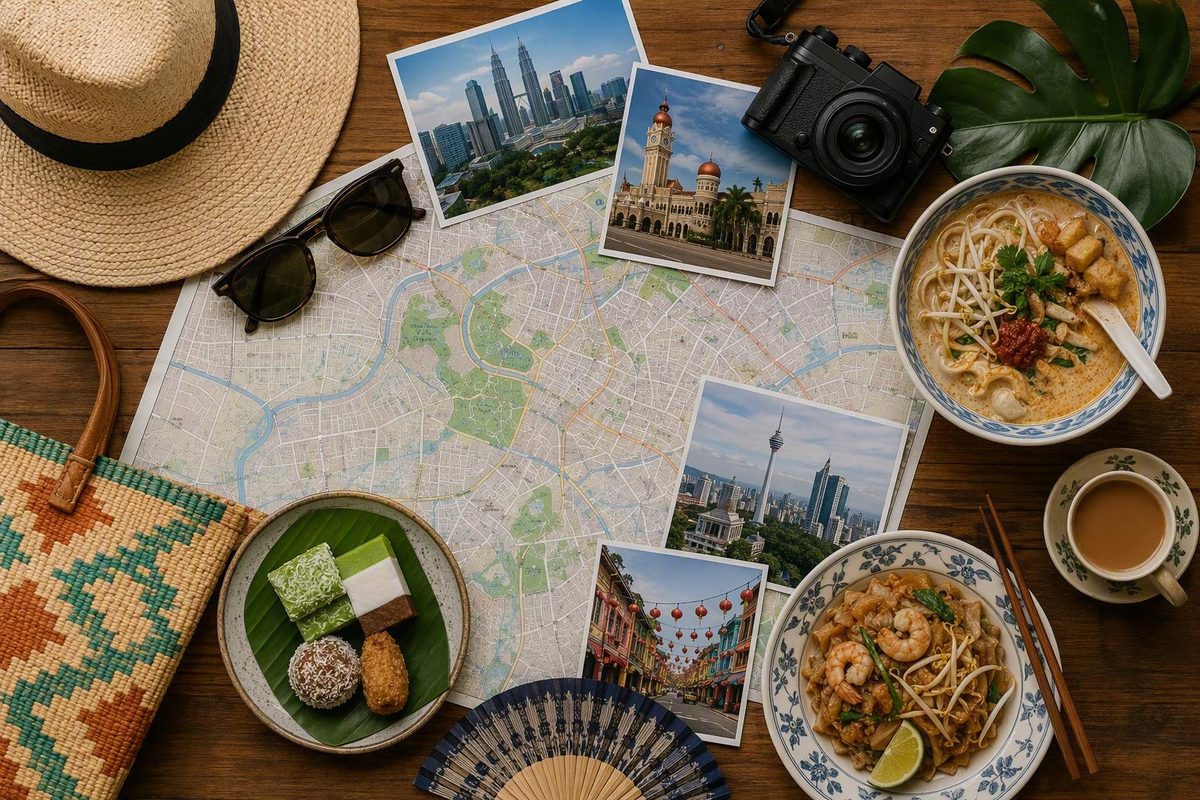
Kuala Lumpur is easier to enjoy when you stop treating it as one long attraction checklist. Think of the city as a series of sightseeing zones connected by rail: KLCC for towers and park views, Bukit Bintang for shopping and evening food, Chinatown and Merdeka Square for heritage, and Batu Caves as a separate outing.
For most first visits, prioritize three defining experiences:
- Petronas Twin Towers and KLCC Park
- Batu Caves
- The connected Chinatown–Central Market–Merdeka Square heritage area
Everything else should reflect your interests, available time, tolerance for heat and walking, and appetite for museums, food, gardens, or nightlife.
Related: How to Explore Kuala Lumpur Using Rail and Walking.
Start Here: Choose the Kuala Lumpur Experiences That Fit Your Trip
A useful Kuala Lumpur shortlist needs categories, not an artificial ranking. This guide uses three editorial labels:
- Core first-visit experience: A strong introduction to the city when time is limited.
- Best for a specific interest: A worthwhile addition for travelers particularly interested in food, religion, museums, architecture, skyline views, or greenery.
- Optional when time allows: A good choice that may require extra travel, duplicate another experience, or displace a higher-priority cluster.
These labels are planning guidance, not objective measures of quality. A museum-focused traveler might reasonably value the Islamic Arts Museum more than an observation deck. Someone who cannot manage a long staircase might omit Batu Caves entirely.
The practical shortlist
Core first-visit experiences
- Petronas Twin Towers with KLCC Park
- Batu Caves, if the staircase and outdoor exposure suit you
- Central Market, Chinatown, and Merdeka Square as one heritage route
Interest-based additions
- Thean Hou Temple and other active religious sites for culture and architecture
- Jalan Alor, Kampung Baru, Chinatown, or Brickfields for food
- National Museum or Islamic Arts Museum for history and an indoor activity
- KL Forest Eco Park for brief urban greenery
- Perdana Botanical Gardens for a more substantial park visit
- Aquaria KLCC for families or poor weather
- KL Tower or the Petronas observation facilities for an elevated view
This route-first approach follows the broader KL Observer method of choosing a base, using rail as the spine, and building food and rest into the day. Its editorial focus is on neighborhoods and station-linked routes rather than collecting disconnected attractions.
Major activities at a glance
The table uses broad planning categories rather than current prices, operating hours, or guarantees of entry. “Confirm current terms” means checking admission, reservations, access restrictions, and venue conditions directly before visiting.
| Activity | Planning label | Area | Broad cost category | Character | Suitable block | Likely transport | Entry or booking note | Weather sensitivity | Mobility caveat |
|---|---|---|---|---|---|---|---|---|---|
| Petronas Twin Towers exterior and KLCC Park | Core | KLCC | Free exterior setting | Mostly outdoor | Brief or relaxed visit | Rail plus walking | No observation ticket needed for the exterior setting | High in heat or rain | Outdoor walking and possible crowds |
| Petronas observation facilities | Interest: skyline | KLCC | Ticketed | Indoor and elevated | Dedicated attraction visit | Rail plus walking | Timed entry is reported; verify current terms | Visibility affects the experience | Confirm lifts, queues, and venue access |
| Batu Caves | Core when stairs are manageable | North of central KL | Confirm current admission for each area | Outdoor and cave complex | Major outing | KTM Komuter or ride-hailing | Access arrangements may differ across the complex | High | Long exposed staircase |
| Central Market | Core within heritage route | Pasar Seni and Chinatown | Confirm current purchase or activity costs | Covered | Cooling and browsing stop | Rail plus walking | Check current entrances and activities | Low | Confirm venue-specific access |
| Petaling Street and Chinatown lanes | Core within heritage route | Chinatown | Pay for purchases | Outdoor and partly covered | Flexible neighborhood block | Rail plus walking | No general booking expected; individual venues may differ | High | Crowds, crossings, and uneven walking conditions |
| Merdeka Square and Sultan Abdul Samad Building exterior | Core within heritage route | Heritage core | Exterior setting | Outdoor | Focused civic-heritage stop | Rail plus walking | Events or works may affect access | High | Exposed walking and road crossings |
| Sri Mahamariamman and Guan Di temples | Interest: religion and culture | Chinatown | Confirm locally | Active religious sites | Short cultural stops | Walking within the cluster | Visitor access may change around worship | Moderate | Shoe removal, thresholds, or steps may apply |
| Jalan Alor | Interest: food and atmosphere | Bukit Bintang | Pay for food | Outdoor food street | Evening meal block | Rail, walking, or short transfer | Individual stalls generally set their own arrangements | High | Crowds, heat, smoke, and limited seating |
| Thean Hou Temple | Interest: religious architecture | Near Brickfields and Seputeh | Confirm current terms | Indoor and outdoor | Focused visit | Short transfer or combined transit | Ceremonies may affect access | Moderate | Slopes and steps may matter |
| KL Tower | Interest: skyline | Near Bukit Nanas | Ticketed | Mostly indoor and elevated | Dedicated attraction visit | Rail plus walk or short transfer | Verify current ticket and reservation terms | Visibility affects value | Confirm venue-specific access |
| KL Forest Eco Park | Interest: brief greenery | Near KL Tower | Confirm current admission | Outdoor | Short nature stop | Rail plus walking | Check current access before going | High | Trails, slopes, steps, and wet surfaces |
| Perdana Botanical Gardens | Interest: larger green space | Perdana area | Confirm costs for any associated venues | Outdoor | Substantial outdoor block | Rail plus transfer or extended walk | General access and nearby attractions should be checked separately | High | Long distances and weather exposure |
| National Museum | Interest: history | Near KL Sentral | Confirm current admission | Indoor | Substantial indoor stop | Rail plus walking | Check current galleries and entry terms | Low | Confirm step-free routes and gallery access |
| Islamic Arts Museum | Interest: art and culture | Near Masjid Negara and Perdana | Confirm current admission | Indoor | Substantial indoor stop | Rail plus walking or transfer | Verify current entry arrangements | Low | Confirm venue-specific access |
| Aquaria KLCC | Interest: families or rain | KLCC | Ticketed | Indoor | Substantial indoor stop | Rail plus indoor walking | Check current ticketing and busy-period arrangements | Low | Confirm venue-specific access |
Map distance alone does not determine whether two places form a comfortable walk. Heat, sudden rain, major road crossings, construction, luggage, footwear, crowding, and personal mobility can turn a short-looking connection into the most tiring part of the day. Break routes into sections and use rail or a brief ride-hailing transfer when a pedestrian connection feels awkward.
Trip length should determine how strict your shortlist becomes:
- One day: Choose either Batu Caves or a central skyline-led morning, then complete one heritage cluster and one evening area.
- Two days: Cover KLCC and Bukit Bintang on one day, then Batu Caves and a selective heritage circuit on the other.
- Three or more days: Add museums, gardens, Brickfields, Thean Hou Temple, a neighborhood food crawl, or a slower return to a favorite district.
Published recommendations vary. Anoushka Probyn suggests allocating three to five nights when Kuala Lumpur forms part of a wider Malaysia trip (see that stay-length recommendation). Snap Happy Travel favors three to four nights, illustrating why pace and interests matter more than a single prescribed duration (see the alternative recommendation).
Before leaving your accommodation, confirm current tickets, operating hours, religious-site access rules, transit information, and reservation requirements with the relevant operator or venue. This is a route-planning guide, not a source of real-time operational information.
KLCC and Bukit Bintang: Towers, Park Views, Shopping and Evening Food
KLCC is the obvious modern-city cluster: the Petronas Twin Towers, KLCC Park, indoor shopping, Aquaria KLCC, and places to pause in air conditioning. Do not assume every point in the two districts is a quick or pleasant walk from every other point.
Choose one skyline experience
There are four basic ways to approach the skyline:
- KLCC Park: Choose this for a free, ground-level exterior view and photographs of the towers.
- Petronas observation facilities: Choose this if the Skybridge and the experience of being inside the towers matter more than obtaining the classic exterior photograph.
- KL Tower: Choose this for a panorama from a separate tower.
- A rooftop venue: Choose this when you want the view to accompany food or drinks and are comfortable with the venue’s spending, dress, reservation, and seating rules.
There is no universal winner. Visibility, weather, budget, fear of heights, photography goals, and the rest of your route matter more than collecting every viewpoint.
The Petronas paid visit uses timed tickets and includes the Skybridge and observation facilities, according to a recent editorial guide. Verify current availability and booking terms with the official operator before committing the rest of your day (see the timed-entry description).
Pair the towers with the park—and a cooling break
A simple KLCC sequence is:
- See the towers from the park.
- Walk only as much of the park as conditions make comfortable.
- Move indoors for lunch, shopping, or coffee.
- Add Aquaria KLCC if you want a family-oriented indoor attraction.
- Return outside later if the weather improves.
This sequence avoids depending on a long outdoor session. Aquaria and the surrounding malls are not merely substitutes for sightseeing; they can provide the pause that keeps the rest of the route manageable.
Add KL Tower and the forest only deliberately
KL Tower and KL Forest Eco Park can form another compact theme: elevated views followed by brief urban greenery, or the reverse. The eco park is associated with trails and a canopy walkway near KL Tower, but it is better treated as a short city-nature experience than as a replacement for a substantial hike.
The trade-off is variety. KL Tower may duplicate the elevated-view role of the Petronas visit. If you have chosen one observation experience, consider whether another adds enough to justify the expense and transfer.
Decide where the evening belongs
At the end of the day, choose one direction:
- Stay in KLCC for tower views, an easy mall meal, or an evening skyline atmosphere.
- Move to Bukit Bintang for shopping, bright streets, and Jalan Alor.
- Go elsewhere for food only if that neighborhood is a genuine priority rather than another pin on a list.
Jalan Alor is prominent, lively, convenient, hot, crowded, and highly visitor-oriented. Girl on a Zebra explicitly characterizes it as touristy, so approach it as an atmosphere-first food street rather than the only place in Kuala Lumpur worth eating (read that assessment of Jalan Alor).
Two efficient route shapes
Lower-cost KLCC to Bukit Bintang route
- Start with the Petronas exterior and KLCC Park.
- Take a covered or air-conditioned break in the KLCC complex.
- Browse, have coffee, or eat lunch indoors.
- Move once to Bukit Bintang later in the day.
- Finish with Jalan Alor or another meal in the district.
This version directs spending mainly toward food and transport rather than observation tickets.
Paid-view route
- Begin with a relaxed KLCC visit.
- Use one reserved skyline experience: Petronas or KL Tower.
- Add a nearby indoor break.
- Finish either in KLCC or Bukit Bintang.
The important word is one. Purchasing every tower, deck, and rooftop view can consume both the budget and the time that could reveal a different side of the city.
Chinatown and the Heritage Core: A Cultural Route With Built-In Cooling Stops
For a short first visit, Chinatown, Central Market, and the Merdeka Square area make a particularly useful heritage cluster. The route combines civic architecture, active religious sites, markets, street life, food, and covered breaks.
A flexible sequence is:
- Merdeka Square
- Sultan Abdul Samad Building exterior
- Central Market
- Petaling Street
- Sri Mahamariamman Temple
- Guan Di Temple
- Kwai Chai Hong
Reverse the order if you begin at Pasar Seni, want lunch in Chinatown first, or prefer to reach Merdeka Square later. Weather should also influence the direction: if rain appears likely, prioritize Central Market rather than beginning with the most exposed section.
Use Central Market as the route’s reset point
Central Market is associated with crafts, batik, souvenirs, artwork, food, and the site’s history as a former wet market. That combination makes it more useful than a simple shopping stop. It is the cluster’s natural covered break: browse, have a drink, reassess the weather, and decide whether to continue toward Chinatown or Merdeka Square.
Snap Happy Travel describes the site as a former wet market that now accommodates handicrafts, batik, souvenirs, and food, although its current tenants and activities should still be checked on arrival (see the Central Market description).
Treat Petaling Street as a market, not a promise
Petaling Street is a busy commercial and food area. It can be enjoyable for movement, signage, snacks, browsing, and people-watching, but do not assume every item will be inexpensive, locally made, or of a particular quality. Compare prices and inspect anything you plan to buy.
Together, these stops create variety without requiring another cross-city transfer.
Make room for religious and civic context
Sri Mahamariamman Temple and Guan Di Temple turn the route into more than a market crawl. They are active religious places, not decorative sets. Enter only when visitor access is permitted, follow posted rules, and avoid blocking worshippers or doorways for photographs.
Merdeka Square and the Sultan Abdul Samad Building introduce the civic and colonial-era side of the area. They also add a more exposed section, so approach them when conditions are tolerable rather than forcing the walk through heavy rain or intense midday heat.
Social-media routes sometimes imply that every landmark is only a few minutes from the next. Such claims rarely account for crossings, navigation errors, photo stops, crowds, or tropical weather. Check a current walking route and think in short segments rather than one uninterrupted march.
Optional extensions
The most logical additions are:
- Masjid Jamek: A religious and architectural stop near the heritage core.
- Masjid Negara: Better combined with the museum and gardens side of the city.
- Islamic Arts Museum: A substantial indoor cultural stop.
- National Museum: A broader introduction to Malaysian history.
Adding one can deepen the day. Adding all four changes a compact heritage route into a much larger itinerary.
Half-day heritage route
For a focused route:
- Begin at Central Market.
- Continue to Petaling Street.
- Visit Sri Mahamariamman Temple and Guan Di Temple if access permits.
- Walk to Kwai Chai Hong.
- Finish with lunch, coffee, or dessert in Chinatown.
This version prioritizes markets, religious sites, and short cooling stops.
Fuller heritage day
For a more extensive day:
- Begin at Merdeka Square and view the Sultan Abdul Samad Building.
- Continue toward Central Market.
- Stop indoors for browsing and a drink.
- Explore Petaling Street, the temples, and Kwai Chai Hong.
- Add one museum.
- Finish with dinner in Chinatown.
A seated drink or air-conditioned museum is part of the itinerary, not lost time.
Batu Caves and Other Religious Sites: Access, Stairs and Respectful Visits
Batu Caves is an active Hindu religious complex known for its large Murugan statue and the staircase leading toward the cave temples. The staircase is commonly reported as having 272 steps, making physical effort and outdoor exposure central planning considerations (see the Batu Caves overview and stair count).
Getting there
KTM Komuter serves Batu Caves Station beside or near the complex. Rail can therefore provide a practical route, particularly when starting near KL Sentral or another convenient connection. Check the current operator schedule and interchange details before departure.
A ride-hailing trip may make more sense when:
- Your accommodation is awkwardly placed for KTM.
- Several people are traveling together.
- Weather makes multiple transfers unattractive.
- Mobility or luggage complicates station changes.
- Your available sightseeing window is limited.
Do not assume either mode will always be faster or cheaper. The starting point, current rail operations, road conditions, and group needs all matter.
Treat Batu Caves as a major outing rather than a gap-filler. The visit includes reaching the station or pickup point, walking through the complex, dealing with the exposed staircase if you choose to climb it, resting, and completing the return journey.
Stairs, heat, and mobility
The long staircase is the clearest mobility consideration. Anyone with low stair tolerance, balance concerns, or difficulty with prolonged outdoor exposure should evaluate the visit carefully.
That does not establish a complete accessibility label for the complex. Conditions can differ between the ground-level area, stairs, caves, and associated attractions. Ask the site directly about the particular areas you hope to visit rather than relying on a generic accessible-or-inaccessible description.
Pace yourself and allow recovery time. A morning visit may reduce some heat exposure, but it does not guarantee comfortable weather, low crowds, or unrestricted access.
Monkeys and belongings
Monkeys may be present around Batu Caves. Keep food and loose belongings secured, do not feed or provoke the animals, and follow instructions on site. The useful response is to reduce opportunities for contact rather than assuming the animals are either harmless or inevitably aggressive (review the practical Batu Caves cautions).
Respect at active places of worship
A conservative starting point is to choose modest clothing, remove shoes where instructed, keep voices low, follow posted photography rules, and avoid standing between worshippers and a shrine, altar, or prayer area. Supplied visitor accounts specifically recommend clothing that covers shoulders and knees at Batu Caves and other religious sites, but the rules of the individual venue always take priority (see the religious-site guidance).
Do not treat ceremonies as performances. Non-worshipper access may pause during prayers, festivals, ceremonies, or private events.
Mosque, Hindu-temple, and Chinese-temple rules are not interchangeable. A head covering, shoe policy, photography restriction, visitor entrance, or restricted area at one venue does not establish the rules at another.
Organize other religious sites geographically
Rather than trying to collect religious buildings, add them where they fit:
- Sri Mahamariamman Temple: Include it in the Chinatown heritage route.
- Masjid Jamek: Pair it selectively with Merdeka Square and the heritage core.
- Masjid Negara: Pair it with the Islamic Arts Museum, National Museum, or Perdana area.
- Thean Hou Temple: Combine it with Brickfields or make it a focused visit involving a short transfer.
Thean Hou Temple offers a different architectural and cultural context from Batu Caves, but visiting both is not compulsory. Choose it when religious culture or temple architecture is a genuine interest.
Do not rely on old reports about admission, subsidiary caves, opening hours, prayer schedules, or the Dark Cave. Confirm current conditions directly.
Eat Through One Neighborhood Instead of Crossing KL for Every Meal
Food is one of Kuala Lumpur’s defining travel experiences, but an efficient food day does not require crossing the city for every famous dish. Choose a neighborhood whose food and setting fit the rest of your route.
Four useful food contexts
Jalan Alor and Bukit Bintang
Choose this for a prominent, high-energy visitor food street attached to a major shopping and nightlife district. Expect visual choice, crowds, heat, noise, and a visitor-oriented atmosphere. It works particularly well when you are already ending a KLCC or Bukit Bintang day nearby.
Kampung Baru
Choose this for a Malay-neighborhood setting and a food-focused contrast with the towers on the KLCC side of the city. It can be paired with KLCC, but inspect the actual connection rather than assuming the whole route will be an easy walk.
Chinatown
Choose this when food should follow directly from the heritage route. Markets, cafés, Chinese-food contexts, drinks, desserts, and casual meals can fit without another cross-city transfer.
Brickfields
Choose this for an Indian cultural and food district. Treat it as a focused stop or pair it with Thean Hou Temple if the transport connection suits your day.
None is automatically more authentic, cheaper, safer, or better than the others. They offer different settings and fit different routes.
Build a crawl around rhythm, not quantity
The KL Observer neighborhood food-crawl framework is deliberately simple:
- One anchor meal
- One nearby snack or drink
- A walking or seated break
- A final meal or dessert
This is more practical than crossing Kuala Lumpur for isolated dishes. Long transfers interrupt the rhythm of the day and turn a food experience into a transport exercise.
Foods appearing across the supplied travel accounts include nasi lemak, satay, roti, teh tarik, apam balik, and ais mata kucing. Treat them as possibilities to research, not guaranteed menu items in every neighborhood or at every stall.
Stall and market etiquette
At a busy food space:
- Join the queue properly.
- Read the visible menu before reaching the counter.
- Decide as much as possible in advance.
- Order clearly and briefly.
- Pay promptly.
- Avoid blocking pickup and service areas.
- Keep photography quick and unobtrusive.
- Release tables when finished if other people are waiting.
If you have dietary restrictions, explain them early and plainly. Ask direct questions about ingredients, but do not assume every vendor can prevent cross-contact or adapt a dish. If the answer is uncertain, choose another option rather than pressuring a busy stall to make a guarantee.
Sample lunch-to-dessert crawl
- Arrive around your preferred lunch period.
- Have one anchor meal.
- Walk a short section of the neighborhood.
- Stop indoors or in shade for water, tea, or coffee.
- Browse a market, temple exterior, gallery, or shop.
- Finish with fruit, a sweet snack, or dessert.
This shape works particularly well in Chinatown, where Central Market can provide a covered break.
Sample evening-to-late-snack crawl
- Begin with a lighter shared dish or drink.
- Walk through the district before settling into the main meal.
- Pause rather than ordering continuously.
- Finish with dessert or a late snack near the station or return route.
Jalan Alor and Bukit Bintang naturally suit this structure, though crowds may affect the experience. Kampung Baru can also work when you have already confirmed the return route.
Attach food to sightseeing
The most efficient pairings are:
- Chinatown food after the heritage walk
- Bukit Bintang after KLCC
- Brickfields as its own food-and-neighborhood stop
- Kampung Baru paired carefully with the KLCC side of the city
Avoid finishing a tiring day in one district and then crossing Kuala Lumpur solely because a single stall appeared on social media. A good nearby meal usually contributes more than another transfer.
Green, Indoor and Weather-Proof Options
Weather planning works best when you distinguish among brief urban greenery, substantial park time, and indoor attractions. These categories are not interchangeable.
Brief urban greenery
KLCC Park is useful for tower views, a short walk, photographs, and a pause between indoor stops. It does not need to become a long park excursion.
KL Forest Eco Park is associated with trails and a canopy walkway near KL Tower. Treat it as a short urban-nature stop, with possible slopes, steps, damp surfaces, and weather exposure—not as a wilderness hike.
Both work best when paired with a nearby indoor alternative.
Substantial parks and garden time
Perdana Botanical Gardens is the better choice when greenery is a major part of the day rather than an interval between landmarks. Because the wider area contains several attractions, it is tempting to add too much.
Select one pairing:
- Gardens plus the National Museum
- Gardens plus the Islamic Arts Museum
- Gardens plus Masjid Negara, subject to visitor access
- Gardens plus KL Bird Park
Attempting every nearby attraction in one session may create more walking and less enjoyment than the map suggests.
Indoor and covered choices
Useful rain or heat fallbacks include:
- Aquaria KLCC
- Central Market
- National Museum
- Islamic Arts Museum
- Other museums and galleries
- Shopping malls
- Cafés
- A paced food experience
- A longer lunch instead of an exposed walk
The best fallback is near the outdoor stop it replaces. KLCC Park pairs naturally with Aquaria or the malls; Chinatown streets pair with Central Market; the Perdana area pairs with a museum.
Use a weather-switch method
For each day:
- Put the most exposed outdoor stop earlier.
- Identify one nearby indoor substitute.
- Keep an afternoon block flexible.
- Reassess conditions during lunch.
- Postpone a park or exposed walk when conditions make it unpleasant.
Rain can affect pedestrian comfort even when an attraction remains open. Wet paving, limited visibility, standing water, stairs, and road crossings may alter whether a route is sensible.
Short greenery is not the same as hiking
Taman Tugu and Bukit Kiara require more preparation than KLCC Park or a brief canopy-walk stop. More remote waterfall and jungle routes may involve uneven terrain, navigation demands, river crossings, or difficult return transport.
Personal hiking reports describe widely varying terrain and transport requirements around Kuala Lumpur, including routes where return rides may be difficult to obtain. Those reports do not establish current safety or access conditions (review the range of reported KL-area hikes). Before attempting an outlying route, check current weather, closures, trail conditions, navigation needs, access rules, and return transport.
Do not rely on broad accessibility labels for parks, museums, or trails. Identify the likely challenge—stairs, long outdoor walking, slopes, uneven ground, station distance, or weather exposure—and ask the venue about the specific access you need.
Realistic Kuala Lumpur Plans for One, Two or Three Days
These itineraries use geographic blocks rather than unsupported minute-by-minute schedules. Rail connects the main areas; walking handles short internal sections; ride-hailing can reduce an awkward transfer when weather, mobility, group size, or route design makes that worthwhile.
One-day classic plan
Morning: choose one major experience
- Option A: Batu Caves
- Option B: Petronas Twin Towers, KLCC Park, and one skyline choice
Do not attempt a full Batu Caves outing and a detailed KLCC morning unless you are prepared for an early start and a highly selective pace.
Middle of the day: heritage cluster
Travel to the Chinatown–Central Market–Merdeka Square area. Choose the direction according to conditions:
- In heat or rain, begin at Central Market.
- In comfortable conditions, begin at Merdeka Square.
- Include Petaling Street and one or two religious sites.
- Take a seated or air-conditioned break.
Evening: choose one district
- Finish at KLCC for towers and a convenient meal.
- Or finish in Bukit Bintang for Jalan Alor and evening energy.
Fitting Batu Caves, the full heritage circuit, and a detailed skyline visit into the same day requires trimming stops and keeping transitions disciplined.
Rain substitution: Move Central Market, a museum, Aquaria, malls, cafés, and a longer meal forward. Reduce exposed time at Merdeka Square or KLCC Park.
One-day low-walking alternative
- Base the day in KLCC.
- Choose either the exterior tower view or one paid observation experience.
- Move indoors for Aquaria, shopping, lunch, or coffee.
- Rest during the hottest or wettest period.
- Finish with dinner in KLCC, Bukit Bintang, or another single nearby district.
This is more practical than forcing Batu Caves or a long heritage walk when stairs, fatigue, weather, or limited mobility make them poor fits.
Rain substitution: Shift the park to a short weather window and devote more of the day to indoor attractions.
Two-day plan
Day one: KLCC and Bukit Bintang
- Start with the Petronas exterior and KLCC Park.
- Choose one paid skyline experience if desired.
- Add Aquaria or a mall break around midday.
- Move once to Bukit Bintang.
- Finish with a neighborhood meal or Jalan Alor.
Day two: Batu Caves and heritage
- Make Batu Caves the main early outing.
- Return to the central city for lunch and a cooling break.
- Follow a selective Chinatown and heritage route.
- Prioritize Central Market, Petaling Street, one or two temples, and either Merdeka Square or a museum.
- Finish in Chinatown rather than crossing the city again.
Rain substitution: Move the museum, Central Market, and café portions earlier. Postpone Batu Caves if the exposed staircase or transport connections no longer suit the day.
Three-day plan
Keep the two-day structure and add one themed day.
Option A: Museums and gardens
- National Museum or Islamic Arts Museum
- Perdana Botanical Gardens when conditions allow
- Masjid Negara if visitor access is available
- A nearby meal and an unhurried return
Option B: Brickfields and Thean Hou Temple
- Explore Brickfields as a cultural and food district.
- Have an anchor meal rather than grazing continuously.
- Transfer to Thean Hou Temple.
- Finish with dessert, coffee, or an early evening meal.
Option C: Food-focused neighborhood day
- Choose Chinatown, Brickfields, Kampung Baru, or Bukit Bintang.
- Build the day around one main meal, one snack or drink, a break, and a final meal.
- Add only nearby cultural or shopping stops.
Rain substitution: Assign the wettest day to museums and covered attractions. Save gardens and long outdoor approaches for a better window.
Use a heat-aware rhythm
A sustainable day generally follows this shape:
- Earlier: Exposed outdoor sight or stairs
- Midday: Museum, mall, market, lunch, or café
- Later: Shorter walk, food, or skyline view
The objective is not to maximize the number of pins visited. It is to preserve enough energy to enjoy the evening.
Rail as the spine, transfers as tools
Use rail for cluster-to-cluster movement when the connection is direct and the stations fit your route. Consider a short ride-hailing transfer when:
- The rail route requires an awkward interchange.
- The destination is not conveniently served.
- Rain makes the final walk unpleasant.
- Several travelers are moving together.
- Mobility or luggage changes what is practical.
- A less central stop requires a clearer door-to-door return.
KTM Komuter is the relevant rail service for Batu Caves. KL Sentral is useful for connections, while Pasar Seni supports the Chinatown and Central Market side of the city. Check current operations rather than choosing automatically based on assumed fares or journey times.
Choose a base that supports your priorities
- KLCC: Useful for skyline attractions and indoor alternatives.
- Bukit Bintang: Useful for shopping, evening food, and nightlife access.
- Chinatown: Useful for heritage, markets, cafés, and Pasar Seni connections.
- KL Sentral: Useful when rail connections and onward travel are the main priority.
No district is universally best. Consider the first and last activity of each day, food access, the walk from the station, and whether you prefer quieter evenings or late activity.
Final pre-departure checklist
Before starting the day, verify:
- Current attraction access
- Timed-ticket or reservation requirements
- Religious-site visitor rules
- Weather and rain risk
- Rail operations and station connections
- The final return journey
- Whether the route contains enough shade, water, food, and rest
- Whether stairs and long outdoor sections suit everyone in the group
The best plan has enough structure to prevent backtracking and enough flexibility to absorb a downpour.
What Counts as a Day Trip Rather Than a Kuala Lumpur Activity?
Central Kuala Lumpur sightseeing is organized around districts and relatively short transfers. Malacca, Genting Highlands, Kuala Selangor, Putrajaya, Klang, Pulau Ketam, Ipoh, outlying waterfalls, and other distant destinations are excursions. They should not be inserted into a city itinerary as though they were another stop between KLCC and Chinatown.
Match the excursion to its real time cost
An excursion may consume a large part of the day, a full day, or an overnight stay. It may also require:
- Advance transport planning
- Travel beyond the central urban rail network
- A fixed return departure
- Multiple transport modes
- More limited flexibility during poor weather
For a traveler with only one or two days, adding an excursion means surrendering several central neighborhood clusters. A short first visit is generally better kept within Kuala Lumpur unless the excursion is a primary interest. That is editorial planning guidance, not a universal rule.
Malacca
Malacca is better approached as a substantial day or overnight plan than as a quick Kuala Lumpur attraction. The outward journey, local movement, meals, and return all compete with time that could otherwise cover Batu Caves, KLCC, Chinatown, or a museum.
Commercial travel listings commonly categorize Malacca as a full-day tour from Kuala Lumpur, reinforcing its role as an excursion rather than a city-center stop (see how Kuala Lumpur excursions are categorized).
Putrajaya
Putrajaya may appeal to travelers interested in civic architecture, monumental urban planning, and mosques.
Genting Highlands
Genting Highlands is oriented toward resort and entertainment facilities. Choose it because those facilities are a major interest, not simply because it appears on a generic Kuala Lumpur list.
Kuala Selangor and waterfalls
Kuala Selangor and outlying waterfall routes involve transport and scheduling demands that differ from a rail-led city day. Tours, transfers, return timing, weather, and site conditions may dominate the plan.
Do not use an old travel account as proof that a waterfall route is currently open, navigable, or supported by dependable return transport.
Klang, Pulau Ketam, and Ipoh
Klang and Pulau Ketam appear in older user-generated discussions of rail-accessible excursions. Pulau Ketam also requires a ferry connection. Ipoh is another rail-reachable idea, but it is substantial enough to deserve separate planning rather than being treated as a casual extension.
Because these suggestions come partly from dated forum evidence, research current schedules, transfers, operating conditions, and suitability independently. The older discussion identifies combinations of train and ferry travel but cannot establish present services (review the dated excursion discussion).
Use one final test: Take the excursion only if it outranks a full Kuala Lumpur neighborhood day for your interests—and only after independently confirming the complete transport and return plan.
Kuala Lumpur FAQs
How many days are enough for Kuala Lumpur?
One day is enough for a strict highlights route, but it requires choosing between Batu Caves and a fuller central-city morning. Two days allow a more balanced split: KLCC and Bukit Bintang on one day, then Batu Caves with Chinatown and the heritage core on the other.
Three days create room for a themed addition such as museums and gardens, Brickfields with Thean Hou Temple, or a neighborhood food crawl. Several supplied travel accounts recommend approximately three to four nights, while others suggest a slightly wider range. The right duration depends on pace, interests, and whether you intend to take excursions.
What are the best free or low-cost things to do in Kuala Lumpur?
Strong free-setting or low-cost possibilities include:
- Viewing the Petronas Twin Towers from KLCC Park
- Walking around Merdeka Square
- Seeing the Sultan Abdul Samad Building exterior
- Browsing Central Market and Petaling Street without committing to purchases
- Exploring Kwai Chai Hong
- Visiting active religious sites when visitor access is permitted and no admission applies
- Building food, cafés, and markets into an existing neighborhood route instead of buying another major attraction ticket
Do not assume Batu Caves or every religious site is currently free. Admission arrangements may differ by area and can change, so confirm current terms directly.
How do I get to Batu Caves using public transport?
KTM Komuter serves Batu Caves Station beside or near the complex. Check the current operator schedule, identify the appropriate interchange from your starting point, and confirm the return service before leaving central Kuala Lumpur.
Allow for station access, waiting, the journey, walking into the complex, climbing if you choose to do so, resting, and returning. Do not rely on a fixed journey time from an older itinerary.
What should I wear at Batu Caves, temples, and mosques?
Modest clothing that covers shoulders and knees is a conservative starting point in the supplied visitor guidance. Choose clothing that remains comfortable in heat and allows movement on stairs. Remove shoes or use visitor garments where the venue instructs you to do so.
Always follow the rules at the specific site. Mosque, Hindu-temple, and Chinese-temple requirements differ, and access may change during prayers, ceremonies, or festivals. Observe posted photography restrictions and avoid obstructing worshippers.
What can I do in Kuala Lumpur when it rains?
Move indoor and covered stops forward:
- Aquaria KLCC
- Central Market
- National Museum
- Islamic Arts Museum
- Other museums or galleries
- Malls
- Cafés
- A longer lunch
- A paced neighborhood food experience
Keep nearby outdoor stops available for a break in the weather rather than abandoning the whole day. Even when a venue remains open, rain may make stairs, trails, crossings, and exposed walks uncomfortable.
The most reliable Kuala Lumpur planning rule is simple: choose one major experience and one geographic cluster for each part of the day, use rail to connect those clusters, and add food, shade, rest, and indoor alternatives before adding more attractions. Select the one-, two-, or three-day framework that fits your trip, verify changeable details with official operators, and leave room for heat, rain, worship schedules, and the city you encounter between planned stops.