 KL Observer
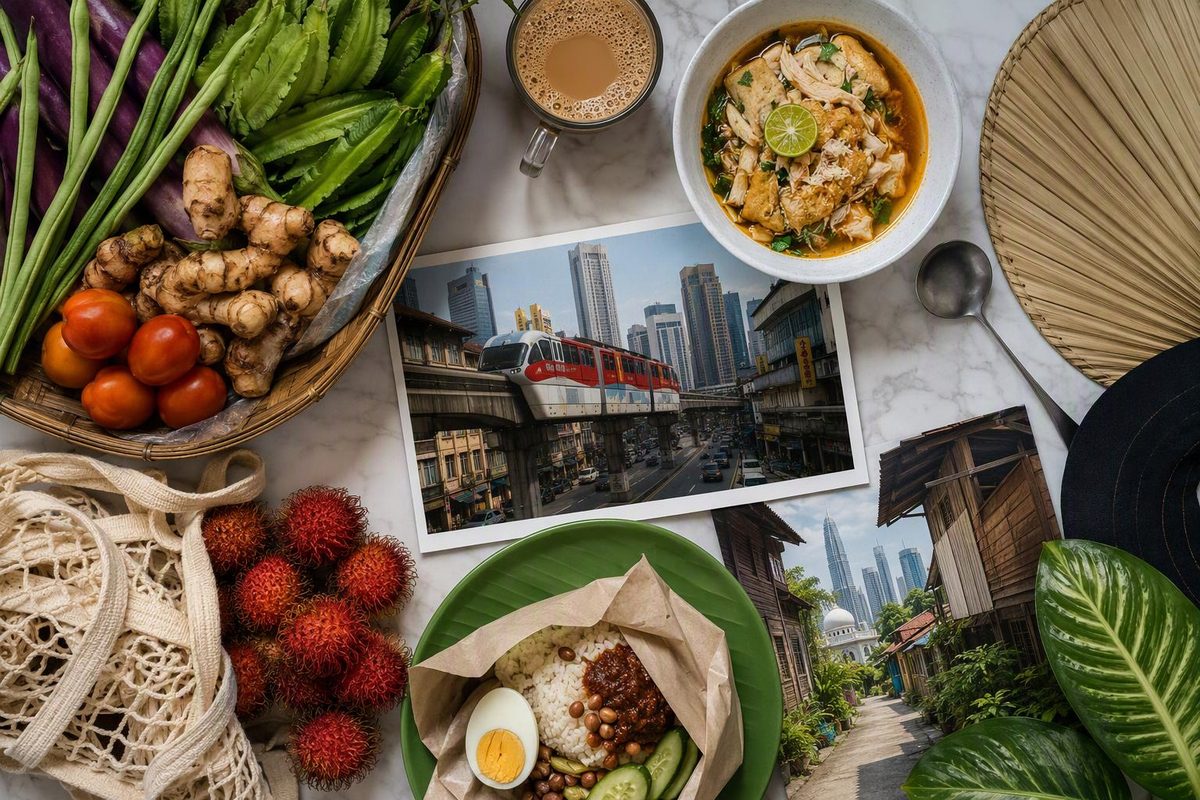
Chow Kit works best as a morning neighbourhood, not a collection of attractions. Come for the working wet market, eat one unhurried meal, then choose either the shops and cafés around Jalan Doraisamy or the Malay food streets of neighbouring Kampung Baru. Trying to cover all three in one exposed walk is unnecessary, especially once the day heats up.
Is Chow Kit worth visiting?
Yes, if you enjoy markets, everyday street life and food districts more than polished landmarks. Chow Kit Market is the neighbourhood’s anchor. A 2018 Tourism Malaysia feature described it as Kuala Lumpur’s largest wet market, selling produce, meat and seafood, with cooked food available in the surrounding market area. It also identified Pasar Raja Bot, Bazaar Baru Chow Kit and Medan Selera Chow Kit as places to find dishes such as nasi lemak, curry laksa, wantan mee, bakso and ayam penyet (Tourism Malaysia). Individual stalls and operating hours change, so treat those dishes as possibilities rather than a guaranteed menu.
This is primarily a place where people shop and work. Expect damp floors, close quarters, delivery activity and strong smells in the wet section. Wear closed shoes, keep out of vendors’ working space and ask before photographing people or produce at close range.
If your priority is air-conditioned shopping, major sights or an easy evening stroll, Bukit Bintang, KLCC or Chinatown may make a better base. Our Kuala Lumpur neighbourhood comparison explains those trade-offs.
Use the Monorail as the route spine
Two stations are useful:
- Chow Kit Monorail station is the practical arrival point for the market and the northern part of Jalan Tuanku Abdul Rahman.
- Medan Tuanku Monorail station suits The Row, Jalan Doraisamy and hotels around the district’s southern edge.
Rapid KL’s Monorail links KL Sentral and Titiwangsa through 11 stations, including Bukit Bintang, Medan Tuanku and Chow Kit. As published on 26 September 2026, stations open from 6am and trains generally run every seven to ten minutes through most of the day, with 12-minute intervals late on Sundays and public holidays. Entry is by Touch ’n Go card, or you can buy a journey token from a station ticket machine (Rapid KL). Check the same operator page before a very early or late trip because last-train times depend on station and direction.
For most visitors, the simplest plan is to arrive at Chow Kit station and leave from either Chow Kit or Medan Tuanku. This avoids retracing a long, hot stretch of Jalan Tuanku Abdul Rahman. If Chow Kit is part of a larger day, use the same station-pair method described in our rail-and-walking guide.
GoKL route 08 is an alternative between MRT Kampung Batu and Chow Kit. As published by DBKL on 26 September 2026, foreign visitors pay RM1 per ride by Touch ’n Go, credit card or debit card; children aged 12 and under ride free, and service hours are 6am to 11pm (DBKL). It is useful when the route matches your origin, but the Monorail is simpler for many first visits.
A heat-aware Chow Kit morning
8am: Start at the market
Allow roughly 45 to 75 minutes. Begin with the produce and dry-goods side before deciding whether you want to enter the wettest meat and seafood aisles. There is no need to inspect every lane.
Small cash notes are useful, although payment methods vary by stall. Do not assume every prepared-food vendor accepts cards. Published market hours online are inconsistent, so confirm locally if one particular stall matters to you.
9.15am: Stop for one breakfast
Choose one breakfast plus a drink rather than turning the market into a tasting marathon. A neighbourhood food tour run by The Chow Kit hotel lists kopi with kaya toast, murtabak and apam balik among its Chow Kit tastings (The Chow Kit). That establishes these as local possibilities, not that every dish will be available daily without joining the tour.
Ask directly about pork, lard, alcohol and halal status when these matter to you. A familiar Malay or Malaysian dish is not, by itself, a dietary certification. For allergies, name the ingredient rather than relying only on a broad label.
For pacing and stall etiquette, see our guide to a respectful Kuala Lumpur food crawl.
10.15am: Choose one second cluster
For cafés and restored shophouses: take the Monorail one stop south to Medan Tuanku, then continue to The Row on Jalan Doraisamy. The development occupies 22 adapted 1940s shophouses and contains cafés, restaurants, small shops and event spaces (The Row KL). Its tree canopy and indoor businesses can provide a more comfortable finish after the market, but each tenant keeps its own hours.
For Malay food and living heritage: continue toward Kampung Baru instead. Treat it as a residential neighbourhood, not an open-air exhibit. Keep voices down near homes and avoid photographing residents without permission. A March 2026 account of a community-led Chow Kit–Kampung Baru walk notes that visitors passed occupied houses and moderated their voices accordingly (The Star). Use rail or a booked car when rain, midday heat or a long meal makes the return walk unattractive.
Do one branch, not both. METMalaysia says thunderstorms occur throughout the year, usually in the evening or early evening, and become more frequent during the April–May and October–November inter-monsoon periods (METMalaysia). An early start reduces heat exposure and leaves room to move indoors if conditions change.
Should you stay in Chow Kit?
Chow Kit is a sensible base for travellers who want early market access, varied local food and a direct Monorail ride to Bukit Bintang and KL Sentral. It is less suitable if you want a resort-like streetscape, a doorstep park or direct rail access to every major sight.
Choose the block, not just the neighbourhood name:
- Near Chow Kit station: best for the market and early starts; expect traffic and utilitarian surroundings.
- Near Medan Tuanku: better for The Row and the district’s southern end.
- Toward Kampung Baru: useful for Malay food, but check the exact walk to rail rather than assuming every property advertised as “Chow Kit” is equally connected.
Read recent room reviews for street noise and inspect the route between the entrance and station. If a lane feels too quiet or poorly lit, use a booked car after dark rather than forcing the walk.
That is a practical precaution, not a reason to label the whole district unsafe. Canada’s countrywide advice recommends normal security precautions in Malaysia while warning of pickpocketing, purse-snatching and theft by motorcyclists (Government of Canada). Keep valuables secured, carry your bag away from the traffic side and step back from the kerb before checking directions.
The useful rhythm is simple: market first, one proper meal, one nearby extension, then rail out before a compact morning becomes a long trudge.