 KL Observer
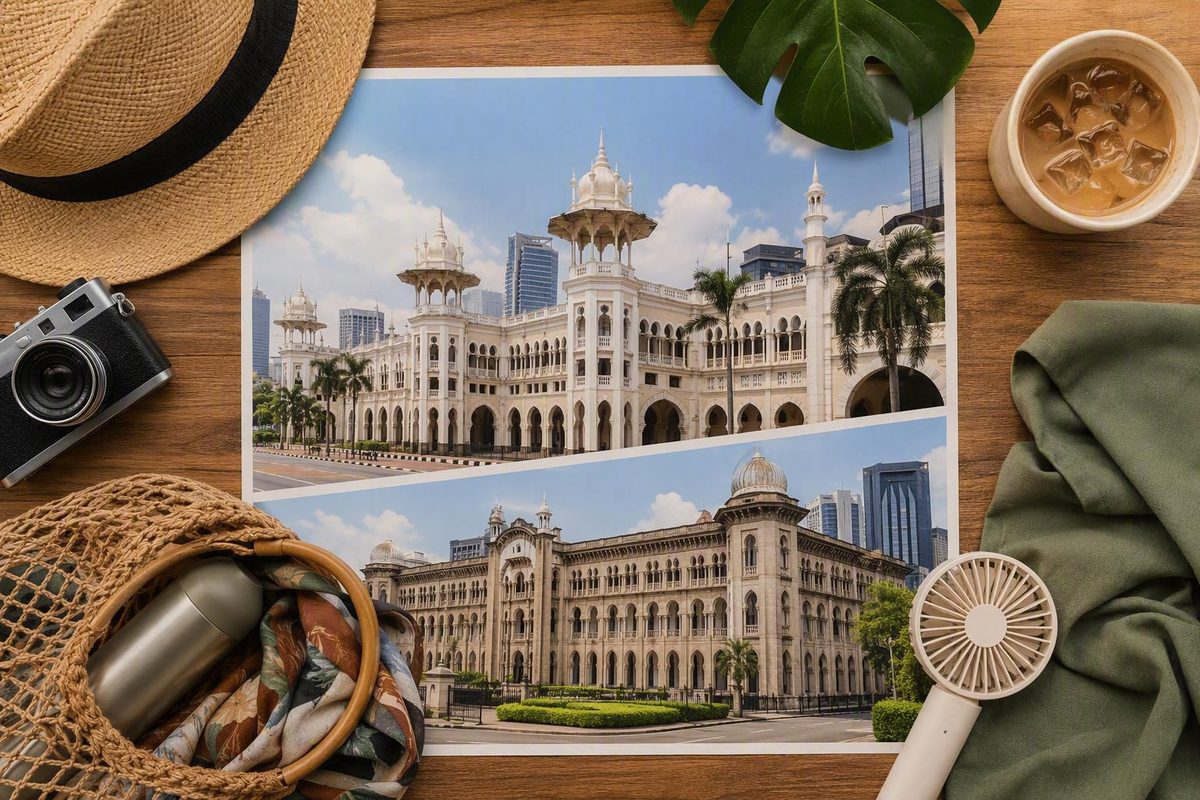
Kuala Lumpur Railway Station is worth a brief stop if you enjoy architecture or railway history and are already exploring the historic core. Plan it as an exterior-first visit rather than a museum experience: study the facade, view the Railway Administration Building opposite, then continue toward another nearby landmark. Do not confuse it with KL Sentral, the modern interchange used for direct airport-rail departures.
First, make sure you have the right station
Kuala Lumpur Station and KL Sentral Station are separate places. The heritage building is Kuala Lumpur Station on Jalan Sultan Hishamuddin. KL Sentral is the modern transport interchange. KTMB’s official station directory lists Kuala Lumpur Station and KL Sentral Station separately, so check the complete station name before following a map pin or arranging a ride.
| Station | What it is | Use it for |
|---|---|---|
| Kuala Lumpur Station | Historic railway building and functioning KTM station | A compact architectural stop or a KTM journey confirmed for that day |
| KL Sentral Station | Modern transport interchange | Major connections and the direct rail departure listed for KLIA Terminal 1 |
| Pasar Seni Station | Nearby LRT and MRT access point across the Klang River | Linking the wider Pasar Seni and Chinatown area with the rail network |
The distinction is especially important when travelling to Kuala Lumpur International Airport. Rome2Rio’s journey listing identifies a direct train from KL Sentral to KLIA Terminal 1, not from the heritage station. Because journey planners can contain changing schedules and fares, confirm departure details with the responsible airport-rail operator.
Do not select Kuala Lumpur Station merely because its name sounds like the city’s main terminal. For a KLIA rail transfer or a meeting at the modern interchange, use KL Sentral Station as the destination and confirm the terminal before leaving.
For an architecture stop, however, Kuala Lumpur Station is the correct place. Its Jalan Sultan Hishamuddin location puts it within the historic core rather than inside the KL Sentral complex.
Is the heritage station worth visiting?
Yes, when it fits your existing route. The station is most useful as a compact stop for visitors interested in architecture, railway history or the development of central Kuala Lumpur.
| Your situation | Recommendation |
|---|---|
| You enjoy architecture or are visiting nearby landmarks | Include it. Treat the station and the building opposite as one architectural stop. |
| Time is tight and the station lies outside your route | Make it optional. Do not detour across KL for an unconfirmed interior experience. |
| You need the direct train listed for KLIA Terminal 1 | Go to KL Sentral instead. |
The principal architectural features can be appreciated from outside, making the visit workable without relying on access to heritage rooms, tunnels or former public spaces. A short pause also fits Kuala Lumpur’s heat better than an open-ended wait for entry.
Remember that this remains a working station. Keep entrances and passenger routes clear, and avoid positioning photographs where commuters or staff need to move.
KL Mayor Datuk Seri Fadlun has described the station as a National Heritage Building that continues to operate as a central-city transit station. He also characterises its architecture and historical significance as a tourism attraction and part of Kuala Lumpur’s identity, according to Warisan KL’s account of the station. That dual role is the right frame for a visit: appreciate the heritage while allowing normal station operations to take priority.
What to notice from outside
The present station building dates to 1910 and is attributed to British architect Arthur Benison Hubback. Architectural accounts variously describe it as blending Eastern and Western traditions or combining Asian, Indian and European influences. These descriptions are overlapping interpretations rather than a single definitive classification.
Use this concise visual checklist:
-
Chhatri-topped towers and domes: These elevated roof pavilions create the station’s distinctive silhouette.
-
Overall composition: From a suitable public vantage, look at how the towers, arches and long frontage work as one design.
The chhatris, colonnades, Hubback attribution and the building’s 1910 date are documented in an architectural account of the old station and its companion building. The same account identifies the Railway Administration Building across Jalan Sultan Hishamuddin as another Hubback design.
Treat the two buildings as a pair. The station presents the public face of rail travel, while the administration building extends the railway story across the street. Together they make this stretch of Jalan Sultan Hishamuddin more rewarding than the station facade would be in isolation.
There is no need to enter either building to understand the pairing. Observe them from appropriate public viewpoints and use the pedestrian route available on the day rather than assuming the most visually direct road crossing is suitable.
Build a compact, heat-aware heritage route
Keep the route simple:
- View Kuala Lumpur Station from outside.
- Look toward the Railway Administration Building from a suitable public position.
- Choose one onward historic-core connection according to the weather, your energy and current pedestrian conditions.
Warisan KL identifies the National Mosque of Malaysia and Dayabumi Complex among the station’s nearby landmarks. It also places Pasar Seni Station across the Klang River, connecting the wider area with LRT and MRT services. These places provide a useful route skeleton, but they do not guarantee that every connection will be shaded, step-free or straightforward when you visit. See Warisan KL’s station overview for the documented geographic relationship.
Chinatown and the wider Pasar Seni area can also be continuations of the day. Treat them as route options rather than fixed walks with promised journey times. Station entrances, road works, crossings, rain, luggage and individual mobility can all change how a short distance on a map feels on the ground.
A practical day shape is:
- Start with another historic-core place already on your plan.
- Add the station and administration building as one architectural segment.
- Continue only while the weather and walking conditions remain comfortable.
- Switch to rail or another suitable transport option when extending the walk no longer makes sense.
Avoid committing to a particular entrance or road crossing before arrival. The two railway buildings stand opposite one another, but that does not establish which pedestrian route is currently appropriate.
In strong heat, keep the stop focused on the facade and roofline rather than lingering in exposed space. In rain, do not assume the approach from another landmark will be continuously sheltered. The station works best as a flexible addition because it can be shortened without losing its main architectural value.
What to verify before you go
Plan on an exterior architectural visit unless KTMB or a station-specific event announcement confirms broader access. Do not assume that heritage interiors, an underground tunnel, former museum areas or other unusual spaces are open to independent visitors. Likewise, do not rely on third-party claims about round-the-clock opening, free admission or a requirement to buy a KTM Komuter ticket.
Warisan KL describes festival visitors exploring arches, verandahs, domes and an underground tunnel during the Heritage Colours Festival. That was event-specific access, not proof that the tunnel or other heritage spaces are routinely available.
For station and train questions, KTMB’s directory gives the customer-service number 03-9779 1200. Ask specifically about Kuala Lumpur Station, not KL Sentral, and separate your questions into:
- whether your intended train currently stops there;
- which passenger entrance to use;
- whether any non-passenger heritage access is available;
- whether advance booking or a ticket is required for the area you intend to enter.
Travellers who need step-free access should also request station-specific confirmation. Ask about the relevant entrance, lifts or ramps, accessible toilets, seating and assistance with platform gaps rather than assuming those facilities are present and operating.
For cultural programming, Warisan KL points visitors toward the VisitKL events calendar. An event listing for Kuala Lumpur does not by itself include station entry, so look for explicit mention of Kuala Lumpur Railway Station and the spaces included.
As historical context, Phase 1 of the station’s facade-conservation project launched on March 25, 2025, addressing weathering, deteriorating plaster and other materials affected by long exposure, according to Warisan KL’s project account. That launch date does not mean work is still active or that present-day entrances and views are affected.
The most reliable plan is therefore a short architectural pause within a wider historic-core day: view Kuala Lumpur Station’s facade, include the Railway Administration Building opposite and continue according to the weather. Use KL Sentral—not the heritage station—for the direct airport-rail departure listed to KLIA Terminal 1, and confirm any train, interior-access or accessibility requirement with the relevant operator before setting out.